Why You Get Brain Fog Under Stress (and What Helps)
Brain fog under stress often comes from poor sleep, a revved-up stress response, or low iron/B12. Targeted labs can help—no referral needed.





Brain fog under stress usually comes from a mix of disrupted sleep, an overactive stress response, and “hidden” fixable issues like low iron or low vitamin B12. When your brain is stuck in threat mode, it prioritizes speed and safety over focus and memory, which can feel like you are thinking through mud. Basic labs can help you sort out whether this is mainly stress physiology or something your body is missing. This symptom is frustrating because it is real, but it is also non-specific. You can be high-functioning on the outside while your attention, word-finding, and short-term memory feel unreliable on the inside. The good news is that stress-related brain fog often improves when you target the right lever instead of trying to “power through.” If you want help matching your pattern to likely causes, PocketMD can walk through your symptoms with you, and Vitals Vault labs can help confirm (or rule out) common medical contributors.
Why you get brain fog under stress
Your brain stays in threat mode
When stress feels constant, your alarm system (the fight-or-flight response) keeps running even when nothing is “happening.” That shifts your brain away from deep focus and flexible thinking and toward scanning for problems, which can show up as distractibility, blanking on words, and feeling mentally jumpy. A useful clue is timing: if your fog spikes during emails, meetings, or conflict and eases on true days off, stress physiology is likely a big driver.
Sleep gets lighter and fragmented
Stress often steals the kind of sleep that restores attention and memory, even if you are in bed for enough hours. You might fall asleep fine but wake at 3 a.m. with your mind racing, or you might sleep “all night” yet wake unrefreshed because your sleep is shallow. The takeaway is practical: improving sleep quality for even 7–10 nights can noticeably sharpen working memory and reaction time, so sleep is not a side issue here.
Blood sugar swings drain focus
Under stress, your body releases more glucose to fuel quick action, but that can backfire if you go long stretches without eating or rely on sugary snacks and caffeine. The result is a spike-and-crash pattern that feels like sudden fog, irritability, and a hard time concentrating about 1–3 hours after you eat. If your brain fog improves within 20–30 minutes of a balanced snack, that is a strong hint that steadier fueling will help.
Low iron stores (ferritin)
You can have “normal” hemoglobin and still have low iron reserves, which are reflected by ferritin. Low iron stores can make your brain feel slow and effortful because iron supports oxygen delivery and neurotransmitter function, and stress can make the fatigue feel even worse. If you have heavy periods, follow a restrictive diet, or notice restless legs at night, ferritin is especially worth checking.
Thyroid slowdown hides as fog
An underactive thyroid can look like stress burnout because it causes slowed thinking, low energy, and low mood, and it often creeps in gradually. You might also notice feeling colder than others, constipation, dry skin, or unexplained weight gain, but brain fog can be the symptom that pushes you to search. A simple TSH test can flag when your thyroid is part of the picture, which matters because the fix is different than “stress management.”
What actually helps you think clearly again
Do a two-week fog pattern check
For 14 days, rate your brain fog once in the morning and once mid-afternoon on a 1–10 scale, and write one sentence about what happened right before it got worse. You are looking for repeatable triggers like poor sleep, long gaps between meals, or specific stressors, not a perfect diary. Once you see your pattern, you can target one change at a time instead of trying everything at once.
Use a 10-minute “downshift” ritual
When your nervous system is revved up, your brain has trouble switching into deep work. Try 10 minutes of slow breathing with a longer exhale, a short walk outside, or a guided relaxation before you start a focus block, because it tells your body the threat has passed. The goal is not to feel blissful; it is to reduce the background alarm enough that your attention can hold steady.
Stabilize energy with protein first
If you tend to start the day with coffee and a carb-heavy breakfast, try getting 25–35 grams of protein within a couple of hours of waking. That single change often smooths mid-morning and mid-afternoon crashes, which can feel like brain fog lifting rather than “more motivation.” If you are not hungry in the morning, start smaller but keep the protein anchor.
Protect deep work with one rule
Pick a single boundary that makes focus possible, such as “no inbox for the first 45 minutes” or “meetings only after 11.” Stress brain fog is often made worse by constant context switching, because every switch costs working memory. One consistent rule beats a complicated productivity system you cannot maintain when you are already overloaded.
Treat the medical contributor you find
If labs show low ferritin or low B12, correcting that deficiency can make stress feel more manageable because your baseline energy and cognition improve. If TSH suggests thyroid dysfunction, it is worth discussing next steps with a clinician, because treatment can be straightforward but needs the right diagnosis. The point is not to medicalize stress; it is to remove the “extra weight” your body is carrying so your brain can recover.
Useful biomarkers to discuss with your clinician
Ferritin
Ferritin is your body's iron storage protein, reflecting total iron stores in the body. In functional medicine, ferritin assessment is crucial for identifying both iron deficiency and iron overload, conditions that can significantly impact energy levels and overall health. Low ferritin is the earliest sign of iron deficiency, often occurring before anemia develops. This can cause fatigue, weakness, restless leg syndrome, and cognitive impairment. Conversely, elevated ferritin may indicate iron overload, inflamma…
Learn moreVitamin B12
Vitamin B12 (cobalamin) is essential for DNA synthesis, red blood cell formation, neurological function, and energy metabolism. In functional medicine, we recognize that B12 deficiency is surprisingly common, especially in older adults, vegetarians, vegans, and those with digestive issues. B12 deficiency can cause irreversible neurological damage if left untreated. The vitamin is crucial for methylation reactions, which affect cardiovascular health, detoxification, and gene expression. Even subclinical deficienc…
Learn moreGlucose
Fasting glucose is a fundamental marker of glucose metabolism and insulin function. In functional medicine, we recognize that even 'normal' glucose levels in the upper range may indicate early insulin resistance. Optimal fasting glucose reflects efficient glucose regulation and insulin sensitivity. Elevated fasting glucose suggests the body's inability to maintain normal glucose levels overnight, indicating hepatic insulin resistance or insufficient insulin production. This marker is essential for early detectio…
Learn moreLab testing
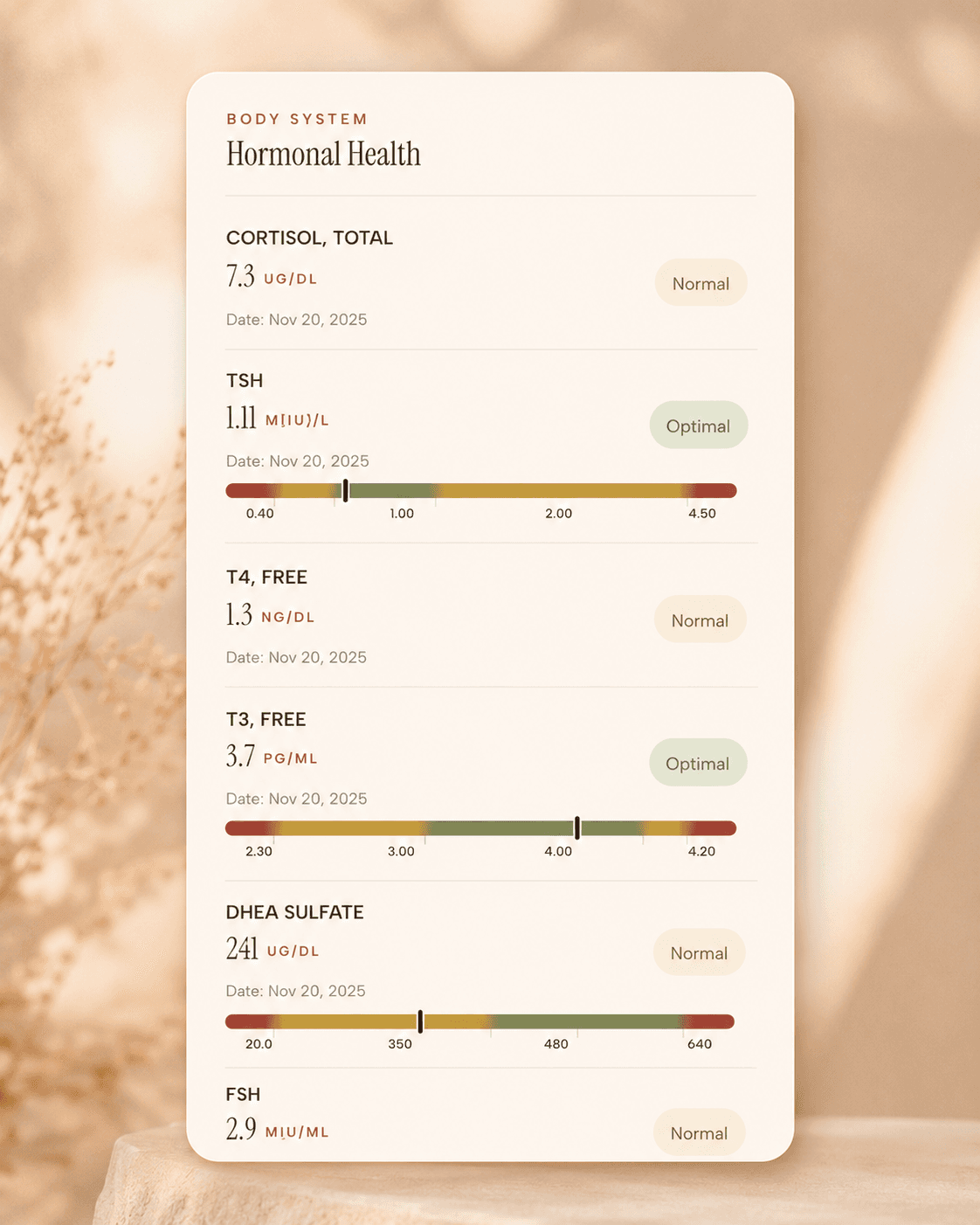
Check ferritin, vitamin B12, and TSH at Quest
starting from $99 panel with 100+ tests, one visit
No referral needed
About 1 week
Schedule online — results typically within a week
Clear next steps
Guidance included, with follow-up care available
HSA / FSA
Eligible for pre-tax health spending accounts
Pro Tips
Try a “two-tab rule” for one week: during focus blocks, keep only the document you are working on and one reference tab open. Stress brain fog gets dramatically worse with constant switching, so reducing choices reduces fog.
If you wake at the same time every night, keep a notepad by your bed and write the thought down once, then tell yourself you have a plan for it tomorrow. That simple external “memory” often stops the mental loop that keeps your sleep light.
Do a caffeine reality check by moving your last caffeine earlier by two hours for seven days. If your sleep deepens and your morning fog improves, you just found a lever that is bigger than willpower.
Use a “protein plus fiber” snack when fog hits, such as yogurt with chia or a handful of nuts with fruit, and then re-rate your clarity 30 minutes later. If you reliably improve, your next step is building that steadier pattern into lunch and afternoon routines.
If you have heavy periods, ask specifically about ferritin rather than only “iron” or hemoglobin. Low iron stores can hide for months while your brain and energy pay the price.
Frequently Asked Questions
Can stress really cause brain fog?
Yes. Ongoing stress keeps your body in a high-alert state, which makes it harder for the part of your brain that handles planning and focus to do its job. It often feels like distractibility, slower recall, and trouble finding words, especially during busy or emotionally loaded moments. If your fog improves on true rest days, that pattern strongly supports stress as a driver.
How do I know if my brain fog is from anxiety or something medical?
Look for clues in timing and add a few targeted labs. Anxiety-driven fog often spikes with worry, social pressure, or deadlines, while medical contributors tend to be more steady across situations and come with body symptoms like cold intolerance, heavy bleeding, or numbness and tingling. Checking ferritin, vitamin B12, and TSH is a practical starting point, and you can bring the results to a clinician for interpretation.
What vitamin deficiency causes brain fog under stress?
Vitamin B12 deficiency is a common, fixable cause of brain fog, and it can be more likely if you eat little animal food or take acid-suppressing medications. Low iron stores can also feel like brain fog even when hemoglobin is normal, which is why ferritin matters. If you are supplementing, recheck levels after 8–12 weeks so you know the plan is working.
How long does stress brain fog last?
It depends on what is driving it, but many people notice improvement within 1–2 weeks once sleep quality improves and daily stress load becomes more predictable. If a deficiency or thyroid issue is contributing, it can take several weeks to a few months to feel fully steady again after treatment starts. If your fog is worsening, or you have new neurologic symptoms like one-sided weakness or severe confusion, get urgent medical care.
What is the best blood test for brain fog?
There is not one single “brain fog test,” but ferritin, vitamin B12, and TSH cover three common medical reasons people feel mentally slow under stress. Ferritin helps catch low iron stores, B12 supports nerve and brain function, and TSH screens for thyroid dysfunction that can mimic burnout. If those are normal and symptoms persist, a clinician can decide whether to expand testing based on your story.