Memory Loss on Keto Diet: Causes, Fixes, and Lab Tests
Memory loss on keto diet is often from low electrolytes, too few carbs, or low thyroid. Targeted labs available at Quest—no referral needed.






Memory loss on keto is usually not your brain “failing” — it is your body adapting to a big fuel shift, and that can be worsened by low sodium or other electrolytes, not eating enough overall, or an underlying issue like low thyroid or low B12 that keto accidentally exposes. The good news is that these are often reversible once you identify the driver. A few targeted labs can help you tell the difference between a fixable nutrition or hormone issue and something that needs a deeper workup. It is also completely normal to feel alarmed when you forget names, misplace things, or walk into a room and blank on why you are there — especially if dementia runs in your family or you are recovering from COVID. Keto can improve mental clarity for some people, but for others the first weeks (and sometimes longer) bring “brain fog” that feels like memory loss. This page walks you through the most common reasons it happens, what tends to help in real life, and which tests are most useful. If you want help matching your exact pattern to the most likely cause, PocketMD and Vitals Vault labs can be practical tools without turning this into a months-long guessing game.
Why memory can feel worse on keto
Low sodium and electrolytes
When you cut carbs, your insulin level drops and your kidneys dump more salt and water, which means you can get “keto flu” even if you are eating clean. Low sodium can make you feel spacey, forgetful, and oddly anxious because your brain is sensitive to small shifts in blood volume and nerve signaling. If your memory feels worse along with headaches, lightheadedness when you stand, or muscle cramps, treat electrolytes like a real variable, not an afterthought.
Not enough total calories
Keto can blunt appetite, so it is easy to under-eat without noticing, especially if you are also doing intermittent fasting. Your brain can run on ketones, but it still needs enough overall energy and protein to make neurotransmitters and keep attention steady. If your “memory loss” shows up most on busy days or after long gaps between meals, the simplest explanation may be that you are running on fumes.
Carbs too low for you
Some people do fine at very low carbs, but others get cognitive symptoms because their brain is not yet efficiently using ketones or because their lifestyle demands quick glucose more often. This can feel like word-finding trouble, slow recall, or a blank, detached feeling during meetings or driving. A small, consistent increase in carbs — especially around sleep or workouts — can be enough to bring your memory back without abandoning low-carb eating entirely.
Low thyroid function (hypothyroidism)
If your thyroid is underactive, your brain tends to feel slow and your short-term memory suffers because metabolism and neurotransmitter turnover are dialed down. Keto does not usually “cause” hypothyroidism, but rapid weight loss, low calorie intake, or stress can unmask it, and some people notice symptoms right when they change diets. If memory problems come with feeling cold, constipation, hair shedding, or a puffy face, it is worth checking a thyroid-stimulating hormone test (TSH).
Low vitamin B12 over time
B12 helps maintain the insulation around nerves and supports brain chemistry, so low levels can show up as forgetfulness, low mood, or tingling in your hands and feet. Keto can be B12-friendly if you eat animal foods, but if your version of keto is mostly fats with limited meat, or you take metformin or acid blockers, deficiency becomes more plausible. This matters because B12-related cognitive symptoms can improve when you catch them early.
What actually helps your memory on keto
Salt on purpose for 7 days
Try a one-week experiment where you deliberately add sodium instead of hoping it happens naturally. Many people feel clearer when they use salted broth or electrolyte packets and aim for steady intake across the day, especially in the morning. If your memory improves within 24–72 hours, you have a strong clue that the “memory loss” was really low-volume, low-sodium brain fog.
Stop stacking keto with fasting
Keto plus long fasting windows can be too much stress at once, particularly if you are older, post-COVID, or already sleeping poorly. For two weeks, keep keto but eat three anchored meals with protein, and see whether recall and focus stabilize. If it helps, you can reintroduce a shorter fasting window later without the cognitive crash.
Add carbs strategically, not randomly
If your symptoms hit hardest at night, after workouts, or during high-focus tasks, try adding 15–30 grams of carbs in a consistent place each day, such as dinner or post-exercise. Think of it as a controlled test rather than “cheating,” because you are looking for a repeatable change in memory and mood. If you feel better, you can fine-tune the amount while still staying lower-carb overall.
Prioritize protein at each meal
Memory depends on attention, and attention depends on stable neurotransmitters, which require amino acids from protein. On keto, it is easy to over-focus on fat and end up with meals that do not actually support your brain. A practical target is to include a clear protein portion at each meal and reassess after a week, especially if your “forgetfulness” is paired with low motivation or irritability.
Treat sleep like a keto variable
Early keto can disrupt sleep, and fragmented sleep can look exactly like memory loss because your brain cannot consolidate new information. If you are waking at 3 a.m. or feeling wired at bedtime, consider moving caffeine earlier, shifting workouts earlier, and adding your day’s carbs at dinner if you are testing a carb increase. If sleep improves, memory often follows within days.
Useful biomarkers to discuss with your clinician
Sodium
Sodium is the primary extracellular electrolyte essential for fluid balance, nerve transmission, muscle contraction, and blood pressure regulation. In functional medicine, sodium balance reflects kidney function, adrenal health, and hydration status. Low sodium (hyponatremia) can cause neurological symptoms and may indicate SIADH, adrenal insufficiency, or excessive water intake. High sodium may indicate dehydration, diabetes insipidus, or excessive salt intake. Optimal sodium levels support cellular energy prod…
Learn moreTSH
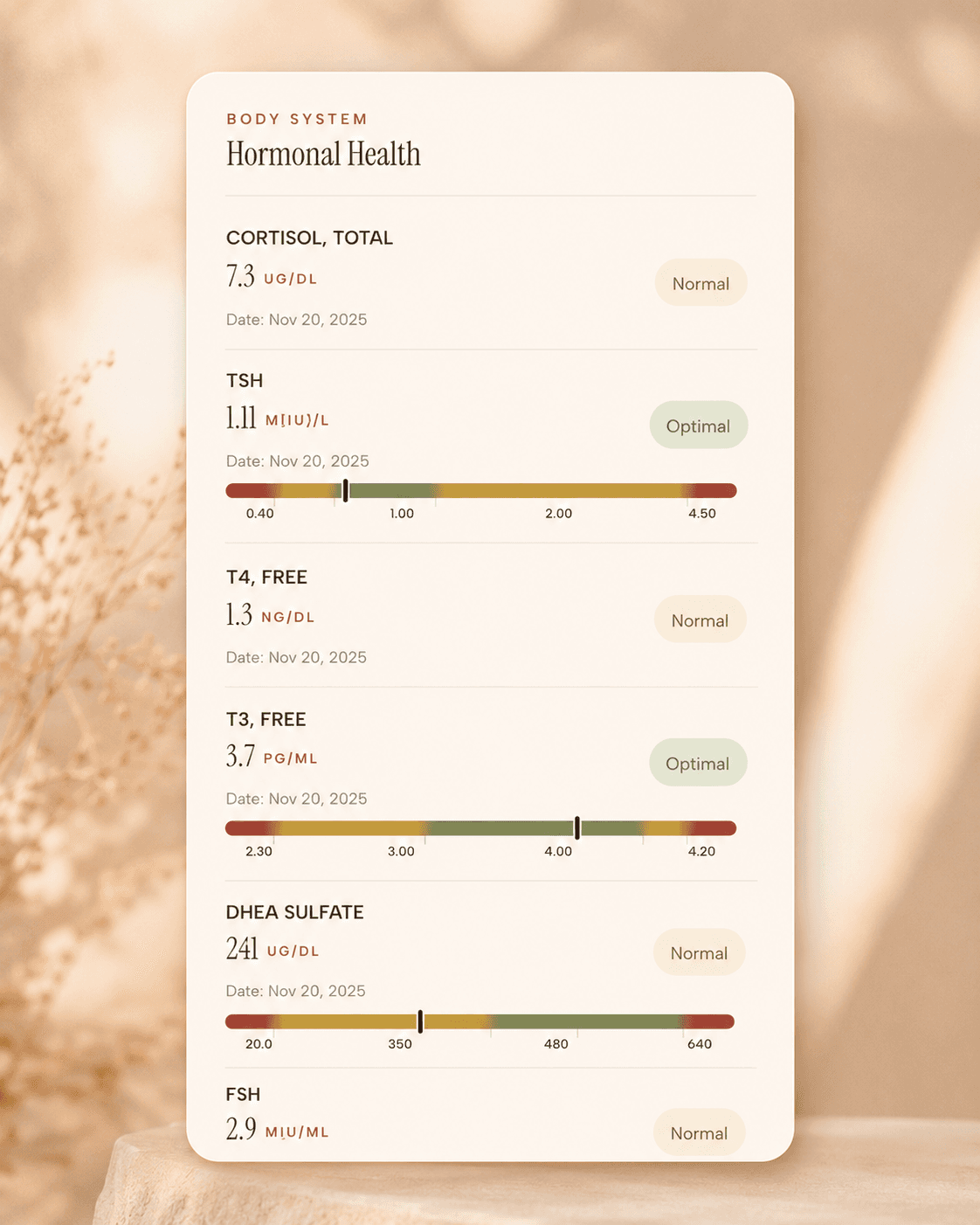
TSH is the master regulator of thyroid function, controlling the production of thyroid hormones T4 and T3. In functional medicine, we use narrower TSH ranges than conventional medicine to identify subclinical thyroid dysfunction early. Even mildly elevated TSH can indicate thyroid insufficiency, leading to fatigue, weight gain, depression, and metabolic dysfunction. TSH levels are influenced by stress, nutrient deficiencies, autoimmune conditions, and environmental toxins. Optimal TSH supports energy, metabolism…
Learn moreVitamin B12
Vitamin B12 (cobalamin) is essential for DNA synthesis, red blood cell formation, neurological function, and energy metabolism. In functional medicine, we recognize that B12 deficiency is surprisingly common, especially in older adults, vegetarians, vegans, and those with digestive issues. B12 deficiency can cause irreversible neurological damage if left untreated. The vitamin is crucial for methylation reactions, which affect cardiovascular health, detoxification, and gene expression. Even subclinical deficienc…
Learn moreLab testing
Check TSH, vitamin B12, and fasting glucose at Quest
starting from $99 panel with 100+ tests, one visit
No referral needed
About 1 week
Schedule online — results typically within a week
Clear next steps
Guidance included, with follow-up care available
HSA / FSA
Eligible for pre-tax health spending accounts
Pro Tips
Do a two-week “memory log” that takes under 60 seconds: rate your recall and focus from 1–10 at midday and evening, and write down whether you had electrolytes, how long since your last meal, and how you slept. Patterns show up fast when you track the same way each day.
If you are getting lightheaded when you stand, try the simplest test: drink a salty broth or electrolyte drink and re-check how your head feels 30–60 minutes later. A quick improvement strongly points toward low sodium rather than a progressive memory problem.
If you are older or post-COVID, avoid rapid weight loss as a “success metric.” A slower, steadier deficit often protects sleep and cognition better, which means you are more likely to stay consistent long-term.
If you take metformin, a proton pump inhibitor, or you have had bariatric surgery, put B12 on your short list even if you eat meat. Those factors can block absorption, so your diet alone may not protect you.
When you test adding carbs, keep everything else the same for three days and add a measured amount at the same time each day. That way you can tell whether the change helped, instead of guessing based on a chaotic week.
Frequently Asked Questions
Is memory loss on keto normal in the first week?
It can be, because the first week often includes fluid and salt loss, sleep disruption, and a lag before your brain uses ketones efficiently. That combination can feel like forgetfulness or slow recall even if your long-term memory is fine. If it is improving week by week, that is reassuring, but if it is worsening or affecting safety (like driving), adjust electrolytes and calories and consider labs.
How do I know if it’s electrolytes or something more serious?
Electrolyte-related brain fog often comes with headaches, muscle cramps, a racing heart, or feeling worse when you stand up, and it can improve within hours after salty fluids. More concerning patterns include steadily progressive memory decline over months, getting lost in familiar places, or major personality changes. If you notice those red flags, do not wait it out as “keto adaptation” — talk to a clinician.
Can keto cause dementia or permanent memory damage?
There is no good evidence that a well-formulated ketogenic diet causes dementia, and many cognitive symptoms people feel on keto are reversible once electrolytes, calories, sleep, and micronutrients are corrected. The bigger risk is missing another cause, such as low B12 or thyroid problems, because you assume keto is the whole story. If your symptoms persist beyond 3–4 weeks or keep recurring, get targeted labs like TSH and vitamin B12.
What carbs should I add if keto is hurting my memory?
Start with a consistent 15–30 grams of carbs from whole-food sources that you tolerate well, such as berries, yogurt if you eat dairy, beans if they fit your plan, or a small portion of rice or potatoes. Adding them at dinner or after workouts is often the least disruptive to ketosis goals while still helping sleep and cognition. Treat it like a structured trial for one week and track whether recall and mood improve.
Which blood tests are most useful for memory issues on keto?
A practical starting trio is TSH for thyroid-related cognitive slowing, vitamin B12 for a reversible deficiency that can affect memory and nerves, and fasting glucose to look for low or high baseline sugar patterns that can mimic “memory loss.” If any of these are abnormal or borderline, the next step is usually follow-up tests rather than guessing with supplements. If you want to move quickly, you can order targeted labs through Vitals Vault and review the results with a clinician.
What the research says
Ketogenic diets can change cognition and brain energy use, with benefits in some neurological conditions but variable effects during adaptation
Vitamin B12 deficiency is a recognized reversible contributor to cognitive symptoms and should be considered in evaluation
Thyroid dysfunction can present with cognitive slowing and memory complaints, and TSH is a standard first-line test