Memory Loss in Men: What It Usually Means and What to Do Next
Memory loss in men often comes from sleep apnea, low B12, or thyroid slowdown. Simple steps and targeted blood tests are available—no referral needed.






Memory loss in men is most often tied to fixable problems like poor sleep from sleep apnea, low vitamin B12, thyroid slowdown, depression or chronic stress, or medication and alcohol effects. Less commonly, it is the early sign of a progressive brain disease, especially when memory problems are getting steadily worse and daily tasks are slipping. A few targeted labs and a focused history can help sort out which bucket you are in. If you are forgetting names, missing appointments, or walking into a room and blanking on why you are there, it can feel scary fast—especially if you have a family history of dementia. The tricky part is that “memory” is not one thing. Your brain needs attention, sleep, mood stability, and steady fuel to lay down new memories, and men are more likely to have some specific disruptors like untreated sleep apnea and heavy alcohol use. This page walks you through the most common causes, what helps in real life, and which blood tests can clarify the picture. If you want help connecting your specific symptoms to next steps, PocketMD can help you think it through, and Vitals Vault labs can help you check the most relevant markers.
Why memory slips happen in men
Sleep apnea starving your brain
If you stop breathing repeatedly during sleep, your brain gets less oxygen and your sleep never reaches the deep, restorative stages that lock in new memories. You may feel “fine” during the day but still notice slower thinking, irritability, and forgetting conversations. If you snore loudly, wake with a dry mouth, or feel sleepy while driving, ask for a sleep evaluation because treating apnea can noticeably improve memory within weeks to months.
Low vitamin B12 affecting nerves
Vitamin B12 helps maintain the insulation around nerves, including in the brain, so low levels can show up as forgetfulness, word-finding trouble, or a foggy, slowed feeling. Some men also get numbness or tingling in the feet, balance issues, or a sore tongue, but memory changes can come first. If you take metformin, acid blockers, or eat very little animal protein, you have a higher chance of low B12 and it is worth testing rather than guessing.
Thyroid slowdown (hypothyroidism)
When your thyroid runs low, your whole system slows down, including processing speed and recall, which can feel like you are thinking through mud. You might also notice weight gain, constipation, dry skin, or feeling cold when others are comfortable, but some men mainly notice mental sluggishness. A simple TSH blood test can flag this, and treating the underlying thyroid issue often improves concentration and memory.
Depression, anxiety, and chronic stress
Stress hormones push your brain into “survival mode,” which makes it harder to pay attention and store new memories in the first place. Depression can look like memory loss because motivation drops and your mind keeps looping on worries, so details never get encoded. If your memory feels worse during stressful weeks and better on calmer days, that pattern is a clue, and addressing mood and sleep can be as important as any supplement.
Alcohol, cannabis, and medication effects
Alcohol disrupts REM sleep and can directly impair short-term memory, so even “just evenings” can add up to real forgetfulness over time. Some common medications—especially sedatives, certain allergy pills, and some bladder medicines—can also dull attention, which your brain experiences as memory problems. A practical step is to bring your full medication and substance list to a clinician or pharmacist and ask, “Which of these could be affecting memory, and what are safer alternatives?”
What actually helps your memory (starting this week)
Treat sleep like a medical issue
If you suspect sleep apnea, the most effective “memory supplement” is getting it diagnosed and treated, often with CPAP or an oral appliance. Even before testing, you can reduce airway collapse by sleeping on your side and avoiding alcohol within four hours of bedtime. Track whether your morning headaches and daytime sleepiness improve, because those changes often move before memory does.
Use external memory on purpose
When your brain is overloaded, the goal is to stop relying on recall and start relying on systems. Pick one capture tool—notes app, paper notebook, or a single calendar—and commit to it for two weeks so you are not scattering reminders across five places. It sounds simple, but reducing “where did I put that?” moments frees up attention, which is what your memory needs to work.
Strength train for brain benefits
Resistance training improves insulin sensitivity and blood flow, and it tends to improve sleep quality, which together support memory formation. Aim for two to three full-body sessions per week, and keep it realistic so you can stick with it. If you want a quick win, do a 10-minute brisk walk right after lunch because it often sharpens afternoon focus the same day.
Fix the specific deficiency you have
If labs show low B12, replacing it is not just about energy—it can prevent nerve damage from becoming permanent. Your clinician may recommend high-dose oral B12 or injections depending on the cause, and you should recheck levels to confirm they actually rose. If your B12 is normal, do not keep escalating supplements “just in case,” because the benefit comes from correcting a real problem.
Get evaluated for progressive warning signs
If your memory problems are steadily worsening over months, you are getting lost in familiar places, or family members notice personality changes, it is worth a formal cognitive evaluation rather than waiting. That workup can include brief office tests, medication review, and sometimes brain imaging, and it often identifies treatable contributors even when dementia is not the diagnosis. Bring one specific example of a recent mistake and when it started, because timelines help clinicians triage urgency.
Useful biomarkers to discuss with your clinician
Vitamin B12
Vitamin B12 (cobalamin) is essential for DNA synthesis, red blood cell formation, neurological function, and energy metabolism. In functional medicine, we recognize that B12 deficiency is surprisingly common, especially in older adults, vegetarians, vegans, and those with digestive issues. B12 deficiency can cause irreversible neurological damage if left untreated. The vitamin is crucial for methylation reactions, which affect cardiovascular health, detoxification, and gene expression. Even subclinical deficienc…
Learn moreTSH
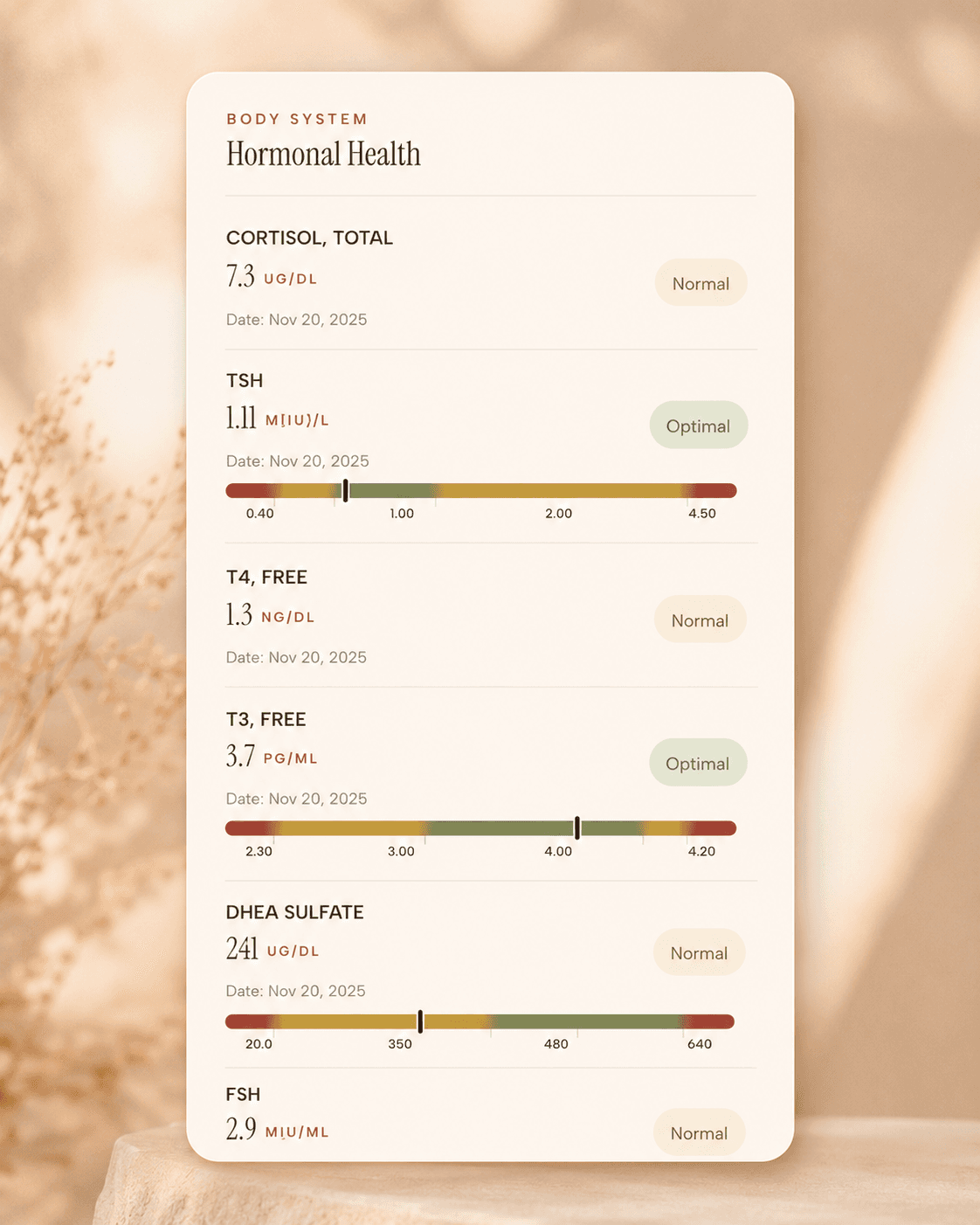
TSH is the master regulator of thyroid function, controlling the production of thyroid hormones T4 and T3. In functional medicine, we use narrower TSH ranges than conventional medicine to identify subclinical thyroid dysfunction early. Even mildly elevated TSH can indicate thyroid insufficiency, leading to fatigue, weight gain, depression, and metabolic dysfunction. TSH levels are influenced by stress, nutrient deficiencies, autoimmune conditions, and environmental toxins. Optimal TSH supports energy, metabolism…
Learn moreHomocysteine
Homocysteine is an amino acid metabolite that serves as an independent risk factor for cardiovascular disease, stroke, and cognitive decline. In functional medicine, elevated homocysteine indicates methylation dysfunction and B-vitamin deficiencies. High homocysteine promotes endothelial dysfunction, oxidative stress, and thrombosis. It's particularly important because it's easily modifiable through B-vitamin supplementation (B6, B12, folate). Homocysteine levels are also associated with Alzheimer's disease risk…
Learn moreLab testing
Get vitamin B12, thyroid (TSH), and inflammation (hs-CRP) checked at Quest
starting from $99 panel with 100+ tests, one visit
No referral needed
About 1 week
Schedule online — results typically within a week
Clear next steps
Guidance included, with follow-up care available
HSA / FSA
Eligible for pre-tax health spending accounts
Pro Tips
Run a two-week “memory context” log: each time you forget something, write the time, how you slept, whether you drank alcohol the night before, and how stressed you felt. Patterns like “always after short sleep” are more actionable than a vague sense that you are slipping.
If you suspect sleep apnea, record 30 seconds of your breathing while you nap or sleep (many phones can do this). Hearing repeated pauses and gasps makes it much easier to take the next step and get tested.
Do one daily “retrieval practice” drill: pick three things you want to remember today, and try to recall them without looking at notes at noon and again at 6 pm. This trains the exact skill that feels broken, and it also shows you whether attention or storage is the bigger issue.
If you take an acid blocker or metformin, ask specifically about B12 monitoring and what number you should aim for. Many men feel better when B12 is brought above roughly 400–500 pg/mL, especially if they had tingling or brain fog.
Use the ‘one-touch rule’ for commitments: when someone tells you a date or task, you either put it in your calendar immediately or you say, “Give me 10 seconds to log that.” It prevents the most common memory failure, which is not encoding the information in the first place.
Frequently Asked Questions
Is memory loss in men a normal part of aging?
Some slowing is common with age, but it should not steadily interfere with daily life. Normal aging looks like occasionally needing more time to recall a name, while concerning change looks like repeating questions, missing bills, or getting lost in familiar places. If your function is slipping over months, schedule a cognitive evaluation and bring a timeline of what changed and when.
What are the early warning signs of dementia in men?
Early signs often include trouble learning new information, repeating the same stories, difficulty managing finances, or noticeable changes in judgment and personality. It is also common for family members to notice the change before you do. If two or more of these are happening and getting worse, ask for a formal assessment rather than waiting it out.
Can low testosterone cause memory problems in men?
Low testosterone can contribute to low energy, depressed mood, and poor sleep, and those can absolutely feel like memory loss. The evidence that testosterone directly improves memory is mixed, and treatment decisions depend on symptoms plus confirmed low morning levels on repeat testing. If you suspect this is part of your picture, start by addressing sleep and mood while you discuss hormone testing with a clinician.
Can COVID cause memory loss or brain fog in men?
Yes, post-COVID symptoms can include brain fog, slower processing, and short-term memory lapses, sometimes lasting months. The mechanisms likely include inflammation, sleep disruption, and deconditioning, which means pacing, sleep repair, and gradual exercise often help more than “brain boosters.” If symptoms are severe or worsening, ask about checking basics like vitamin B12, TSH, and hs-CRP and screening for sleep apnea.
Which blood tests are most useful for memory loss?
For a practical first pass, vitamin B12, TSH, and hs-CRP can uncover common, treatable contributors like deficiency, thyroid slowdown, and chronic inflammation risk. Many clinicians also consider a complete blood count and metabolic panel depending on your story, but the best tests are the ones tied to your symptoms and risk factors. If you get labs, review the results with someone who can connect them to next steps rather than treating numbers in isolation.