Lack of Focus in Women: Causes, Relief, and Lab Tests
Lack of focus in women often comes from low iron, thyroid imbalance, or sleep disruption. Targeted blood tests available—no referral needed.






Lack of focus in women is often your brain reacting to a fixable bottleneck, like low iron stores, a thyroid slowdown, or chronically poor sleep that keeps your attention system stuck in “low battery” mode. Hormone shifts can amplify all of this, which is why the same workload can suddenly feel impossible. Simple labs can help pinpoint which driver fits you so you’re not guessing. If you feel scattered, forgetful, or like you can only concentrate in short bursts, you’re not alone—and you’re not “lazy.” Attention is a body-wide process that depends on oxygen delivery, brain chemicals, stress hormones, and sleep depth. The tricky part is that different problems can feel identical from the inside. This guide walks you through the most common causes, what actually helps, and the specific blood tests that can clarify the picture. If you want help connecting your symptoms to next steps, PocketMD can talk it through with you, and Vitals Vault labs can help you confirm what’s going on.
Why you can’t focus lately
Low iron stores, even without anemia
Iron helps your blood carry oxygen and it also supports brain chemicals that keep you alert. When your iron “savings account” is low, which is common with heavy periods, your brain can feel like it’s running on a dimmer switch even if your hemoglobin looks “normal.” You might notice mental fatigue, restless sleep, or getting overwhelmed by tasks that used to be easy. A ferritin test is the most useful starting point, and many women feel best when ferritin is comfortably above the bare-minimum lab cutoff.
Thyroid slowdown affecting attention
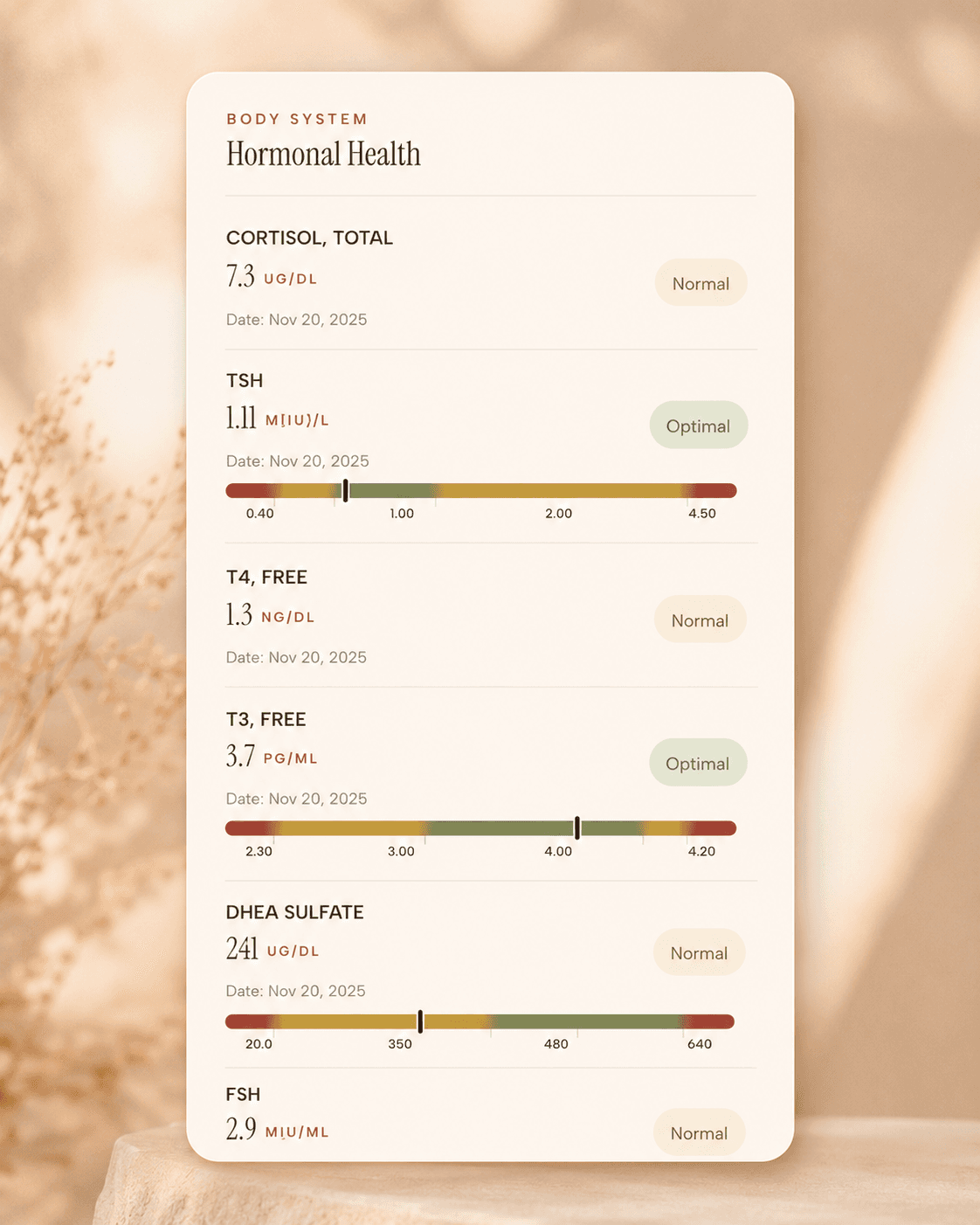
Your thyroid sets your body’s pace, including how quickly your brain processes information. When it runs slow, you can feel foggy, forgetful, and mentally “stuck,” and you may also notice dry skin, constipation, or feeling colder than other people. This matters because the fix is different from ADHD strategies—you need to identify whether thyroid hormone is part of the problem. A TSH test is the usual first screen, and it is especially worth checking if your focus issues came with low energy or unexplained weight changes.
Sleep debt and fragmented sleep
When you don’t get enough deep, uninterrupted sleep, your brain has trouble holding information in working memory, which is the mental notepad you use to stay on task. The result is classic “tab switching,” rereading the same sentence, and feeling wired-but-tired by afternoon. Sleep problems are extra common in women because of hormone shifts, caregiving schedules, and anxiety that spikes at night. If you snore, wake up with headaches, or feel unrefreshed after 7–9 hours in bed, ask about sleep apnea screening because it is underdiagnosed in women.
Hormone shifts changing your “bandwidth”
Estrogen and progesterone influence dopamine and serotonin, which are key for motivation and sustained attention. During the week before your period, after pregnancy, or in perimenopause, those shifts can make your brain feel less “sticky,” so you lose your place and get emotionally reactive to small stressors. The important takeaway is that timing matters: if your focus reliably worsens in a specific part of your cycle, you can plan demanding work for your higher-focus days and bring that pattern to your clinician. If symptoms are new and intense in your 40s, perimenopause is a common missing piece.
ADHD that was missed earlier
Many women learn to mask ADHD for years by over-preparing, people-pleasing, or relying on stress to create urgency. When life gets heavier—remote work, parenting, a harder job, perimenopause—that coping system breaks, and you suddenly can’t focus even though you’re trying harder than ever. You might notice time blindness, losing items, and starting many tasks but finishing few, especially when the task is boring. A formal evaluation can be life-changing because the treatment plan is specific, and it often includes coaching and medication options rather than “try harder” advice.
What actually helps you focus (without burning out)
Match your work to your attention cycles
Your brain focuses best in short sprints, especially when you’re already depleted. Try 25 minutes of one task, then a 5-minute break where you stand up and change rooms, because movement helps reset attention. If you can, schedule your hardest thinking for your best window, which for many people is 2–4 hours after waking. The win is not “more hours,” it is fewer context switches.
Fix the sleep problem first
If your focus is collapsing, treat sleep like the foundation rather than a bonus. Pick a consistent wake time for two weeks, and protect the last hour before bed from work and scrolling so your brain can downshift. If you wake at 3 a.m. with a racing mind, try writing a two-minute “tomorrow list” earlier in the evening so your brain stops rehearsing it at night. When sleep is the driver, even perfect productivity hacks won’t stick.
Use food to stabilize attention
Big blood sugar swings can feel like sudden brain fog, irritability, and a strong urge to snack while you work. A practical approach is to build breakfast and lunch around protein plus fiber, because that steadies energy and reduces the mid-morning crash that mimics poor focus. If you rely on coffee to skip meals, you can end up jittery and scattered instead of sharp. Try eating first, then using caffeine as a tool rather than a life support system.
Treat low iron or B12 if confirmed
If ferritin or vitamin B12 is low, replacing it can improve focus because you’re restoring oxygen delivery and nerve function rather than forcing productivity. The details matter: iron is absorbed better away from calcium, and some people tolerate every-other-day dosing more easily than daily. For B12, the right form and dose depend on how low you are and whether absorption is an issue. Work with a clinician on a plan, then recheck labs so you know the treatment is actually moving the needle.
Get targeted help for ADHD patterns
If your history fits ADHD, focus improves fastest when you combine external structure with the right medical support. That can mean body-doubling (working alongside someone), using a single capture system for tasks, and setting “start” alarms rather than “due” alarms. Medication is not the only option, but for many adults it is the difference between coping and functioning. The key is to pursue an evaluation instead of self-blaming, because shame is a terrible treatment plan.
Useful biomarkers to discuss with your clinician
Ferritin
Ferritin is your body's iron storage protein, reflecting total iron stores in the body. In functional medicine, ferritin assessment is crucial for identifying both iron deficiency and iron overload, conditions that can significantly impact energy levels and overall health. Low ferritin is the earliest sign of iron deficiency, often occurring before anemia develops. This can cause fatigue, weakness, restless leg syndrome, and cognitive impairment. Conversely, elevated ferritin may indicate iron overload, inflamma…
Learn moreVitamin B12
Vitamin B12 (cobalamin) is essential for DNA synthesis, red blood cell formation, neurological function, and energy metabolism. In functional medicine, we recognize that B12 deficiency is surprisingly common, especially in older adults, vegetarians, vegans, and those with digestive issues. B12 deficiency can cause irreversible neurological damage if left untreated. The vitamin is crucial for methylation reactions, which affect cardiovascular health, detoxification, and gene expression. Even subclinical deficienc…
Learn moreTSH
TSH is the master regulator of thyroid function, controlling the production of thyroid hormones T4 and T3. In functional medicine, we use narrower TSH ranges than conventional medicine to identify subclinical thyroid dysfunction early. Even mildly elevated TSH can indicate thyroid insufficiency, leading to fatigue, weight gain, depression, and metabolic dysfunction. TSH levels are influenced by stress, nutrient deficiencies, autoimmune conditions, and environmental toxins. Optimal TSH supports energy, metabolism…
Learn moreLab testing
Check ferritin, TSH, and vitamin B12 at Quest
starting from $99 panel with 100+ tests, one visit
No referral needed
About 1 week
Schedule online — results typically within a week
Clear next steps
Guidance included, with follow-up care available
HSA / FSA
Eligible for pre-tax health spending accounts
Pro Tips
Run a two-week “focus log” where you rate focus from 1–10 at three set times (mid-morning, mid-afternoon, evening) and write one sentence about sleep and meals; patterns show up faster than you think.
If you work from home, create a “start ritual” that takes under two minutes—same desk, same playlist, same first tiny task—because your brain learns the cue and stops negotiating.
When you can’t start, shrink the task until it is almost silly, like “open the document and write one ugly sentence,” because starting is often the real bottleneck in ADHD-adjacent focus problems.
If your focus tanks before your period, plan for it on purpose by moving deep-work earlier in the cycle and using that week for admin tasks, meetings, and cleanup work.
Do a caffeine audit for one week: keep your first dose after breakfast and stop by 2 p.m., then notice whether your evening focus and sleep improve; many people are surprised by the rebound.
Frequently Asked Questions
Why can’t I focus even when I’m motivated?
Motivation and focus use different brain circuits, so you can care a lot and still feel mentally slippery. Low iron stores (ferritin), thyroid slowdown (TSH), and sleep fragmentation are common “hidden” reasons your attention system can’t stay online. If this is new for you, checking ferritin, TSH, and vitamin B12 is a practical way to look for fixable drivers. Bring a short symptom timeline to your appointment so the pattern is clear.
Can low iron cause brain fog in women?
Yes. Low iron stores can reduce oxygen delivery and affect brain chemicals involved in alertness, which can feel like slow thinking and poor concentration even before you’re anemic. Ferritin is the key test, and many women with heavy periods have low ferritin without realizing it. If your ferritin is low, ask about iron replacement and rechecking levels in about 8–12 weeks.
Is lack of focus a sign of ADHD in women?
It can be, especially if you have a long history of distractibility, time blindness, procrastination, or feeling like you need last-minute pressure to function. Many women were missed as kids because they were not disruptive, and symptoms often become obvious when responsibilities pile up or hormones shift. A proper ADHD evaluation looks at childhood patterns, current impairment, and other causes like sleep and thyroid issues. If it resonates, write down 5–10 real-life examples before you seek an assessment.
Can thyroid problems make you feel unfocused?
Absolutely. When your thyroid runs slow, your brain can feel like it’s processing through mud, and you may also feel tired, cold, or constipated. TSH is the usual screening test, and if it is abnormal your clinician may add free T4 and thyroid antibodies to confirm the cause. If you suspect thyroid issues, track any other symptoms alongside your focus changes and share them with your clinician.
When should I worry about sudden trouble concentrating?
If your focus problem is sudden and severe, or it comes with confusion, fainting, new weakness, chest pain, or a “worst headache,” treat it as urgent and get immediate medical care. More commonly, a gradual decline that lasts more than 2–4 weeks is a sign to check basics like sleep, stress load, and targeted labs such as ferritin, TSH, and vitamin B12. If you’re also feeling depressed or unusually anxious, mention that too because mood symptoms can drive attention problems. The fastest next step is to book a visit and bring a short timeline of when this started and what changed.