Irregular Periods in the Morning: why it shows up when you wake
Irregular periods in the morning usually reflect hormone timing shifts, thyroid imbalance, or PCOS-related ovulation changes. Targeted labs at Quest—no referral needed.






Irregular periods in the morning usually aren’t caused by “morning” itself. They happen because hormone signals that control ovulation and the uterine lining shift over time, so bleeding starts unpredictably and you simply notice it first when you wake. Common drivers include not ovulating regularly, thyroid imbalance, and the hormone swings of perimenopause, and targeted labs can help sort out which one fits your body. The morning pattern can still feel real because your bladder is full, you stand up, and gravity helps pooled blood leave the vagina, which makes spotting look heavier right after you get out of bed. That can be reassuring if you’re worried something is suddenly “worse” overnight, but it can also mask what’s actually going on: a cycle that is changing underneath you. Below, you’ll see the most common reasons cycles become unpredictable, what you can do this month (not just “wait and see”), and which blood tests tend to give the clearest answers. If you want help interpreting your pattern, PocketMD can walk through your timing and symptoms, and VitalsVault labs can help you check the most relevant hormones without a referral.
Why your period feels “morning-irregular”
You’re not ovulating consistently
When you don’t release an egg regularly, your body often makes less progesterone, which is the hormone that “organizes” the uterine lining. The lining can build up and then shed at unpredictable times, so you might go weeks without bleeding and then suddenly wake up to a heavier flow. A clue is cycles that vary by more than about a week month to month, especially if you also notice acne, chin hair, or weight changes.
PCOS-style hormone pattern
With polycystic ovary syndrome (PCOS), your ovaries may get stuck in a start-and-stop rhythm, so follicles begin to grow but ovulation doesn’t reliably happen. That can lead to long gaps, light “false starts,” or spotting that seems to show up first thing in the morning because it’s been collecting overnight. If your cycles are often longer than 35 days or you’re trying to conceive, this is one of the most useful patterns to evaluate with labs and a clinician.
Thyroid imbalance is nudging your cycle
Your thyroid sets the pace for many body systems, including how your brain talks to your ovaries. When thyroid hormone is too low or too high, you can see longer cycles, skipped periods, or heavier bleeding that surprises you when you wake. If your irregular periods come with new fatigue, hair shedding, heat or cold intolerance, or constipation, thyroid testing is a practical first step.
High prolactin is blocking ovulation
Prolactin is the milk-making hormone, but when it runs high outside of breastfeeding it can quiet the brain signals that trigger ovulation. The result can be missed periods, very light bleeding, or spotting that seems random and often gets noticed in the morning. If you’ve had nipple discharge, headaches, or you recently started a medication that can raise prolactin, ask specifically for a prolactin level rather than assuming it’s “just stress.”
Perimenopause hormone swings
In your late 30s to 50s, estrogen and progesterone can swing more dramatically from month to month as your ovaries transition toward menopause. That can create cycles that are shorter one month and longer the next, and bleeding can start with a small morning streak before turning into a normal flow later in the day. If you’re also getting night sweats, sleep changes, or new PMS-like mood shifts, the timing may be part of this transition rather than a sudden disease.
What actually helps you get predictable cycles
Track the pattern that matters
Instead of only counting “days between periods,” track three things for two cycles: the first day of true flow, any mid-cycle spotting, and whether you had ovulation signs (cervical mucus changes or a positive ovulation test). This helps you separate a real period from breakthrough spotting, which often looks worse in the morning because blood pools overnight. Bring that simple timeline to your appointment or PocketMD chat, because it speeds up the right workup.
Rule out pregnancy early
If there is any chance you could be pregnant, take a home pregnancy test the first day you notice unexpected bleeding, even if it seems light and “period-like.” Early pregnancy bleeding can be subtle and is often noticed on wiping in the morning. If the test is positive or the bleeding is heavy with one-sided pelvic pain or dizziness, get urgent care that day.
Address PCOS drivers, not just bleeding
If PCOS fits your symptoms, the goal is to restore more regular ovulation and protect the uterine lining, not just to “make a period happen.” For many people, improving insulin sensitivity through a structured plan (often including weight-neutral nutrition changes, resistance training, and sometimes medication like metformin) makes cycles more predictable over a few months. If you’re not trying to conceive, your clinician might also discuss hormonal contraception or cyclic progesterone to prevent prolonged lining buildup.
Treat thyroid issues when present
If your TSH suggests hypothyroidism or hyperthyroidism, treating the thyroid problem often improves cycle regularity because your ovary signals stabilize. You usually do not need to chase multiple sex-hormone tests first if the thyroid is clearly off. Ask when to recheck TSH after starting or adjusting treatment, because the cycle response often lags behind the lab improvement by a couple of months.
Know when bleeding needs faster evaluation
Irregular bleeding deserves prompt attention if you are soaking through a pad or tampon every hour for two hours, passing large clots repeatedly, or feeling faint. It also matters if you have bleeding after sex, bleeding between periods that persists for more than two cycles, or you’re over 45 with new heavy bleeding, because your clinician may want to rule out uterine lining problems. In those situations, don’t wait for your next “normal” cycle to show up.
Useful biomarkers to discuss with your clinician
TSH
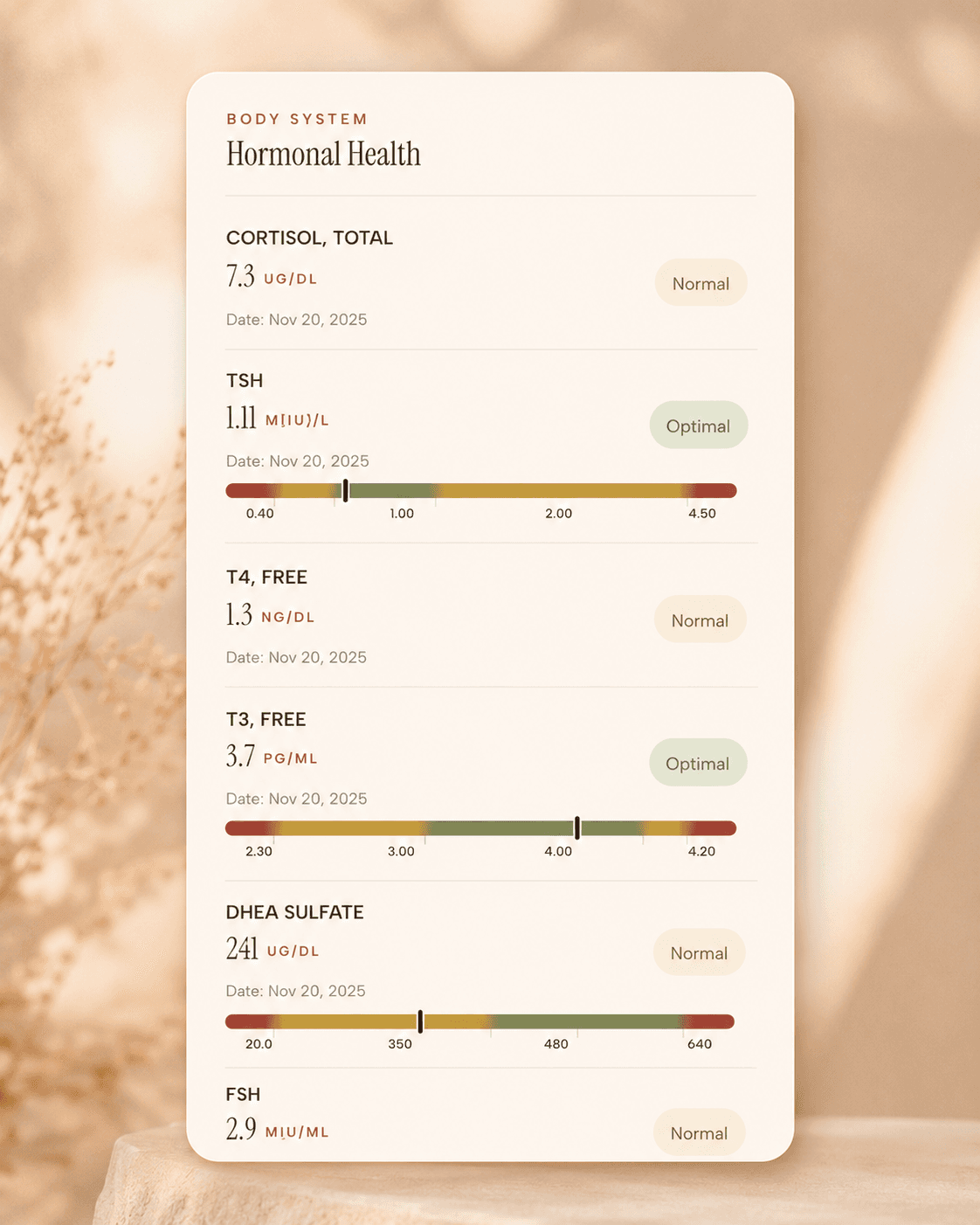
TSH is the master regulator of thyroid function, controlling the production of thyroid hormones T4 and T3. In functional medicine, we use narrower TSH ranges than conventional medicine to identify subclinical thyroid dysfunction early. Even mildly elevated TSH can indicate thyroid insufficiency, leading to fatigue, weight gain, depression, and metabolic dysfunction. TSH levels are influenced by stress, nutrient deficiencies, autoimmune conditions, and environmental toxins. Optimal TSH supports energy, metabolism…
Learn moreProgesterone
While primarily known as a female hormone, progesterone plays important roles in men including neuroprotection, sleep quality, and as a precursor to other hormones. In functional medicine, male progesterone assessment helps evaluate overall hormone synthesis pathways and stress response. Low progesterone in men may indicate chronic stress or adrenal dysfunction, while optimal levels support brain health and sleep quality. Progesterone in men supports neurological health, sleep quality, and serves as a building b…
Learn moreEstradiol
Estradiol in men is produced from testosterone via aromatase enzyme. In functional medicine, we recognize that men need optimal estradiol levels for bone health, cognitive function, and cardiovascular protection. However, excessive estradiol can suppress testosterone production and cause feminizing effects. The testosterone-to-estradiol ratio is crucial for male health, with optimal balance supporting vitality while preventing estrogen dominance. Balanced estradiol levels in men support bone health and cognitive…
Learn moreLab testing
Check TSH, prolactin, and AMH at Quest
starting from $99 panel with 100+ tests, one visit
No referral needed
About 1 week
Schedule online — results typically within a week
Clear next steps
Guidance included, with follow-up care available
HSA / FSA
Eligible for pre-tax health spending accounts
Pro Tips
Do a two-cycle “morning check” log: when you first notice blood after waking, how much shows on wiping versus in underwear, and whether it turns into steady flow by midday. This helps you tell pooled blood from true heavy bleeding.
If your cycles are unpredictable, use ovulation tests as a detective tool, not a pass/fail grade. Testing daily for 10–14 days starting around day 10 can show whether you are getting LH surges at all, which is a big clue for anovulation.
If you suspect prolactin is involved, avoid breast stimulation and intense exercise right before the blood draw, and try to schedule the test in the morning after a calmer start. A small change in how you test can prevent a false alarm.
If you are an athlete or you’ve been eating in a calorie deficit, write down your weekly training load and whether you’ve had stress fractures, hair thinning, or feeling cold. Low energy availability can shut down ovulation even when you feel “fit.”
If you have frequent spotting, take a photo of the amount on a pad or liner (for your own record). It sounds silly, but it makes it much easier to communicate “light,” “moderate,” or “heavy” accurately when you’re anxious in an appointment.
Frequently Asked Questions
Why do I only notice my period in the morning?
Overnight, blood can collect in the vagina while you’re lying down, and then when you stand up in the morning it comes out all at once, which makes it feel like the bleeding “started” at wake-up. That effect is common with light flow or spotting. If the bleeding becomes heavy quickly or you’re soaking a pad hourly, treat it as heavy bleeding rather than a normal pooling effect and get checked.
Is morning spotting a sign of pregnancy?
It can be, especially if the bleeding is lighter than your usual period and you have breast tenderness, nausea, or unusual fatigue. Take a home pregnancy test the first day you notice unexpected bleeding, because early pregnancy bleeding is often only seen on wiping in the morning. If you have a positive test plus one-sided pelvic pain or dizziness, seek urgent care.
Can thyroid problems cause irregular periods?
Yes. Both low thyroid function and high thyroid function can disrupt ovulation and change how the uterine lining builds and sheds, which can show up as skipped periods or heavier, unpredictable bleeding. A TSH test is the usual starting point, and many people feel best when TSH is roughly around 0.5–2.5 mIU/L, depending on the situation. If your cycles changed along with fatigue, hair shedding, or temperature intolerance, ask for TSH soon.
What labs are most helpful for irregular periods?
If your main issue is unpredictability, three high-yield tests are TSH, prolactin, and AMH because they can point toward thyroid-driven cycle disruption, prolactin-related ovulation suppression, or an ovarian reserve pattern that fits PCOS or perimenopause. Results are most useful when paired with your cycle timeline and symptoms, not viewed in isolation. If you’re trying to conceive or have signs of high androgens, your clinician may add other hormones based on what these show.
When should I worry about irregular bleeding and see a doctor?
Go sooner if you are soaking through a pad or tampon every hour for two hours, feeling faint, or passing large clots repeatedly. You should also book an evaluation if you have bleeding after sex, persistent bleeding between periods for more than two cycles, or you’re over 45 with new heavy or frequent bleeding. Bring your last two months of dates and a quick note about morning-only spotting versus all-day flow to make the visit more productive.