Irregular Periods at Night: Why It Happens and What Helps
Irregular periods at night usually come from hormone shifts, thyroid problems, or ovulation changes. Targeted labs are available—no referral needed.






Irregular periods at night usually aren’t caused by “nighttime” itself. They’re more often a sign that ovulation is inconsistent, your uterine lining is shedding unpredictably, or a hormone driver like thyroid function is off. A few targeted blood tests can help you figure out which pattern fits your body. What makes this confusing is that bleeding often becomes noticeable when you finally slow down, use the bathroom, or lie down, so it can feel like it’s “starting at night” even if the hormonal shift happened days earlier. Sometimes it’s harmless timing. Other times it’s your body waving a flag about stress, under-fueling, PCOS, perimenopause, or a thyroid issue. If you’re trying to make sense of your pattern, PocketMD can help you map symptoms to likely causes, and VitalsVault labs can help you confirm what’s driving it. If you’re soaking through a pad or tampon every hour for several hours, passing large clots, feeling faint, or you could be pregnant, get urgent care.
Why your period acts up at night
You didn’t ovulate this cycle
When you don’t release an egg (anovulation), your body often makes less progesterone, which is the hormone that “organizes” the uterine lining. Without that steady signal, the lining can build unevenly and then shed in unpredictable bursts, which can show up as spotting or a period that seems to start out of nowhere at night. If your cycles swing widely in length or you go months without bleeding and then bleed heavily, this is a common explanation.
PCOS hormone pattern
With polycystic ovary syndrome (PCOS), higher androgens and insulin resistance can interfere with regular ovulation, so bleeding becomes irregular rather than monthly. You might notice acne, more facial/body hair, or weight changes along with cycles that arrive late and then linger. The takeaway is that irregular bleeding in PCOS isn’t just inconvenient — going long stretches without a true period can let the lining thicken, so it’s worth getting evaluated rather than just “waiting it out.”
Perimenopause hormone swings
In your late 30s to 50s, estrogen and progesterone can swing month to month as your ovaries transition, which makes timing and flow less predictable. That can look like a period that starts at night, stops, and then restarts, because the lining is responding to shifting hormones instead of a smooth cycle. If you’re also getting night sweats, sleep disruption, or new PMS mood changes, perimenopause moves higher on the list.
Thyroid imbalance affects your cycle
Your thyroid sets the pace for a lot of body systems, including the signals between your brain and ovaries. When thyroid function is low or high, you can get longer cycles, missed periods, or heavier bleeding, and the timing can feel random because ovulation timing shifts. If you’ve also noticed unusual fatigue, hair shedding, heat/cold intolerance, or a racing heart, a simple TSH test is a very practical next step.
Stress or under-fueling shuts signals down
If you’re training hard, losing weight, not eating enough, or under chronic stress, your brain can dial down reproductive hormones to conserve energy (functional hypothalamic amenorrhea). Sometimes that shows up as skipped periods, but it can also show up as light, irregular bleeding that seems to arrive at odd times because ovulation isn’t happening reliably. The key clue is context: a recent jump in exercise volume, calorie restriction, or major life stress often comes before the cycle changes.
What actually helps you get predictable cycles
Track the pattern that matters
Instead of only marking “period days,” track cycle length, flow heaviness, and any spotting, and note whether bleeding follows sex, intense workouts, or a stressful week. A 2–3 month log often reveals whether you’re dealing with missed ovulation, perimenopause-style variability, or a trigger pattern. Bring that log to a clinician visit because it speeds up decision-making more than memory ever will.
Rule out pregnancy early
If there’s any chance you could be pregnant, take a home pregnancy test the first day you notice unexpected bleeding, even if it feels like a “weird period.” Early pregnancy bleeding can mimic a light period, and knowing quickly changes what you should do next. If the test is positive or you have one-sided pelvic pain, don’t wait on this — get same-day medical advice.
Address thyroid or prolactin issues
If labs show a thyroid problem or high prolactin, treating that driver often makes cycles more regular because the brain-ovary signaling stabilizes. This is one of the more satisfying “fix the root cause” scenarios, and it can also improve sleep, energy, and mood. Ask specifically whether your result is optimal for symptoms, not just “in range,” because borderline values can still matter.
PCOS: focus on ovulation support
With PCOS, the goal is often to restore more consistent ovulation and protect the uterine lining, which may involve nutrition changes that improve insulin sensitivity, targeted medications, or hormonal contraception depending on your goals. You don’t have to choose between “do nothing” and “go on the pill forever.” If fertility is a goal, bring that up early because the plan looks different when you’re actively trying to conceive.
Get checked for heavy or frequent bleeding
If you’re bleeding more than every 21 days, bleeding longer than 7 days, or needing to change protection overnight because you’re soaking through, you deserve a workup. Sometimes the issue is hormonal, but sometimes it’s a structural problem like a fibroid or a polyp, which is diagnosed with an exam and often an ultrasound. The practical move is to book a visit and show your tracking notes so you’re taken seriously and evaluated efficiently.
Lab tests that help explain irregular periods at night
Progesterone
While primarily known as a female hormone, progesterone plays important roles in men including neuroprotection, sleep quality, and as a precursor to other hormones. In functional medicine, male progesterone assessment helps evaluate overall hormone synthesis pathways and stress response. Low progesterone in men may indicate chronic stress or adrenal dysfunction, while optimal levels support brain health and sleep quality. Progesterone in men supports neurological health, sleep quality, and serves as a building b…
Learn moreTSH
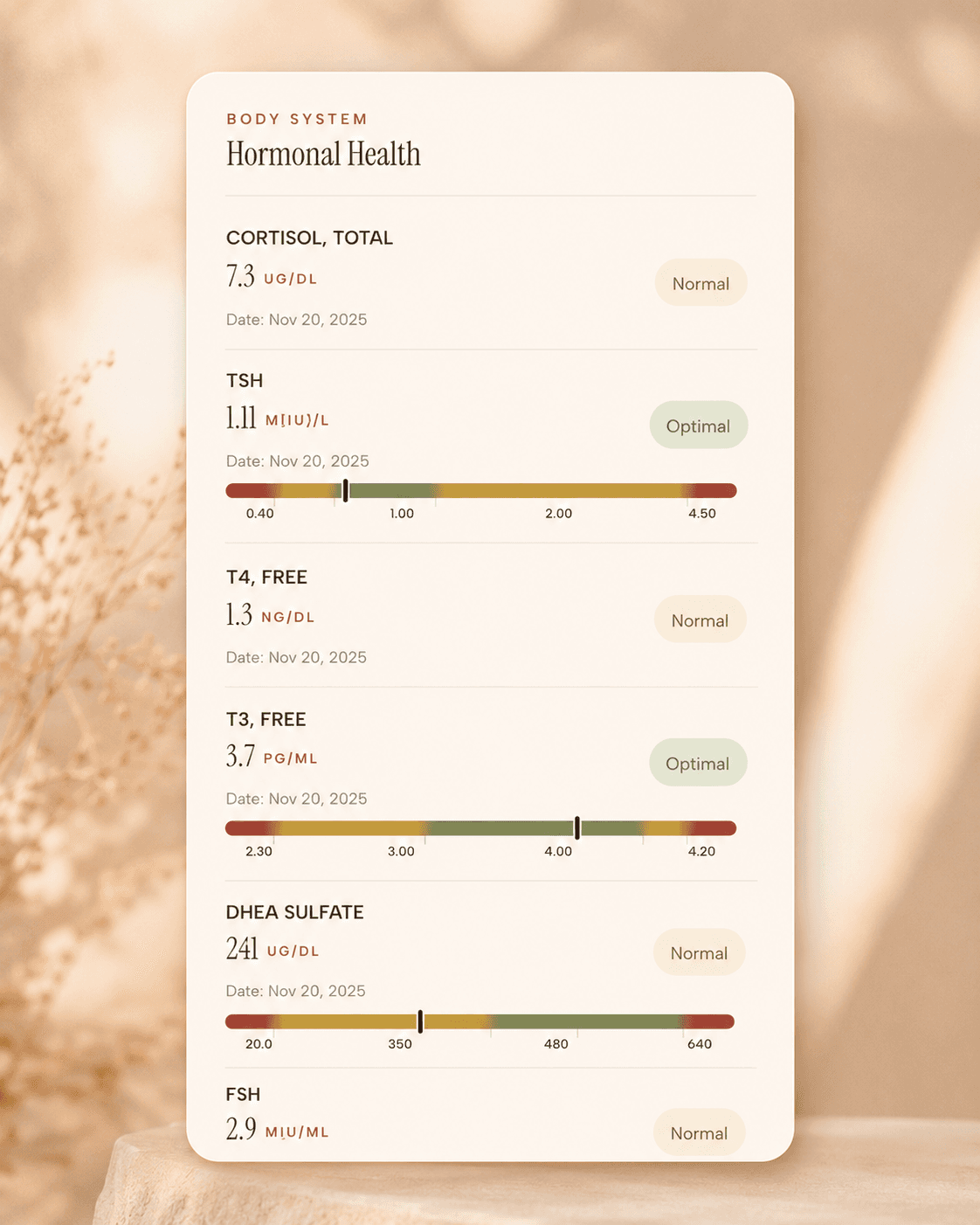
TSH is the master regulator of thyroid function, controlling the production of thyroid hormones T4 and T3. In functional medicine, we use narrower TSH ranges than conventional medicine to identify subclinical thyroid dysfunction early. Even mildly elevated TSH can indicate thyroid insufficiency, leading to fatigue, weight gain, depression, and metabolic dysfunction. TSH levels are influenced by stress, nutrient deficiencies, autoimmune conditions, and environmental toxins. Optimal TSH supports energy, metabolism…
Learn moreEstradiol
Estradiol in men is produced from testosterone via aromatase enzyme. In functional medicine, we recognize that men need optimal estradiol levels for bone health, cognitive function, and cardiovascular protection. However, excessive estradiol can suppress testosterone production and cause feminizing effects. The testosterone-to-estradiol ratio is crucial for male health, with optimal balance supporting vitality while preventing estrogen dominance. Balanced estradiol levels in men support bone health and cognitive…
Learn moreLab testing
Get TSH, prolactin, and AMH checked at Quest
starting from $99 panel with 100+ tests, one visit
No referral needed
About 1 week
Schedule online — results typically within a week
Clear next steps
Guidance included, with follow-up care available
HSA / FSA
Eligible for pre-tax health spending accounts
Pro Tips
If your bleeding seems to “start at night,” do a quick reality check by looking at your underwear or liner earlier in the day for two cycles. Many people only notice bleeding once they lie down or use the bathroom, which makes the timing feel more mysterious than it is.
Use a simple 0–3 flow scale (spotting, light, medium, heavy) and write down the first day you need a tampon or pad. That single detail helps separate true period starts from mid-cycle spotting.
If you’re an athlete or you’ve been dieting, add one data point to your log: whether you ate a real dinner with carbs and protein. Under-fueling often shows up first as sleep disruption and cycle weirdness before it shows up on the scale.
When you get labs like prolactin, try to do the blood draw after you’ve been awake for a bit and you’re not rushing in stressed. Prolactin can bump up with stress and poor sleep, and you want a result you can trust.
If you’re waking up to change protection, take a photo of the product (for your own record) and note how many hours it took to soak. That makes it much easier to communicate “how heavy” to a clinician without guessing.
Frequently Asked Questions
Why does my period always start at night?
Your period doesn’t have a built-in “night schedule,” but you often notice bleeding when you finally slow down, lie down, or use the bathroom. The underlying driver is usually ovulation timing, which can shift with stress, PCOS, perimenopause, or thyroid changes. If it’s happening with spotting between periods or big swings in cycle length, consider checking TSH and prolactin and tracking your cycle for 2–3 months.
Is nighttime spotting the same as a period?
Not always. Spotting is typically light enough that you only need a liner, while a true period usually progresses to a steady flow that requires a pad or tampon. Spotting can happen around ovulation, after sex, or when hormones are fluctuating, so write down when it occurs relative to your last period. If spotting is frequent, happens after sex, or comes with pelvic pain, book an evaluation.
Can PCOS cause bleeding at weird times?
Yes, because PCOS often disrupts regular ovulation, which means the uterine lining can shed unpredictably. You might go weeks without bleeding and then have prolonged or on-and-off bleeding, sometimes noticed most at night. If you suspect PCOS, pairing your symptom log with labs and a clinician visit helps you protect the uterine lining and plan for fertility if that matters to you.
What blood tests help explain irregular periods?
For irregular timing and unpredictable bleeding, TSH can reveal a thyroid driver, prolactin can show an ovulation-suppressing hormone issue, and AMH can add context about ovarian reserve or a PCOS-style pattern. These tests don’t replace an exam, but they often narrow the “why” quickly. If you order labs, bring the results and your cycle log to a clinician so the numbers are interpreted in context.
When should I worry about irregular bleeding at night?
Worry less about the clock and more about the pattern and severity. Get urgent care if you’re soaking through a pad or tampon every hour for several hours, you feel faint, you have severe one-sided pelvic pain, or you could be pregnant. For ongoing issues like bleeding more often than every 21 days, bleeding longer than 7 days, or new bleeding after sex, schedule a medical evaluation and bring your tracking notes.