Why Your Period Gets Irregular When You Haven’t Eaten Yet
Irregular periods before eating often come from low energy availability, blood sugar swings, or thyroid shifts. Targeted labs available—no referral needed.






Irregular periods before eating usually means your brain is reading “not enough fuel” or “unstable fuel,” which can dial down ovulation and make your cycle unpredictable. The most common drivers are low energy availability (not eating enough for your training or life), blood sugar swings that stress your hormone signals, and thyroid changes that shift cycle timing. A few targeted labs can help you figure out which one fits your body. This symptom is confusing because the timing makes it feel like food is directly “causing” your period to change, but it’s usually the bigger pattern around meals that matters: long gaps, dieting, intense training, or a cycle that’s already on the edge from PCOS or perimenopause. The good news is that many people can improve cycle regularity once they identify the pattern and correct the underlying signal. If you want help sorting your story into the most likely bucket, PocketMD can walk through your symptoms with you, and Vitals Vault labs can help confirm what’s happening biologically.
Why your cycle gets weird on an empty stomach
Not enough fuel for your body
When you consistently eat less energy than your body needs, your brain protects you by turning down reproductive hormones, which can delay or stop ovulation. This is called low energy availability, and it can happen with dieting, busy schedules, or “healthy eating” that is accidentally too low-calorie. It often shows up as longer cycles, missed periods, or spotting that seems to come and go depending on how regularly you’ve been eating. The takeaway is simple but not easy: if your periods get more irregular during weeks you skip meals, your body may be asking for steadier fuel, not a new supplement.
High training load, low recovery
If you train hard, your body treats long stretches without food as an extra stressor on top of workouts. Stress hormones can blunt the hormone pulses that trigger ovulation, so your period can become late, light, or disappear even if you don’t feel “stressed.” You might notice that your cycle gets most unpredictable during heavy mileage, double sessions, or when you’re trying to “lean out.” A practical clue is whether adding a pre-workout snack or moving more calories earlier in the day makes your cycle more consistent over the next 2–3 months.
Blood sugar swings affect hormones
Long gaps between meals can lead to blood sugar dips, and your body responds by releasing adrenaline and cortisol to bring sugar back up. That rollercoaster can interfere with the hormone signaling between your brain and ovaries, especially if you already have insulin resistance. It can feel like shakiness, irritability, or waking at night hungry, and over time it can pair with irregular cycles. If you suspect this, the most useful next step is stabilizing breakfast and seeing whether cravings and cycle timing calm down together.
PCOS and insulin resistance
With polycystic ovary syndrome (PCOS), your ovaries can get “stuck” in a pattern where follicles don’t mature and ovulation doesn’t happen regularly. Going a long time without eating can make insulin and stress-hormone patterns more erratic, which can worsen the underlying signal even if you are not eating a lot of sugar. You might also notice acne, extra facial hair, or weight changes, but some people have PCOS at any size. The key takeaway is that irregular periods tied to meal timing often improve when insulin resistance is addressed, not when you simply “wait it out.”
Thyroid or prolactin imbalance
Thyroid hormone sets the pace for many body systems, and when it’s too low or too high, your cycle can become unpredictable regardless of what you eat. Another common disruptor is high milk hormone (prolactin), which can suppress ovulation and sometimes causes nipple discharge or headaches. These problems can masquerade as “food-related” because fatigue and appetite changes often come with them, which changes how and when you eat. If your irregularity is new, persistent, or paired with hair loss, heat intolerance, or breast discharge, labs are a high-yield next step.
What actually helps your cycle normalize
Anchor breakfast within 1 hour
If your body is sensitive to long gaps without food, starting the day with a real breakfast can be a game-changer. Aim for protein plus fiber plus a slow carb, because that combination tends to prevent the mid-morning crash that drives stress hormones. You are not doing this to “eat more,” but to send a steady-fuel signal to your brain. Give it at least 6–8 weeks, since cycles change slowly.
Stop the long fasting windows
If you regularly go 14–18 hours without eating, try shortening the window for a few months and see what your cycle does. Many people do best with a consistent eating rhythm, even if total calories stay similar, because your brain reads predictability as safety. This matters most if you’re already on the edge with heavy training, recent weight loss, or a history of missed periods. A simple approach is to add one planned snack and keep it boring and repeatable.
Fuel workouts like they count
Training without fuel can look “disciplined,” but your ovaries often interpret it as a threat. A small carb-and-protein snack before or after workouts can reduce the stress response and support the hormone pulses that drive ovulation. You will usually notice the first changes in recovery and sleep before you notice cycle changes. If you track anything, track whether your luteal phase (the 10–14 days after ovulation) becomes more consistent over time.
Treat insulin resistance directly
If PCOS or insulin resistance is part of your picture, focusing on blood sugar stability tends to help more than chasing “hormone-balancing” teas. Strength training, a protein-forward breakfast, and pairing carbs with protein or fat can lower insulin spikes, which can support more regular ovulation. Some people also benefit from clinician-guided options like metformin or inositol, depending on labs and goals. The practical next step is to confirm insulin resistance with fasting insulin (not just glucose) so you’re not guessing.
Address thyroid or prolactin causes
If labs show a thyroid problem or high prolactin, the fix is usually specific and effective, but it needs the right diagnosis. Treating hypothyroidism often improves cycle length and bleeding patterns within a few cycles, and treating high prolactin can restore ovulation and fertility. This is one of the situations where “just eat differently” won’t solve the root issue. If you have severe headaches, vision changes, or milky discharge from the breast, bring it up promptly because it changes how urgently you should be evaluated.
Useful biomarkers to discuss with your clinician
Insulin
Insulin is a master metabolic hormone that regulates glucose uptake, fat storage, and numerous cellular processes. In functional medicine, fasting insulin levels are one of the earliest and most sensitive markers of metabolic dysfunction. Elevated insulin (hyperinsulinemia) often precedes diabetes by years or decades and is central to metabolic syndrome. High insulin levels promote fat storage, inflammation, and contribute to numerous chronic diseases including cardiovascular disease, PCOS, and certain cancers.…
Learn moreGlucose
Fasting glucose is a fundamental marker of glucose metabolism and insulin function. In functional medicine, we recognize that even 'normal' glucose levels in the upper range may indicate early insulin resistance. Optimal fasting glucose reflects efficient glucose regulation and insulin sensitivity. Elevated fasting glucose suggests the body's inability to maintain normal glucose levels overnight, indicating hepatic insulin resistance or insufficient insulin production. This marker is essential for early detectio…
Learn moreTSH
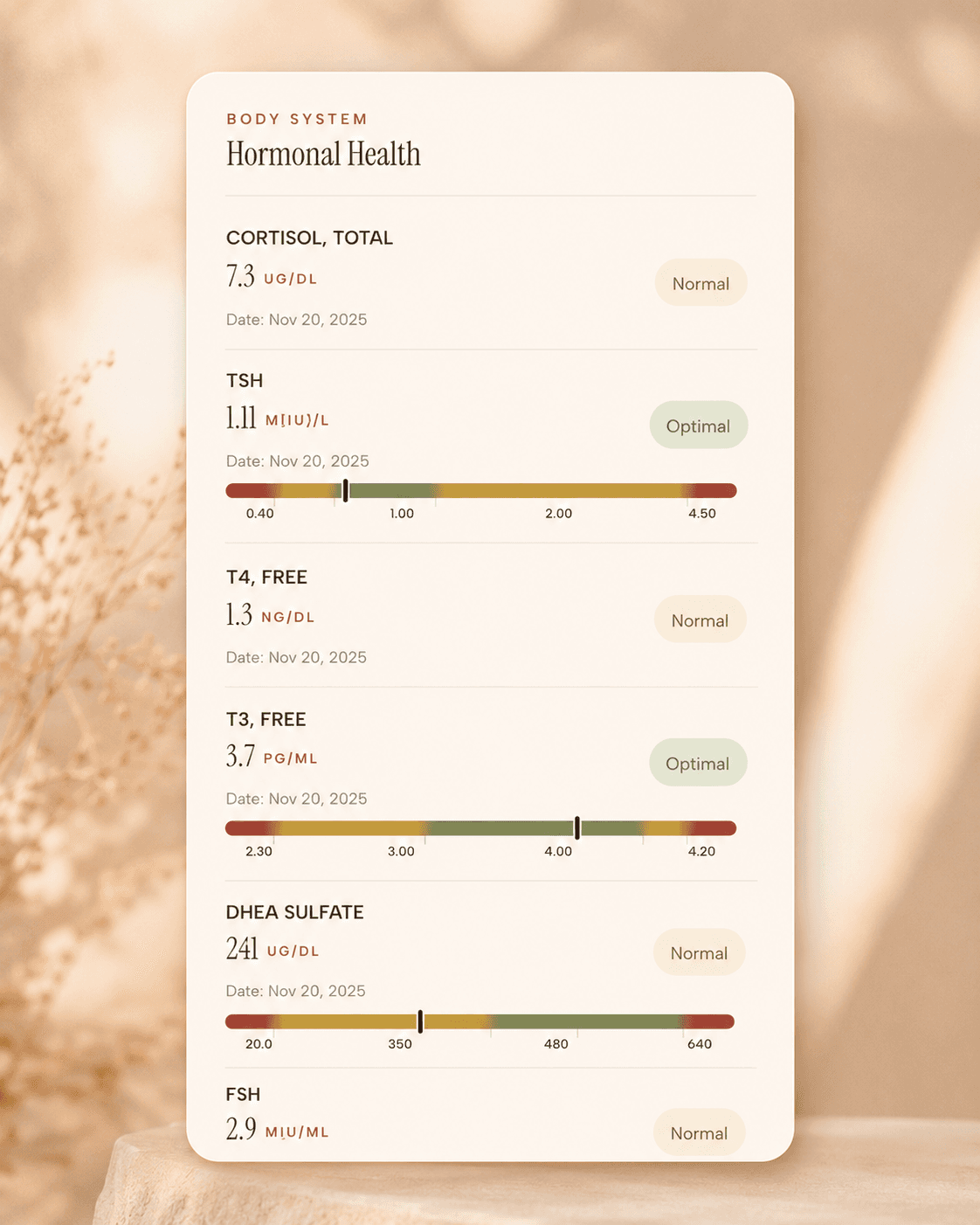
TSH is the master regulator of thyroid function, controlling the production of thyroid hormones T4 and T3. In functional medicine, we use narrower TSH ranges than conventional medicine to identify subclinical thyroid dysfunction early. Even mildly elevated TSH can indicate thyroid insufficiency, leading to fatigue, weight gain, depression, and metabolic dysfunction. TSH levels are influenced by stress, nutrient deficiencies, autoimmune conditions, and environmental toxins. Optimal TSH supports energy, metabolism…
Learn moreLab testing
Get TSH, prolactin, and fasting insulin checked at Quest
starting from $99 panel with 100+ tests, one visit
No referral needed
About 1 week
Schedule online — results typically within a week
Clear next steps
Guidance included, with follow-up care available
HSA / FSA
Eligible for pre-tax health spending accounts
Pro Tips
Try a 2-cycle experiment: for the next 8 weeks, eat within an hour of waking and avoid going more than 5 hours without food during the day, then compare cycle length and spotting to the prior two cycles.
If you train, add a “fuel minimum” on workout days, such as 30–60 g of carbs plus some protein within 2 hours of training, and watch whether sleep and luteal-phase symptoms improve first.
Use one simple marker of ovulation, like basal body temperature or ovulation predictor strips, because knowing whether you are ovulating changes what “irregular” means and what to do next.
If you suspect PCOS, don’t rely on symptoms alone; write down your typical cycle length range and any acne or hair changes, because that history helps your clinician interpret fasting insulin and other labs correctly.
When you get prolactin tested, schedule a morning draw and skip intense exercise beforehand, because a falsely high result can send you down an unnecessary rabbit hole.
Frequently Asked Questions
Can skipping breakfast really make your period irregular?
Yes, it can, especially if skipping breakfast is part of a bigger pattern of low energy intake or long fasting windows. Your brain needs a steady “we’re safe and fed” signal to keep ovulation on schedule, and long gaps can push stress hormones up. If your cycles get longer or you start spotting during weeks you skip meals, try anchoring breakfast for 6–8 weeks and track whether cycle length stabilizes.
Is this a sign of PCOS or just dieting?
It can be either, and sometimes it is both at once. PCOS is more likely if you have cycles longer than about 35 days plus signs of higher androgens like acne or extra facial hair, while dieting-related cycle disruption is more likely after weight loss, heavy training, or consistently low intake. A fasting insulin test can help separate “insulin-driven” irregularity from “fuel-stress” irregularity, so you’re not guessing.
What labs should I get for irregular periods when I don’t eat?
A practical starting trio is TSH, prolactin, and fasting insulin because they cover thyroid pace-setting, pituitary suppression of ovulation, and insulin resistance. If those are normal but you still have missed periods, your clinician may add tests like pregnancy, iron studies, or ovarian hormones depending on your age and symptoms. Bring a 3-month cycle log to your appointment so results can be interpreted in context.
How long does it take for periods to regulate after eating more regularly?
Most people need at least 6–12 weeks to see a clear change because ovulation and the uterine lining respond over multiple cycles. You might notice earlier wins like better sleep, fewer cravings, or less shakiness before meals, which are signs your stress-hormone pattern is calming down. If you have gone 90 days without a period, it is worth getting evaluated rather than waiting indefinitely.
When should I worry about irregular periods and get checked urgently?
You should get checked promptly if you might be pregnant, if you have very heavy bleeding that soaks a pad or tampon every hour for several hours, or if you feel dizzy or faint with bleeding. It is also worth a timely evaluation if you have milky nipple discharge, severe headaches, or vision changes because high prolactin can be involved. If none of those apply but irregularity persists for 3 months, schedule a visit and consider labs like TSH, prolactin, and fasting insulin.
Research worth knowing about
Endocrine Society guideline on functional hypothalamic amenorrhea (low energy availability and stress-related cycle loss)
International evidence-based guideline for PCOS (diagnosis and management, including metabolic testing)
American Thyroid Association pregnancy guideline (TSH targets often used when fertility is a concern)