Blood Pressure Spikes in Teenagers: What They Mean and What Helps
Blood pressure spikes in teenagers often come from stress surges, caffeine or stimulants, or an inaccurate cuff. Targeted labs—no referral needed.






Blood pressure spikes in teenagers usually happen because your stress system kicks in hard, because caffeine or stimulants push your heart and blood vessels, or because the reading itself is off due to cuff size or technique. Less often, repeated spikes are a clue to an underlying issue such as kidney-related blood pressure problems or a hormone imbalance. A few targeted labs and the right kind of blood pressure tracking can help sort out which one fits you. Spiky readings are scary because you immediately think “stroke,” but in teens the bigger risk is missing a pattern that needs attention or getting stuck in an anxiety loop that keeps numbers high. The tricky part is that blood pressure is very sensitive to sleep, pain, dehydration, and emotions, and teens have a nervous system that can swing fast. This guide walks you through the most common reasons spikes happen, what to do when a number surprises you, and which tests can be useful. If you want help interpreting your log and deciding what to do next, PocketMD can talk it through with you, and Vitals Vault labs can help you check for common medical drivers.
Why your blood pressure spikes as a teen
Stress surge and adrenaline
When your body thinks it needs to perform or protect you, it releases stress hormones that make your heart beat harder and your blood vessels tighten. That can push your top number up quickly, and you might feel shaky, hot, or like your heart is “pounding.” The takeaway is that a spike right after an argument, a test, a scary thought, or even rushing up stairs often says more about your stress response than your baseline blood pressure.
Caffeine, nicotine, or stimulants
Energy drinks, pre-workout powders, nicotine vapes, and some ADHD medications can all raise blood pressure for a few hours by increasing alertness signals in your nervous system. You may notice the spike comes with jitteriness, nausea, or trouble falling asleep later. If your spikes cluster on days you use these, try a two-week “no stimulants” experiment and see whether your numbers settle, then bring that pattern to your clinician.
Wrong cuff size or technique
A cuff that is too small for your arm can read falsely high, and measuring right after activity or while talking can do the same. This matters because it can make you think you have a medical problem when you actually have a measurement problem. Use an upper-arm cuff, sit quietly for five minutes with your feet on the floor, and take two readings one minute apart; if the second is much lower, the first was probably a “startle” number.
Sleep loss, pain, or dehydration
Poor sleep and pain turn up your stress hormones, and dehydration makes your heart work harder to move blood around, which can raise readings. You might notice spikes after late nights, intense practices, headaches, or stomach illness. The practical move is to treat the trigger first, then recheck when you feel calmer and hydrated, because that second number is usually closer to your true baseline.
Kidney or hormone-related hypertension
If spikes are frequent, happen at rest, or come with headaches, chest tightness, or shortness of breath, you need to consider “secondary” causes, meaning blood pressure that is being driven by something else. In teens, kidney issues are a common driver, and certain hormone problems can also push pressure up by changing salt balance and blood vessel tone. The takeaway is not to panic, but to take repeated high readings seriously and ask about a proper evaluation, especially if you have a family history or your readings stay high outside stressful situations.
What actually helps when a reading spikes
Repeat the reading the right way
One high number is a data point, not a diagnosis, so your first job is to make it a good data point. Sit quietly for five minutes, loosen tight sleeves, keep your arm supported at heart level, and take two more readings one minute apart. If the average drops a lot, you likely caught a temporary surge or a technique issue rather than your true resting pressure.
Use slow breathing to lower the surge
When your stress system is driving the spike, your body responds to slow exhale-heavy breathing because it signals “you’re safe.” Try breathing in for four seconds and out for six seconds for three to five minutes, then recheck. This is not “mind over matter”; it is a direct way to nudge your nervous system away from adrenaline.
Cut the obvious trigger for 14 days
If you suspect energy drinks, vaping, decongestants, or pre-workout supplements, take a clean break for two weeks and track your readings. This works because it removes the most common “hidden” blood pressure drivers in teens, and the change can be dramatic. If you take a prescribed stimulant, do not stop it on your own, but do ask your prescriber about timing, dose, and whether your readings suggest an adjustment.
Build a simple home BP plan
A useful plan is two readings in the morning and two in the evening for seven days, taken when you are calm and seated, then you ignore day one and average the rest. That average is what clinicians use to decide if you have persistent hypertension rather than random spikes. Bring the log, the cuff brand, and your arm size to your appointment, because those details change how the numbers are interpreted.
Know when it is urgent
If you get a very high reading along with chest pain, severe shortness of breath, fainting, new weakness on one side, confusion, or the “worst headache of your life,” treat it as an emergency rather than a tracking problem. If the number is high but you feel okay, recheck after rest and contact your clinician the same day for guidance, especially if repeated readings stay high. Your symptoms matter as much as the number.
Useful biomarkers to discuss with your clinician
Sodium
Sodium is the primary extracellular electrolyte essential for fluid balance, nerve transmission, muscle contraction, and blood pressure regulation. In functional medicine, sodium balance reflects kidney function, adrenal health, and hydration status. Low sodium (hyponatremia) can cause neurological symptoms and may indicate SIADH, adrenal insufficiency, or excessive water intake. High sodium may indicate dehydration, diabetes insipidus, or excessive salt intake. Optimal sodium levels support cellular energy prod…
Learn morePotassium
Potassium is the primary intracellular electrolyte crucial for muscle function, nerve transmission, and cardiovascular health. In functional medicine, potassium deficiency is extremely common due to low fruit/vegetable intake and high sodium diets. Potassium supports healthy blood pressure, prevents kidney stones, and maintains bone health. Low potassium increases risk of hypertension, arrhythmias, and stroke. Optimal potassium levels support heart rhythm, muscle function, and cellular metabolism. Potassium is e…
Learn moreCortisol, Total
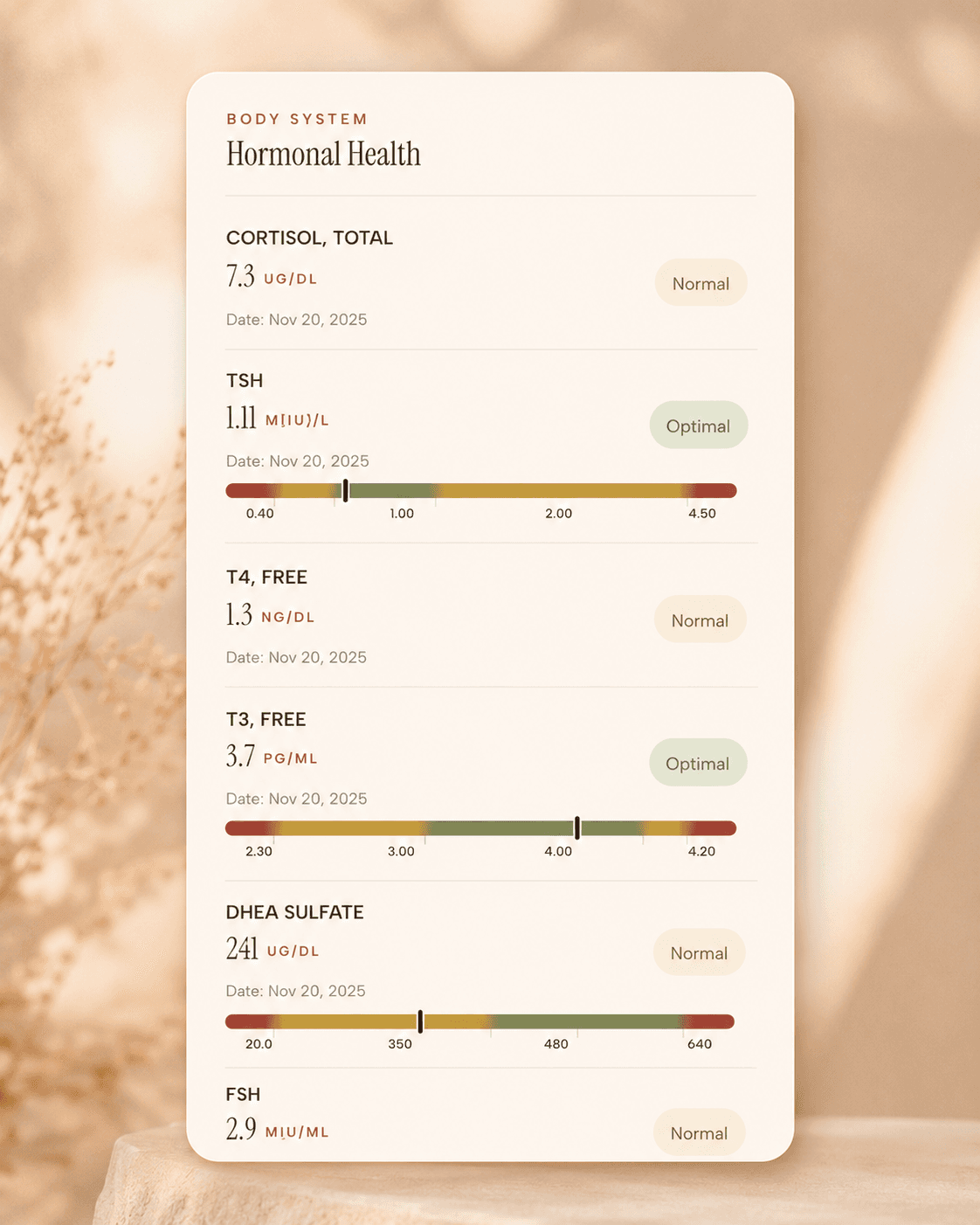
Cortisol is the primary stress hormone that regulates metabolism, immune function, and blood pressure. In functional medicine, cortisol assessment is crucial for understanding stress response and its impact on overall health. Chronic elevation suppresses testosterone production and immune function, while low cortisol indicates adrenal insufficiency. Optimal cortisol rhythm supports energy, mood stability, and hormone balance. Cortisol orchestrates the body's stress response and daily energy rhythms. Balanced cor…
Learn moreLab testing
Check kidney function, thyroid, and potassium at Quest
starting from $99 panel with 100+ tests, one visit
No referral needed
About 1 week
Schedule online — results typically within a week
Clear next steps
Guidance included, with follow-up care available
HSA / FSA
Eligible for pre-tax health spending accounts
Pro Tips
Do a “calm baseline” check once a day for a week: same chair, same arm, five minutes of quiet, then two readings. You will learn your real resting range, which makes random spikes less terrifying and more interpretable.
If you are athletic, measure at least 30 minutes after practice and after you have cooled down. Right after training your body is still in performance mode, so the number is not a fair test of resting blood pressure.
Take a photo of your cuff label and write down your arm circumference. A cuff that fits your arm is the difference between useful data and false alarms, especially if you are muscular or still growing.
If anxiety is part of the spike, name it out loud and then recheck after slow breathing. Seeing the number fall teaches your brain that you can influence the surge, which reduces the next spike.
Bring your home monitor to a clinic visit once and compare it to their reading. If your device runs high or low, you can adjust how you interpret your own log instead of chasing the wrong problem.
Frequently Asked Questions
What is a normal blood pressure for a teenager?
“Normal” in teens depends on age, sex, and height, but many older teens are close to adult cutoffs. As a rough guide, readings consistently below about 120/80 are usually reassuring, while repeated readings at or above 130/80 deserve a clinician conversation. If you are seeing high numbers, track them for a week using proper technique and bring the averages in.
Can anxiety cause blood pressure spikes in teens?
Yes. Anxiety triggers adrenaline, which makes your heart pump harder and your blood vessels tighten, so your systolic number can jump quickly. The key clue is that the number often drops after five to ten minutes of quiet and slow breathing. If you notice that pattern, focus on calming first, then measure again to find your true baseline.
Do energy drinks raise blood pressure in teenagers?
They can, especially if they contain high caffeine plus other stimulants. You might see higher readings for a few hours, along with jitteriness, nausea, or a racing heart. If you are getting spikes, try a two-week break from energy drinks and pre-workout products and see whether your readings normalize.
When should I worry about a high blood pressure reading at home?
Worry more when a high number comes with symptoms like chest pain, severe shortness of breath, fainting, confusion, one-sided weakness, or a sudden severe headache, because those need urgent care. If you feel okay, sit quietly and repeat the reading twice; if the average stays high on multiple days, contact your clinician promptly for next steps. Bring your log so the decision is based on a pattern, not one scary moment.
What labs help figure out why my blood pressure is spiking?
A practical starting trio is kidney function (creatinine with eGFR), thyroid signal (TSH), and potassium, because kidney and hormone pathways can drive repeated spikes in teens. Abnormal results do not automatically mean something serious, but they tell your clinician where to look next. If you are tracking frequent spikes, ask whether these tests and a urine check make sense for you.