Symptoms of Low Basophils: Causes, Ranges, and What to Do
Low basophils often reflect stress hormones or steroid meds—typical range is ~0–0.1 x10^9/L. See symptoms, causes, and next steps, no referral needed.




Low basophils usually mean your immune system is temporarily “shifted” by stress hormones or medications like steroids, rather than that you’re missing an essential blood cell. In many CBC reports, basophils sit at or near zero even in healthy people, so the context of your symptoms and the rest of your CBC matters more than the single flag. Basophils are a type of white blood cell that help coordinate allergic-type inflammation and parasite defense by releasing chemical signals such as histamine. Because they are rare in the bloodstream, small changes can look dramatic on paper. In this guide, you’ll learn what can drive a low basophil count, what you might actually notice (often from the underlying cause, not the basophils themselves), how clinicians interpret the result alongside other CBC markers, and when it’s worth following up. If you want help applying your exact CBC numbers to your allergy history, medications, and recent illnesses, PocketMD can walk you through it, and VitalsVault can help you retest to confirm a trend.
Why Is Your Basophil Count Low?
Steroid medications lowering counts
Corticosteroids such as prednisone can push basophils out of the circulating blood and dampen the signals that normally keep them active. If you recently started steroids for asthma, allergies, autoimmune flares, or a rash, a low basophil count often fits that story. The practical next step is to interpret your basophils alongside the rest of your CBC and your medication timeline rather than treating the basophil number by itself.
Stress response and high cortisol
When your body is under physical stress, it releases cortisol and adrenaline, which can temporarily lower basophils in the bloodstream. This can happen with poor sleep, intense training, acute pain, surgery, or even a significant anxiety spike around illness. If your basophils are low on a day you felt “run down,” it may normalize on a repeat CBC once you’re back to baseline.
Acute infection or inflammation shifting white cells
During an infection, your immune system prioritizes other white blood cells, especially neutrophils, and basophils can look low by comparison. Sometimes the absolute basophil count drops slightly, and sometimes the percentage drops because your total white count rises. Looking at your neutrophils, lymphocytes, and overall white blood cell count usually explains the pattern better than basophils alone.
Thyroid overactivity
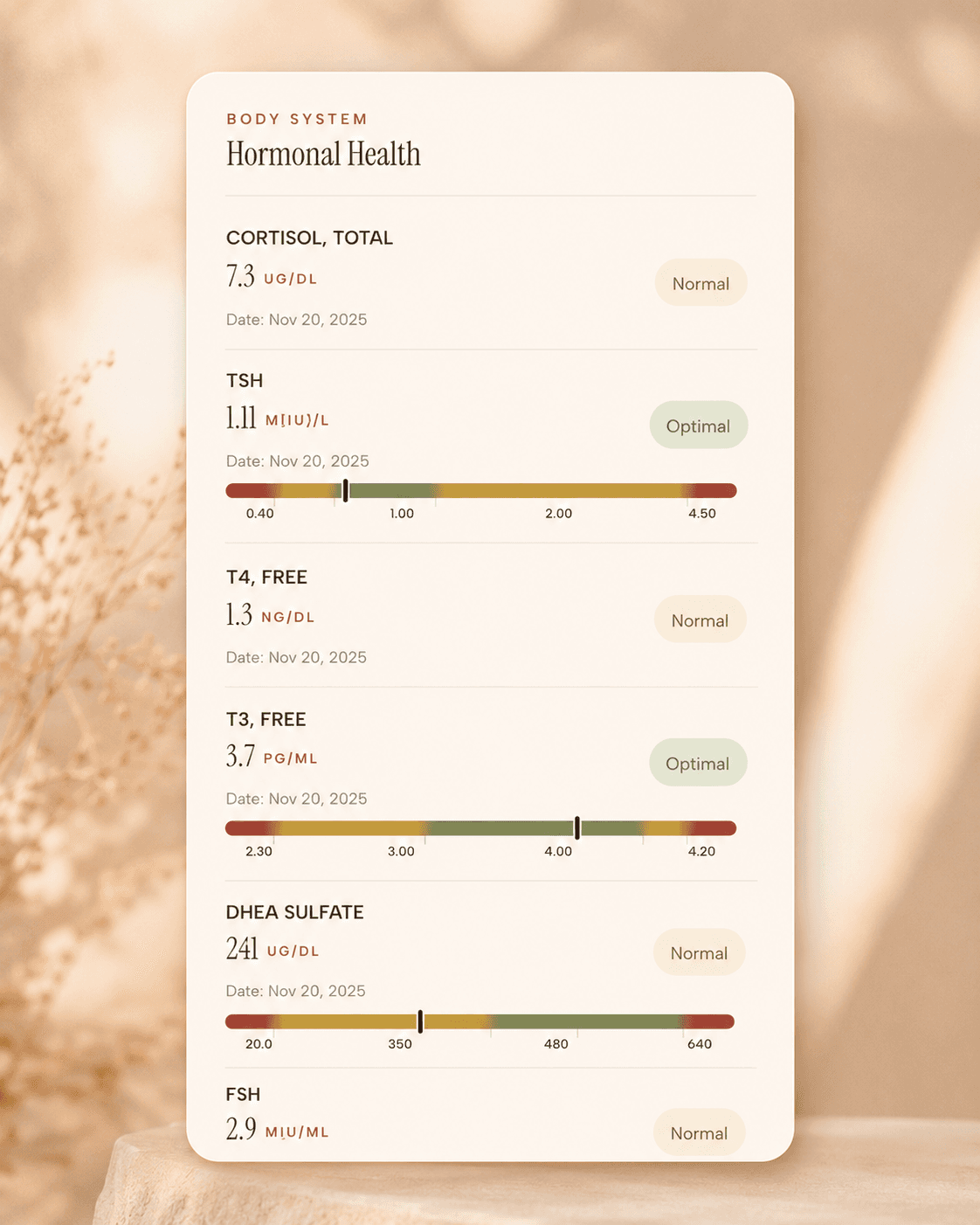
An overactive thyroid (hyperthyroidism) can be associated with lower basophil counts in some people, likely because thyroid hormones influence bone marrow activity and immune signaling. If low basophils show up alongside symptoms such as heat intolerance, tremor, palpitations, or unexplained weight loss, it is reasonable to ask whether thyroid testing is appropriate. This is less common than medication or stress effects, but it is a meaningful “check the bigger picture” cause.
Bone marrow suppression (uncommon, but important)
Basophils are made in your bone marrow, so anything that broadly suppresses marrow production can lower multiple blood cell lines. In that situation, basophils are not the main clue; the bigger red flags are low neutrophils, low platelets, or anemia on the same CBC. If your basophils are low and other counts are also abnormal, that combination deserves prompt clinical review.
Normal level of basophils
Reference intervals differ by laboratory, assay, age, and sex — use your report's own columns as primary.
| Measure | Typical range (adult, general) | Notes |
|---|---|---|
| Basophils (absolute) | About 0.0–0.1 x10^9/L (0–100 cells/µL), lab-dependent | VitalsVault optimal: typically within your lab’s reference interval; many healthy results read 0.0. Persistent 0.0 with other CBC abnormalities deserves context. |
| Basophils (%) | About 0–1% of white blood cells, lab-dependent | Percent can look “low” simply because other white cells rose (for example during infection or stress). Absolute basophils are usually more meaningful. |
What You Might Notice When Basophils Are Low
Often, nothing specific
Most people do not feel “low basophils” directly because basophils are a tiny fraction of your white blood cells. A low result is usually a lab clue about what your body is doing right now, such as being under stress or responding to medication. Your symptoms, if any, usually come from that underlying situation rather than from the basophil number.
Fewer allergy-type flares while on steroids
If steroids are the reason your basophils are low, you may notice that itching, wheezing, or hives calm down at the same time. That is because steroids blunt the whole allergic inflammation pathway, not just basophils. The key point is that the “benefit” is medication-driven and temporary, so your basophil count may rise again when steroids are reduced.
Feeling wired, shaky, or having palpitations
When low basophils reflect a stress-hormone state, you might also feel restless, have a racing heart, or struggle with sleep. The basophils are not causing those sensations; cortisol and adrenaline are. If this pattern keeps repeating, it is worth looking for the trigger rather than chasing the basophil number.
Cold or infection symptoms driving a CBC shift
If your CBC was drawn during a viral illness or bacterial infection, you may have fever, sore throat, cough, or body aches, and basophils can look low while other white cells rise. In that case, the basophil result is often a “timing” issue. A repeat CBC after recovery is the cleanest way to see whether the low value was temporary.
Signs that other blood counts are also low
If low basophils occur as part of broader bone marrow suppression, you may notice easy bruising, unusual fatigue, frequent infections, or shortness of breath from anemia. Those symptoms are not specific, but they matter because they point to a bigger CBC problem than basophils alone. If you have symptoms plus multiple low cell lines on your report, that is a reason to get evaluated promptly.
How to Support Healthy Basophil Levels
Start by confirming whether it’s truly low
Because basophils are so rare, a result of 0.0 is often within normal variation and can change with a small difference in sampling or timing. If your absolute basophils are low but the rest of your CBC is normal and you feel well, repeating the CBC in a few weeks often clarifies whether it was a one-off. Trend matters more here than a single number.
Review steroid and immune-suppressing medications
If you are taking prednisone, steroid inhalers at higher doses, or other immune-suppressing therapies, low basophils can be an expected effect. Do not stop a prescribed medication just to “fix” a lab value, especially if it is controlling asthma or an autoimmune condition. Instead, talk with your clinician about whether the dose and duration still fit your current symptoms and risk profile.
Support recovery from acute illness and overtraining
When low basophils show up during infection, poor sleep, or heavy training blocks, your body often normalizes once the stressor resolves. Prioritizing sleep, hydration, and a short period of reduced training load can help your immune system return to baseline. If you retest, aim for a time when you are not actively sick and have had a few stable weeks.
Check for thyroid symptoms and test if the story fits
If your low basophils come with classic hyperthyroid symptoms, addressing thyroid overactivity is the route back toward normal immune patterns. That typically means confirming the diagnosis with thyroid labs and treating the cause, not trying to raise basophils through supplements. Once thyroid levels are controlled, blood cell patterns often improve over time.
Escalate if other CBC lines are abnormal
If your basophils are low and you also have low neutrophils, low platelets, or anemia, the goal is not to raise basophils “naturally” but to identify why the bone marrow is underproducing cells. That may require repeat testing, a careful medication and exposure review, and sometimes specialist input. In this scenario, acting early is protective because it prevents complications like infection or bleeding.
When to see a doctor
If your basophils are low and you also have other CBC abnormalities such as neutrophils below 1.0 x10^9/L, platelets below 100 x10^9/L, or new anemia, you should get prompt medical evaluation because that pattern can signal bone marrow suppression or a medication effect that needs attention. Seek urgent care sooner if you have fever (38.0°C/100.4°F or higher), repeated infections, unusual bruising, or bleeding. If basophils are the only low value and you feel well, a repeat CBC is often the most useful next step. At VitalsVault, trending basophils alongside your total white count, neutrophils, and lymphocytes helps the result land in context instead of in isolation.
Frequently Asked Questions
Is a low basophil count dangerous?
By itself, a low basophil count is usually not dangerous, and many healthy CBCs show basophils at 0.0. What matters is why it is low and whether other blood counts are also abnormal. If your neutrophils, platelets, or hemoglobin are also low, that combination needs prompt follow-up. If basophils are the only flag, consider retesting when you are well.
Can allergies cause low basophils?
Allergies more often relate to basophil activation than to a low basophil number, and many people with allergies have normal basophil counts. If you are treating allergies with steroids, that treatment can lower basophils on a CBC. The most useful step is to review your allergy meds and timing of the blood draw when interpreting the result.
Do steroids lower basophils on a CBC?
Yes. Steroids can reduce circulating basophils and also change the balance of other white blood cells, which can make the basophil percentage look even lower. This is often an expected medication effect rather than a sign of a new disease. If you are on steroids long-term, ask your clinician how often your CBC should be monitored.
What does 0.0 basophils mean on my lab report?
A basophil value of 0.0 often means the lab did not detect basophils in the small sample counted, not that your body has none. Because basophils are rare, this can happen even when everything is normal. Look at the absolute basophil count (not just the percent) and whether the rest of your CBC is normal. If you are unsure, repeating the CBC can confirm whether it persists.
How can I raise my basophils back to normal?
There is usually nothing specific you need to do to “raise basophils,” because low values are commonly driven by temporary factors like steroids, stress, or recent illness. The practical approach is to address the driver and then confirm normalization with a repeat CBC. If low basophils come with other low blood counts, focus on getting the underlying cause evaluated rather than trying supplements. Bring your full CBC report and medication list to the conversation.
Research
Related Topics

Other Tests That Help Explain a Low Basophil Result
White Blood Cell Count
White blood cell count (WBC) measures the total number of immune cells and is fundamental for assessing immune system health. In functional medicine, WBC count reflects immune system activity, infection status, and overall health resilience. Low WBC may indicate immunosuppression, nutritional deficiencies, or bone marrow dysfunction. High WBC suggests infection, inflammation, stress, or hematologic conditions. The WBC differential provides detailed information about specific immune cell types and their functions…
Learn moreAbsolute Neutrophils
Absolute neutrophil count (ANC) measures the actual number of neutrophils per microliter and is crucial for assessing infection risk. In functional medicine, ANC is the most important measure of bacterial infection resistance. Low ANC (neutropenia) significantly increases infection risk, while high ANC indicates active infection or inflammation. Absolute neutrophil count measures infection-fighting capacity and is critical for assessing bacterial infection risk.
Learn moreCortisol, Total
Cortisol is the primary stress hormone that regulates metabolism, immune function, and blood pressure. In functional medicine, cortisol assessment is crucial for understanding stress response and its impact on overall health. Chronic elevation suppresses testosterone production and immune function, while low cortisol indicates adrenal insufficiency. Optimal cortisol rhythm supports energy, mood stability, and hormone balance. Cortisol orchestrates the body's stress response and daily energy rhythms. Balanced cor…
Learn moreLab testing
Retest basophils as part of a CBC to confirm the trend at Quest
starting from $99 panel with 100+ tests, one visit
No referral needed
About 1 week
Schedule online — results typically within a week
Clear next steps
Guidance included, with follow-up care available
HSA / FSA
Eligible for pre-tax health spending accounts