Why Are You Having Mood Swings After Menopause?
Mood swings after menopause often come from sleep disruption, thyroid imbalance, or lingering hormone shifts. Targeted blood tests available—no referral needed.






Mood swings after menopause are usually not “all in your head.” They often come from sleep getting fragmented by hot flashes, a thyroid shift that changes your energy and anxiety level, or ongoing low-and-unstable hormone signaling that affects the brain chemicals that steady mood. A few targeted blood tests can help sort out which of those is most likely for you. This can be especially frustrating because you might be years past your last period and expected the emotional rollercoaster to be over. But your brain is still adapting to a long-term lower-estrogen environment, and stress, alcohol, certain medications, and poor sleep can hit harder than they used to. In the sections below, you’ll see the most common reasons mood swings linger after menopause, what tends to help in real life, and which labs can clarify the picture. If you want help connecting your exact pattern of symptoms to next steps, PocketMD can walk through it with you, and VitalsVault labs can help you check the most relevant markers without a referral.
Why mood swings can show up after menopause
Sleep disruption rewires your mood
When your sleep is broken up, your brain’s emotion-control circuits get jumpier the next day, which can look like irritability, tearfulness, or feeling “on edge” for no clear reason. After menopause, hot flashes, night sweats, and even subtle insomnia can keep you from reaching enough deep sleep to feel emotionally buffered. A useful clue is timing: if your mood is worst after a bad night and improves after a solid one, sleep is likely a main driver worth treating directly.
Thyroid shifts mimic anxiety or depression
Your thyroid is your body’s metabolic “volume knob,” and when it runs too low or too high, your mood often changes before anything else feels obvious. An overactive thyroid can feel like inner restlessness, racing thoughts, and a shorter fuse, while an underactive thyroid can feel like low motivation and a heavy, flat mood. Because thyroid problems become more common with age, it’s worth checking thyroid labs if your mood swings are new, persistent, or paired with palpitations, heat intolerance, constipation, or unexplained weight change.
Low estrogen changes brain signaling
Estrogen helps modulate serotonin and other brain messengers that affect calm, reward, and resilience, so a long-term lower-estrogen state can make your mood less “stable” under stress. That doesn’t mean you’re destined to feel moody forever, but it does explain why small triggers can suddenly feel bigger. If your mood swings come with vaginal dryness, painful sex, or hot flashes, it’s a hint that menopause-related hormone effects are still part of the story.
Stress load and burnout catch up
After menopause, you may have less physiological “wiggle room” for chronic stress because sleep, recovery, and stress hormones can all be less forgiving. That can show up as snapping at people you love, crying unexpectedly, or feeling like you’re constantly bracing for something. The takeaway here is practical: if your mood swings track with work overload, caregiving, or major life changes, treating stress like a real health input — not a character flaw — usually gives you the fastest wins.
Medication or alcohol effects intensify
Some common meds can affect mood directly, and after menopause your sensitivity can change because body composition, sleep, and liver metabolism shift over time. Alcohol is a frequent culprit because it can briefly relax you but then fragments sleep and increases next-day anxiety, which feels like a “mood hangover.” If your mood swings cluster after starting a new medication, changing a dose, or drinking in the evening, bring that pattern to your clinician so you can adjust safely rather than guessing.
What actually helps you feel steadier
Treat sleep like the first domino
If your mood swings are tied to broken sleep, aim for a two-week experiment focused on sleep continuity, not perfection. Keep your bedroom cool, avoid alcohol within four hours of bedtime, and consider talking with your clinician about treating night sweats or insomnia directly. When you get even one extra hour of consolidated sleep, many people notice their patience and emotional “bounce-back” improves the very next day.
Consider menopause hormone therapy thoughtfully
For some people, menopause hormone therapy can reduce hot flashes and improve sleep, which indirectly steadies mood, and some also feel a direct mood benefit. It is not the right choice for everyone, and the decision depends on your symptoms, age, time since menopause, and personal risk factors. A practical next step is to write down your top three symptoms and how often they happen, because that makes the risk–benefit conversation far clearer.
Use evidence-based mood treatments early
If your mood swings include persistent sadness, anxiety, or loss of interest, you do not have to “wait it out” as a menopause phase. Therapies like CBT and medications such as SSRIs or SNRIs can be effective in midlife, and some of these meds also reduce hot flashes, which is a helpful two-for-one. If you’re having thoughts of self-harm or you feel unsafe, that is an urgent situation and you should seek immediate help.
Build a daily “stability routine”
Mood swings often shrink when your brain can predict a few anchors each day, especially during stressful seasons. Pick one morning cue and one evening cue you can keep even on busy days, such as a 10-minute walk after breakfast and a screen-free wind-down at the same time each night. The point is not wellness perfection; it is giving your nervous system a steady rhythm so it stops reacting like everything is an emergency.
Track patterns, not feelings alone
A simple mood log works best when it connects mood to inputs you can change, like sleep length, alcohol, caffeine timing, and conflict or workload. Rate mood from 1–10 once a day, then jot one sentence about what stood out, because that makes patterns visible without turning your life into a spreadsheet. Bring that log to a visit, because it helps your clinician distinguish hormone-related swings from depression, anxiety, or medication effects.
Useful biomarkers to discuss with your clinician
TSH
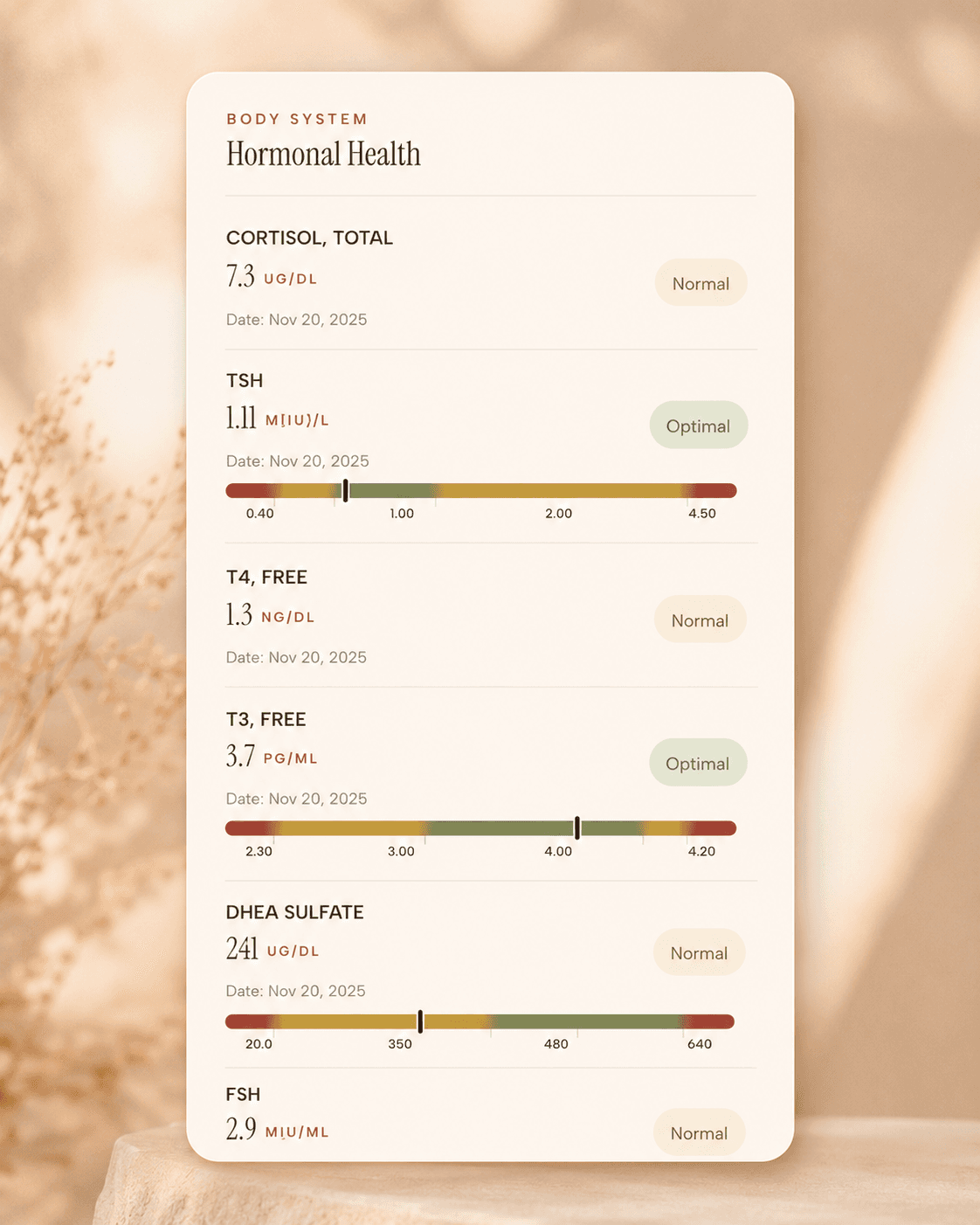
TSH is the master regulator of thyroid function, controlling the production of thyroid hormones T4 and T3. In functional medicine, we use narrower TSH ranges than conventional medicine to identify subclinical thyroid dysfunction early. Even mildly elevated TSH can indicate thyroid insufficiency, leading to fatigue, weight gain, depression, and metabolic dysfunction. TSH levels are influenced by stress, nutrient deficiencies, autoimmune conditions, and environmental toxins. Optimal TSH supports energy, metabolism…
Learn moreEstradiol
Estradiol in men is produced from testosterone via aromatase enzyme. In functional medicine, we recognize that men need optimal estradiol levels for bone health, cognitive function, and cardiovascular protection. However, excessive estradiol can suppress testosterone production and cause feminizing effects. The testosterone-to-estradiol ratio is crucial for male health, with optimal balance supporting vitality while preventing estrogen dominance. Balanced estradiol levels in men support bone health and cognitive…
Learn moreCortisol, Total
Cortisol is the primary stress hormone that regulates metabolism, immune function, and blood pressure. In functional medicine, cortisol assessment is crucial for understanding stress response and its impact on overall health. Chronic elevation suppresses testosterone production and immune function, while low cortisol indicates adrenal insufficiency. Optimal cortisol rhythm supports energy, mood stability, and hormone balance. Cortisol orchestrates the body's stress response and daily energy rhythms. Balanced cor…
Learn moreLab testing
Get TSH, free T4, and ferritin checked at Quest
starting from $99 panel with 100+ tests, one visit
No referral needed
About 1 week
Schedule online — results typically within a week
Clear next steps
Guidance included, with follow-up care available
HSA / FSA
Eligible for pre-tax health spending accounts
Pro Tips
Try a “next-day mood check” for two weeks: each morning, rate your sleep quality 1–10, and each evening rate your mood 1–10. If the lines move together, you’ve found a high-leverage target.
If evenings are your danger zone, set a hard cutoff for alcohol and doom-scrolling. You are not being strict; you are protecting the part of your brain that keeps emotions proportional when you’re tired.
When you feel a swing coming on, do a 90-second reset: slow exhale breathing (longer exhale than inhale) while you relax your jaw and shoulders. It sounds small, but it directly downshifts your stress response and can prevent a spiral.
Bring one concrete example to your next appointment, like “three times this month I went from fine to furious within 10 minutes, usually after a bad night.” Specific stories get you better care than saying “my mood is all over the place.”
If you have a personal or family history of bipolar disorder, treat new mood swings as something to evaluate, not just endure. Ask specifically about screening for bipolar spectrum before starting an antidepressant.
Frequently Asked Questions
How long do mood swings last after menopause?
For some people they fade within a year or two, but for others they can persist, especially if sleep disruption, stress, or thyroid changes are still active. The pattern matters more than the calendar: mood that tracks with poor sleep or hot flashes often improves when those symptoms are treated. If mood swings are frequent for more than two to four weeks or they impair work or relationships, it’s worth getting evaluated rather than waiting.
Can low estrogen cause anxiety after menopause?
Yes, lower estrogen can change how your brain uses serotonin and other calming signals, which can make you feel more reactive or anxious, especially under stress. Often the anxiety is amplified by poor sleep from night sweats, so treating vasomotor symptoms can help indirectly. If anxiety is new or intense, ask about both menopause treatment options and a thyroid check (TSH and free T4).
What blood tests should I get for mood swings after menopause?
A focused starting set is TSH and free T4 to screen for thyroid-related mood changes, plus ferritin to look for low iron stores that worsen fatigue and sleep quality. These tests do not “diagnose” emotions, but they can reveal fixable body-level contributors. Bring your results and a brief symptom timeline to your clinician so the numbers are interpreted in context.
Is it depression or just menopause mood swings?
Menopause-related mood changes often come in waves and are closely tied to sleep disruption, hot flashes, or stress, while depression tends to be more persistent and includes loss of interest, hopelessness, or changes in appetite and concentration. The two can overlap, and you can have both at once. If symptoms last most days for two weeks or you have thoughts of self-harm, seek care promptly and ask for a depression screen.
Can menopause hormone therapy help mood swings?
It can, especially when mood swings are being driven by hot flashes and poor sleep, because better sleep often means steadier mood. Some people also notice a direct mood benefit, but it is not guaranteed and it depends on your health history and how long it has been since menopause. A good next step is to list your top symptoms and ask your clinician whether you’re a candidate, and what nonhormone options could also help.
Research worth knowing about
NAMS 2023 position statement on nonhormone therapy for vasomotor symptoms (sleep and mood often improve when hot flashes improve)
USPSTF recommendation: screening for depression and suicide risk in adults (relevant when mood changes persist after menopause)
Thyroid dysfunction and mood symptoms overview (clinical review in The Lancet)