Memory Loss in Pregnancy: What’s Normal, What’s Not
Memory loss in pregnant women is usually from sleep loss, stress overload, or low iron and thyroid shifts. Targeted blood tests at Quest—no referral needed.






Memory loss in pregnancy is most often your brain reacting to disrupted sleep, a heavier mental load, and body changes like low iron or thyroid shifts. It can feel like you are “losing it,” but for many people it is a temporary attention-and-recall problem rather than true dementia. Simple blood tests can help sort out whether iron, thyroid, or another fixable issue is contributing. Pregnancy asks your body to re-prioritize energy, sleep, and stress hormones, and your brain tends to pay the price in focus and short-term recall. That is why you might walk into a room and forget why, blank on a familiar name, or reread the same paragraph three times. Most of the time this is normal and improves after delivery, but it is still worth taking seriously because a few common pregnancy-related problems are treatable. If you want help thinking through your pattern, PocketMD can walk you through likely causes, and Vitals Vault labs can help you confirm what is going on without waiting weeks for an appointment.
Why memory feels worse during pregnancy
Sleep disruption rewires your focus
When you are waking up to pee, dealing with heartburn, or just cannot get comfortable, your brain loses deep sleep that normally “files” memories. The result is often not true memory loss, but poor attention, so new information never sticks in the first place. If your forgetfulness is worst after a bad night, treat sleep like a medical need: ask your OB about reflux control, leg cramps, or safe sleep-position supports.
Your mental load is maxed out
Pregnancy adds a constant background task list, and your brain starts prioritizing what feels urgent over what feels optional. That can make names, appointments, and small details slip, especially when you are multitasking. A useful clue is that you can remember things when you slow down, but you lose them when you rush. The takeaway is practical: reduce “open loops” by writing down tasks the moment they appear, so your brain does not have to hold them.
Low iron reduces brain oxygen
Iron helps your body carry oxygen and supports brain chemistry, so low iron stores can show up as fatigue, fogginess, and slower recall. In pregnancy, your blood volume expands, which means you can become iron deficient even if you were fine before. If you are also short of breath with stairs, craving ice, or feeling unusually wiped out, ask for ferritin and a CBC rather than assuming it is just pregnancy.
Thyroid shifts slow your thinking
Your thyroid is your body’s metabolic “speed dial,” and pregnancy can unmask an underactive thyroid (hypothyroidism) or, less commonly, an overactive one. When thyroid hormone is low, you can feel mentally sluggish, forgetful, and depressed, and you may also notice constipation or feeling cold. Because thyroid levels have pregnancy-specific targets, the key action is to check TSH early if your brain fog feels out of proportion or is getting worse.
Anxiety and depression cloud recall
When your stress system is running hot, your brain spends more energy scanning for threats and less energy encoding new memories. That can look like forgetfulness, but it is often “I can’t concentrate” in disguise, and it may come with racing thoughts, irritability, or a sense of dread. If you are having panic symptoms, persistent sadness, or intrusive thoughts, bring it up directly, because treatment during pregnancy can be both safe and life-changing.
What actually helps your memory during pregnancy
Treat sleep like a prescription
Pick one sleep blocker and solve it first, because better sleep improves memory faster than almost anything else. If reflux is waking you, ask about pregnancy-safe acid control and try finishing dinner earlier so your stomach is not working at midnight. If you are waking from discomfort, a supportive pillow between your knees and under your belly can reduce micro-awakenings that you barely notice but your brain definitely feels the next day.
Use one “capture system” daily
Your brain is not failing; it is overloaded, so give it a reliable external memory. Choose one place for everything—one notes app or one paper notebook—and write down tasks the moment they pop up, then check it at the same times each day. This works because it stops the constant mental rehearsal that drains attention and makes you more forgetful.
Correct iron deficiency on purpose
If ferritin is low, food alone often cannot catch you up quickly, especially in the second and third trimesters. Your clinician may recommend an iron supplement, and taking it with vitamin C can improve absorption, while taking it away from calcium can help it work better. The practical win is that many people notice clearer thinking and better stamina within a few weeks once iron stores start rising.
Check and treat thyroid early
If your TSH suggests hypothyroidism, treatment is usually straightforward and can protect both your well-being and your pregnancy. The goal is not just “normal” on the lab slip, because pregnancy has tighter targets that your OB will use. If you are already on thyroid medication, pregnancy often requires a dose adjustment, so do not wait for symptoms to become severe before rechecking.
Make stress smaller and specific
Generic “reduce stress” advice is useless when you are already doing your best, so make it concrete. Pick one daily 10-minute reset that reliably downshifts your body, such as a slow walk after lunch or a guided breathing track before bed, and treat it like a non-negotiable appointment. If your worry is spiraling, therapy and pregnancy-safe medications are options, and getting help sooner usually improves memory because your attention comes back online.
Useful biomarkers to discuss with your clinician
Ferritin
Ferritin is your body's iron storage protein, reflecting total iron stores in the body. In functional medicine, ferritin assessment is crucial for identifying both iron deficiency and iron overload, conditions that can significantly impact energy levels and overall health. Low ferritin is the earliest sign of iron deficiency, often occurring before anemia develops. This can cause fatigue, weakness, restless leg syndrome, and cognitive impairment. Conversely, elevated ferritin may indicate iron overload, inflamma…
Learn moreTSH
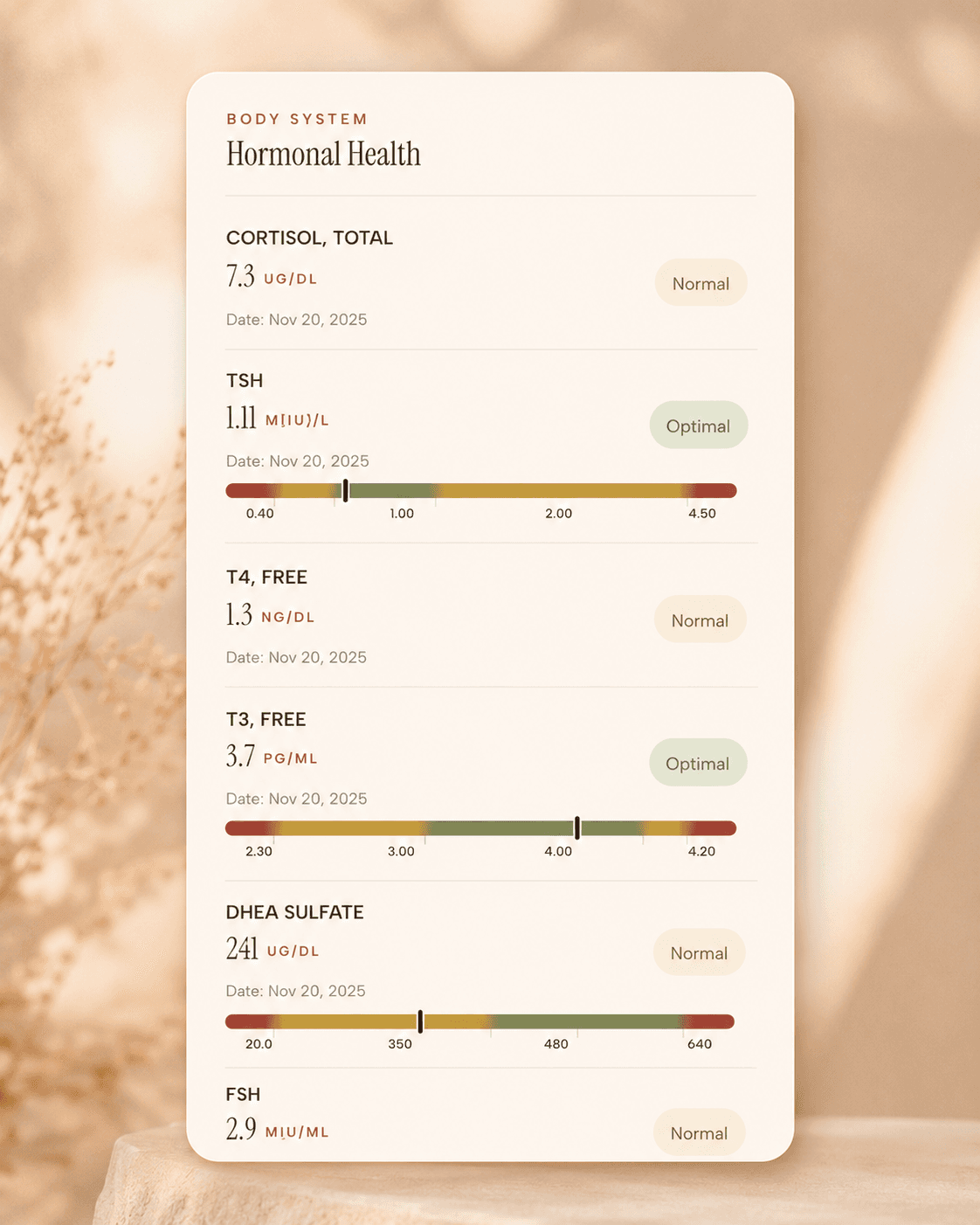
TSH is the master regulator of thyroid function, controlling the production of thyroid hormones T4 and T3. In functional medicine, we use narrower TSH ranges than conventional medicine to identify subclinical thyroid dysfunction early. Even mildly elevated TSH can indicate thyroid insufficiency, leading to fatigue, weight gain, depression, and metabolic dysfunction. TSH levels are influenced by stress, nutrient deficiencies, autoimmune conditions, and environmental toxins. Optimal TSH supports energy, metabolism…
Learn moreIron Binding Capacity
TIBC helps distinguish between different causes of abnormal iron levels. High TIBC indicates iron deficiency (the body increases transferrin to capture more iron), while low TIBC suggests iron overload or chronic disease. It's essential for accurate iron status assessment. Total Iron Binding Capacity (TIBC) measures the blood's capacity to bind iron with transferrin, the main iron transport protein. It indirectly reflects transferrin levels and iron status.
Learn moreLab testing
Check ferritin, CBC, and TSH at Quest
starting from $99 panel with 100+ tests, one visit
No referral needed, and it can quickly flag iron or thyroid issues that worsen memory
About 1 week
Schedule online — results typically within a week
Clear next steps
Guidance included, with follow-up care available
HSA / FSA
Eligible for pre-tax health spending accounts
Pro Tips
Try a two-week “forgetfulness log” where you rate brain fog from 1–10 and write down how you slept, what you ate, and how stressed you felt that day. Patterns show up fast, and it helps you stop blaming yourself.
If you keep misplacing items, pick one “home base” spot for keys, wallet, and prenatal vitamins and make it physically obvious, like a small bowl by the door. Your goal is to remove decisions, because decisions are what your tired brain keeps dropping.
When you need to remember something in the moment, say it out loud and tie it to an action, such as “I’m putting the appointment card in my phone right now.” That tiny narration improves encoding when your attention is scattered.
If you are taking an iron supplement and it is upsetting your stomach, ask about switching the form or taking it every other day. Better tolerated iron that you actually take beats “perfect” iron that sits in the cabinet.
If your memory changes feel sudden or extreme, do a quick safety check: new severe headache, vision changes, one-sided weakness, or confusion are not normal pregnancy brain. Those are reasons to seek urgent care right away.
Frequently Asked Questions
Is memory loss during pregnancy normal?
Mild forgetfulness is common in pregnancy, and it is often driven by sleep disruption, stress, and attention overload rather than permanent brain damage. It should feel annoying, not scary, and it usually improves after delivery. If it is worsening quickly or affecting safety, ask your clinician about checking ferritin, a CBC, and TSH.
Can pregnancy brain be a sign of dementia?
In a typical pregnancy, dementia is not the expected explanation for new forgetfulness, especially if you are otherwise functioning and the timing matches sleep and stress changes. Pregnancy brain usually looks like poor concentration and “tip-of-the-tongue” moments, not getting lost in familiar places or major personality changes. If you have strong family history and symptoms that persist well after postpartum recovery, bring that timeline to a clinician for a more formal evaluation.
What vitamin deficiency causes memory problems in pregnancy?
Iron deficiency is one of the most common and most fixable contributors, and it can cause brain fog even before you are anemic. Ferritin is the test that best reflects iron stores, while a CBC shows whether anemia has developed. If ferritin is low (often below about 30 ng/mL in pregnancy), ask about a targeted plan to replete iron and recheck.
Can thyroid problems in pregnancy cause brain fog and forgetfulness?
Yes. An underactive thyroid (hypothyroidism) can make you feel mentally slow, forgetful, and more depressed, and pregnancy can reveal it for the first time. A TSH blood test is the usual starting point, and pregnancy has trimester-specific targets that your OB will use. If you already take thyroid medication, ask whether you need earlier or more frequent monitoring during pregnancy.
When should I worry about memory loss while pregnant?
Worry less about occasional forgetfulness and more about sudden confusion, getting lost, severe headache with vision changes, fainting, or any new one-sided weakness, because those are not typical pregnancy brain. Also pay attention if your memory issues come with severe anxiety, persistent depression, or inability to function at work or home. The next step is usually a focused check-in plus labs like ferritin, CBC, and TSH to look for treatable drivers.