Memory Loss in Postpartum Women: What’s Normal, What’s Not, and What to Do
Memory loss in postpartum women is often from sleep deprivation, hormone shifts, or low iron/thyroid changes. Targeted labs available—no referral needed.






Memory loss in postpartum women is usually your brain struggling to store and retrieve information because you’re sleep-deprived, hormonally shifting, and sometimes running low on iron or dealing with thyroid changes. It can feel scary, but most postpartum “forgetfulness” is a temporary attention-and-recall problem, not early dementia. A few targeted blood tests can help you figure out whether iron deficiency or thyroid dysfunction is adding fuel to the fire. The tricky part is that postpartum life stacks several memory-hijackers at once: broken sleep, constant task-switching, stress hormones, and mood changes. On top of that, your body is recovering from pregnancy and birth, and breastfeeding can keep hormones in a different place for months. This page helps you sort what’s common from what deserves a closer look, and it gives you practical ways to feel sharper again. If you want help matching your exact pattern to likely causes, PocketMD can talk it through with you, and VitalsVault labs can help confirm (or rule out) the common reversible contributors.
Why memory feels worse after having a baby
Sleep fragmentation blocks memory storage
Your brain files new memories during deeper stages of sleep, but postpartum sleep is often chopped into short segments. That means you can “know” something in the moment and still fail to store it well enough to retrieve later, which feels like your mind is leaking. If you notice you can remember details after a rare solid night, that’s a strong clue sleep is the main driver.
Hormone shifts change attention and recall
After delivery, estrogen and progesterone drop quickly, and if you’re breastfeeding, prolactin stays higher while estrogen can stay lower. These shifts can affect neurotransmitters that support focus and working memory, so you feel mentally slower even when you’re trying hard. A useful takeaway is that this tends to improve as sleep consolidates and hormones stabilize, but it can take months rather than weeks.
Low iron after pregnancy or birth
Iron is how your body moves oxygen and supports energy production in the brain, and pregnancy plus blood loss at delivery can drain your stores. When iron is low, you can feel foggy, forgetful, and oddly “flat,” especially if you also get short of breath on stairs or feel your heart race. Ask specifically about ferritin, because you can have “normal” hemoglobin and still have depleted iron stores that affect how you feel.
Postpartum thyroid problems (thyroiditis)
Some women develop postpartum thyroid inflammation, which can swing from a revved-up phase to an underactive phase. When your thyroid is underactive, your thinking can feel slowed and your memory can feel unreliable, and you might also notice constipation, dry skin, or feeling cold. Because thyroid symptoms overlap with normal postpartum exhaustion, a simple TSH test can be a high-yield way to avoid months of guessing.
Depression or anxiety steals mental bandwidth
Postpartum depression and anxiety don’t just affect mood — they pull attention toward worry, rumination, and threat-scanning, which leaves less brainpower for encoding everyday details. That’s why you can forget why you walked into a room or miss appointments even though you care deeply. If you’re also feeling hopeless, panicky, or having scary intrusive thoughts, you deserve support now, because treating mood often improves memory faster than any supplement.
What actually helps your memory postpartum
Treat sleep like a medical intervention
If sleep is the biggest trigger, the goal is fewer awakenings and longer stretches, not “perfect” sleep. Try a two-week experiment where you protect one uninterrupted block (even 4 hours) by trading off with a partner, using a pumped bottle, or asking someone to handle one feed. When that block appears, many women notice fewer word-finding problems and less “where did I put it?” confusion within days.
Use external memory, not willpower
Postpartum life is a constant stream of micro-tasks, so relying on your brain alone is unfair. Pick one capture system and make it frictionless: a single notes app widget on your home screen, or a paper pad that lives in one spot, and write things down the moment they appear. You’re not “failing” — you’re offloading working memory so your brain can focus on the baby and the present moment.
Rebuild iron stores if ferritin is low
If ferritin is low, iron repletion can noticeably improve energy and mental clarity, but it takes time because you’re refilling a storage tank. Many people tolerate iron better when they take it every other day and avoid taking it with calcium, which can block absorption. If you’re breastfeeding or had significant blood loss, talk with your clinician about dosing and whether you need a recheck in 6–8 weeks.
Address thyroid dysfunction promptly
If TSH suggests hypothyroidism, treating it can make a big difference in brain speed, motivation, and memory reliability. Postpartum thyroiditis can be temporary, so your clinician may monitor trends rather than committing you to lifelong medication right away. The practical move is to repeat labs on a schedule (often every 6–8 weeks) so you’re not stuck in limbo wondering whether it’s “just postpartum.”
Treat mood symptoms as brain symptoms
Therapy, social support, and when appropriate, medication can reduce the cognitive load of anxiety and depression, which often improves memory as a downstream effect. If you’re having intrusive thoughts, it does not mean you will act on them, but it is a sign you should get help because you deserve relief. Start with a postpartum-focused screening (like the EPDS) and bring the results to your OB, midwife, or primary care clinician.
Useful biomarkers to discuss with your clinician
Ferritin
Ferritin is your body's iron storage protein, reflecting total iron stores in the body. In functional medicine, ferritin assessment is crucial for identifying both iron deficiency and iron overload, conditions that can significantly impact energy levels and overall health. Low ferritin is the earliest sign of iron deficiency, often occurring before anemia develops. This can cause fatigue, weakness, restless leg syndrome, and cognitive impairment. Conversely, elevated ferritin may indicate iron overload, inflamma…
Learn moreTSH
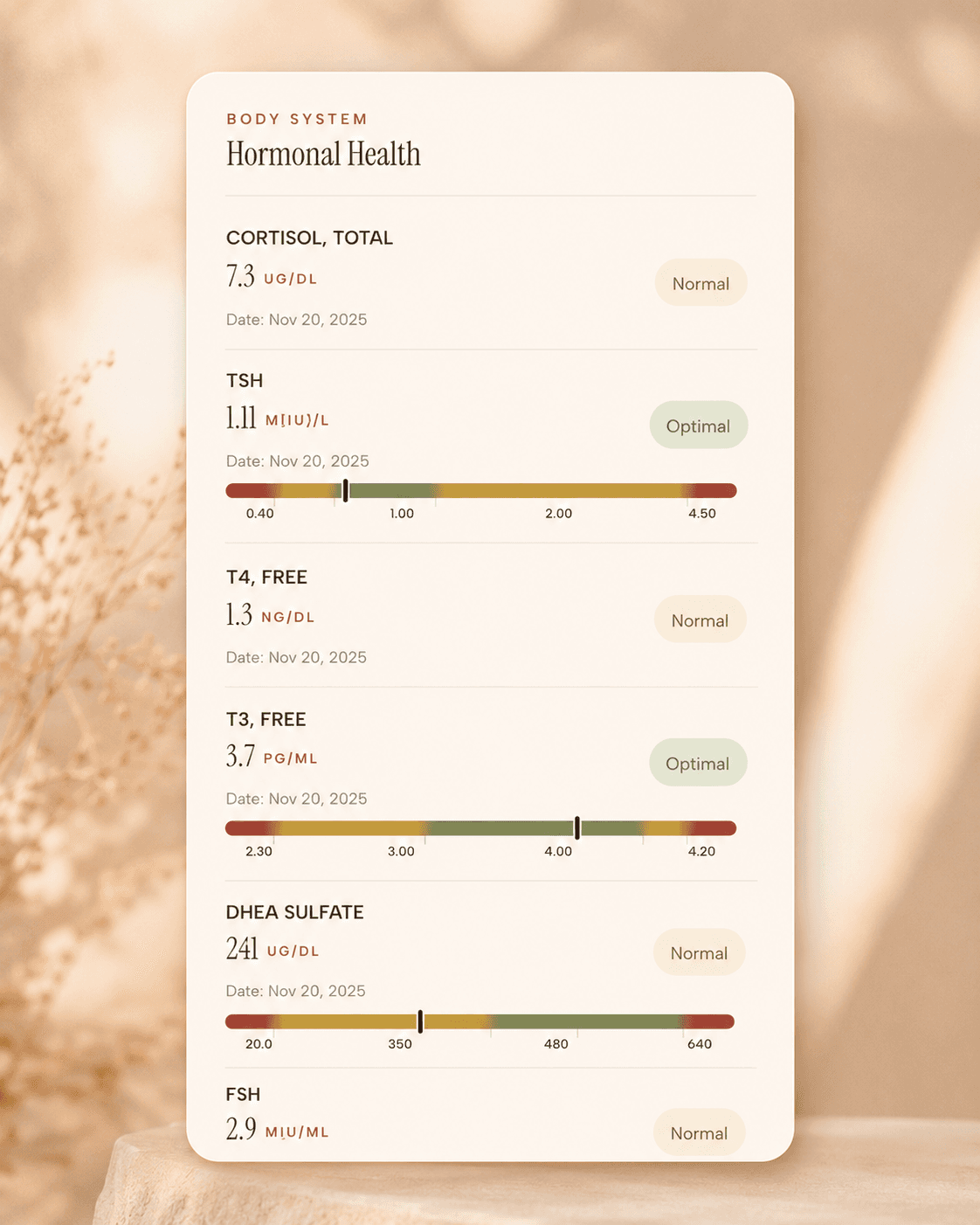
TSH is the master regulator of thyroid function, controlling the production of thyroid hormones T4 and T3. In functional medicine, we use narrower TSH ranges than conventional medicine to identify subclinical thyroid dysfunction early. Even mildly elevated TSH can indicate thyroid insufficiency, leading to fatigue, weight gain, depression, and metabolic dysfunction. TSH levels are influenced by stress, nutrient deficiencies, autoimmune conditions, and environmental toxins. Optimal TSH supports energy, metabolism…
Learn moreHemoglobin
Hemoglobin is the iron-containing protein in red blood cells that actually carries oxygen throughout your body. In functional medicine, hemoglobin is considered one of the most important markers of oxygen-carrying capacity and overall vitality. Low hemoglobin (anemia) significantly impacts energy levels, cognitive function, exercise tolerance, and quality of life. Even mild decreases can cause fatigue and reduced performance. Hemoglobin levels are influenced by iron status, vitamin B12, folate, protein intake, a…
Learn moreLab testing
Check ferritin, TSH, and vitamin B12 at Quest
starting from $99 panel with 100+ tests, one visit
No referral needed
About 1 week
Schedule online — results typically within a week
Clear next steps
Guidance included, with follow-up care available
HSA / FSA
Eligible for pre-tax health spending accounts
Pro Tips
Run a 7-day “memory audit” where you write down what you forgot and what was happening right before it, because patterns usually pop out fast: missed meals, a bad night, a stressful visit, or trying to multitask during feeds.
If you keep losing objects, create one “landing zone” for essentials (keys, wallet, pump parts) and make it physically obvious, because reducing search-and-panic moments protects your attention for the rest of the day.
When someone tells you something important, repeat it back once in your own words and then write it down, because that combination (retrieval plus external storage) is much more reliable than “I’ll remember.”
If you suspect iron is part of the problem, ask for ferritin specifically and not just a hemoglobin check, because you can be depleted and symptomatic before you meet criteria for anemia.
If your memory issues come with new severe headaches, one-sided weakness, fainting, or you feel unsafe due to mood symptoms, treat that as a same-day medical issue and get urgent help rather than waiting it out.
Frequently Asked Questions
Is postpartum memory loss normal, or should I worry?
Some forgetfulness is very common postpartum because broken sleep and constant task-switching make it harder to store new memories. It becomes more concerning if it is rapidly worsening, you can’t function day to day, or you have other red flags like severe headaches, fainting, or neurological symptoms. If you’re worried, checking ferritin and TSH is a practical first step because low iron and thyroid changes are treatable.
How long does postpartum brain fog last?
For many women it improves as sleep consolidates and routines stabilize, which can take a few months, and sometimes longer if you’re breastfeeding or dealing with anxiety or depression. If you’re still struggling past 6–12 months, or it’s getting worse instead of better, it’s worth screening for thyroid dysfunction (TSH) and iron depletion (ferritin). Bring a short symptom timeline to your clinician so you don’t have to rely on memory in the appointment.
Can breastfeeding cause memory problems?
Breastfeeding itself does not “damage” memory, but it can indirectly affect it because it changes hormones and often keeps sleep more fragmented. Lower estrogen during lactation can make you feel a bit more foggy, and frequent night feeds can prevent the deep sleep your brain uses to consolidate memories. If you can protect one longer sleep block a few nights per week, many people notice a meaningful difference.
What blood tests should I ask for postpartum forgetfulness?
A focused starting set is ferritin for iron stores, TSH for thyroid function, and vitamin B12 for neurologic support. For postpartum brain symptoms, many clinicians consider ferritin below about 30–50 ng/mL and B12 below about 400 pg/mL worth addressing, even if the lab flags them as “normal.” If TSH is abnormal, ask whether free T4 and thyroid antibodies are needed to clarify the cause.
Can postpartum depression or anxiety make you forgetful?
Yes — mood symptoms can look like memory loss because anxiety pulls your attention into worry and depression slows processing speed and motivation. You might notice you can remember things when you’re calm, but you blank when you’re stressed or overstimulated. If this sounds like you, take a postpartum screening (such as the EPDS) and share it with your OB or primary care clinician, because treating mood often improves memory quickly.
Research worth knowing about
ACOG guidance on screening and treating postpartum depression (mood symptoms can look like memory problems)
NIH overview of postpartum thyroiditis and typical timing of hyper- then hypo-thyroid phases
Review of cognitive changes across pregnancy and the postpartum period (why “baby brain” is often attention and sleep related)