Low Libido in Teenagers: What It Usually Means
Low libido in teenagers often comes from stress, sleep loss, or hormone/thyroid shifts. Get targeted labs and guidance—no referral needed.






Low libido in teenagers is usually your body’s “interest system” turning down the volume because you are stressed, not sleeping enough, or dealing with mood changes, medication effects, or hormone/thyroid shifts. It can also happen when puberty timing, body image, or relationship pressure makes sex feel more like a performance than a choice. A few targeted labs can help sort out whether hormones or thyroid issues are part of your picture. If this is happening to you, it can feel confusing because teens are “supposed” to be interested in sex all the time. Real life is messier. Desire is sensitive to sleep, mental health, safety, attraction, and how your body feels day to day, and it can change a lot during adolescence. This guide walks you through the most common reasons libido drops, what tends to help in a practical way, and which tests can be worth checking. If you want help connecting your specific symptoms into a plan, PocketMD can talk it through with you, and Vitals Vault labs can help you check the basics without turning it into a huge ordeal.
Why your sex drive feels lower lately
Stress and a “shut down” mode
When your brain thinks you are under threat or constant pressure, it prioritizes survival and focus over desire. That stress chemistry can blunt arousal, make it harder to feel pleasure, and even make touch feel irritating instead of comforting. If your libido dropped around exams, family conflict, or a big life change, treating stress like a real health factor (not a personality flaw) is often the most direct path back.
Not enough sleep, not enough desire
Sleep is when your body resets hormones and your brain’s reward circuits, which is a big deal for sexual interest. If you are chronically short on sleep, you can feel flat, less motivated, and less responsive to attraction even if nothing is “wrong” with you. A useful clue is timing: if your libido is better on weekends or after a few early nights, sleep is probably a major driver.
Depression or anxiety changing pleasure
Low mood can make everything feel muted, including sexual interest, because your brain has trouble anticipating reward. Anxiety can do the opposite kind of damage by keeping you in your head and scanning for what could go wrong, which makes arousal hard to access. If you also feel persistently down, numb, panicky, or avoidant, it is worth addressing mental health directly rather than chasing hormones first.
Medication side effects (especially SSRIs)
Some common meds for acne, depression, anxiety, and ADHD can affect libido by changing brain signaling, blood flow, or how easily you reach orgasm. Antidepressants in the SSRI family are well known for lowering desire and making arousal feel “distant,” even when your relationship is fine. Do not stop a prescription on your own, but do bring it up plainly with your prescriber because dose changes, timing tweaks, or switching meds can sometimes help.
Hormone or thyroid shifts
During adolescence, sex hormones are still finding their rhythm, and that can mean your interest comes in waves rather than staying steady. Thyroid problems can also lower libido by slowing your body down, which often shows up as fatigue, feeling cold, constipation, or unexpected weight change. If your libido drop comes with those body-wide symptoms, labs can be a smart way to avoid guessing.
What actually helps (without forcing it)
Make it about safety, not performance
Desire is much more likely to show up when you feel emotionally safe and not judged. If you feel pressured by a partner, friends, porn expectations, or your own “shoulds,” your body often responds by shutting down interest as a form of self-protection. Try naming the pressure out loud and setting a boundary like, “I want closeness, but I don’t want to be pushed into sex,” and see what changes.
Rebuild sleep like it’s treatment
If you are getting less than about 8 hours most nights, treat sleep as the first intervention, not an afterthought. Pick one change you can actually keep, such as moving your wake time earlier on weekends by only 30–60 minutes so your body clock stays stable. After two weeks, many people notice libido improves simply because energy, mood, and body confidence improve.
Address mood with the right tool
If depression or anxiety is part of this, libido usually returns when your baseline mental health improves, not when you “try harder” sexually. Therapy that targets anxiety loops, trauma, or body image can be more libido-friendly than white-knuckling through it. If you are on an SSRI and libido is a problem, ask about options like dose adjustment or a different medication rather than silently tolerating it.
Reduce friction and pain triggers
If sex or masturbation has started to feel uncomfortable, your brain learns to avoid it, and libido drops for a very practical reason. For vaginal dryness or irritation, a simple water-based lubricant and slower warm-up can make a big difference, and persistent burning or itching deserves a check for infection or skin irritation. For erections, pain, or pelvic discomfort, getting evaluated is worth it because pain is a powerful libido-killer.
Use labs to rule in or out biology
When you are tired, moody, and not interested in sex, it is easy to blame yourself, but sometimes there is a measurable body reason. Checking thyroid function and a few sex-hormone signals can clarify whether you are dealing with a hormone pattern that needs medical attention or whether the main work is sleep, stress, and mental health. The goal is not to “optimize” numbers but to find a clear explanation you can act on.
Useful biomarkers to discuss with your clinician
Testosterone, Total, Ms
Total testosterone is the primary male sex hormone responsible for muscle mass, bone density, libido, energy levels, and cognitive function. In functional medicine, we recognize testosterone as a key marker of vitality and aging. Low testosterone (hypogonadism) affects up to 40% of men over 45 and is linked to metabolic syndrome, cardiovascular disease, depression, and reduced quality of life. Optimal testosterone levels support healthy body composition, sexual function, motivation, and overall masculine vitalit…
Learn moreEstradiol
Estradiol in men is produced from testosterone via aromatase enzyme. In functional medicine, we recognize that men need optimal estradiol levels for bone health, cognitive function, and cardiovascular protection. However, excessive estradiol can suppress testosterone production and cause feminizing effects. The testosterone-to-estradiol ratio is crucial for male health, with optimal balance supporting vitality while preventing estrogen dominance. Balanced estradiol levels in men support bone health and cognitive…
Learn moreTSH
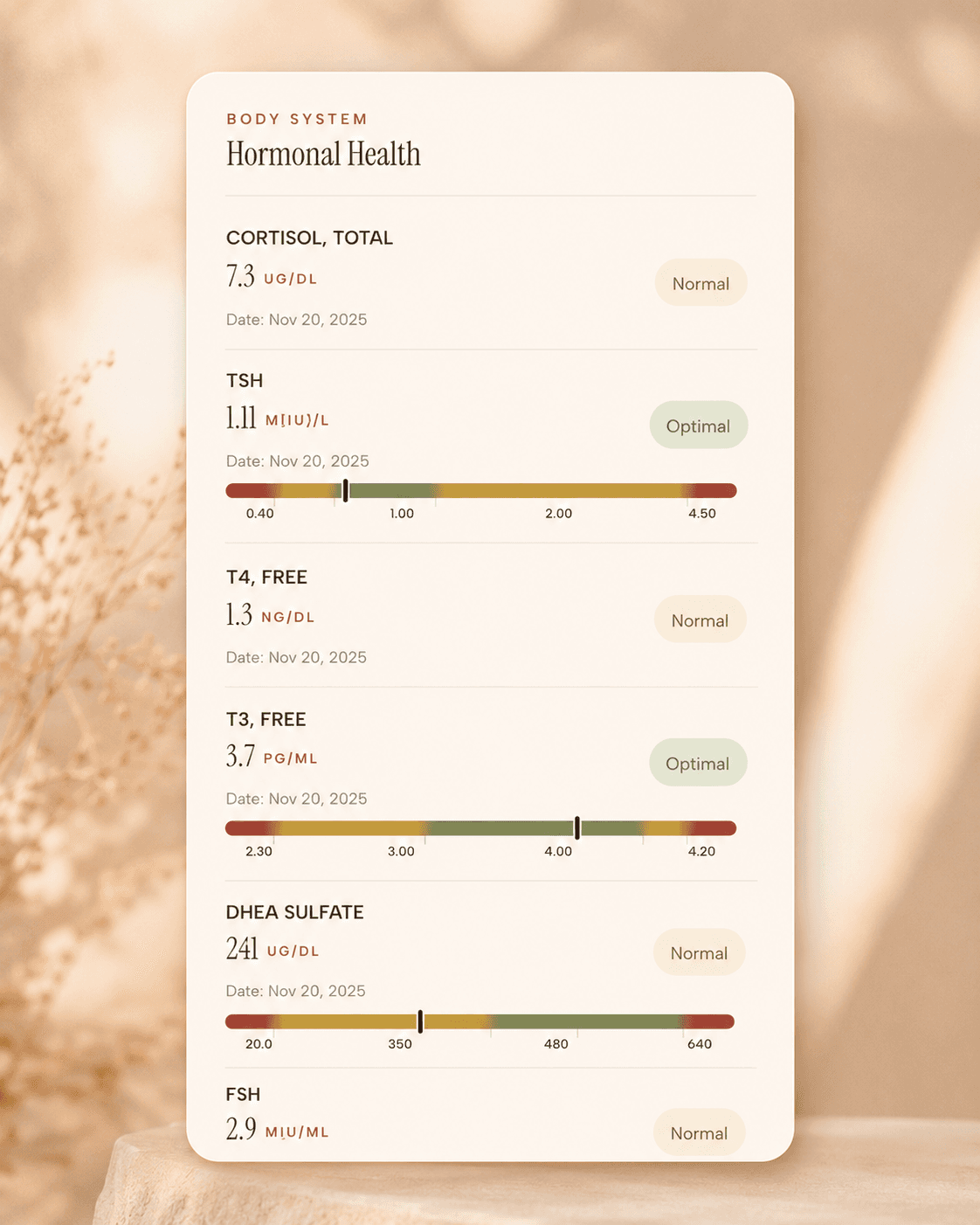
TSH is the master regulator of thyroid function, controlling the production of thyroid hormones T4 and T3. In functional medicine, we use narrower TSH ranges than conventional medicine to identify subclinical thyroid dysfunction early. Even mildly elevated TSH can indicate thyroid insufficiency, leading to fatigue, weight gain, depression, and metabolic dysfunction. TSH levels are influenced by stress, nutrient deficiencies, autoimmune conditions, and environmental toxins. Optimal TSH supports energy, metabolism…
Learn moreLab testing
Check thyroid and sex-hormone signals at Quest
starting from $99 panel with 100+ tests, one visit
No referral needed
About 1 week
Schedule online — results typically within a week
Clear next steps
Guidance included, with follow-up care available
HSA / FSA
Eligible for pre-tax health spending accounts
Pro Tips
Try a two-week “desire log” that tracks sleep hours, stress level (1–10), and whether you felt any interest at all that day. Patterns show up fast, and it keeps you from blaming yourself when the real driver is exhaustion.
If you are in a relationship, swap “Why don’t you want sex?” for “What helps you feel safe and relaxed?” That one question often changes the whole dynamic and reduces pressure, which is the quickest libido boost for many teens.
If you think a medication is involved, write down the exact start date and dose changes and compare them to when libido changed. Bringing that timeline to your clinician makes it much easier to adjust treatment without guesswork.
If sex feels uncomfortable, treat comfort as the goal for a month. Use lubricant, slow down, and stop before pain starts, because your brain learns avoidance quickly when pain is part of the story.
Ask for labs in the morning when possible, especially for testosterone-related tests, because levels can be higher earlier in the day. If a result is borderline, repeating it once under similar conditions is often more informative than panicking over a single number.
Frequently Asked Questions
Is it normal to have low libido as a teenager?
Yes, it can be normal because desire in adolescence is not constant, and it is strongly affected by sleep, stress, and how safe you feel. A drop is more concerning when it is persistent for months and comes with other changes like fatigue, depressed mood, or missed periods. If it feels like a real shift from your usual baseline, consider checking TSH and discussing mental health and medications with a clinician.
Can stress really lower your sex drive that much?
Absolutely, because stress pushes your body toward “get through the day” chemistry rather than “connect and explore” chemistry. You might notice you still feel attraction in your head, but your body does not respond, or you feel irritable when someone initiates. If your libido improves after a break or a calmer week, that is strong evidence stress is a main cause.
Do antidepressants cause low libido in teens?
They can, especially SSRIs, which may reduce desire and make arousal or orgasm harder even when your mood is improving. This is common enough that it is worth bringing up directly, because prescribers can sometimes adjust the dose, timing, or medication choice. Do not stop an antidepressant suddenly; instead, ask for a plan that protects both your mental health and your quality of life.
What hormone tests should I get for low libido?
A practical starting trio is TSH for thyroid function, free testosterone for bioavailable androgen signal, and prolactin to check for a hormone that can suppress sexual interest when elevated. These tests do not “diagnose” your whole life, but they can rule in or out common biological contributors. If results are abnormal, ask for interpretation using age-appropriate ranges and your puberty stage.
When should I worry and get checked out?
Get checked if low libido comes with severe depression, panic, eating restriction, rapid weight change, new headaches with vision changes, breast discharge, missed periods, or erectile pain. Those combinations can point to treatable medical issues such as thyroid problems or high prolactin, and they deserve timely attention. If you are not sure where to start, bring a short symptom timeline and ask specifically whether TSH, prolactin, and sex-hormone testing makes sense for you.
Research and clinical guidance
Global consensus on testosterone therapy in women (context for how testosterone relates to sexual desire and why “low libido” is not just a number)
Endocrine Society guideline on testosterone therapy in men (useful for understanding testing, interpretation, and why symptoms matter alongside levels)
American Academy of Pediatrics guidance on adolescent sexuality (development, consent, and why desire varies widely in teens)