Low Libido in Your 30s: Causes, Fixes, and Lab Tests
Low libido in your 30s is often from stress and sleep loss, hormone shifts, or medication effects. Targeted labs available at Quest—no referral needed.






Low libido in your 30s is usually your body’s “wanting” system getting crowded out by stress and poor sleep, shifted by hormones (like low testosterone or high prolactin), or dampened by medications such as SSRIs and some birth control. It can also show up when pain, dryness, or relationship tension makes sex feel like work instead of connection. A few targeted labs can help you figure out which bucket you’re in so you stop guessing. This is a frustrating symptom because desire is not a single switch. Your brain needs enough energy, safety, and reward to feel interest, and your body needs comfortable arousal to make that interest worth acting on. In your 30s, careers, kids, shifting routines, and new medications can all change that equation fast. Below, you’ll see the most common causes, what tends to help in real life, and which tests are most useful. If you want help connecting your specific pattern to the most likely cause, PocketMD can talk it through with you, and Vitals Vault labs can help you confirm what’s happening biologically.
Why your libido can drop in your 30s
Stress and a tired nervous system
When your brain is running on deadlines, childcare, or constant mental load, it prioritizes survival tasks over pleasure. Stress hormones can blunt the “reward” feeling that normally makes you curious about sex, and you may notice you can enjoy it once it starts but rarely initiate. A useful clue is that your desire improves on vacation or after a few nights of solid sleep, which points you toward recovery and workload changes rather than a mystery disease.
Sleep loss and low energy
Desire is energy-dependent, and chronic short sleep can lower morning testosterone and increase irritability, which makes intimacy feel like one more demand. If you also feel less motivated in general, crave caffeine to function, or fall asleep the moment you stop moving, libido is often just the loudest symptom. Treating sleep as a medical issue — not a willpower issue — is often the turning point, especially if snoring or waking unrefreshed suggests sleep apnea.
Hormone shifts: testosterone or prolactin
Testosterone supports sexual interest in all genders, and when it’s low you might feel like the “spark” is missing even if you love your partner. High prolactin (a hormone that rises with some pituitary issues and certain medications) can also shut down desire and sometimes affects erections, lubrication, or menstrual regularity. The takeaway is simple: if low libido comes with new fatigue, fewer spontaneous thoughts about sex, or cycle changes, it’s worth checking hormones rather than assuming it’s “just aging.”
Medication and birth control effects
Some antidepressants (especially SSRIs) can reduce desire and make orgasm harder to reach, even when your mood is better. Certain hormonal contraceptives can raise a protein that binds testosterone (sex hormone–binding globulin), which means less free testosterone is available to your tissues. If your timing lines up with starting or changing a medication, bring it up directly, because dose changes, switching agents, or add-on strategies can help without sacrificing mental health or pregnancy prevention.
Pain, dryness, or body-image friction
If sex has started to hurt or feel irritating, your brain learns to avoid it, and that avoidance can look like “low libido” from the outside. Dryness, pelvic floor tension, postpartum changes, and even recurrent yeast or urinary symptoms can make arousal feel unsafe rather than pleasurable. A practical next step is to treat comfort as the priority for a few weeks — lubrication, slower warm-up, and evaluation for infections or pelvic floor issues — because desire often returns when your body stops bracing.
What actually helps you want sex again
Rebuild desire with “low-pressure” intimacy
If every touch feels like it must lead to sex, your nervous system can start avoiding touch altogether. Try two weeks where you agree on connection without an endpoint — kissing, massage, showering together, or cuddling — and stop before it turns into a performance test. This often brings back spontaneous desire because your brain relearns that closeness is rewarding, not demanding.
Fix the sleep bottleneck first
Aim for a consistent wake time and protect the last hour before bed from work and scrolling, because your brain needs a runway to shift into rest. If you snore, wake with headaches, or feel unrefreshed despite “enough” hours, ask about sleep apnea testing, since treating it can noticeably improve libido within weeks. You are not trying to become a perfect sleeper; you are trying to give your hormones and mood a fair chance.
Review meds with a libido lens
Bring a short list to your clinician: what you take, when you started, and what changed in your sex drive after. For SSRI-related sexual side effects, options can include switching antidepressants, adjusting dose timing, or adding a medication that counteracts sexual blunting, depending on your situation. The key is not to stop meds abruptly, but to treat libido as a real quality-of-life outcome worth optimizing.
Treat pain and dryness like a cause
Use a generous, body-safe lubricant and give yourself more warm-up time than you think you “should” need, because arousal often lags when you’re stressed or postpartum. If you have burning, tearing, bleeding, or persistent pelvic pain, get evaluated rather than pushing through, since conditions like infections, vulvar pain, or pelvic floor spasm respond to targeted treatment. Comfortable sex is not a luxury; it is the foundation that makes desire possible.
Target the hormone issue you find
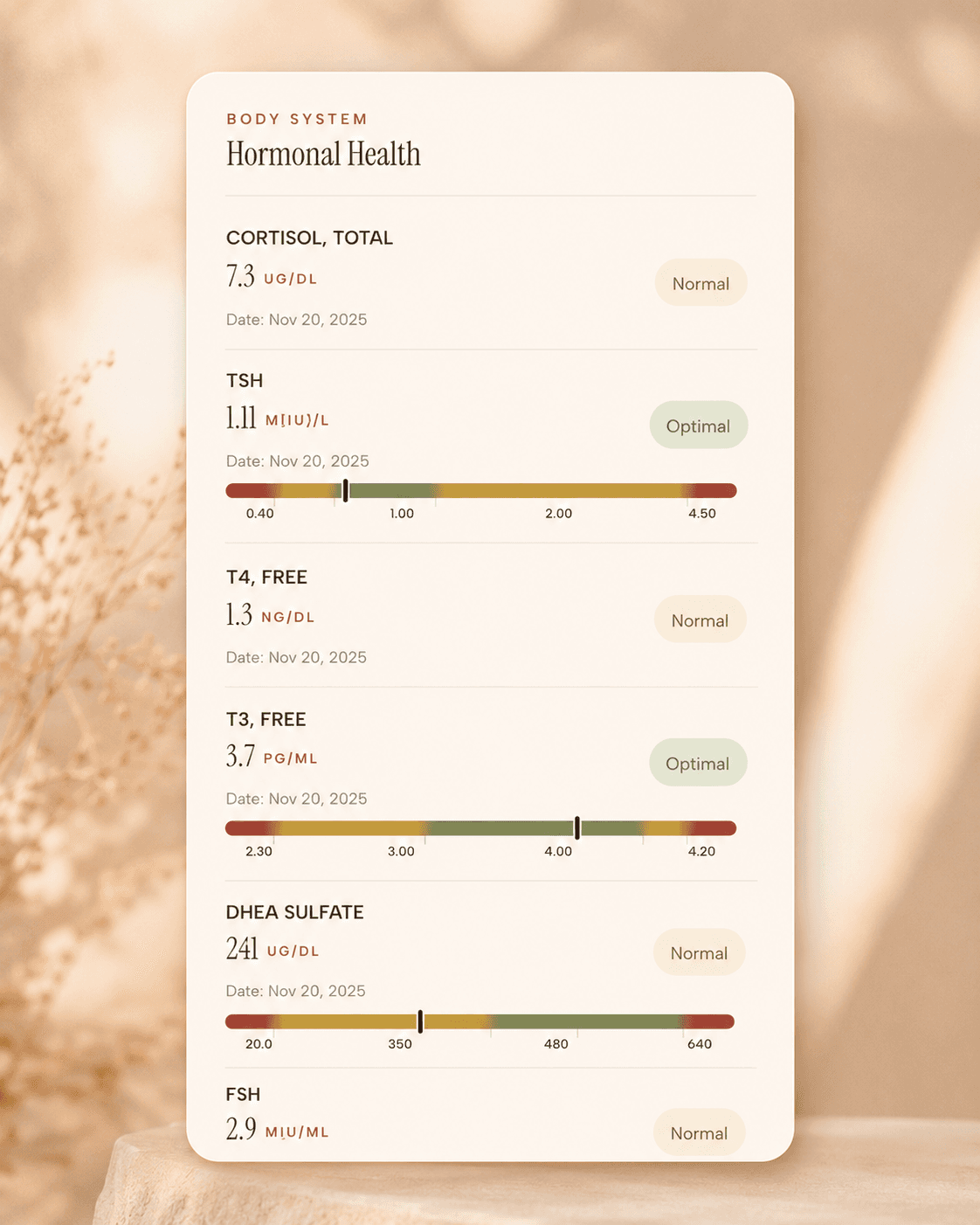
If labs show thyroid problems, treating them often improves energy and interest in sex because your metabolism and mood stabilize. If prolactin is high, the fix may be as simple as changing a medication, or it may require a focused workup, and libido can improve once levels normalize. If testosterone is low, the right approach depends on your sex, fertility goals, and symptoms, so use results to guide a real plan rather than guessing with supplements.
Useful biomarkers to discuss with your clinician
Testosterone, Total, Ms
Total testosterone is the primary male sex hormone responsible for muscle mass, bone density, libido, energy levels, and cognitive function. In functional medicine, we recognize testosterone as a key marker of vitality and aging. Low testosterone (hypogonadism) affects up to 40% of men over 45 and is linked to metabolic syndrome, cardiovascular disease, depression, and reduced quality of life. Optimal testosterone levels support healthy body composition, sexual function, motivation, and overall masculine vitalit…
Learn moreSex Hormone Binding Globulin
SHBG levels determine how much sex hormone is "free" and biologically active. High SHBG reduces bioavailable testosterone/estrogen, while low SHBG increases it. Understanding SHBG is crucial for interpreting total hormone levels and diagnosing conditions like PCOS, hypogonadism, and metabolic syndrome. Sex Hormone Binding Globulin (SHBG) is a protein produced by the liver that binds to sex hormones (testosterone, estrogen, and DHT), regulating their availability to tissues throughout the body.
Learn moreEstradiol
Estradiol in men is produced from testosterone via aromatase enzyme. In functional medicine, we recognize that men need optimal estradiol levels for bone health, cognitive function, and cardiovascular protection. However, excessive estradiol can suppress testosterone production and cause feminizing effects. The testosterone-to-estradiol ratio is crucial for male health, with optimal balance supporting vitality while preventing estrogen dominance. Balanced estradiol levels in men support bone health and cognitive…
Learn moreLab testing
Check testosterone, prolactin, and thyroid function at Quest
starting from $99 panel with 100+ tests, one visit
No referral needed
About 1 week
Schedule online — results typically within a week
Clear next steps
Guidance included, with follow-up care available
HSA / FSA
Eligible for pre-tax health spending accounts
Pro Tips
Do a 14-day “desire audit” where you rate desire from 0–10 each day and write one sentence about sleep quality and stress level. Patterns show up fast, and they often point to sleep debt or burnout more clearly than any hormone theory.
If you’re partnered, try scheduling a 20-minute connection window twice a week that is explicitly not a sex appointment. When your brain stops anticipating pressure, it is much more likely to let desire appear.
If you suspect a medication effect, write down the exact week your libido changed and what else changed at the same time. That timeline is incredibly persuasive in a clinic visit and helps you and your clinician choose the safest adjustment.
If penetration is uncomfortable, switch the goal to comfort for a month and use a lubricant plus slower pacing. Desire commonly rebounds when your body stops associating sex with irritation or pain.
Get testosterone checked in the morning and avoid heavy exercise and alcohol the night before if you can. You want a clean baseline so you don’t chase a false low with unnecessary interventions.
Frequently Asked Questions
Is low libido in your 30s normal?
It’s common, but “common” doesn’t mean you have to accept it as your new baseline. In your 30s, low desire is often driven by stress, sleep loss, medication effects, or hormone shifts such as thyroid problems or low testosterone. If it’s lasted more than a couple of months or it’s causing relationship strain, pick one next step: address sleep, review meds, or get targeted labs like TSH, prolactin, and morning total testosterone.
Can antidepressants cause low sex drive even if they help my mood?
Yes. SSRIs and SNRIs can blunt desire and make orgasm harder, and that can happen even when anxiety or depression improves. Don’t stop your medication suddenly; instead, tell your prescriber what changed and ask about options like switching agents, adjusting dose timing, or adding a strategy to reduce sexual side effects.
What hormone tests should I get for low libido?
A practical starting trio is morning total testosterone, prolactin, and TSH because they cover common, treatable biological reasons desire drops. If testosterone is low or symptoms are strong, clinicians often add SHBG and sometimes LH/FSH to interpret what “low” means for you. Bring your results and your symptom timeline to a visit so the numbers get matched to your real life.
Can thyroid problems lower libido?
They can. Hypothyroidism often causes fatigue, low mood, and low interest in sex, while hyperthyroidism can disrupt sleep and increase anxiety, which also kills desire. A TSH test is the usual first step, and many people feel best when TSH is roughly 0.5–2.5 mIU/L, even if the lab’s normal range is wider.
When should I worry that low libido is something serious?
Pay attention if low libido comes with red flags like nipple discharge, new severe headaches or vision changes, rapidly worsening fatigue, unexplained weight change, or major menstrual changes, because those can point to hormone disorders that need prompt evaluation. Also take it seriously if sex has become painful, since pain can be treated and you shouldn’t have to push through it. If any of those fit, schedule a clinician visit and consider labs like prolactin and TSH to speed up answers.