Low Libido in Your 40s: What It Means and What to Do
Low libido in your 40s often comes from hormone shifts, stress and sleep loss, or medication effects. Targeted labs at Quest—no referral needed.






Low libido in your 40s is usually your body reacting to a few common pressures: hormone shifts (especially around perimenopause or lower testosterone), chronic stress with poor sleep, or medication side effects. It can also show up when sex starts to feel uncomfortable, which makes your brain avoid it even if you still love your partner. A small set of labs can help you sort out which bucket you’re in, so you’re not guessing. This symptom is frustrating because desire is not a simple “on/off switch.” It is a mix of hormones, brain chemistry, relationship context, and whether your body expects sex to feel good or draining. The good news is that low libido is often very fixable once you identify the main driver. If you want help connecting your specific pattern to next steps, PocketMD can talk it through with you, and Vitals Vault labs can help you check the most relevant markers without turning this into a months-long project.
Why your sex drive can drop in your 40s
Perimenopause hormone shifts
In your 40s, estrogen and progesterone can swing unpredictably even before periods change much, which can affect arousal, mood, and sleep. When estrogen runs lower, vaginal tissue can get drier and more sensitive, so sex starts to feel irritating instead of rewarding. If you notice new dryness, burning, or pain with penetration, treat that as a real medical clue rather than “just stress,” because addressing comfort often brings desire back.
Lower testosterone than your baseline
Testosterone supports sexual thoughts, sensitivity, and the “spark,” but what matters most is your personal baseline, not a single number on a lab printout. Levels can drift down with age, weight changes, sleep apnea, heavy training without recovery, or certain medications. If you feel less spontaneous desire plus lower energy or weaker workouts, it is reasonable to check total testosterone and then interpret it with a clinician in the context of your symptoms.
Stress and sleep debt
When your nervous system lives in “go mode,” your body prioritizes getting through the day, not reproduction or pleasure. High stress hormones can blunt arousal signals, and poor sleep lowers next-day desire while also worsening irritability and body image. A useful takeaway is to treat sleep like a libido intervention: if you can add even 45–60 minutes of consistent sleep for two weeks, many people notice desire returning before they change anything else.
Medication side effects
Some common meds can flatten desire or make orgasm harder, especially antidepressants like SSRIs and SNRIs, as well as certain blood pressure medicines and hormonal contraception. The tricky part is that the medication may be helping your mood or anxiety, so stopping abruptly can backfire. Instead, bring it up directly and ask about options such as dose adjustments, switching agents, or add-on strategies that protect sexual function while keeping your mental health stable.
Thyroid or prolactin problems
Your thyroid sets the pace for energy and metabolism, so when it is underactive, sex can feel like another chore because you are tired, cold, and mentally foggy. High prolactin (a hormone that rises with some pituitary issues and certain medications) can directly suppress sex hormones and reduce desire in any sex. If low libido comes with new fatigue, constipation, breast discharge, headaches, or vision changes, that is a strong reason to check TSH and prolactin rather than assuming it is “just aging.”
What actually helps you want sex again
Fix pain and dryness first
If sex hurts, your brain learns to avoid it, and that avoidance can look like “low libido” even when attraction is still there. Start with a high-quality lubricant and consider a vaginal moisturizer a few times per week if dryness is frequent. If symptoms persist, ask about vaginal estrogen or other local therapies, because improving comfort often restores desire faster than any supplement.
Make sleep a non-negotiable experiment
Try a two-week sleep reset where you keep the same wake time daily and aim for 7.5–8.5 hours in bed, even if you do not fall asleep instantly at first. This matters because libido is tightly linked to energy, and sleep also supports testosterone and mood regulation. If you snore, wake up gasping, or feel unrefreshed after 8 hours, ask about sleep apnea testing because treating it can be a game changer for desire.
Have a “pressure-free” intimacy plan
Desire often returns when your body stops expecting sex to turn into performance or conflict. Agree on a short window, like 15–20 minutes, where the goal is touch and connection and where intercourse is explicitly off the table unless you both want it. This reduces anxiety, builds positive feedback again, and gives you data about what actually turns you on now.
Review meds with a plan, not guilt
If your libido dropped after starting or increasing a medication, write down the timeline and the specific change you noticed, such as less desire, numbness, or delayed orgasm. Bring that to your prescriber and ask, “What are my options that keep my main condition controlled?” Many people do best with a thoughtful switch or adjustment rather than trying to power through for years.
Target the driver you find in labs
If labs suggest hypothyroidism, treating it can improve energy and sexual interest over weeks to a few months. If prolactin is high, the next step is usually repeating the test under calm conditions and reviewing medications, because stress and some drugs can raise it. If testosterone is low for your situation, a clinician can discuss whether lifestyle changes, treating sleep apnea, or hormone therapy makes sense, and what monitoring is needed so you stay safe.
Useful biomarkers to discuss with your clinician
Testosterone, Total, Ms
Total testosterone is the primary male sex hormone responsible for muscle mass, bone density, libido, energy levels, and cognitive function. In functional medicine, we recognize testosterone as a key marker of vitality and aging. Low testosterone (hypogonadism) affects up to 40% of men over 45 and is linked to metabolic syndrome, cardiovascular disease, depression, and reduced quality of life. Optimal testosterone levels support healthy body composition, sexual function, motivation, and overall masculine vitalit…
Learn moreEstradiol
Estradiol in men is produced from testosterone via aromatase enzyme. In functional medicine, we recognize that men need optimal estradiol levels for bone health, cognitive function, and cardiovascular protection. However, excessive estradiol can suppress testosterone production and cause feminizing effects. The testosterone-to-estradiol ratio is crucial for male health, with optimal balance supporting vitality while preventing estrogen dominance. Balanced estradiol levels in men support bone health and cognitive…
Learn moreDhea Sulfate
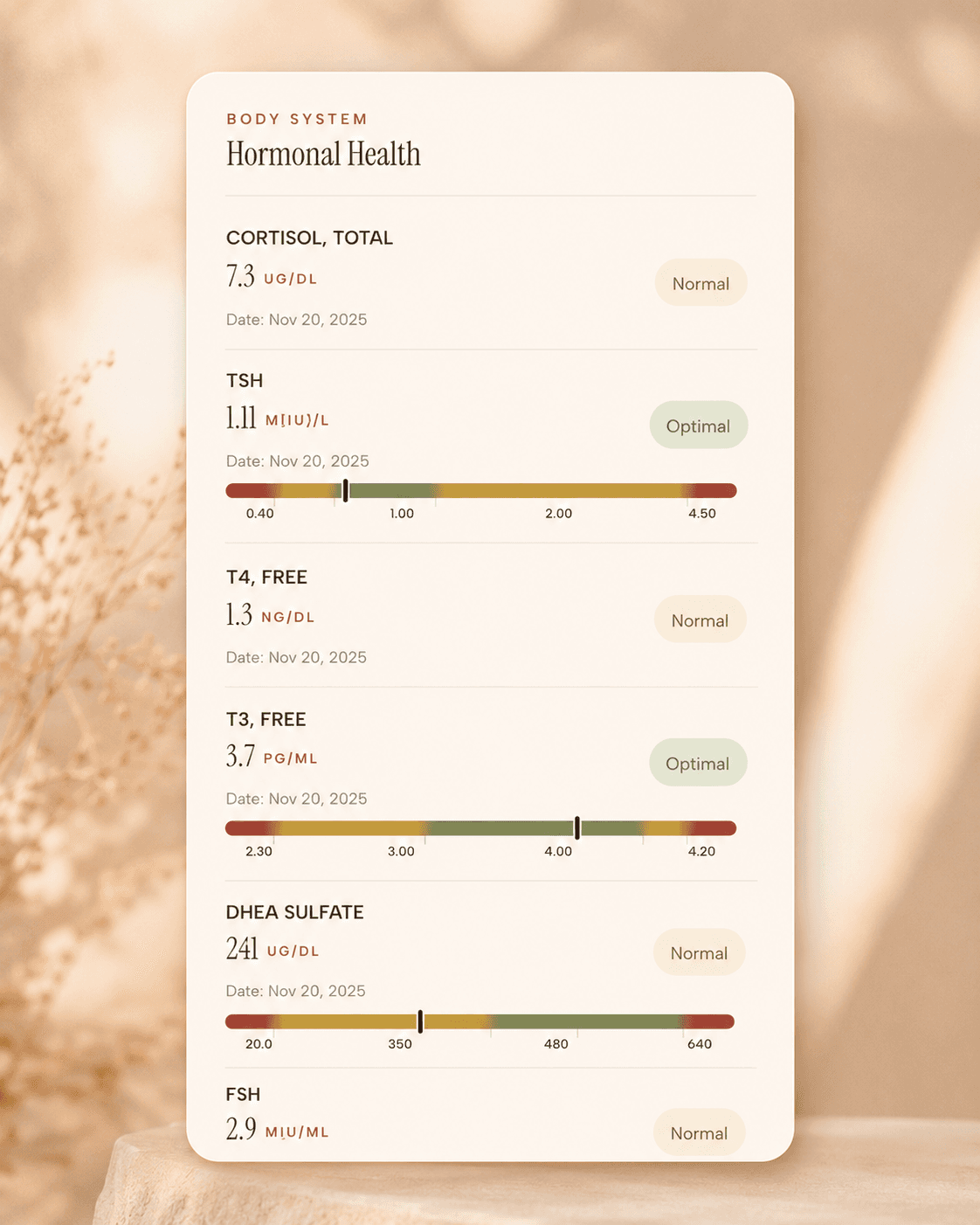
DHEA-S levels reflect adrenal function and decline naturally with age. It's used to evaluate adrenal tumors, congenital adrenal hyperplasia, and androgen excess conditions like PCOS. Some consider it a marker of biological aging and stress resilience. DHEA-Sulfate (DHEA-S) is a hormone produced by the adrenal glands that serves as a precursor to sex hormones (testosterone and estrogen). It's the most abundant steroid hormone in the body.
Learn moreLab testing
Get TSH, prolactin, and total testosterone checked at Quest
starting from $99 panel with 100+ tests, one visit
No referral needed
About 1 week
Schedule online — results typically within a week
Clear next steps
Guidance included, with follow-up care available
HSA / FSA
Eligible for pre-tax health spending accounts
Pro Tips
Do a two-week “desire audit” where you rate desire from 0–10 each day and jot down sleep hours and stress level; patterns show up fast, and they beat guessing.
If you have pain, don’t push through it. Use lubricant every time for two weeks and see whether your body stops bracing, because comfort is often the missing link to desire.
Pick one low-stakes time to talk with your partner when you are not in bed and say, “I want us to be close, but my body isn’t responding the same way.” That single sentence reduces blame and makes problem-solving possible.
If you suspect a medication effect, write the exact start date or dose change and the exact sexual change you noticed. Bringing a timeline to your clinician usually leads to better options than a vague “my libido is gone.”
When you get hormone labs, try to test in the morning and avoid a hard workout the night before. It makes results easier to interpret and reduces false alarms.
Frequently Asked Questions
Is low libido in your 40s normal or a sign something is wrong?
It is common, but it is not something you have to accept as “just aging.” In your 40s, hormone shifts, chronic stress with sleep loss, and medication side effects are three of the biggest drivers, and each has a different fix. If the change is sudden, distressing, or paired with fatigue, pain with sex, or mood changes, get a targeted check like TSH, prolactin, and testosterone so you can act on real information.
Can antidepressants cause low libido even if they help my mood?
Yes. SSRIs and SNRIs can reduce desire and make orgasm harder even when they are doing a great job for anxiety or depression. The most useful next step is to tell your prescriber what changed and when, because options can include dose changes, switching medications, or add-on strategies rather than stopping abruptly. Ask specifically, “What’s the plan to protect sexual function while keeping my mood stable?”
What hormone tests should I get for low libido?
A practical starting trio is TSH for thyroid function, prolactin to rule out a libido-suppressing hormone signal, and total testosterone to assess androgen support for desire. These tests do not diagnose everything, but they help you avoid missing common, treatable causes. If results are borderline, your clinician may add free testosterone calculations, SHBG, or sex-specific hormone testing based on your symptoms.
Does perimenopause lower libido even if my periods are still regular?
It can, because perimenopause is often about hormone swings, not just skipped periods. You might notice lower desire alongside sleep disruption, mood changes, or new vaginal dryness that makes sex less appealing. If dryness or pain is part of the picture, addressing vaginal comfort directly is often the fastest way to improve libido.
When should I worry about low libido and see a doctor?
If low libido comes with pain during sex, new breast discharge, persistent headaches, vision changes, or major fatigue, it is worth getting checked sooner rather than later because thyroid or prolactin issues can be involved. You should also seek help if the change is sudden after a new medication or if it is causing relationship distress that you cannot talk through. Bring a short symptom timeline and ask about checking TSH, prolactin, and testosterone as a focused first step.