Why You Can’t Focus at Work (and What Helps)
Lack of focus in working women often comes from low iron, thyroid slowdown, or sleep debt. Targeted blood tests are available at Quest—no referral needed.






Lack of focus at work usually comes down to a few fixable buckets: your brain is under-slept, your stress system is stuck “on,” or your body is running low on key inputs like iron or thyroid hormone. It can feel like you are lazy or “not trying,” but it is often biology plus workload colliding. Targeted labs can help you figure out which bucket you are in so you stop guessing. This is especially common when you are juggling deadlines, caregiving, studying, remote work, or constant notifications, because your attention system is being asked to switch gears all day long. Some people also have ADHD traits that only become obvious when life gets more complex, while others have brain fog from low iron, thyroid changes, or poor sleep quality. In this guide, you will learn the most common causes, what helps in real life, and which blood tests are worth checking. If you want help sorting your pattern quickly, PocketMD can walk through your symptoms and next steps, and Vitals Vault labs can help confirm what is going on.
Why focus slips at work (even when you care)
Sleep debt and poor sleep quality
When you are not getting enough deep, consistent sleep, your brain’s “executive” system has less fuel for planning, prioritizing, and resisting distractions. That shows up as rereading the same email, forgetting why you opened a tab, or feeling mentally slow by mid-afternoon. A useful clue is that your focus improves noticeably after two nights of solid sleep, even if your workload is unchanged.
Chronic stress overloads attention
Long stretches of stress keep your body in a threat-ready state, which is great for emergencies but terrible for sustained concentration. Your mind starts scanning for problems, so you feel jumpy, impatient, and pulled toward task-switching because it briefly relieves pressure. If your lack of focus comes with a tight chest, irritability, or “wired but tired” energy, treating stress like a body state—not a personality flaw—usually changes the game.
Low iron stores (iron deficiency)
You can have low iron stores even with a “normal” hemoglobin, and your brain may feel it first. Iron helps your cells make energy and supports dopamine signaling, so low stores can feel like brain fog, low motivation, and poor stamina for complex work. Heavy periods, frequent blood donation, and endurance training are common reasons, so it is worth checking ferritin rather than assuming it is just burnout.
Thyroid slowdown affects mental speed
If your thyroid is underactive, your whole system runs a bit slower, including processing speed and working memory. You might notice that you can do simple tasks but struggle with multi-step work, and you may also feel colder than others or more constipated than usual. A TSH test can flag this pattern, and it is especially relevant if focus problems arrived alongside fatigue or unexplained weight changes.
ADHD traits unmasked by workload
Some women compensate for attention differences for years through structure, urgency, or sheer effort, and then a new job, remote work, or parenting removes the scaffolding. The result is not just distraction, but time blindness, procrastination that feels physically painful, and difficulty starting tasks even when you want to. If this pattern has been present since childhood or shows up across settings, it is worth discussing an ADHD evaluation rather than treating it as a temporary slump.
What actually helps you focus (without becoming a robot)
Do a two-week focus pattern check
For 14 days, track when focus is best and worst, and note sleep length, caffeine timing, cycle day, and whether you ate protein at breakfast. You are looking for repeatable patterns, like a crash after a high-sugar lunch or a sharp dip in the late luteal phase. Once you can predict your “low-focus window,” you can schedule shallow tasks there and protect your best hours for deep work.
Use one-tab work blocks
Your brain pays a switching cost every time you jump between apps, even if it feels fast. Try 25 minutes where you keep one document and one reference tab open, and park everything else in a “later” list so you do not negotiate with yourself mid-task. If you do this twice a day, you often get more done than with an entire day of scattered effort.
Fix the afternoon crash strategically
If you fade after lunch, start by changing the order of your meal rather than trying to “power through.” Eating protein and fiber first, then starches, tends to blunt the blood sugar swing that can make you sleepy and foggy. A 10-minute brisk walk right after eating can be surprisingly effective because it helps your muscles clear glucose and signals your brain that it is still daytime.
Treat sleep like a focus medication
If you wake up unrefreshed, focus tools will only go so far because your brain is still trying to protect itself. Pick one lever you can actually sustain, such as a consistent wake time within a 60-minute window, and a 30-minute “lights down” buffer where you stop work and stop scrolling. If snoring, gasping, or morning headaches are part of the picture, ask about sleep apnea testing because treating it can improve concentration within weeks.
Match the fix to the cause
If labs show low ferritin or low B12, supplements and diet changes can meaningfully improve mental clarity, but they take weeks, not days. If your pattern fits ADHD, external structure like body-doubling, visual timers, and coaching can help immediately, and medication may be an option after a proper evaluation. The point is to stop using willpower for a problem that is actually physiology or neurobiology.
Lab tests that help explain lack of focus in working women
Iron, Total
Serum iron measures the amount of iron circulating in your blood at the time of testing. In functional medicine, we recognize that serum iron alone provides limited information about iron status, as it fluctuates throughout the day and is affected by recent iron intake, inflammation, and diurnal variation. However, when combined with other iron studies, it helps assess iron metabolism and transport. Iron is essential for oxygen transport, energy production, DNA synthesis, and immune function. Optimal serum iron…
Learn moreTSH
TSH is the master regulator of thyroid function, controlling the production of thyroid hormones T4 and T3. In functional medicine, we use narrower TSH ranges than conventional medicine to identify subclinical thyroid dysfunction early. Even mildly elevated TSH can indicate thyroid insufficiency, leading to fatigue, weight gain, depression, and metabolic dysfunction. TSH levels are influenced by stress, nutrient deficiencies, autoimmune conditions, and environmental toxins. Optimal TSH supports energy, metabolism…
Learn moreFerritin
Ferritin is your body's iron storage protein, reflecting total iron stores in the body. In functional medicine, ferritin assessment is crucial for identifying both iron deficiency and iron overload, conditions that can significantly impact energy levels and overall health. Low ferritin is the earliest sign of iron deficiency, often occurring before anemia develops. This can cause fatigue, weakness, restless leg syndrome, and cognitive impairment. Conversely, elevated ferritin may indicate iron overload, inflamma…
Learn moreLab testing
Get ferritin, TSH, and vitamin B12 checked at Quest
starting from $99 panel with 100+ tests, one visit
No referral needed
About 1 week
Schedule online — results typically within a week
Clear next steps
Guidance included, with follow-up care available
HSA / FSA
Eligible for pre-tax health spending accounts
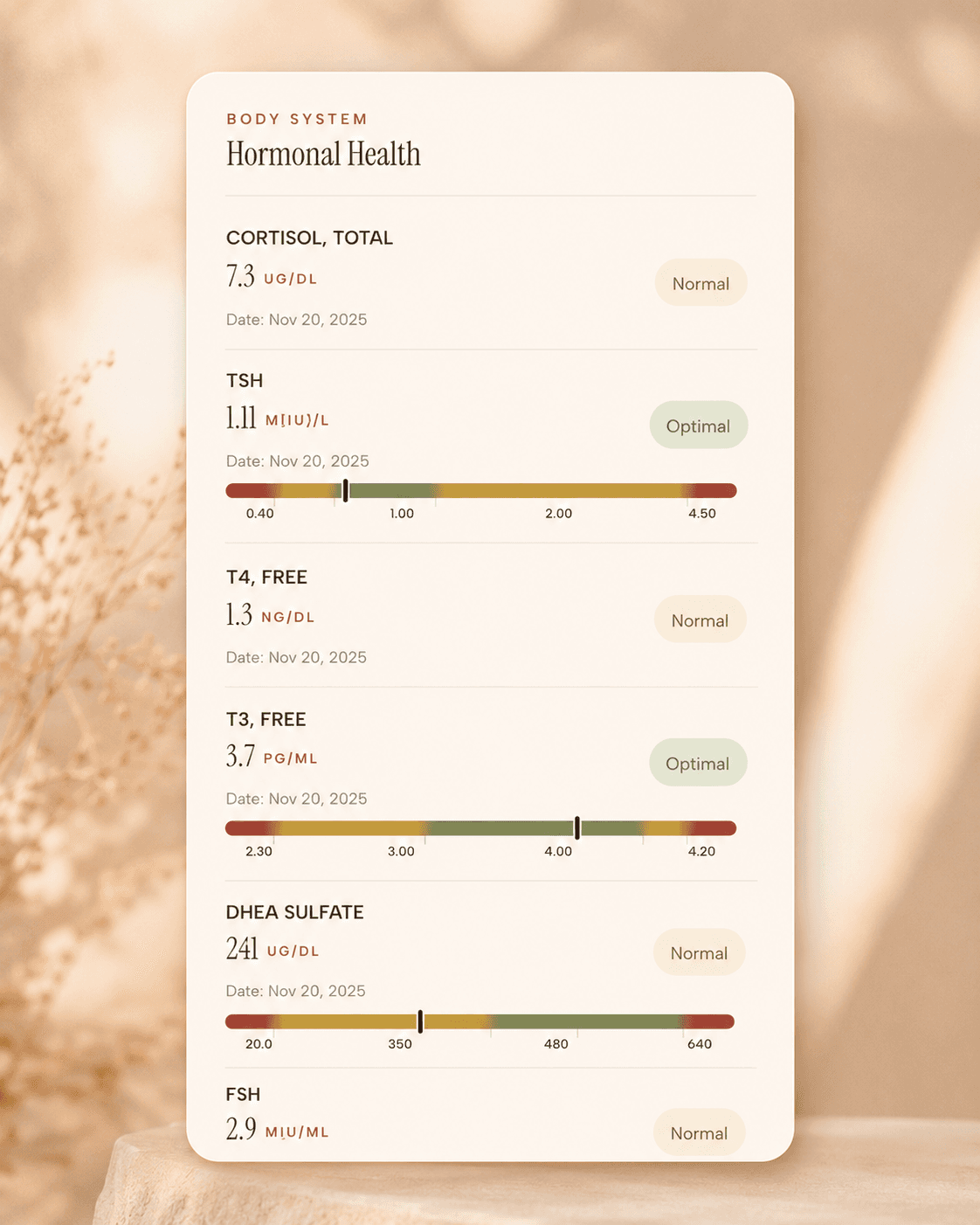
Pro Tips
Try a “first 10 minutes” rule: set a timer for 10 minutes and only commit to starting the task, because initiation is often the hardest part when you are stressed or ADHD-adjacent. Once you are moving, decide whether to continue for another 15 minutes.
Move caffeine earlier than you think. If you drink coffee after about 1–2 pm and your sleep is light, you can end up in a loop where caffeine worsens sleep and poor sleep worsens focus the next day.
If you have heavy periods, do not wait for anemia to treat low iron. Ask for ferritin specifically, and if it is low, pair iron with vitamin C and take it away from calcium to improve absorption.
Create a single capture place for “open loops,” like a notes app or sticky note, and dump every distracting thought there during work blocks. Your brain relaxes when it trusts you will not forget, which makes it easier to stay on one task.
If your focus tanks in the week before your period, plan around it instead of fighting it. Put meetings, admin, and routine tasks there, and schedule deep work for the follicular phase when many women feel more mentally sharp.
Frequently Asked Questions
Why can’t I focus at work even though I’m motivated?
Motivation and focus are not the same system. You can care deeply and still struggle if you are under-slept, chronically stressed, low on iron (ferritin), or dealing with thyroid slowdown (TSH changes). A useful next step is to track when focus is worst and consider checking ferritin, TSH, and vitamin B12 if fatigue or brain fog is also present.
Is lack of focus a sign of ADHD in women?
It can be, especially if you have lifelong patterns like time blindness, chronic procrastination, and difficulty starting tasks across school, home, and work. But many ADHD-like symptoms are also caused by sleep deprivation, anxiety, low iron stores, or thyroid issues. If the pattern has been there since childhood or you have strong functional impairment, ask for a formal ADHD evaluation rather than self-diagnosing.
What vitamin deficiency causes brain fog and poor concentration?
Low vitamin B12 is a common, testable cause of brain fog, and symptoms can show up even in the low-normal range. Many people aim for B12 above about 400–500 pg/mL when cognitive symptoms are present, and confirm borderline cases with methylmalonic acid or homocysteine. If you are vegetarian, take metformin, or use acid-suppressing meds, checking B12 is especially worthwhile.
Can low iron cause trouble concentrating without anemia?
Yes. Ferritin reflects iron stores, and you can have low ferritin with a normal hemoglobin, especially with heavy periods. For focus and fatigue, many clinicians consider ferritin around 50–100 ng/mL a more supportive target than barely-normal values. If your ferritin is low, address both replacement and the reason you are losing iron.
When should I worry that brain fog is something serious?
Get urgent help if confusion is sudden, you have one-sided weakness, severe headache, fainting, chest pain, or new trouble speaking, because those are not typical “busy life” focus problems. For slower-onset fog, it is still worth seeing a clinician if it is worsening over weeks, affecting safety at work, or paired with weight loss, fevers, or neurological symptoms like numbness. Bring a short symptom timeline and any relevant lab results so you can move faster.