Why You Feel Brain Fog at Work (and What Helps)
Brain fog in working women often comes from poor sleep, iron deficiency, or thyroid imbalance. Targeted labs at Quest are available—no referral needed.






Brain fog in working women is usually your brain running on the wrong fuel: not enough restorative sleep, not enough oxygen delivery from low iron, or a metabolism shift from thyroid imbalance. Stress and hormonal changes can amplify all three, which is why you can feel “fine” emotionally but still think through mud. A few targeted labs can help you figure out which driver is most likely in your case. Brain fog is frustrating because it is not one thing. It can feel like slow processing, word-finding problems, forgetfulness, or staring at your screen without being able to start. Sometimes it is situational and reversible, and sometimes it is your body waving a flag that something basic is off. This guide walks you through the most common root causes in busy working women, what tends to help fastest, and which blood tests are worth prioritizing. If you want help connecting your symptoms to a plan, PocketMD can talk it through with you, and Vitals Vault labs can help you confirm what is going on.
Why brain fog hits during busy work seasons
Sleep debt and fragmented sleep
When you shorten sleep or wake up repeatedly, your brain loses deep sleep and REM, which are the phases that file memories and reset attention. The next day, it can feel like you are reading the same email three times and still not absorbing it. If your fog is worse after late-night work, early meetings, or scrolling in bed, treat sleep as the first “lab test” and run a two-week reset before assuming something scarier.
Low iron stores (ferritin)
You can have normal hemoglobin and still have low iron reserves, which means your brain may not get the oxygen and neurotransmitter support it needs for sharp focus. This often shows up as mental fatigue, headaches, feeling cold, or getting winded on stairs, especially if you have heavy periods or donate blood. The key takeaway is that ferritin is the number that often explains the story, not just a basic anemia screen.
Thyroid slowdown or overdrive
Your thyroid sets the pace for how quickly your cells make energy, so when it is underactive you can feel slowed down, forgetful, and puffy, and when it is overactive you can feel wired but unable to concentrate. At work, both can look like “I can’t think straight,” just with different body clues like constipation and dry skin versus palpitations and heat intolerance. If your fog comes with a noticeable change in weight, heart rate, or temperature tolerance, thyroid testing is a high-yield next step.
Blood sugar swings from skipped meals
If you run on coffee and adrenaline and then eat a big late lunch, your blood sugar can rise and fall quickly, and your brain feels that drop as irritability, shakiness, and sudden mental blankness. You might notice you are sharp at 9 a.m. and useless by 11 a.m., or you get “hangry fog” before meetings. A simple experiment is to add protein and fiber at breakfast and see if your late-morning cognition stops crashing.
Post-viral brain fog and inflammation
After some viral illnesses, including COVID-19, your nervous system can stay in a revved-up, inflamed state, which makes attention and word retrieval harder even when you are back at work. The fog often worsens after exertion, long days, or poor sleep, and it can come with headaches or a “heavy head” feeling. If your symptoms started after an infection and you keep crashing after busy days, pacing and recovery strategies matter as much as willpower.
What actually helps you think clearly
Do a 14-day sleep rebuild
Pick a realistic bedtime and wake time you can keep even on weekends, and protect the last 45 minutes before bed from work and bright screens. The goal is not perfection; it is consistency, because your brain’s attention network stabilizes when your circadian rhythm is predictable. If you snore, wake up choking, or feel unrefreshed after 8 hours, bring that up because sleep apnea is common and very treatable.
Eat for stable morning focus
If your fog hits mid-morning, try a breakfast that includes 25–35 grams of protein plus a slow carb, such as Greek yogurt with berries and oats or eggs with whole-grain toast. This reduces the spike-and-crash pattern that can make your brain feel like it is buffering. Keep caffeine, but delay the first cup 60–90 minutes after waking if you tend to feel jittery or anxious.
Treat iron deficiency thoughtfully
If ferritin is low, the fix is not just “take iron forever,” because dose, timing, and side effects matter. Many people do better with a lower-dose iron taken every other day with vitamin C, and avoiding it near coffee, tea, or calcium, which can block absorption. If you have heavy periods, the long-term win is also addressing the bleeding so your iron stores can actually stay up.
Check meds and supplements for fog
Some common medications can blunt attention, including certain antihistamines, sleep aids, and anxiety medications, and even “natural” supplements can be sedating. The pattern to watch for is fog that started after a new pill, a dose increase, or a new nighttime product. Do not stop prescriptions abruptly, but do bring a list to your clinician and ask, “Could any of these be contributing to cognitive slowing?”
Use pacing for post-viral crashes
If your fog flares after long workdays, treat your energy like a budget and schedule short recovery breaks before you feel depleted. A practical approach is a 5–10 minute downshift every 60–90 minutes, plus one “lighter” day after a heavy day, because overexertion can trigger a delayed crash. If you are not improving over 8–12 weeks or you are getting new neurologic symptoms, it is worth a medical review.
Lab tests that help explain brain fog
Ferritin
Ferritin is your body's iron storage protein, reflecting total iron stores in the body. In functional medicine, ferritin assessment is crucial for identifying both iron deficiency and iron overload, conditions that can significantly impact energy levels and overall health. Low ferritin is the earliest sign of iron deficiency, often occurring before anemia develops. This can cause fatigue, weakness, restless leg syndrome, and cognitive impairment. Conversely, elevated ferritin may indicate iron overload, inflamma…
Learn moreTSH
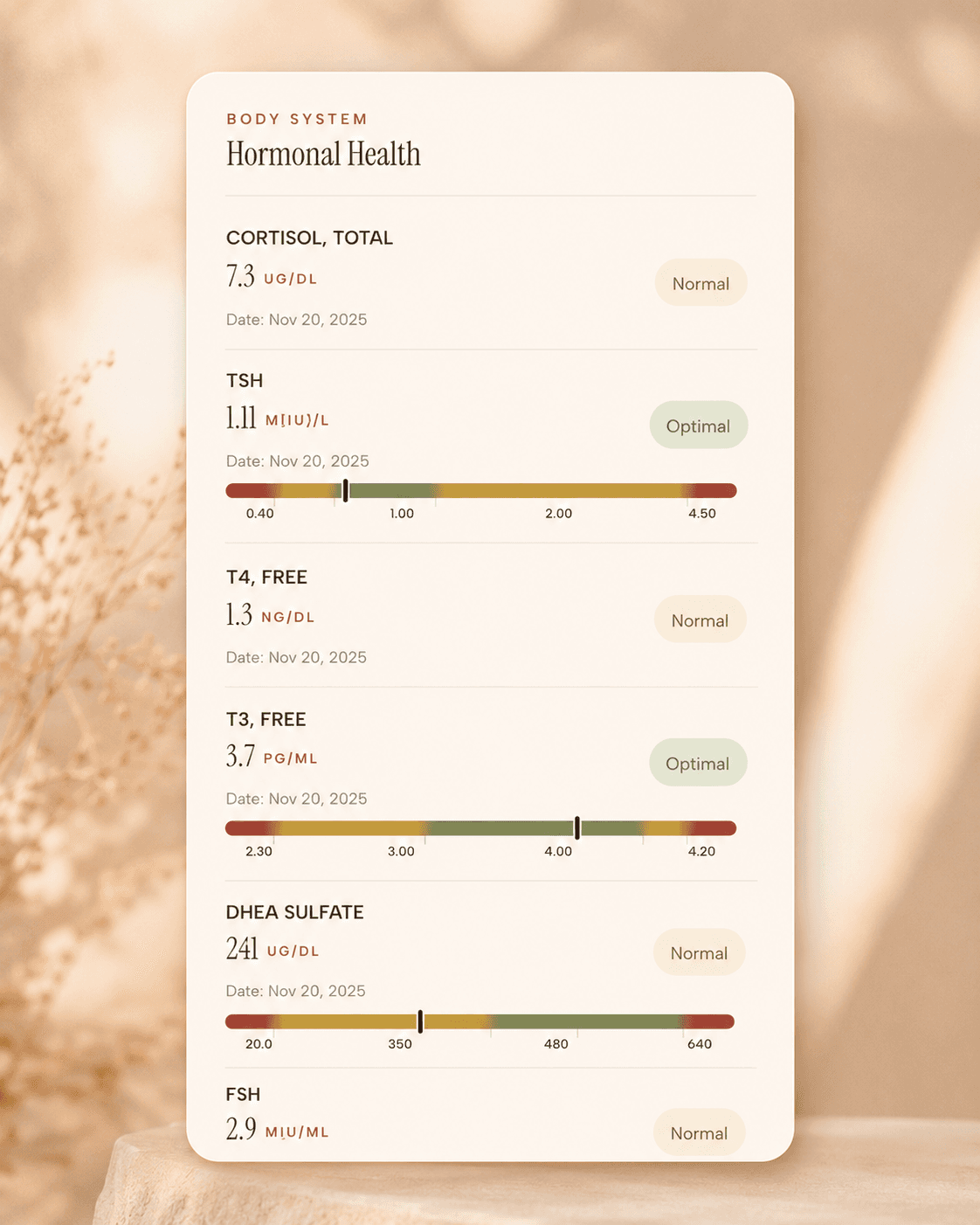
TSH is the master regulator of thyroid function, controlling the production of thyroid hormones T4 and T3. In functional medicine, we use narrower TSH ranges than conventional medicine to identify subclinical thyroid dysfunction early. Even mildly elevated TSH can indicate thyroid insufficiency, leading to fatigue, weight gain, depression, and metabolic dysfunction. TSH levels are influenced by stress, nutrient deficiencies, autoimmune conditions, and environmental toxins. Optimal TSH supports energy, metabolism…
Learn moreGlucose
Fasting glucose is a fundamental marker of glucose metabolism and insulin function. In functional medicine, we recognize that even 'normal' glucose levels in the upper range may indicate early insulin resistance. Optimal fasting glucose reflects efficient glucose regulation and insulin sensitivity. Elevated fasting glucose suggests the body's inability to maintain normal glucose levels overnight, indicating hepatic insulin resistance or insufficient insulin production. This marker is essential for early detectio…
Learn moreLab testing
Check ferritin, TSH, and vitamin B12 at Quest
starting from $99 panel with 100+ tests, one visit
No referral needed
About 1 week
Schedule online — results typically within a week
Clear next steps
Guidance included, with follow-up care available
HSA / FSA
Eligible for pre-tax health spending accounts
Pro Tips
Run a “fog log” for 10 workdays: rate your clarity at 9 a.m., 1 p.m., and 4 p.m. (1–10), and write one line about sleep length, caffeine timing, and whether you skipped breakfast. Patterns usually jump out faster than you expect.
If you suspect iron is part of it, look at your period like a vital sign. If you are soaking through a pad or tampon every hour for several hours, passing large clots, or bleeding longer than 7 days, that is worth addressing because supplements alone may not keep up.
Try a meeting-day rescue snack that is not sugar-forward, such as a cheese stick plus an apple or hummus with crackers. If your brain fog improves within 20–30 minutes, blood sugar swings were likely contributing.
Do a two-minute “attention warm-up” before deep work: close tabs, write the next three micro-steps on paper, and set a 25-minute timer. Brain fog often makes starting the hardest part, so you are lowering the activation energy.
If you wake with a dry mouth, morning headaches, or your partner notices snoring, record 30 seconds of your sleep breathing on your phone for a few nights. Bringing that clip to a clinician can speed up evaluation for sleep-disordered breathing.
Frequently Asked Questions
Why do I get brain fog at work but not on weekends?
Workdays often stack the triggers that create fog: shorter sleep, earlier alarms, more caffeine, and longer stretches without food. Your brain can compensate for a while, but by late morning or afternoon you feel the slowdown. Try matching your weekend wake time within 60–90 minutes and adding a protein-forward breakfast for two weeks, then reassess.
Can low iron cause brain fog even if I’m not anemic?
Yes. Low iron stores show up as low ferritin, and you can have that even when hemoglobin is still normal. Many people notice mental fatigue, headaches, and poor concentration when ferritin is low, especially with heavy periods. Ask for ferritin specifically and aim to replete it into a symptom-friendly range such as 50–100 ng/mL with clinician guidance.
What thyroid levels are linked to brain fog?
A high TSH can signal an underactive thyroid, which often feels like slowed thinking, low energy, constipation, and feeling cold. A very low TSH can signal an overactive thyroid, which can feel like jittery focus, palpitations, and poor sleep. If your TSH is outside roughly 0.5–4.0 mIU/L, ask what follow-up tests (often free T4) are appropriate for your symptoms.
Is brain fog a symptom of long COVID?
It can be. Post-viral brain fog often shows up as slowed processing, word-finding trouble, and a “crash” after mental or physical exertion, even if you look fine on the outside. The most helpful early strategy is pacing, which means building in breaks before you are wiped out and avoiding the push-crash cycle. If symptoms are worsening or you develop new neurologic signs like weakness or one-sided numbness, get evaluated promptly.
When should I worry that brain fog is something serious?
If brain fog comes on suddenly, is paired with confusion you cannot shake, severe headache, fainting, new weakness, trouble speaking, or vision changes, treat it as urgent. For slower-onset fog, it is still worth checking in if it is lasting more than 6–8 weeks, affecting job performance, or coming with unintentional weight loss, persistent fever, or night sweats. A practical next step is to book a visit and bring a short symptom timeline plus key labs like ferritin, TSH, and vitamin B12.
What research says about brain fog
WHO clinical case definition for post COVID-19 condition (includes cognitive dysfunction/“brain fog” and pacing concepts)
Iron deficiency without anemia is common and can cause fatigue; oral iron every other day improves absorption physiology
AASM clinical guideline on diagnosing obstructive sleep apnea (a frequent, overlooked cause of daytime cognitive fog)