Irregular Periods on Keto: What’s Going On and What Helps
Irregular periods on keto often come from calorie deficit stress, rapid weight loss, or thyroid shifts. Targeted labs at Quest—no referral needed.






Irregular periods on keto usually happen because your body senses “not enough energy” and turns down ovulation, because rapid weight loss shifts reproductive hormones, or because thyroid changes show up during big diet changes. The pattern matters, and a few targeted labs can help you tell the difference between a temporary adjustment and something that needs treatment. Keto can be a great tool for some people, especially if you have insulin resistance or PCOS, but your menstrual cycle is also a sensitive “vital sign” of how safe your body feels. When carbs drop, appetite often drops too, workouts sometimes ramp up, and stress hormones can rise, which can all nudge your brain’s hormone signaling off track. Below, you’ll see the most common reasons keto affects your cycle, what tends to help in real life, and which blood tests are most useful. If you want help interpreting your specific pattern, PocketMD can talk it through with you, and VitalsVault labs can help you confirm what’s driving the change.
Why your period changes on keto
You’re accidentally under-eating
Keto often blunts hunger, so you can slip into a calorie deficit without trying. When your brain reads that as “food is scarce,” it reduces the hormone pulses that trigger ovulation, which can make cycles longer, lighter, or disappear for a while. A practical clue is that your period changes along with low energy, feeling cold, hair shedding, or a sudden drop in libido. If you are losing weight quickly or tracking shows you are consistently far below your needs, bringing calories up is often the first lever to pull.
Rapid weight loss shifts hormones
Fat tissue is not just storage; it also influences estrogen levels and how your body handles hormones. When weight drops fast, estrogen exposure can fall and your cycle can get irregular, especially if you were previously at a higher weight. You might notice spotting, shorter bleeds, or a skipped month during the steepest part of your weight loss. Slowing the pace and prioritizing protein and enough total energy often helps your cycle catch up.
Stress hormones stay high
Big diet changes can raise your stress response, especially if you are also training hard, sleeping less, or feeling anxious about food choices. Higher stress hormone output can interfere with the ovulation signal, which is why you may see longer cycles and more PMS-like mood swings even if you are “doing keto perfectly.” This matters because it can also affect sleep and cravings, which then makes the whole plan feel harder. If your resting heart rate is up, sleep is worse, and your cycle is drifting, treat recovery as part of the diet.
PCOS hormones are shifting
If you have PCOS (polycystic ovary syndrome), keto can sometimes improve cycles by lowering insulin, but the transition can be bumpy. As insulin drops, your ovaries may start ovulating more regularly, which can temporarily change bleeding patterns and timing. The “so what” is that irregular bleeding on the way to more regular ovulation can feel confusing, especially if you are trying to conceive. Tracking ovulation signs and checking fasting insulin can help you see whether you are moving in the right direction.
Thyroid changes show up
Your thyroid helps set your metabolic “speed,” and it can be sensitive to major calorie restriction or rapid weight loss. Some people see thyroid markers shift during aggressive dieting, and thyroid problems are a classic cause of irregular or missing periods. This matters because thyroid-related cycle changes often come with other signs like constipation, dry skin, unusual fatigue, or feeling wired and shaky. If you have those symptoms or your period is gone for 3 months, checking TSH is a smart, concrete next step.
What actually helps your cycle normalize
Aim for energy, not just carbs
If your cycle changed right after starting keto, the simplest fix is often eating more total food, not necessarily adding sugar. Try increasing calories for 2–4 weeks by adding an extra meal or a planned snack with protein and fat, and watch whether your temperature, sleep, and cycle cues improve. Your body is more likely to ovulate when it consistently senses enough energy. If you are losing more than about 1% of your body weight per week, slowing down can be a cycle-saver.
Consider a higher-carb “floor”
Some bodies tolerate very low carbs poorly, especially if you exercise a lot or already run lean. You can stay low-carb while raising carbs modestly around workouts or in the evening, and many people see cycles become more predictable without “falling off keto” emotionally. The point is not a perfect number; it is finding the lowest carb level that still lets your reproductive system feel safe. If you track, look for a return of mid-cycle cervical mucus changes or a steadier luteal phase length.
Build recovery into training
Hard training plus a calorie deficit is a common recipe for missed periods, even when you feel strong. Add at least one true rest day per week, keep high-intensity sessions limited, and make sure you eat after workouts instead of “pushing through” until dinner. This helps because your brain integrates exercise stress the same way it integrates life stress. If your cycle is irregular and your performance is stalling, that is your body asking for recovery, not more discipline.
Use cycle tracking that fits keto
A simple period app is not enough when your cycle is shifting. Track bleeding days, but also note ovulation clues like basal body temperature, cervical mucus, and how you feel in the week after suspected ovulation. This matters because keto can change inflammation and water balance, which can make symptoms feel different even when ovulation is returning. After two full cycles of tracking, you usually have enough data to decide whether to adjust food, training, or testing.
Rule out non-diet causes early
It is easy to blame keto for everything, but irregular periods can also come from pregnancy, thyroid disease, high prolactin, or perimenopause depending on your age. If your period is suddenly absent for 90 days, if bleeding is unusually heavy, or if you have nipple discharge or new headaches, it is worth checking labs rather than waiting it out. Getting clarity reduces anxiety and prevents months of guessing. Start with a pregnancy test if there is any chance, and then consider targeted blood work.
Useful biomarkers to discuss with your clinician
Insulin
Insulin is a master metabolic hormone that regulates glucose uptake, fat storage, and numerous cellular processes. In functional medicine, fasting insulin levels are one of the earliest and most sensitive markers of metabolic dysfunction. Elevated insulin (hyperinsulinemia) often precedes diabetes by years or decades and is central to metabolic syndrome. High insulin levels promote fat storage, inflammation, and contribute to numerous chronic diseases including cardiovascular disease, PCOS, and certain cancers.…
Learn moreCortisol, Total
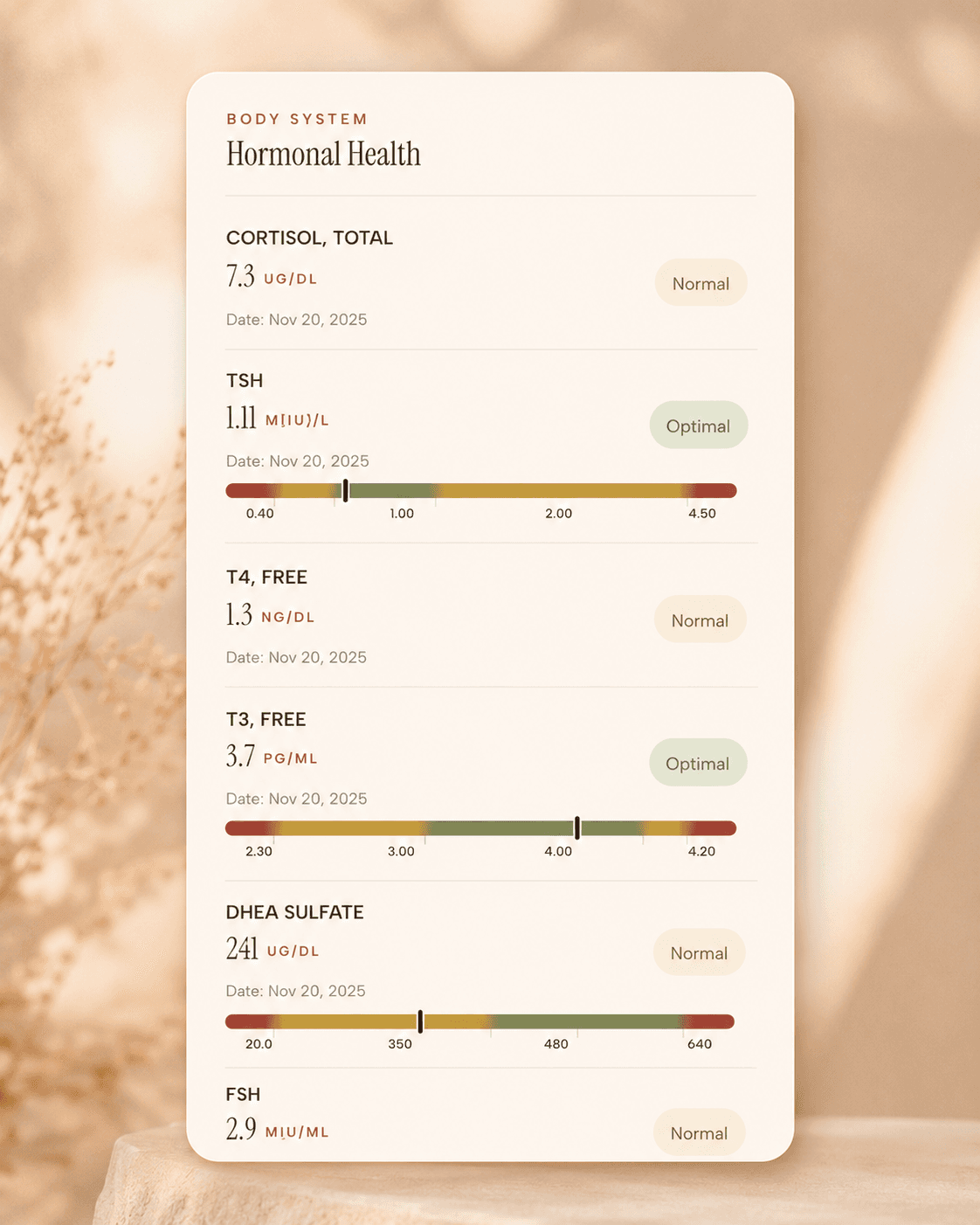
Cortisol is the primary stress hormone that regulates metabolism, immune function, and blood pressure. In functional medicine, cortisol assessment is crucial for understanding stress response and its impact on overall health. Chronic elevation suppresses testosterone production and immune function, while low cortisol indicates adrenal insufficiency. Optimal cortisol rhythm supports energy, mood stability, and hormone balance. Cortisol orchestrates the body's stress response and daily energy rhythms. Balanced cor…
Learn moreEstradiol
Estradiol in men is produced from testosterone via aromatase enzyme. In functional medicine, we recognize that men need optimal estradiol levels for bone health, cognitive function, and cardiovascular protection. However, excessive estradiol can suppress testosterone production and cause feminizing effects. The testosterone-to-estradiol ratio is crucial for male health, with optimal balance supporting vitality while preventing estrogen dominance. Balanced estradiol levels in men support bone health and cognitive…
Learn moreLab testing
Check TSH, prolactin, and fasting insulin at Quest
starting from $99 panel with 100+ tests, one visit
No referral needed
About 1 week
Schedule online — results typically within a week
Clear next steps
Guidance included, with follow-up care available
HSA / FSA
Eligible for pre-tax health spending accounts
Pro Tips
Give yourself a two-week “data window” before you panic: write down bleeding days, workout intensity, sleep length, and whether you are truly hitting your calorie target. Patterns show up faster than you think.
If you are trying to conceive, do not rely on an app’s predicted ovulation while your cycle is changing. Use ovulation predictor kits or basal body temperature for at least one full cycle so you know whether you are actually ovulating.
If your period is lighter or missing, check whether your diet has quietly become very low in protein. A simple target is roughly 25–35 grams of protein per meal, because under-protein eating often goes along with under-eating overall.
Try a “refeed” experiment instead of quitting keto overnight: for one or two days per week, raise carbs to a moderate level and keep calories adequate. If your sleep improves and cycle signs return, your body may be asking for more fuel rather than a totally different diet.
If you are in your late 30s or 40s, remember that perimenopause can start before hot flashes do. If your cycles are getting shorter, then longer, and your symptoms are new, consider labs and a clinician conversation rather than assuming keto is the only cause.
Frequently Asked Questions
Can keto make you miss a period?
Yes. Keto can lead to a missed period when you end up in a sustained calorie deficit, lose weight quickly, or stack intense exercise on top of low intake, which can switch off ovulation. It can also unmask thyroid issues that affect cycles. If you have missed 3 periods in a row (about 90 days), it is worth doing a pregnancy test and considering labs like TSH and prolactin.
How long do irregular periods last after starting keto?
For many people, cycle changes settle within 1–3 cycles once your weight and intake stabilize, but it depends on how big the energy deficit is and whether PCOS or thyroid issues are in the background. If your period stopped completely, that is more concerning than a one-time late cycle. If nothing is improving by about 8–12 weeks, adjust calories and training and consider checking TSH, prolactin, and fasting insulin.
Is irregular bleeding on keto normal or a sign of something serious?
Light spotting or timing changes can happen during rapid weight loss or hormonal shifts, but heavy bleeding, bleeding after sex, or bleeding that keeps happening between periods deserves medical evaluation. Keto should not cause you to soak through pads or tampons quickly or feel dizzy from blood loss. If bleeding is heavy or you have pelvic pain, book care promptly and do not try to “diet your way out of it.”
Does keto help PCOS periods or make them worse?
If insulin resistance is driving your PCOS, lowering carbs can improve ovulation over time by lowering insulin, which can make periods more regular. The confusing part is that the transition can include irregular bleeding before things settle. Tracking ovulation signs and checking fasting insulin can help you see whether you are moving toward better hormone balance. If cycles stay very irregular, you may need a plan that includes enough calories and a sustainable carb level.
What labs should I get for irregular periods on keto?
A practical starting trio is TSH for thyroid-related cycle changes, prolactin for ovulation suppression, and fasting insulin to assess insulin resistance and PCOS patterns. These tests help you separate “not enough fuel” from endocrine causes that need targeted treatment. If you are trying to conceive or symptoms are severe, bring the results to a clinician and ask what they mean in the context of your cycle history.