Irregular Periods During Your Period: What It Means
Irregular periods during period bleeding often come from hormone swings, fibroids, or thyroid issues. Targeted blood tests available—no referral needed.






Irregular periods during your period usually means your uterine lining is shedding unevenly, which can happen when ovulation is off (hormone swings), when the uterus has a structural issue like fibroids or polyps, or when your thyroid is pushing your cycle off rhythm. It can look like bleeding that stops and starts, unexpected spotting, or a “normal” period that suddenly turns heavy. A few targeted labs can help sort out whether this is mainly a hormone timing problem, a thyroid issue, or something that needs an exam or ultrasound. This symptom is frustrating because it messes with planning and it can trigger real worry about fertility or “something serious.” Most of the time, the explanation is fixable, but the next step depends on your pattern and your risk factors. If you are soaking through a pad or tampon every hour for a few hours, passing large clots, feeling faint, or you might be pregnant, get urgent care. Otherwise, you can usually start by tracking your pattern, checking a few key labs, and using PocketMD or a clinician visit to decide whether you need imaging or medication.
Why your period flow is irregular
You didn’t ovulate this cycle
When you do not release an egg (anovulation), your hormones do not get the clean “on/off” signal that normally starts and stops bleeding. Your uterine lining can build up for longer and then shed in a messy, stop-start way, which is why you might spot for days or bleed longer than usual. This is common with stress, travel, illness, weight changes, and in the years after your first period and before menopause. If this is new for you, tracking whether you have mid-cycle signs of ovulation and checking a few labs can help confirm the pattern.
PCOS hormone pattern
With polycystic ovary syndrome (PCOS), your ovaries often make relatively more androgens, and ovulation can be infrequent. That can lead to long gaps followed by unpredictable bleeding, or a period that seems to restart after it “ended” because the lining is unstable. You might also notice acne, extra facial hair, or weight gain, but you can have PCOS without those. If your cycles are often longer than 35 days or you regularly skip months, it is worth discussing PCOS and metabolic screening with a clinician.
Thyroid imbalance shifts your cycle
Your thyroid sets the pace for a lot of body systems, including how your ovaries respond to brain signals. When thyroid function is low or high, you can get heavier bleeding, shorter cycles, or bleeding that drags on because the lining is not being regulated smoothly. The “so what” is that thyroid issues are treatable, and fixing them often improves both bleeding and symptoms like fatigue, hair changes, or feeling unusually cold or wired. A TSH test is a simple first step when your period pattern changes.
Fibroids or polyps in the uterus
A fibroid is a benign muscle growth and a polyp is a small overgrowth of the lining, and both can make bleeding irregular because they change the surface area and blood vessels inside the uterus. This often feels like heavier flow, clots, bleeding that lasts longer than seven days, or spotting between “real” period days. Labs cannot diagnose these, but they can show the impact, like low iron. If you have new heavy bleeding, bleeding after sex, or bleeding that is getting progressively worse, ask about a pelvic exam and ultrasound.
Perimenopause hormone swings
In perimenopause, your estrogen and progesterone can swing widely from month to month because ovulation becomes less predictable. That can create a period that starts, slows, and then ramps back up, or cycles that suddenly shorten or lengthen. The important point is that perimenopause can start in your 40s (sometimes late 30s), and irregular bleeding is common, but you still need evaluation if bleeding is very heavy or you have risk factors for uterine lining overgrowth. Keeping a three-month calendar of bleeding days helps your clinician decide what is “expected” versus what needs imaging.
What actually helps regulate it
Track bleeding like a clinician would
For two to three cycles, write down every day you bleed, even if it is just spotting, and note how heavy it is using something concrete like “pads per day” or “tampon changes.” This turns a vague worry into a pattern, which is exactly what guides next steps. If you can, add one line about possible triggers that month, like a new workout plan, a big stressor, or a missed meal pattern. Bring the log to your visit or use it when you talk with PocketMD.
Treat heavy days and protect iron
If your main issue is heavy flow, nonsteroidal anti-inflammatory drugs like ibuprofen can reduce prostaglandins and often cut bleeding and cramps when taken with food during the first couple of days. The reason this matters is that heavy bleeding can quietly drain your iron stores, which then makes fatigue and shortness of breath worse even if your hemoglobin looks “okay.” If you are having clots and soaking protection quickly, ask specifically about checking ferritin and about prescription options that reduce bleeding.
Hormonal cycle control when appropriate
If irregular bleeding is coming from inconsistent ovulation, hormonal contraception or cyclic progesterone can stabilize the lining so it sheds more predictably. This is not just about convenience; it can also protect the uterine lining if you go long stretches without a true period. The best option depends on whether you want pregnancy soon, your migraine history, and your clot risk, so it is worth a targeted conversation rather than trial-and-error. If you are trying to conceive, ask about ovulation tracking and whether you need help inducing ovulation.
Address thyroid or prolactin issues
When a lab points to thyroid imbalance or high prolactin, treating the underlying driver often improves bleeding patterns over a few months because your brain-ovary signaling becomes steadier. You might notice other symptoms improve first, like energy, sleep, constipation, or breast discharge, and then your cycle follows. Do not self-dose thyroid or hormone supplements based on one result, because the “right” level depends on your age, pregnancy plans, and symptoms. Use repeat testing and clinician guidance to titrate safely.
Get imaging when the story fits
If your bleeding is heavy, progressively worsening, or associated with pelvic pressure, an ultrasound can be more informative than another round of supplements. Structural causes like fibroids and polyps are common, and they have specific treatments, from medication to simple procedures. The practical takeaway is that you do not have to live with months of unpredictable bleeding while guessing. Ask directly, “Do my symptoms meet criteria for a pelvic ultrasound?”
Useful biomarkers to discuss with your clinician
TSH
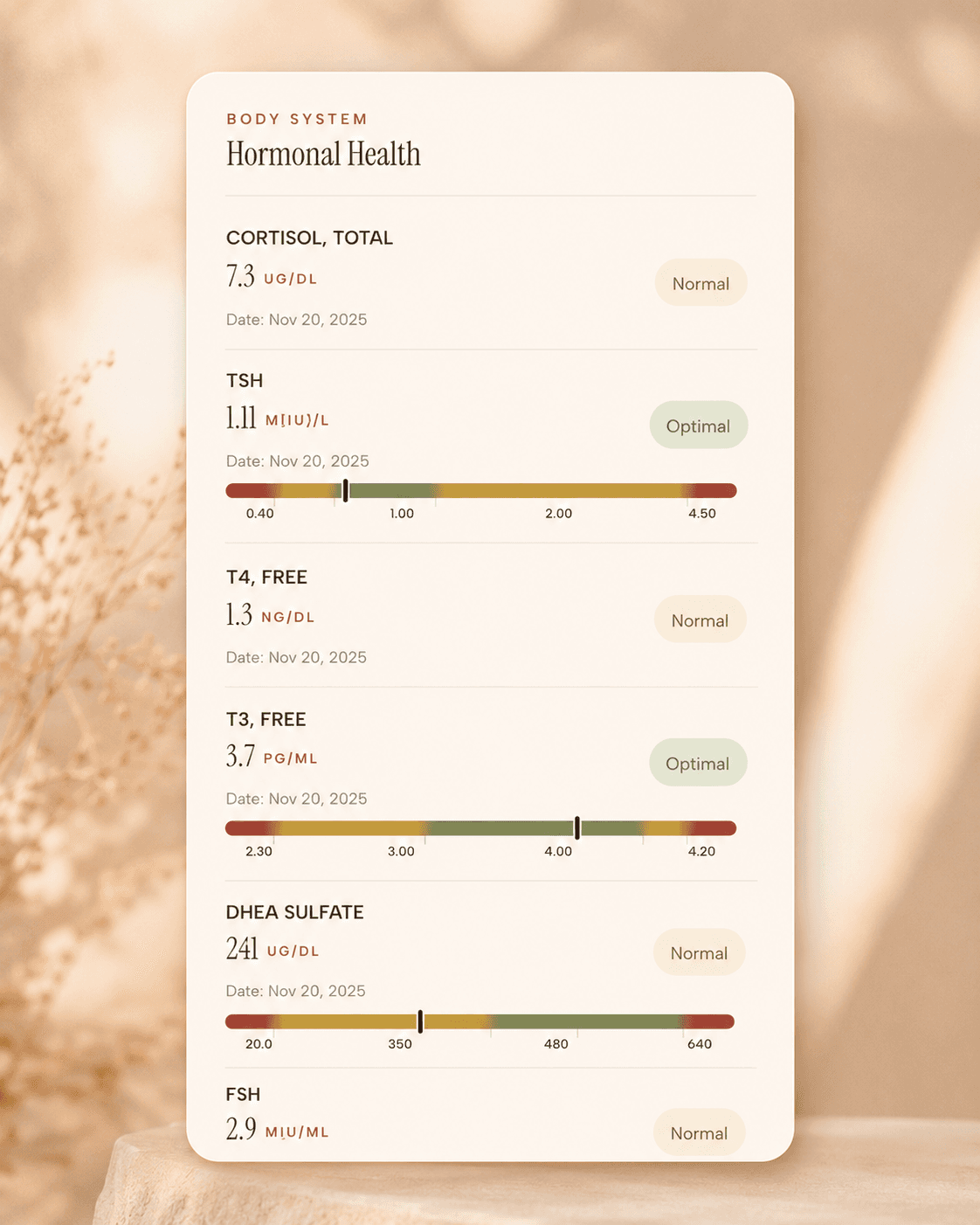
TSH is the master regulator of thyroid function, controlling the production of thyroid hormones T4 and T3. In functional medicine, we use narrower TSH ranges than conventional medicine to identify subclinical thyroid dysfunction early. Even mildly elevated TSH can indicate thyroid insufficiency, leading to fatigue, weight gain, depression, and metabolic dysfunction. TSH levels are influenced by stress, nutrient deficiencies, autoimmune conditions, and environmental toxins. Optimal TSH supports energy, metabolism…
Learn moreEstradiol
Estradiol in men is produced from testosterone via aromatase enzyme. In functional medicine, we recognize that men need optimal estradiol levels for bone health, cognitive function, and cardiovascular protection. However, excessive estradiol can suppress testosterone production and cause feminizing effects. The testosterone-to-estradiol ratio is crucial for male health, with optimal balance supporting vitality while preventing estrogen dominance. Balanced estradiol levels in men support bone health and cognitive…
Learn moreProgesterone
While primarily known as a female hormone, progesterone plays important roles in men including neuroprotection, sleep quality, and as a precursor to other hormones. In functional medicine, male progesterone assessment helps evaluate overall hormone synthesis pathways and stress response. Low progesterone in men may indicate chronic stress or adrenal dysfunction, while optimal levels support brain health and sleep quality. Progesterone in men supports neurological health, sleep quality, and serves as a building b…
Learn moreLab testing
Get TSH, prolactin, and ferritin checked at Quest
starting from $99 panel with 100+ tests, one visit
No referral needed
About 1 week
Schedule online — results typically within a week
Clear next steps
Guidance included, with follow-up care available
HSA / FSA
Eligible for pre-tax health spending accounts
Pro Tips
Do a “three-number” period log for the next two cycles: total bleeding days, heaviest-day pad/tampon changes, and the longest gap where bleeding stopped and then restarted. Those three numbers quickly separate normal variation from abnormal uterine bleeding patterns.
If your flow is stop-start, check whether it correlates with intense workouts, under-eating, or sudden weight loss, because your brain can dial down ovulation when it senses low energy availability. A small increase in daily calories and a deload week sometimes makes the next cycle noticeably more predictable.
When you get labs like prolactin, try to do the draw in the morning after a calmer night of sleep, and avoid breast stimulation beforehand, because temporary spikes can create a confusing “false alarm.” If it is mildly high, repeating it under better conditions is often more informative than panicking.
If you suspect heavy bleeding, do a quick reality check: if you are changing protection during the night, doubling up, or passing clots larger than a quarter, treat that as “heavy” even if your cycle length is normal. That is a strong reason to check ferritin and talk about bleeding-reduction options.
If you are trying to conceive, add ovulation tracking for one cycle before you assume the worst. A simple LH urine strip plus a basal body temperature chart can show whether irregular bleeding is happening with ovulation or instead replacing it.
Frequently Asked Questions
Why does my period stop and start again?
Stop-start bleeding often happens when ovulation is delayed or doesn’t happen, so your uterine lining sheds unevenly instead of in one coordinated wave. It can also happen when a polyp or fibroid disrupts the lining and causes intermittent bleeding. If this is new for you, track the number of bleeding days and gaps, and consider checking TSH and prolactin to look for common hormone drivers.
Is spotting during my period normal?
Light spotting at the beginning or end of a period can be normal, especially if your cycle is otherwise predictable. It becomes more concerning when spotting stretches your bleeding beyond seven days, happens after sex, or shows up most cycles as a new pattern. If that’s you, ask about evaluation for structural causes and consider ferritin if your overall bleeding is increasing.
Can stress cause irregular bleeding during a period?
Yes, because stress can disrupt the brain signals that coordinate ovulation, which then changes progesterone timing and makes the lining less stable. The result can be a period that drags on, comes early, or restarts after it seemed finished. If stress is the likely trigger, your best move is still to log the pattern for two cycles so you can confirm it settles back down rather than guessing.
When should I worry about irregular bleeding and see a doctor?
Get urgent care if you are soaking through a pad or tampon every hour for a few hours, feeling faint, or you might be pregnant. For non-urgent evaluation, make an appointment if bleeding lasts longer than seven days, keeps getting heavier, happens after sex, or you have pelvic pressure or pain. Bring a simple bleeding log and ask whether you need a pelvic exam, ultrasound, and labs like TSH, prolactin, and ferritin.
What labs help explain irregular periods during a period?
TSH can uncover thyroid-driven cycle disruption, prolactin can point to ovulation suppression from pituitary signaling, and ferritin shows whether bleeding has depleted your iron stores. These tests do not replace a pelvic exam or ultrasound when heavy bleeding suggests fibroids or polyps, but they often clarify the “why” behind the pattern. If you order labs, plan to review results alongside your bleeding calendar so the numbers match your real-life symptoms.