Insulin Resistance With Depression: What’s Really Going On?
Insulin resistance with depression often involves blood-sugar swings, inflammation, or sleep and stress hormones. Targeted labs available, no referral needed.





Insulin resistance with depression usually isn’t “all in your head.” It often comes from blood-sugar ups and downs, chronic stress hormones, and low-grade inflammation that can make your mood flatter while also making weight loss feel unfairly hard. A few targeted labs can help you see whether your biggest driver is high insulin, rising average glucose, or a pattern of spikes and crashes. This combo is common because your brain is an energy-hungry organ, and it notices when fuel delivery is chaotic. When your cells stop responding well to insulin, your body compensates by making more, which can push you toward cravings, fatigue, and that wired-but-tired feeling that overlaps with depression. The good news is that insulin resistance is often reversible, and mood can improve as your blood sugar becomes steadier. If you want help connecting your symptoms to a practical plan, PocketMD can talk it through, and Vitals Vault labs can give you objective data to work from.
Why insulin resistance and depression show up together
Blood-sugar spikes and crashes
When insulin resistance builds, your body often overshoots with extra insulin after meals, which can drop your blood sugar too far a few hours later. That “crash” can feel like irritability, anxiety, brain fog, and a heavier mood that seems to come out of nowhere. A practical clue is timing: if your mood dips or you feel shaky two to four hours after eating, steadier meals and a short walk after food are worth testing for a week.
High insulin changes hunger signals
Insulin is not only a blood-sugar hormone; it also talks to your appetite and reward circuits in your brain. When insulin stays high, you can feel hungrier even when you have plenty of stored energy, and cravings can get louder, especially for quick carbs that temporarily boost brain fuel. If you feel “stuck” in a cycle of cravings and guilt, it helps to treat it as biology and build meals around protein and fiber first, not willpower.
Stress hormone overload (cortisol)
Chronic stress can keep your stress hormone (cortisol) elevated, which nudges your liver to release more glucose and makes your cells less responsive to insulin. At the same time, cortisol can blunt pleasure and motivation, which can look and feel like depression. If your symptoms are worst with poor sleep, early-morning dread, or constant tension, your plan has to include stress and sleep as metabolic treatment, not as “extra credit.”
Inflammation affects brain chemistry
Insulin resistance is often paired with low-grade inflammation, and inflammatory signals can change how your brain uses serotonin and dopamine, which are tied to mood and drive. You might notice more aches, more fatigue, and a mood that feels “muted,” not just sad. The takeaway is that reducing inflammation usually looks like stabilizing glucose, building muscle, and addressing sleep apnea or smoking if they apply, because those are big inflammation amplifiers.
PCOS pattern in some women
If you have irregular periods, acne, or new facial hair, insulin resistance may be part of a hormone pattern called polycystic ovary syndrome (PCOS). Higher insulin can push your ovaries to make more androgens, which can worsen weight gain around the middle and also raise depression risk through both biology and the stress of symptoms. If this sounds like you, it’s worth discussing PCOS specifically, because treatment often combines insulin-lowering habits with targeted medication options.
What actually helps (without guesswork)
Build “steady energy” meals
Aim for meals that keep your blood sugar from swinging: start with protein, add high-fiber carbs, and include a fat source so digestion slows down. This matters because fewer spikes usually means fewer crashes, and fewer crashes often means fewer mood dips that feel random. If breakfast is your hardest point, try a protein-forward option for seven days and see whether your afternoon mood improves.
Use a 10-minute post-meal walk
A short walk after eating helps your muscles pull glucose out of your blood without needing as much insulin. It is one of the fastest ways to reduce post-meal spikes, which can translate into less sleepiness and fewer cravings later. If you can only do one change, do it after your biggest carb meal, because that is usually where you get the most payoff.
Strength training for insulin sensitivity
Building muscle gives your body more “storage space” for glucose, which improves insulin sensitivity even if the scale barely moves at first. That matters for depression too, because strength training can improve sleep depth and self-efficacy, and it tends to reduce the energy crashes that make everything feel harder. Start small: two sessions per week with basic movements is enough to begin shifting fasting insulin over time.
Talk to your clinician about meds
If lifestyle changes are not moving the needle, medications can be appropriate and they are not a moral failure. Metformin can lower insulin levels and help with PCOS-related insulin resistance, while GLP-1 medications can reduce appetite noise and improve glucose control for some people. The actionable step is to bring your labs and a symptom timeline to the visit, because it helps you and your clinician choose a medication for your pattern rather than guessing.
Treat sleep like a glucose tool
Poor sleep makes insulin resistance worse the very next day, and it also lowers your emotional bandwidth, which can deepen depression. If you snore, wake up with headaches, or feel unrefreshed after seven to eight hours, sleep apnea is worth considering because treating it can improve both mood and glucose control. A concrete experiment is a two-week “sleep window” with a consistent wake time, because regularity often improves cravings and morning mood faster than you expect.
Useful biomarkers to discuss with your clinician
Insulin
Insulin is a master metabolic hormone that regulates glucose uptake, fat storage, and numerous cellular processes. In functional medicine, fasting insulin levels are one of the earliest and most sensitive markers of metabolic dysfunction. Elevated insulin (hyperinsulinemia) often precedes diabetes by years or decades and is central to metabolic syndrome. High insulin levels promote fat storage, inflammation, and contribute to numerous chronic diseases including cardiovascular disease, PCOS, and certain cancers.…
Learn moreGlucose
Fasting glucose is a fundamental marker of glucose metabolism and insulin function. In functional medicine, we recognize that even 'normal' glucose levels in the upper range may indicate early insulin resistance. Optimal fasting glucose reflects efficient glucose regulation and insulin sensitivity. Elevated fasting glucose suggests the body's inability to maintain normal glucose levels overnight, indicating hepatic insulin resistance or insufficient insulin production. This marker is essential for early detectio…
Learn moreCortisol, Total
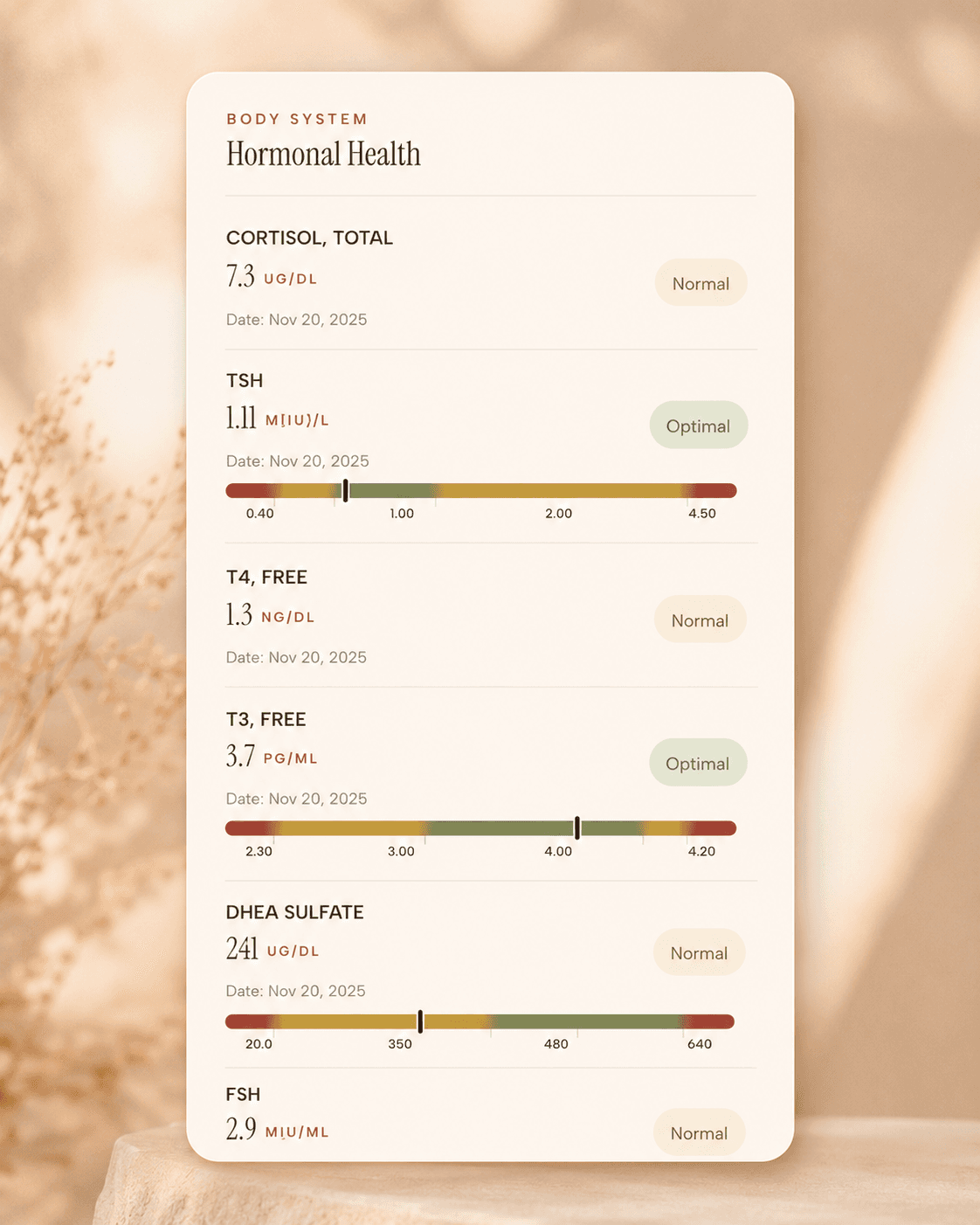
Cortisol is the primary stress hormone that regulates metabolism, immune function, and blood pressure. In functional medicine, cortisol assessment is crucial for understanding stress response and its impact on overall health. Chronic elevation suppresses testosterone production and immune function, while low cortisol indicates adrenal insufficiency. Optimal cortisol rhythm supports energy, mood stability, and hormone balance. Cortisol orchestrates the body's stress response and daily energy rhythms. Balanced cor…
Learn moreLab testing
Check fasting insulin, A1C, and fasting glucose at Quest
starting from $99 panel with 100+ tests, one visit
No referral needed
About 1 week
Schedule online — results typically within a week
Clear next steps
Guidance included, with follow-up care available
HSA / FSA
Eligible for pre-tax health spending accounts
Pro Tips
Try a 14-day “mood + meals” log where you rate mood and energy from 1–10 before lunch and mid-afternoon, then note what you ate and when. Patterns like a 3 p.m. crash show up quickly and tell you where to intervene.
If you crave sweets at night, experiment with a protein-and-fiber snack at dinner instead of “saving carbs” for later. For many people, the craving is a delayed blood-sugar drop, not a lack of discipline.
If mornings feel bleak, eat within 60–90 minutes of waking for one week and keep it protein-forward. A steadier morning glucose curve often reduces that hollow, anxious fatigue that can masquerade as worsening depression.
If you are already exercising but not improving, switch one cardio session to strength training and track waist measurement, not just weight. Insulin resistance often improves through body composition changes before the scale rewards you.
If you take an antidepressant and your appetite or weight changed, write down when that started and bring it up directly. Some medications can affect glucose and weight, and there may be alternatives that fit your mental health needs better.
Frequently Asked Questions
Can insulin resistance cause depression?
It can contribute, especially through blood-sugar swings, inflammation, and sleep disruption that change how your brain experiences energy and motivation. Many people notice more irritability, brain fog, and “flat” mood when they are spiking and crashing after meals. Checking fasting insulin, A1C, and fasting glucose can show whether metabolism is likely part of your picture.
Why do I feel depressed after eating carbs?
If you are insulin resistant, a carb-heavy meal can spike blood sugar and then trigger a bigger insulin response, which may drop your blood sugar a few hours later. That drop can feel like sadness, agitation, or hopelessness even though the driver is physiological. Try pairing carbs with protein and fiber and take a 10-minute walk after the meal, then see if the post-meal mood dip improves.
What labs should I get for insulin resistance and mood issues?
A practical starting trio is fasting insulin, A1C, and fasting glucose because together they show insulin load, average glucose, and your fasting baseline. If fasting insulin is high while glucose is still normal, that often explains cravings and fatigue that precede prediabetes. Bring the results to your clinician so you can decide whether lifestyle changes alone are enough or whether medication is reasonable.
What is a good fasting insulin level?
Lab “normal” ranges are wide, so a result can be flagged as normal while still being higher than ideal for metabolic health. Many clinicians aim for fasting insulin in the single digits, often under about 8 µIU/mL, especially when you are working on insulin resistance. The most useful move is to track the trend over time alongside A1C and symptoms.
Does metformin help depression if you’re insulin resistant?
Metformin is not an antidepressant, but by lowering insulin levels and improving glucose handling, it can reduce crashes, cravings, and fatigue that make depression harder to manage. People with PCOS or prediabetes sometimes notice better energy and steadier mood once their glucose swings calm down. If you are interested, ask your clinician whether your A1C, fasting insulin, and symptoms make you a good candidate.