Bloating in Working Women: Why It Happens and What Helps
Bloating in working women often comes from stress-slowed digestion, IBS, or food intolerances. Targeted labs available at Quest—no referral needed.






Bloating during your workday is usually caused by trapped gas from fast eating and carbonated drinks, a stress-driven gut slowdown, or an IBS-style sensitivity where your gut feels “full” even without a lot of extra volume. Hormone shifts across your cycle can amplify all of it, which is why the same lunch can feel fine one week and awful the next. A few targeted labs can help rule out common medical contributors, so you’re not stuck guessing. If you’re trying to do your job while your waistband feels tight and your abdomen looks or feels distended, it can mess with your comfort and your confidence fast. The tricky part is that “bloating” can mean different things: sometimes it is true abdominal swelling, and sometimes it is your gut nerves overreacting to normal digestion. This guide walks you through the most common patterns in working women, what tends to help in real life, and how tools like PocketMD and Vitals Vault labs can help you narrow down your personal cause without turning your life into a full-time elimination diet.
Why bloating hits during busy workweeks
Stress slows your gut down
When you’re under pressure, your body shifts toward “get things done” mode, and digestion becomes less of a priority. That can slow stomach emptying and change how your intestines move, which means gas and fluid hang around longer and you feel puffy. If your bloating is worse on high-stakes days and eases on weekends, treat stress as a real trigger, not a character flaw.
Fast meals trap extra air
Eating quickly between meetings often means you swallow more air, and you also tend to chew less, which makes your gut work harder. The result can be upper-belly pressure, burping, and a “balloon” feeling within an hour of eating. A simple takeaway is to slow the first five minutes of your meal on purpose, because that’s when most air-swallowing happens.
IBS sensitivity, not “too much food”
With irritable bowel syndrome (IBS), your gut can be extra sensitive to normal stretching, so you feel uncomfortably full even if there isn’t dramatic swelling. Certain carbs that ferment in the colon can also create more gas, which makes the sensation louder. If your bloating comes with crampy pain that improves after a bowel movement, IBS is a strong possibility and it changes what helps.
Cycle-related water retention and constipation
In the second half of your cycle, progesterone can slow bowel movements, and shifting hormones can make you retain more fluid. That combination can feel like you gained a size overnight, especially if you’re also sitting for long stretches at work. If your bloating predictably peaks in the week before your period, tracking your cycle can be as useful as tracking foods.
An underlying condition worth ruling out
Sometimes bloating is a clue to something that needs a specific fix, such as celiac disease, low thyroid function, or iron deficiency that travels with gut inflammation. If you have persistent bloating plus unintentional weight loss, vomiting, black or bloody stools, new severe constipation, or symptoms that wake you from sleep, it’s worth getting medical help promptly. Even without red flags, basic labs can save you months of trial-and-error.
What actually helps you feel flatter
Try a 2-week trigger experiment
Instead of cutting everything, pick one likely driver and test it for 14 days, because your gut needs time to settle. A common first experiment is reducing high-fermentable carbs (often called a low-FODMAP approach) at lunch only, then watching what happens to afternoon bloating. If you improve, you can reintroduce foods one at a time so you keep your diet as normal as possible.
Change how you eat at work
If your bloating starts soon after meals, focus on mechanics: sit down, chew until the food is soft, and keep sips small while you eat. Carbonated drinks and gum can keep feeding swallowed air, so swapping them for still water for a week is a clean test. This is boring advice, but it works surprisingly often for “I bloat after lunch” patterns.
Use movement to move gas
Gas pain is often about where the gas is sitting, not just how much you have. A 10-minute walk after eating can help your intestines push things along, which means less pressure under your ribs and less visible distension by late afternoon. If you’re stuck at a desk, standing and doing a slow torso twist for a minute or two can be a decent substitute.
Treat constipation like a root cause
If you are not emptying regularly, everything backs up and bloating becomes almost inevitable. Soluble fiber such as psyllium can help, but it works best when you start low and increase gradually over a week to avoid making gas worse. If you go more than three days without a bowel movement or you rely on stimulant laxatives often, bring it up with a clinician because there are safer long-term options.
Targeted meds and supplements, carefully
Peppermint oil capsules can reduce IBS-type cramping and bloating for some people, especially when stress is part of the picture. If dairy is a trigger, lactase taken with the first bite of dairy can be a simple fix that lets you keep foods you enjoy. If you suspect reflux or frequent heartburn along with bloating, talk to a clinician before long-term acid suppression, because it can change digestion in ways that matter.
Useful biomarkers to discuss with your clinician
Progesterone
While primarily known as a female hormone, progesterone plays important roles in men including neuroprotection, sleep quality, and as a precursor to other hormones. In functional medicine, male progesterone assessment helps evaluate overall hormone synthesis pathways and stress response. Low progesterone in men may indicate chronic stress or adrenal dysfunction, while optimal levels support brain health and sleep quality. Progesterone in men supports neurological health, sleep quality, and serves as a building b…
Learn moreCortisol, Total
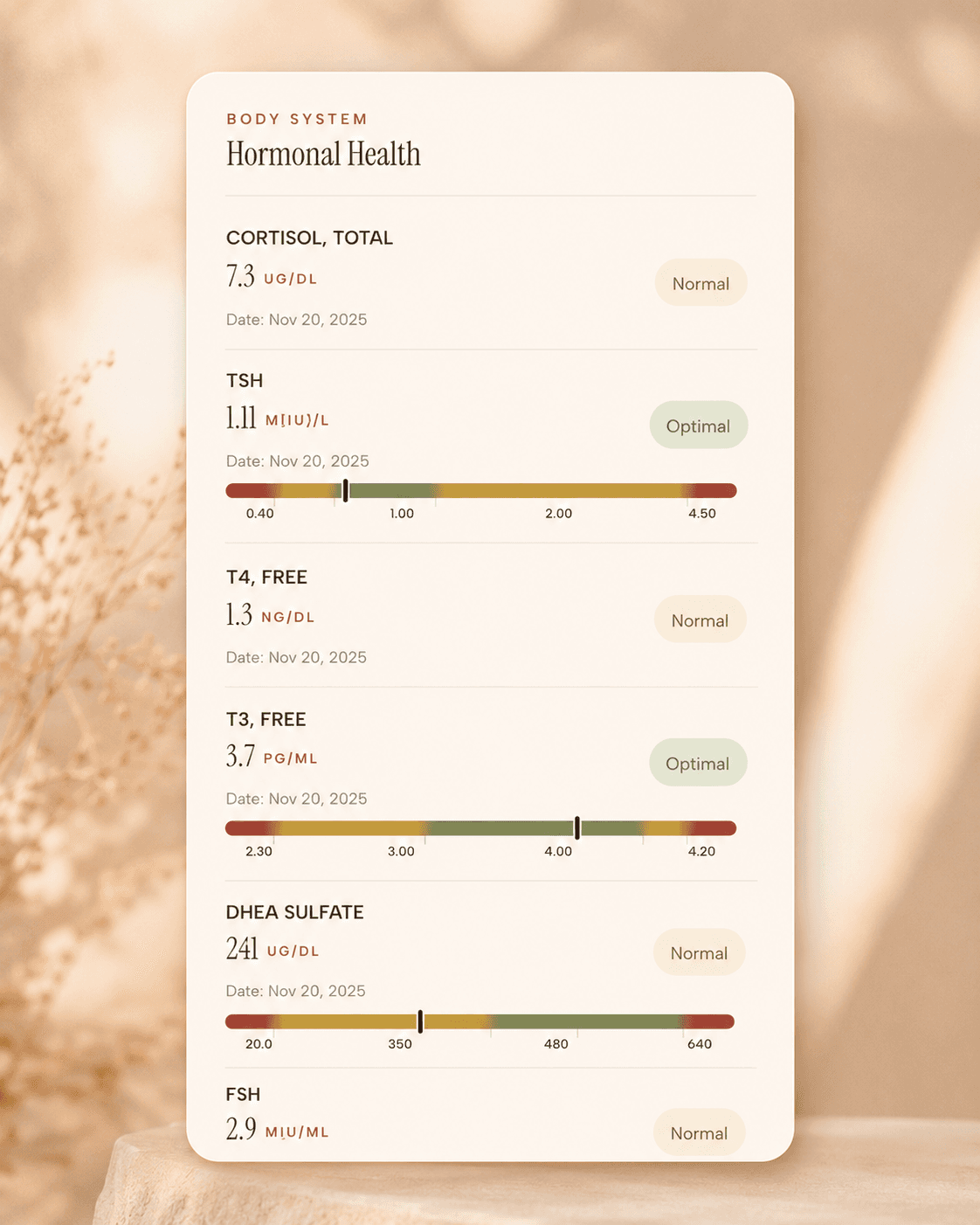
Cortisol is the primary stress hormone that regulates metabolism, immune function, and blood pressure. In functional medicine, cortisol assessment is crucial for understanding stress response and its impact on overall health. Chronic elevation suppresses testosterone production and immune function, while low cortisol indicates adrenal insufficiency. Optimal cortisol rhythm supports energy, mood stability, and hormone balance. Cortisol orchestrates the body's stress response and daily energy rhythms. Balanced cor…
Learn moreHs Crp
High-sensitivity C-reactive protein (hs-CRP) is a key marker of systemic inflammation and cardiovascular risk. In functional medicine, we recognize hs-CRP as one of the most important predictors of heart disease, stroke, and metabolic dysfunction. Levels above 1.0 mg/L indicate increased inflammation that may be driven by poor diet, chronic infections, autoimmune conditions, or metabolic syndrome. Optimal levels below 0.5 mg/L are associated with the lowest cardiovascular risk and overall inflammatory burden. hs…
Learn moreLab testing
Get TSH, celiac screening, and ferritin checked at Quest
starting from $99 panel with 100+ tests, one visit
No referral needed
About 1 week
Schedule online — results typically within a week
Clear next steps
Guidance included, with follow-up care available
HSA / FSA
Eligible for pre-tax health spending accounts
Pro Tips
Do a “lunch audit” for one week: eat the same simple lunch three days in a row, then change just one variable (like swapping onions/garlic for a low-FODMAP seasoning) so you can actually see cause and effect.
If your bloating is worst at 3–6 pm, set a calendar reminder for a 10-minute walk right after lunch for two weeks. It sounds small, but it directly targets gas transit and post-meal sluggishness.
Try a carbonation break: skip sparkling water, soda, and beer for seven days and see if your upper-belly pressure and burping drop. If they do, you have a clear lever you can use on important workdays.
Track your cycle next to your symptoms for two cycles, even if your periods are regular. If bloating clusters in the luteal phase (after ovulation), you can plan lower-trigger meals and more movement during that week.
If you suspect dairy, test it cleanly: keep everything else the same, then take lactase with the first bite of dairy for a week. If symptoms improve, you can keep dairy in your life without guessing.
Frequently Asked Questions
Why do I bloat more at work than at home?
Work often changes how you eat and how your gut moves: you may eat faster, sit longer, and run on stress hormones that slow digestion. Even if you eat similar foods, those factors can increase swallowed air and make gas linger. Try one week of sitting down for meals plus a 10-minute post-lunch walk to see if the pattern shifts.
Is bloating a sign of hormone imbalance?
Bloating can track with normal hormone shifts across your cycle, especially in the week before your period when constipation and water retention are more common. That does not automatically mean something is “wrong” with your hormones, but it does mean timing matters when you look for triggers. If bloating is new, severe, or paired with missed periods, talk to a clinician to rule out pregnancy and other causes.
What foods cause bloating in women most often?
For many people, the biggest culprits are fermentable carbs that feed gut bacteria, which can create gas and pressure, especially if you have IBS. In real life, that often shows up with foods like onions, garlic, wheat-based meals, certain beans, and some sweeteners, but your personal list can be different. A 2-week, lunch-only low-FODMAP experiment is a practical way to test this without over-restricting.
How do I know if my bloating is IBS or something else?
IBS is more likely when bloating comes with recurrent abdominal pain at least once a week and the pain relates to bowel movements or changes in stool frequency or form. It is less likely when you have red flags like blood in your stool, unintentional weight loss, persistent fever, or symptoms that wake you from sleep. If you are unsure, basic labs such as TSH, celiac screening (tTG-IgA with total IgA), and ferritin can help rule out common look-alikes.
When should I worry about bloating and see a doctor?
Get checked promptly if bloating is persistent and new for you, or if it comes with vomiting, black or bloody stools, severe or worsening pain, unexplained weight loss, or a hard swollen belly that does not pass gas. Those features can signal problems that need more than diet tweaks. If symptoms are chronic but not urgent, bring a 2-week log of meals, timing, bowel habits, and cycle phase to make the visit more productive.