Why Is Your Memory Worse in the Morning?
Memory loss in the morning often comes from poor sleep, low oxygen from sleep apnea, or low B12/thyroid issues. Targeted labs available—no referral needed.






Memory loss in the morning is most often your brain running on low-quality sleep, low overnight oxygen from sleep apnea, or a reversible body issue like low vitamin B12 or an underactive thyroid. It can feel scary because it mimics “real” memory disease, but the timing (worst on waking) is a clue that your brain may be under-recovered rather than permanently damaged. A few targeted labs and the right sleep evaluation can help pinpoint which bucket you’re in. If you’re waking up foggy, forgetting names, or needing an hour to feel “online,” you’re not imagining it. Overnight, your brain is supposed to consolidate memories and clear metabolic waste, and your attention system is supposed to reboot for the day. When sleep is fragmented, oxygen dips, or your body is missing key nutrients, you can wake up with a temporary “memory bottleneck.” This guide walks you through the most common causes, what tends to help quickly, and which blood tests are actually worth checking. If you want help matching your exact pattern to the most likely cause, PocketMD can talk it through with you, and Vitals Vault labs can help you confirm or rule out common reversible contributors.
Why your memory is worse in the morning
Sleep fragmentation steals your recall
If you’re waking up repeatedly without fully realizing it, your brain doesn’t get enough deep sleep and dream sleep, which are the phases that stabilize new memories. The result is a very specific feeling: you know you should remember something, but it won’t “come up” until later in the day. Your takeaway is to treat this like a sleep-quality problem first, not a character flaw, and to look for clues like frequent bathroom trips, pain, reflux, or a partner noticing restlessness.
Sleep apnea lowers overnight oxygen
With obstructive sleep apnea, your airway narrows during sleep, your oxygen dips, and your brain keeps jolting you into lighter sleep to reopen the airway. That combination can leave you waking up with poor attention and short-term memory, even if you think you slept for seven or eight hours. If you also snore, wake with a dry mouth, or feel unrefreshed, a home sleep test is often the most direct next step because treating apnea can improve cognition within weeks.
Low vitamin B12 slows brain signaling
Vitamin B12 supports the insulation around nerves and the chemistry your brain uses to process information, so when it’s low you can feel mentally slow and forgetful. Morning can be worse because you’re starting the day without the “momentum” that caffeine, movement, and daylight later provide. If you eat little or no animal products, take metformin, or use acid-suppressing meds long-term, B12 is especially worth checking because replacing it is straightforward when caught early.
Thyroid slowdown dulls thinking
When your thyroid is underactive, your whole system runs a bit slower, including the speed at which you retrieve words and form new memories. Many people describe it as waking up in a mental haze that gradually lifts, but never fully disappears. If you also notice constipation, feeling cold, dry skin, or unexplained weight gain, checking thyroid-stimulating hormone (TSH) can help separate “bad mornings” from a treatable hormone issue.
Post-viral brain fog lingers
After some viral illnesses, including COVID-19, your brain can stay in a low-grade “inflammation mode,” which makes attention and working memory less reliable, especially right after waking. It often feels like you can’t hold multiple steps in mind, even though your long-term memory is mostly intact. The practical takeaway is to track whether the problem is improving month to month, and to take persistent symptoms seriously enough to evaluate sleep, mood, and inflammation rather than assuming it’s permanent.
What actually helps morning memory
Treat sleep apnea if it fits
If your history points toward apnea, don’t try to “out-habit” it, because the core problem is airflow and oxygen. A home sleep apnea test can confirm it, and treatment such as CPAP, an oral appliance, or weight-focused strategies can reduce morning confusion and headaches. The win is often noticeable: you wake up clearer because your brain stops spending the night in rescue mode.
Build a consistent wake-up routine
Your brain’s attention network likes predictable cues, so a steady wake time plus bright light within 10 minutes can shorten that foggy window. Even on weekends, try to keep your wake time within about an hour, because big swings can create a mini jet lag that shows up as morning forgetfulness. If you can, pair the light with a short walk, since movement boosts alertness faster than scrolling does.
Use a “morning buffer” system
When your working memory is shaky on waking, you need fewer decisions, not more willpower. Put your keys, wallet, and meds in one dedicated spot, and write a three-line plan the night before so you’re not relying on recall at 7 a.m. This is not giving in; it’s removing the exact type of memory load that’s most vulnerable in the morning.
Correct B12 if it’s low
If your B12 is low or borderline, your clinician may recommend oral B12 or injections depending on the cause and severity. Many people feel improvements in energy and mental clarity over weeks, not days, because nerve support takes time to rebuild. Ask specifically whether you should also check methylmalonic acid if your B12 result is “low-normal,” since symptoms can show up before the number looks dramatic.
Review meds and alcohol timing
Some common medications that help you sleep can also blunt memory the next morning, especially if they have a long half-life or you take them late at night. Alcohol can do the same thing by fragmenting sleep even when it makes you drowsy. A useful experiment is to shift sedating meds earlier (only with your prescriber’s guidance) and to avoid alcohol within four hours of bedtime for two weeks, then compare your morning recall.
Useful biomarkers to discuss with your clinician
Vitamin B12
Vitamin B12 (cobalamin) is essential for DNA synthesis, red blood cell formation, neurological function, and energy metabolism. In functional medicine, we recognize that B12 deficiency is surprisingly common, especially in older adults, vegetarians, vegans, and those with digestive issues. B12 deficiency can cause irreversible neurological damage if left untreated. The vitamin is crucial for methylation reactions, which affect cardiovascular health, detoxification, and gene expression. Even subclinical deficienc…
Learn moreTSH
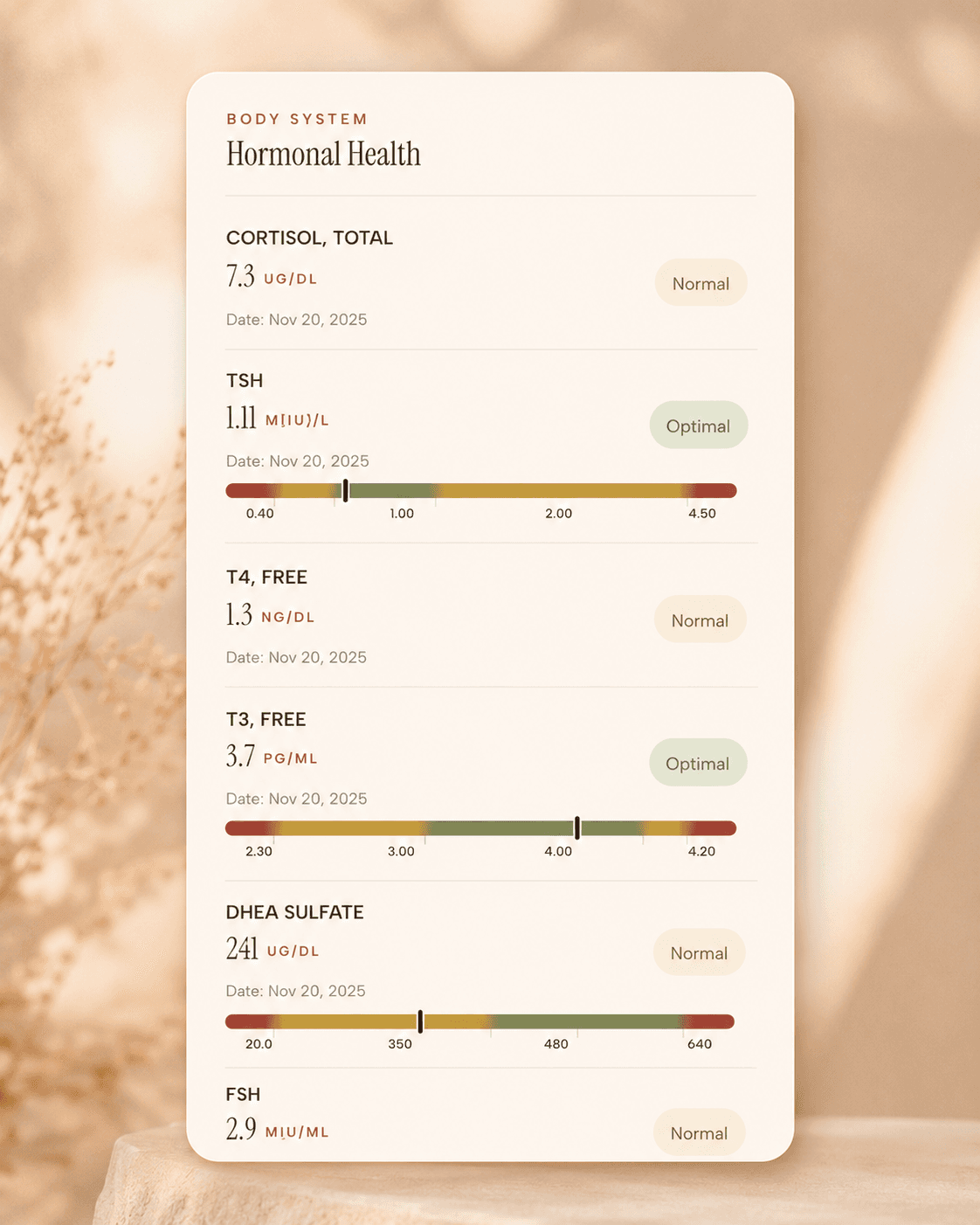
TSH is the master regulator of thyroid function, controlling the production of thyroid hormones T4 and T3. In functional medicine, we use narrower TSH ranges than conventional medicine to identify subclinical thyroid dysfunction early. Even mildly elevated TSH can indicate thyroid insufficiency, leading to fatigue, weight gain, depression, and metabolic dysfunction. TSH levels are influenced by stress, nutrient deficiencies, autoimmune conditions, and environmental toxins. Optimal TSH supports energy, metabolism…
Learn moreHomocysteine
Homocysteine is an amino acid metabolite that serves as an independent risk factor for cardiovascular disease, stroke, and cognitive decline. In functional medicine, elevated homocysteine indicates methylation dysfunction and B-vitamin deficiencies. High homocysteine promotes endothelial dysfunction, oxidative stress, and thrombosis. It's particularly important because it's easily modifiable through B-vitamin supplementation (B6, B12, folate). Homocysteine levels are also associated with Alzheimer's disease risk…
Learn moreLab testing
Check vitamin B12, thyroid (TSH), and inflammation (hs-CRP) at Quest
starting from $99 panel with 100+ tests, one visit
No referral needed
About 1 week
Schedule online — results typically within a week
Clear next steps
Guidance included, with follow-up care available
HSA / FSA
Eligible for pre-tax health spending accounts
Pro Tips
Do a two-week “morning memory log” where you rate your first-hour clarity from 1–10 and write down three things: bedtime, number of awakenings you remember, and whether you woke with a dry mouth or headache. Patterns show up faster than you’d think.
If you suspect apnea, try a simple screen: measure your neck circumference and note whether you snore or stop breathing per a partner. A thick neck plus loud snoring plus morning headaches is a strong reason to ask for a sleep test.
Keep a notepad (or notes app) for the first 30 minutes after waking and capture anything you’re afraid you’ll forget, because your recall often improves after you’re fully alert. This reduces anxiety, which itself can worsen memory retrieval.
If you drink coffee, delay the first cup by 60–90 minutes after waking for a week and see if your mornings feel steadier. For some people, an immediate caffeine spike followed by a dip feels like “memory problems” when it’s really attention volatility.
If you’re a caregiver or family member noticing this in someone else, pay attention to whether they are also getting lost, mismanaging money, or having personality changes. Morning-only fog that improves is different from day-long functional decline, and that distinction helps the clinician triage faster.
Frequently Asked Questions
Is memory loss in the morning normal aging?
Some slowing on waking can happen with age because sleep becomes lighter and more fragmented, which makes recall less crisp at first. What’s not “just aging” is a clear change from your baseline, especially if it’s paired with loud snoring, daytime sleepiness, or trouble managing daily tasks. If it’s mainly a first-hour problem that improves by late morning, sleep quality and reversible causes like low B12 or thyroid issues are worth checking.
Why do I forget things right after waking up?
Right after waking, your brain is transitioning out of sleep chemistry, and if your sleep was interrupted your attention system may still be underpowered. That makes working memory unreliable, so you lose track of what you were about to do or what someone just said. Try a consistent wake time plus bright light right away for two weeks, and if you also snore or wake unrefreshed, consider a sleep apnea evaluation.
Can sleep apnea cause memory loss even if I sleep 8 hours?
Yes, because apnea is not just “short sleep,” it is broken sleep plus repeated oxygen dips. You can be in bed for eight hours and still spend the night bouncing out of deep sleep, which is when memory consolidation happens. If you have snoring, witnessed pauses in breathing, or morning headaches, a home sleep test is a practical next step.
What vitamin deficiency causes morning brain fog and forgetfulness?
Low vitamin B12 is a common, fixable contributor because it supports nerve function and brain signaling. For cognitive symptoms, many clinicians prefer B12 to be comfortably above the low cutoff, often around 400–600 pg/mL, and they may add methylmalonic acid if results are borderline. If you’re vegetarian, take metformin, or use acid blockers long-term, it’s especially worth testing.
When should I worry that morning memory loss is dementia?
Dementia is more likely when memory problems persist throughout the day and start affecting independence, such as getting lost in familiar places, repeating the same questions frequently, or struggling with finances and medications. Morning-only fog that improves after you’re up and moving often points more toward sleep, mood, or medical contributors than a progressive memory disorder. If you’re seeing functional changes, schedule a formal evaluation and bring a short timeline of what changed and when.