Memory Loss at Night: What It Usually Means and What to Do
Memory loss at night is often from sleep deprivation, medication effects, or low B12/thyroid issues. Targeted blood tests available—no referral needed.






Memory loss at night is most often your brain running out of fuel and focus because you are sleep-deprived, overstimulated, or reacting to a medication or alcohol. It can also show up when a reversible body issue such as low vitamin B12, thyroid slowdown, or anemia is quietly affecting attention and recall. Simple labs can help sort out which of those is most likely for you. Nighttime forgetfulness is scary because it can feel like “something is wrong with my brain,” especially if dementia runs in your family or you are recovering from COVID. But the pattern matters: memory that slips mainly in the evening often points to fatigue, sleep quality, and chemistry rather than a rapidly progressive brain disease. This page walks you through the most common causes, what tends to help quickly, and which blood tests are worth checking. If you want help matching your exact pattern to the most likely explanation, PocketMD can talk it through with you, and Vitals Vault labs can help you confirm or rule out common reversible contributors.
Why memory feels worse at night
Sleep debt and fragmented sleep
When you do not get enough deep sleep, your brain has a harder time filing away new information and pulling it back up later. By evening, that “mental filing cabinet” is already overloaded, so you might blank on names, forget why you walked into a room, or reread the same paragraph without absorbing it. The takeaway is simple but powerful: if your memory is noticeably better after one or two solid nights, sleep quality is likely a major driver.
Evening overstimulation and multitasking
Your working memory is the small mental scratchpad you use to hold a few things at once, and it gets worse when you are switching between screens, conversations, and chores. At night, your brain is already tired, so the scratchpad overflows faster and it feels like “my memory is failing,” even though the issue is attention. Try noticing whether your slips happen most when you are doing two things at once, because that points you toward simplifying your evening routine rather than fearing the worst.
Medication or alcohol effects
Many common nighttime helpers can backfire on memory because they dull alertness and disrupt normal sleep architecture. Sleep aids that contain antihistamines, some anxiety medications, and even alcohol can make you feel drowsy while also making it harder to form new memories, which can look like confusion or “missing time” late in the evening. If your symptoms started after a new pill, a dose change, or a new evening drink habit, bring the exact product and timing to your clinician so you can adjust safely.
Low B12 affecting brain wiring
Vitamin B12 helps maintain the insulation around nerves and supports brain chemistry, so low levels can show up as forgetfulness, slowed thinking, or a “cotton wool” feeling in your head. It is especially easy to miss if you take acid-suppressing meds, eat little animal protein, or have gut absorption issues, because you can be low long before you look obviously ill. The practical move is to test B12 (and ideally methylmalonic acid if B12 is borderline) instead of guessing with supplements.
Thyroid slowdown or anemia fatigue
If your thyroid is underactive, your whole system runs a little slower, which can feel like mental fog that gets worse as the day goes on. Anemia can do something similar by reducing oxygen delivery, so by evening you feel wiped out and your recall gets unreliable. The clue is that memory problems come with low energy, feeling cold, shortness of breath on stairs, or a new drop in exercise tolerance, which is a good reason to check TSH and a complete blood count.
What actually helps at night
Protect a consistent sleep window
Pick a realistic bedtime and wake time you can keep most days, because your brain learns when to be alert and when to power down. If your memory is worse at night, you are trying to do high-demand thinking at the exact time your biology is pushing toward sleep. Treat the last 60–90 minutes as a wind-down zone, and move important decisions and planning earlier when your brain is still fresh.
Do a “brain offload” before bed
Nighttime forgetfulness often improves when you stop asking your brain to hold everything. Write down tomorrow’s top three tasks, any appointments, and one place you will put essentials like keys and meds, because external memory beats stressed internal memory. This reduces the anxious loop of “don’t forget, don’t forget,” which itself makes recall worse.
Review evening meds and sleep aids
If you are using an over-the-counter sleep aid, check whether it contains diphenhydramine or doxylamine, because those can worsen memory and next-day grogginess, especially as you get older. Do not stop prescription sedatives suddenly, but do ask whether a lower dose, earlier timing, or a different option could reduce nighttime confusion. A simple medication timing tweak can make a bigger difference than any supplement.
Use light and movement strategically
If you get “foggy” after dinner, a 10–15 minute easy walk or gentle mobility routine can raise alertness without revving you up like intense exercise. Bright light in the early evening can also help if you are drifting into sleepiness too early, but you should dim lights later so your brain can produce melatonin on time. The goal is to smooth the drop-off in attention, not fight your body at midnight.
Get targeted labs and treat the cause
When a reversible issue is driving your symptoms, you usually feel a real shift once it is corrected. Treating low B12, optimizing thyroid function, or addressing anemia can improve attention, processing speed, and the sense that your brain “checks out” at night. If you are not sure which direction to pursue first, start with the three tests below and use the results to guide the next step with a clinician.
Useful biomarkers to discuss with your clinician
Vitamin B12
Vitamin B12 (cobalamin) is essential for DNA synthesis, red blood cell formation, neurological function, and energy metabolism. In functional medicine, we recognize that B12 deficiency is surprisingly common, especially in older adults, vegetarians, vegans, and those with digestive issues. B12 deficiency can cause irreversible neurological damage if left untreated. The vitamin is crucial for methylation reactions, which affect cardiovascular health, detoxification, and gene expression. Even subclinical deficienc…
Learn moreTSH
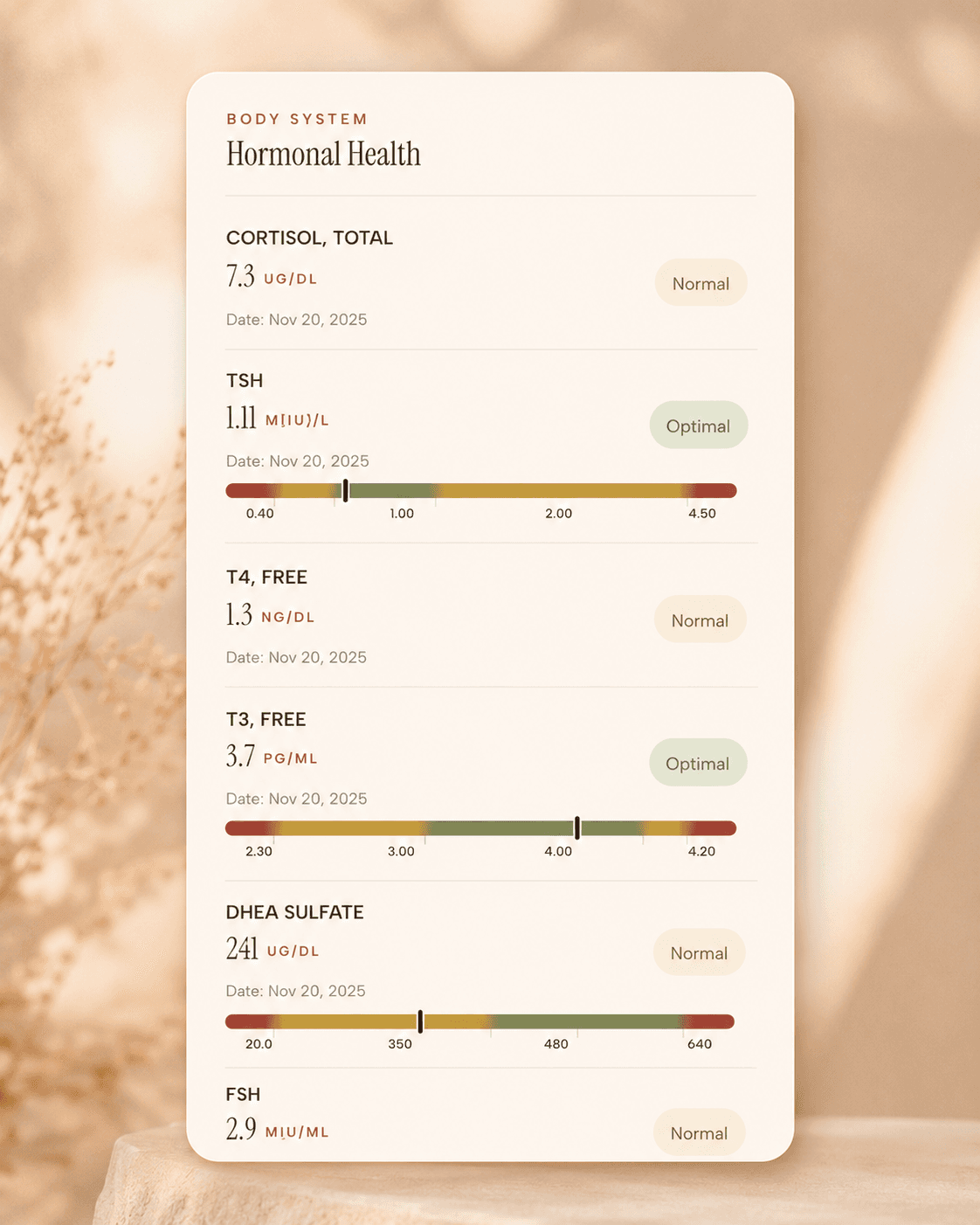
TSH is the master regulator of thyroid function, controlling the production of thyroid hormones T4 and T3. In functional medicine, we use narrower TSH ranges than conventional medicine to identify subclinical thyroid dysfunction early. Even mildly elevated TSH can indicate thyroid insufficiency, leading to fatigue, weight gain, depression, and metabolic dysfunction. TSH levels are influenced by stress, nutrient deficiencies, autoimmune conditions, and environmental toxins. Optimal TSH supports energy, metabolism…
Learn moreFolate, Serum
Folate (vitamin B9) is crucial for DNA synthesis, cell division, and one-carbon metabolism. In functional medicine, adequate folate is essential for cardiovascular health, cognitive function, and preventing neural tube defects during pregnancy. Folate works synergistically with B12 and B6 in methylation reactions that affect homocysteine levels, neurotransmitter synthesis, and gene expression. The synthetic form, folic acid, may not be well-utilized by individuals with MTHFR gene variants, making natural folate…
Learn moreLab testing
Check B12, thyroid (TSH), and anemia markers at Quest
starting from $99 panel with 100+ tests, one visit
No referral needed
About 1 week
Schedule online — results typically within a week
Clear next steps
Guidance included, with follow-up care available
HSA / FSA
Eligible for pre-tax health spending accounts
Pro Tips
Run a 7-night experiment: keep bedtime and wake time steady, and rate your nighttime forgetfulness from 1–10 at the same time each evening. If your score drops quickly, sleep fragmentation is likely the main lever.
If you take any “PM” products, take a photo of the ingredient label and note the time you took it. That makes it much easier to spot antihistamines or other sedating ingredients that can worsen memory.
Use a single “landing zone” for nighttime essentials: put your keys, glasses, and tomorrow’s meds in one visible spot before dinner. When your brain is tired, environment beats willpower.
If you wake up confused at night, turn on a dim light and read a short orientation card you keep by the bed with the date, where you are, and what you planned for tomorrow. It sounds simple, but it can interrupt panic and help your brain re-anchor.
If you suspect B12 issues, do not rely on energy drinks or random high-dose supplements as your only plan. Get a baseline B12 test first so you can track whether treatment is actually fixing the problem.
Frequently Asked Questions
Why is my memory worse at night but fine in the morning?
That pattern often points to fatigue and attention rather than permanent memory loss. As the day goes on, sleep debt, stress hormones, and multitasking reduce your working memory, so recall feels unreliable even if your long-term memory is intact. Try shifting demanding tasks earlier and protecting a consistent sleep window for a week, and see whether the evening “drop-off” improves.
Can sleep apnea cause memory problems at night?
Yes, because repeated breathing interruptions break up deep sleep, and deep sleep is when your brain consolidates memories. You might notice loud snoring, gasping, morning headaches, or needing naps, and your thinking can feel especially fuzzy in the evening. If those signs fit, ask about a sleep study, because treating sleep apnea often improves attention and memory.
Is nighttime forgetfulness an early sign of dementia?
It can be, but dementia usually shows a more consistent decline across the day and over months, not only when you are tired at night. Nighttime-only problems are more commonly linked to sleep disruption, medications, mood, or reversible deficiencies such as low B12 or thyroid issues. If you are noticing getting lost in familiar places, repeated questions, or trouble managing finances, it is worth scheduling a formal cognitive evaluation.
What vitamin deficiency causes memory loss at night?
Low vitamin B12 is a common, testable cause of brain fog and forgetfulness, and symptoms can feel worse when you are tired in the evening. For memory concerns, many clinicians feel more comfortable when B12 is above about 400–500 pg/mL, because “borderline” levels can still be symptomatic in some people. If your B12 is low or borderline, ask whether methylmalonic acid should be checked to confirm true deficiency.
What blood tests should I get for memory problems and brain fog?
A practical starting trio is vitamin B12, TSH (thyroid), and a complete blood count (CBC) to look for anemia. Those tests help catch common reversible contributors that can make your brain feel slower and more forgetful, especially later in the day. If anything is abnormal or borderline, use the results to guide the next step with a clinician rather than guessing with supplements.