Luteal Phase Symptoms: Why You Feel Different After Ovulation
Luteal phase symptoms usually come from progesterone shifts, fluid retention, and blood-sugar sensitivity. Targeted labs available, no referral needed.





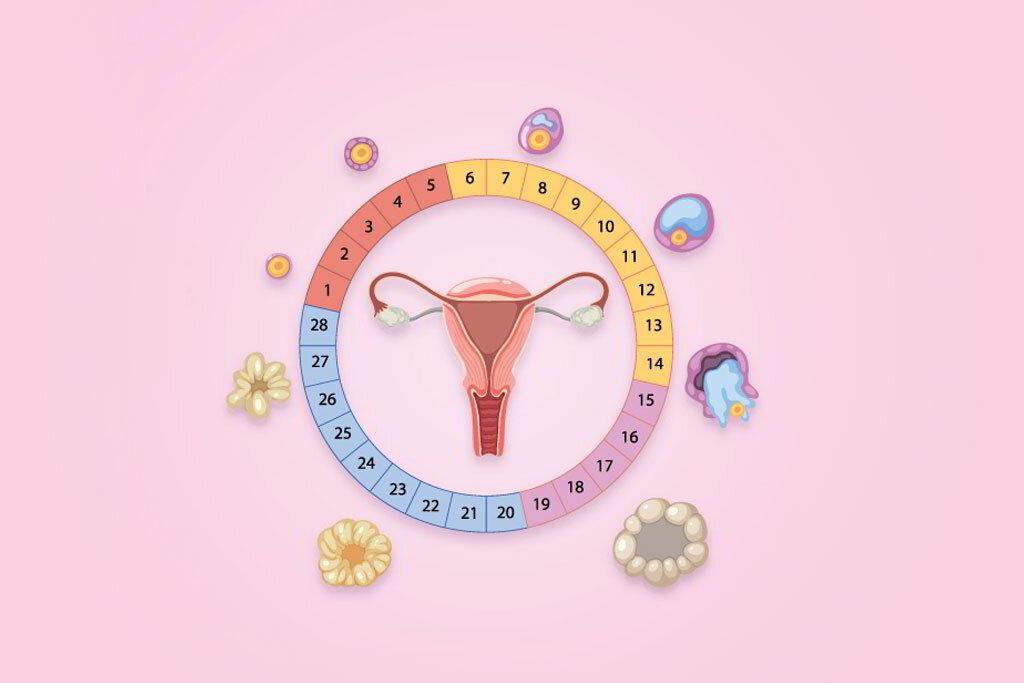
Luteal phase symptoms happen because your hormones shift after ovulation: progesterone rises, oestrogen changes, and your body holds onto more fluid and becomes more sensitive to stress and blood-sugar swings. That can show up as bloating, breast tenderness, mood changes, sleep disruption, headaches, and a dip in exercise “pop.” If your symptoms feel intense or unpredictable, a few well-timed labs can help you tell the difference between normal cycle physiology and something fixable like thyroid issues or low iron. The luteal phase is the 10–14-ish days between ovulation and your period, and it is supposed to feel different. Progesterone is doing real work here: it prepares the uterine lining and slightly changes your temperature, breathing, and how your brain responds to stress. The tricky part is that “normal” has a wide range, and tracking apps don’t always explain why your body is acting like this. This guide walks you through the most common reasons luteal symptoms flare, what tends to help in real life, and how PocketMD and targeted Vitals Vault labs can support you if you want a clearer answer than guesswork.
Why luteal phase symptoms happen in your body
Progesterone shifts after ovulation
After ovulation, progesterone rises and your body behaves a little like it’s “warming up” and slowing down. You might notice sleep feels lighter, your resting heart rate creeps up, and you feel more easily overwhelmed because progesterone interacts with calming brain signals. A practical takeaway is to compare symptoms to ovulation timing, not calendar days, because a “late ovulation” cycle can make everything feel delayed.
Fluid retention and gut slowdown
Progesterone relaxes smooth muscle, which can slow your gut and make you feel puffy even if you did not change how you eat. At the same time, hormone shifts can nudge your kidneys to hold onto more sodium and water, so rings feel tight and your lower belly can look more rounded by evening. If bloating is your main issue, paying attention to constipation and salt-heavy meals in the 48 hours before the worst days often explains more than calories do.
Blood-sugar dips feel like anxiety
In the luteal phase, some people become more sensitive to blood-sugar swings, especially if you train hard or skip breakfast. A dip can feel like irritability, shakiness, a sudden “doom” feeling, or cravings that seem out of proportion. The key clue is timing: if symptoms improve within 15–30 minutes of eating a balanced snack, you’re probably dealing with fuel, not a personality change.
Higher stress response and poor sleep
When sleep is fragmented, your stress hormones can run higher the next day, and your brain gets less patient with everything. That can amplify luteal mood symptoms, make headaches more likely, and make workouts feel harder at the same pace. If you’re waking at 2–4 a.m. in the second half of your cycle, treat that as a real symptom to work on rather than “just PMS.”
Not PMS: thyroid or low iron
Some problems mimic luteal phase symptoms because they also affect energy, mood, and temperature regulation. Low thyroid function can make you feel sluggish, puffy, and down, while low iron stores can make training feel unusually hard and leave you short of breath or lightheaded. If your symptoms are new, steadily worsening, or happening most days of the month, it’s worth checking labs instead of assuming it’s “just hormones.”
What actually helps with luteal phase symptoms
Time your training to your cycle
If you’re cycle-aware, the luteal phase is often better for steady aerobic work and technique than for chasing personal records. Your core temperature runs a bit higher, so heat and long intervals can feel extra punishing even when fitness is unchanged. A useful experiment is to keep intensity but shorten the hardest sets for 7–10 days and see if recovery and mood improve.
Use a “steady fuel” snack plan
When cravings and irritability spike, it often helps to eat earlier and more predictably rather than trying to “power through.” Aim for a snack that includes protein and fiber, like Greek yogurt with berries or hummus with crackers, especially before workouts or long meetings. If you notice fewer afternoon crashes within a week, you’ve found a lever that’s bigger than willpower.
Treat constipation like a trigger
If your gut slows down, bloating and pelvic pressure can snowball, and it can even worsen cramps. Try adding one specific bowel-support habit for the luteal phase, such as a daily kiwi, psyllium in water, or a 10-minute walk after dinner, and track whether your belly feels different by day three. The goal is regularity, not restriction.
Dial in sleep with temperature cues
Because your baseline temperature is higher, you may sleep better with a cooler room, lighter bedding, or a shower that ends cool rather than hot. If you wake wired at night, keep lights low and avoid checking your phone, because bright light tells your brain it is morning. If sleep disruption is your main luteal symptom, improving it often reduces mood symptoms without needing to “fix” your hormones.
Consider targeted medical options
If symptoms are severe, persistent, or affecting relationships and work, you have options beyond supplements. Some people do well with hormonal contraception, others with an SSRI used continuously or only in the luteal phase for PMDD, and some benefit from treating an underlying thyroid or iron issue. The most helpful next step is to bring a two-cycle symptom log to a clinician so the pattern is clear and the plan is tailored.
Useful biomarkers to discuss with your clinician
Progesterone
While primarily known as a female hormone, progesterone plays important roles in men including neuroprotection, sleep quality, and as a precursor to other hormones. In functional medicine, male progesterone assessment helps evaluate overall hormone synthesis pathways and stress response. Low progesterone in men may indicate chronic stress or adrenal dysfunction, while optimal levels support brain health and sleep quality. Progesterone in men supports neurological health, sleep quality, and serves as a building b…
Learn moreGlucose
Fasting glucose is a fundamental marker of glucose metabolism and insulin function. In functional medicine, we recognize that even 'normal' glucose levels in the upper range may indicate early insulin resistance. Optimal fasting glucose reflects efficient glucose regulation and insulin sensitivity. Elevated fasting glucose suggests the body's inability to maintain normal glucose levels overnight, indicating hepatic insulin resistance or insufficient insulin production. This marker is essential for early detectio…
Learn moreCortisol, Total
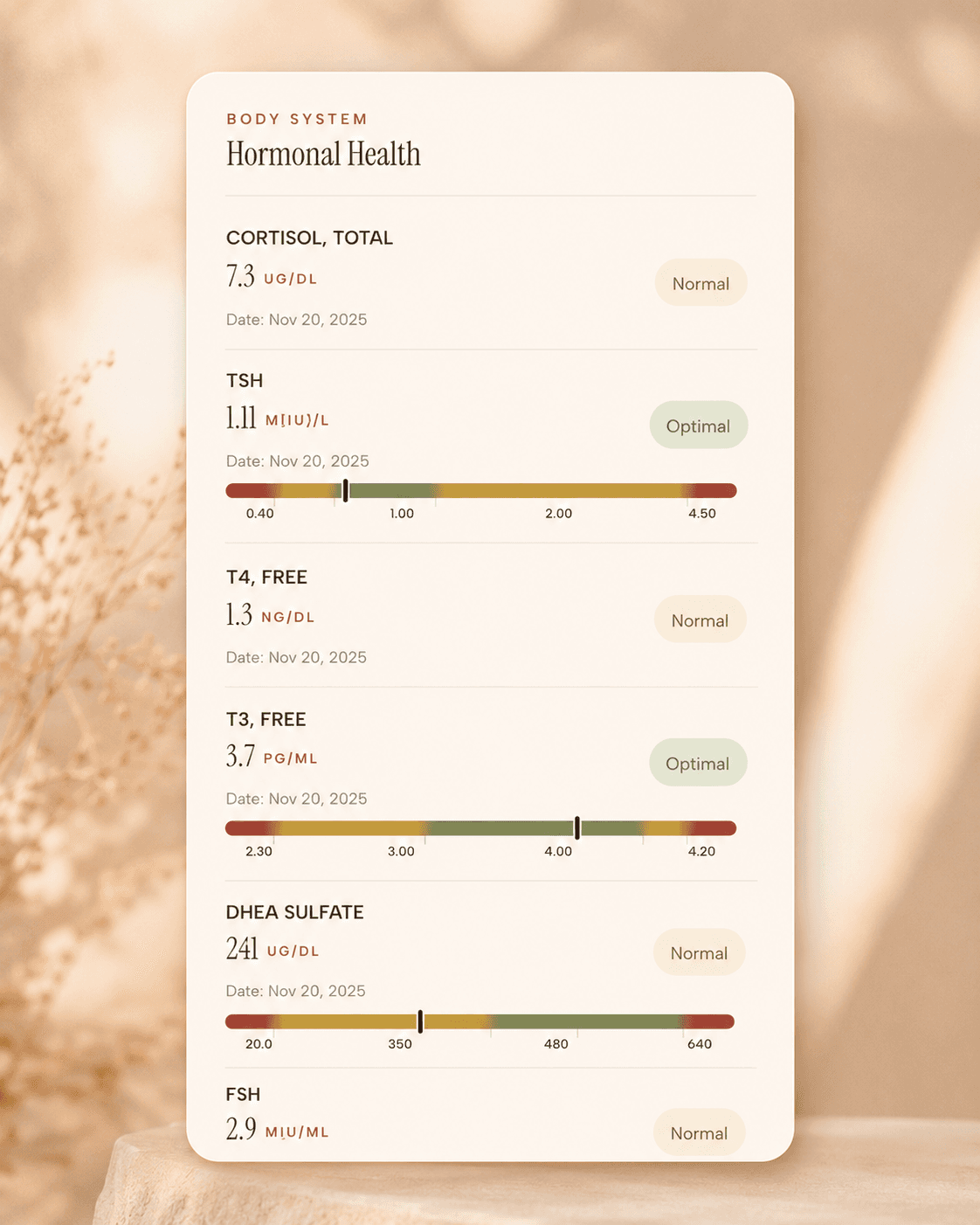
Cortisol is the primary stress hormone that regulates metabolism, immune function, and blood pressure. In functional medicine, cortisol assessment is crucial for understanding stress response and its impact on overall health. Chronic elevation suppresses testosterone production and immune function, while low cortisol indicates adrenal insufficiency. Optimal cortisol rhythm supports energy, mood stability, and hormone balance. Cortisol orchestrates the body's stress response and daily energy rhythms. Balanced cor…
Learn moreLab testing
Check progesterone timing, thyroid function, and iron stores
starting from $99 panel with 100+ tests, one visit
No referral needed
About 1 week
Schedule online — results typically within a week
Clear next steps
Guidance included, with follow-up care available
HSA / FSA
Eligible for pre-tax health spending accounts
Pro Tips
Track symptoms by ovulation, not by “cycle day.” If you use LH strips or basal body temperature, label days as “+3 after ovulation” because that is when progesterone-driven symptoms usually start to make sense.
Do a two-cycle experiment with one change at a time. For example, keep training the same but add a mid-afternoon protein-and-fiber snack in the luteal phase, then see if cravings and irritability drop by at least 2 points on a 1–10 scale.
If bloating is your headline symptom, track bowel movements for a week and aim for one easy movement daily in the luteal phase. When constipation improves, many people notice their belly and pelvic pressure improve within days.
If you suspect low progesterone, don’t test “on day 21” unless you truly ovulate on day 14. Schedule progesterone about 7 days after your confirmed ovulation day so the result actually answers the question you’re asking.
For cycle-aware athletes, compare your pace or power at the same heart rate across phases. If luteal effort feels higher at the same output, plan deload days there instead of assuming you’re losing fitness.
Frequently Asked Questions
What symptoms are normal in the luteal phase?
It is common to feel more bloated, have breast tenderness, notice mood sensitivity, and sleep a bit worse after ovulation because progesterone changes fluid balance, gut motility, and your stress response. Many people also see a small rise in resting heart rate and body temperature. It becomes less “normal” when symptoms are severe, last most of the month, or suddenly change from your usual pattern, so track timing for two cycles and consider labs if it’s escalating.
How do I know if it’s PMS or something else?
PMS typically shows up in the week or so before your period and improves within a day or two of bleeding. If you feel fatigued, down, constipated, or puffy most days of the month, thyroid issues (TSH with free T4) or low iron stores (ferritin) can look like “bad PMS.” A simple next step is a symptom log plus those two labs if the pattern is not clearly cycle-limited.
When should I test progesterone for luteal phase symptoms?
The most useful timing is about 7 days after ovulation, which is often described as “mid-luteal.” If you test too early, progesterone can look low even when ovulation happened, and that can send you down the wrong rabbit hole. Use an ovulation predictor (LH surge) and/or basal body temperature shift to estimate ovulation, then schedule the blood draw 6–8 days later.
Can luteal phase symptoms affect athletic performance?
Yes. Your baseline temperature is slightly higher and your perceived effort can increase, which can make heat, long intervals, and poor sleep hit harder even when fitness is stable. Many athletes do better with steady aerobic work and slightly reduced intensity in the late luteal days, then push harder again in the early follicular phase. Try adjusting training for one cycle and compare performance at the same heart rate or RPE.
When are luteal phase symptoms a red flag?
Get checked sooner if you have severe depression, thoughts of self-harm, panic that feels out of control, or symptoms that dramatically impair work or relationships, because PMDD can be treated. Also pay attention if you have very heavy bleeding, new pelvic pain, or fatigue that is worsening month to month, since iron deficiency and thyroid problems are common and fixable. Bring a two-cycle log and ask specifically about ferritin and TSH with free T4 so you leave with a concrete plan.