Supplements to Reduce Inflammation in Your Body (What Actually Helps)
Supplements to reduce inflammation work by lowering CRP, calming immune signaling, and correcting omega-3 gaps. Targeted labs available—no referral needed.





Supplements to reduce inflammation can help when the problem is driven by an omega-3 shortfall, ongoing oxidative stress, or low-grade immune activation that shows up as a higher CRP. The “best” supplement depends on what is inflamed and why, because joint pain, gut irritation, and metabolic inflammation do not behave the same way. A few targeted labs can show whether inflammation is truly elevated and whether a supplement plan is actually changing your numbers. If you have been staring at shelves of turmeric, fish oil, magnesium, and “immune support” blends, you are not alone. The frustrating part is that inflammation is a real body process, but it is also a marketing word, so it is easy to spend money without getting relief. This guide walks you through the most common reasons inflammation lingers, the supplements with the best evidence and practical dosing, and the blood tests that help you personalize the plan. If you want help matching your symptoms, meds, and lab results to a safe approach, PocketMD can help you think it through, and Vitals Vault labs can help you measure progress instead of guessing.
Why “inflammation” keeps sticking around
Your diet is pro-inflammatory
When most of your calories come from ultra-processed foods, added sugars, and refined starches, your immune system gets a steady stream of “danger” signals from your gut and blood sugar swings. That can feel like achy joints, puffy hands, stubborn fatigue, or flares after meals. If this is you, supplements work best as a bridge while you tighten the basics, because no capsule can outpace a daily inflammatory pattern.
You are low on omega-3s
Omega-3 fats are raw material for inflammation-resolving signals, which means low intake can keep your body stuck in a “stay irritated” mode. You might notice more morning stiffness, dry eyes, or slower recovery after workouts. A practical takeaway is to treat fish oil like a dose-dependent tool: the anti-inflammatory effect usually requires gram-level EPA+DHA, not a tiny “one softgel” amount.
Your gut barrier is irritated
When your gut lining is inflamed, more bacterial fragments can leak into the bloodstream and keep your immune system on alert. This often travels with bloating, unpredictable stools, or skin flares that seem to come out of nowhere. The key move here is to stop chasing random “anti-inflammatory” blends and instead focus on gut-calming choices, while also checking for triggers like frequent NSAID use or heavy alcohol.
Stress and poor sleep amplify it
Chronic stress hormones and short sleep make your immune system more reactive, and they also raise pain sensitivity, so everything feels louder in your body. You can have “normal” labs and still feel inflamed because your nervous system is turning up the volume. If your symptoms spike after a bad night, prioritize sleep interventions first, because supplements tend to work better when your baseline is steadier.
A medical condition is driving it
Sometimes inflammation is a signal of something that needs diagnosis, such as autoimmune disease, chronic infection, gout, or inflammatory bowel disease. What matters is the pattern: persistent fevers, unexplained weight loss, blood in stool, or a single hot swollen joint are not “just inflammation.” If any of those are happening, treat supplements as supportive at most and get evaluated, because the right treatment can be dramatically different.
Supplements that actually move the needle
Omega-3 fish oil (EPA+DHA)
For many people, omega-3s are the most reliable supplement for lowering inflammatory signaling, especially for joint discomfort and triglyceride-driven inflammation. A common effective range is 1–3 grams per day of combined EPA+DHA, taken with food, and you usually reassess after 8–12 weeks. If you bruise easily, take blood thinners, or have surgery coming up, you should run the dose by your clinician first.
Curcumin (turmeric extract)
Curcumin can dial down inflammatory pathways in a way that some people feel as less stiffness and fewer “flare days,” particularly with osteoarthritis-type pain. It absorbs poorly on its own, so products paired with piperine or formulated as phytosome forms tend to work better than plain turmeric powder. A realistic dose is often 500–1,000 mg per day of a standardized extract, and it is worth avoiding if you have gallbladder disease or you are on strong blood thinners unless your clinician okays it.
Magnesium for stress-linked inflammation
Magnesium does not “erase inflammation” overnight, but it can reduce the stress-and-sleep loop that keeps your body reactive, and it may help muscle tension that feels like inflammation. Magnesium glycinate is often easiest on the stomach, while magnesium citrate can loosen stools if constipation is part of your picture. Many people do well with 200–400 mg elemental magnesium in the evening, and the best sign you overshot is diarrhea, not a mysterious side effect.
Vitamin D if you are low
Low vitamin D is common, and when you are deficient your immune system can become less well-regulated, which can show up as more frequent aches or slower recovery. The important point is that vitamin D is a “correct a deficiency” supplement, not a “more is better” anti-inflammatory hack. If your 25(OH)D is low, a typical plan is 1,000–2,000 IU daily (sometimes more short-term), then recheck in about 8–12 weeks to avoid overshooting.
Psyllium fiber for metabolic inflammation
If your inflammation is tied to blood sugar swings, higher insulin, or high LDL, fiber can be surprisingly powerful because it changes what your gut bacteria produce and it blunts glucose spikes after meals. Psyllium is one of the best-studied options, and it often helps both cholesterol and regularity, which is why people feel “less puffy” over time. Start low, like 1 teaspoon daily in a full glass of water, and separate it from medications by at least 2 hours so it does not interfere with absorption.
Useful biomarkers to discuss with your clinician
Hs Crp
High-sensitivity C-reactive protein (hs-CRP) is a key marker of systemic inflammation and cardiovascular risk. In functional medicine, we recognize hs-CRP as one of the most important predictors of heart disease, stroke, and metabolic dysfunction. Levels above 1.0 mg/L indicate increased inflammation that may be driven by poor diet, chronic infections, autoimmune conditions, or metabolic syndrome. Optimal levels below 0.5 mg/L are associated with the lowest cardiovascular risk and overall inflammatory burden. hs…
Learn moreVitamin D, 25-Oh, Total
Total 25-hydroxyvitamin D represents the best measure of vitamin D status, combining both D2 and D3 forms. This is the storage form of vitamin D and reflects recent intake and synthesis. In functional medicine, total 25(OH)D is used to assess vitamin D sufficiency and guide supplementation. Optimal levels (40-80 ng/mL) are associated with reduced risk of cancer, cardiovascular disease, autoimmune conditions, and all-cause mortality. Vitamin D acts as a hormone affecting immune function, bone health, mood, and ce…
Learn moreFerritin
Ferritin is your body's iron storage protein, reflecting total iron stores in the body. In functional medicine, ferritin assessment is crucial for identifying both iron deficiency and iron overload, conditions that can significantly impact energy levels and overall health. Low ferritin is the earliest sign of iron deficiency, often occurring before anemia develops. This can cause fatigue, weakness, restless leg syndrome, and cognitive impairment. Conversely, elevated ferritin may indicate iron overload, inflamma…
Learn moreLab testing
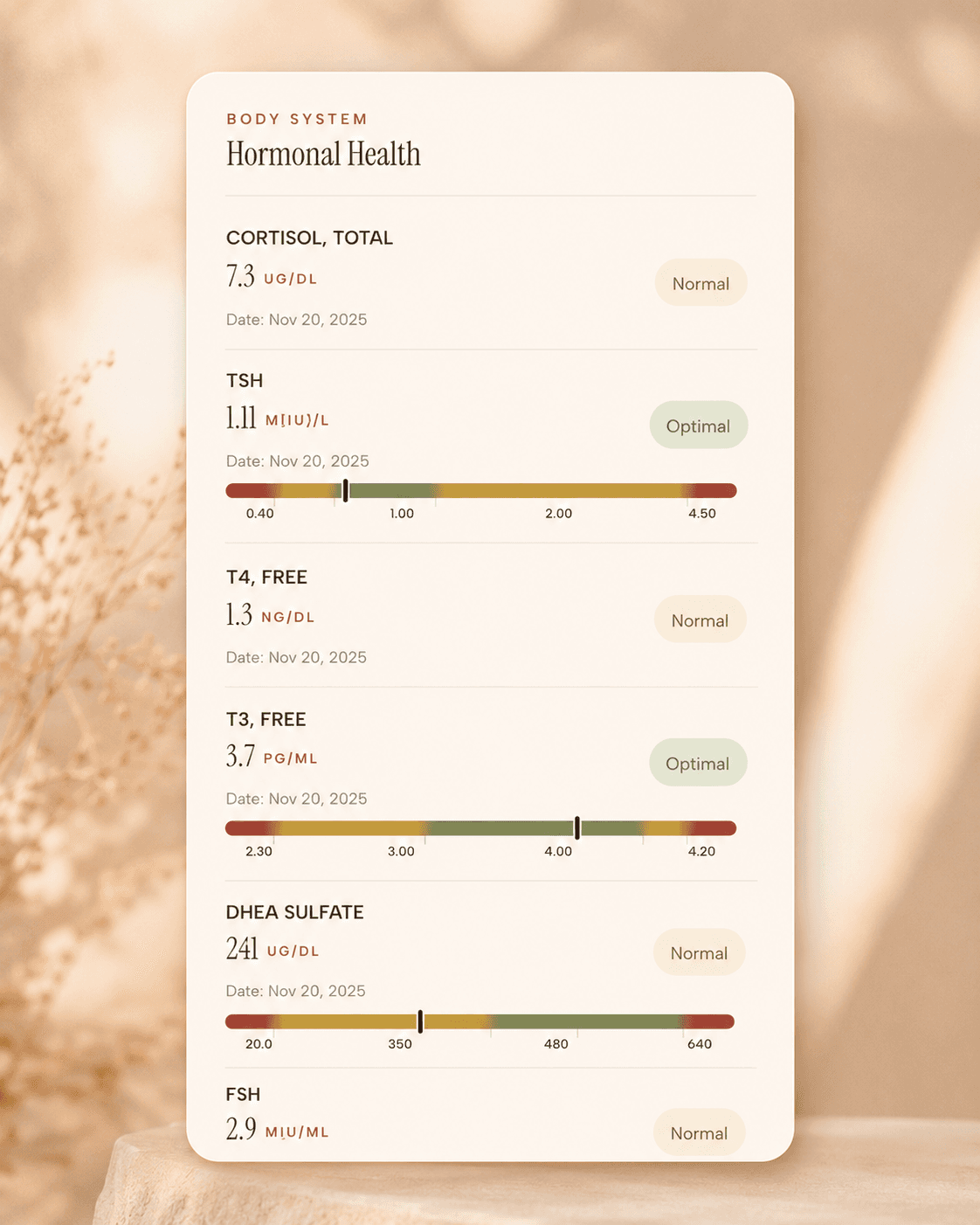
Check hs-CRP, omega-3 index, and fasting insulin at Quest
starting from $99 panel with 100+ tests, one visit
No referral needed
About 1 week
Schedule online — results typically within a week
Clear next steps
Guidance included, with follow-up care available
HSA / FSA
Eligible for pre-tax health spending accounts
Pro Tips
Pick one main goal and one main metric before you buy anything. For example, if your goal is “fewer flare days,” track a daily 0–10 pain score and recheck hs-CRP after 8–12 weeks so you can tell if the plan is working.
Read the “Supplement Facts” panel like it is a dosage label. For fish oil, you are looking for the grams of EPA+DHA, not the total “fish oil” number, because that is what drives the anti-inflammatory effect.
Start one supplement at a time and keep it steady for two weeks before adding the next. That simple pacing makes side effects and benefits much easier to attribute, which saves you money and confusion.
If you take medications, build a quick interaction check into your routine. Curcumin and higher-dose fish oil can increase bleeding tendency for some people, and psyllium can reduce medication absorption if you take them together.
Use a “stop rule” so you do not stay on something that is not helping. If you do not feel any meaningful change and your tracking metric does not improve after 8–12 weeks at an evidence-based dose, switch strategies instead of stacking more products.
Frequently Asked Questions
What is the best supplement to reduce inflammation fast?
If you truly have low-grade inflammation, omega-3s (EPA+DHA) and curcumin are two of the most evidence-backed options, but they still usually take weeks, not days. A practical “fast” plan is to start an effective dose and track hs-CRP, because feeling better without a measurable change can also mean pain sensitivity improved rather than inflammation dropping. If you want speed, remove the biggest trigger first (often alcohol, ultra-processed foods, or poor sleep) while the supplement ramps up.
How much fish oil should you take for inflammation?
Many people need about 1–3 grams per day of combined EPA+DHA to see an anti-inflammatory effect, and that is different from “1,000 mg fish oil” on the front label. Taking it with a meal improves absorption and reduces fishy burps. If you are on anticoagulants, have a bleeding disorder, or have surgery planned, confirm the dose with your clinician.
Does turmeric really reduce inflammation in the body?
Turmeric as a spice is healthy, but the studies showing meaningful anti-inflammatory effects usually use concentrated curcumin extracts. Look for a standardized product and an absorption aid (like piperine or a phytosome form), because plain curcumin absorbs poorly. Give it 6–8 weeks and track something concrete, such as morning stiffness minutes or a weekly pain score.
What blood test shows inflammation in the body?
hs-CRP is one of the most useful single blood tests for low-grade inflammation, especially when you are trying to see whether lifestyle or supplements are moving the needle. Many clinicians aim for under 1.0 mg/L as a “better than average” target for cardiometabolic risk, although results should be interpreted in context. Test when you are not acutely sick, and repeat in 8–12 weeks after changes.
Can supplements reduce inflammation if you have autoimmune disease?
They can sometimes support symptoms, but they usually do not replace disease-specific treatment because autoimmune inflammation is driven by an overactive immune pattern, not just a nutrient gap. If you have persistent swollen joints, rashes, mouth ulcers, fevers, or unexplained weight loss, you deserve a proper workup rather than a supplement-only plan. Use supplements as add-ons and bring your list and doses to your clinician so your plan stays safe.