Memory Loss in Your 60s: What It Means and What to Do
Memory loss in your 60s often comes from sleep problems, thyroid or B12 issues, or medication effects. Targeted labs are available—no referral needed.






Memory loss in your 60s is often caused by things that are fixable, like poor sleep (especially sleep apnea), low vitamin B12, or an underactive thyroid. It can also come from medication side effects, depression, or stress that makes your brain feel “offline.” Simple blood tests and a focused history can help sort out what’s most likely in your case. It’s scary when you walk into a room and forget why, or when a familiar name won’t come to you. The tricky part is that normal aging does slow recall a bit, but it should not steadily erase skills, independence, or your sense of direction. This page walks you through the most common causes in your 60s, what actually helps, and which labs are worth checking first. If you want help connecting your specific pattern to the right next step, PocketMD can talk it through with you, and Vitals Vault labs can help you confirm (or rule out) common reversible causes.
Why memory slips show up in your 60s
Sleep apnea and fragmented sleep
If your breathing repeatedly pauses at night, your brain keeps getting nudged out of deep sleep, which is when memories get “filed” and attention resets. You might notice you can remember things eventually, but you cannot pull them up on demand, especially in the morning. If you snore, wake up unrefreshed, or feel sleepy during the day, treat sleep as a medical cause of memory problems, not a willpower issue.
Low vitamin B12
Vitamin B12 helps maintain the insulation around nerves, which affects processing speed and short-term memory. When it is low, you can feel mentally slower, more forgetful, and sometimes a little unsteady or tingly in your hands or feet. The key takeaway is that “low-normal” can still matter, so if your B12 is borderline, ask about confirmatory testing and a replacement plan rather than brushing it off.
Underactive thyroid (hypothyroidism)
When your thyroid runs slow, your whole system slows with it, including the pace at which you think and retrieve words. This often feels like brain fog, low motivation, and memory that improves slightly later in the day but never feels sharp. If you also have constipation, dry skin, feeling cold, or unexplained weight gain, a thyroid check is a high-yield first step.
Medication and alcohol effects
Some common meds in your 60s can blunt attention and new memory formation, especially sleep aids, anti-anxiety meds, strong allergy pills, and certain bladder medications that dry you out. Alcohol can amplify this, even if you only drink in the evening, because it fragments sleep and worsens next-day recall. A practical move is to bring every prescription, over-the-counter pill, and “PM” product to one visit and ask, “Which of these can affect memory, and what are safer alternatives?”
Early neurodegenerative change
Sometimes memory loss is not just slower recall, but a pattern of repeating questions, getting lost in familiar places, or struggling with tasks you used to do automatically. That can signal a progressive brain condition such as Alzheimer’s disease, and it deserves a real evaluation rather than waiting it out. If memory changes are interfering with driving, finances, medication management, or safety at home, it is time to involve your primary care clinician or a memory clinic and bring a family member to help describe what they’re seeing.
What actually helps your memory (and what to do first)
Treat sleep like a medical priority
Start by aiming for a consistent sleep window, but do not stop there if you suspect apnea. If you snore, wake up choking, or have high blood pressure plus daytime sleepiness, ask for a sleep study because treating apnea can noticeably improve attention and recall within weeks. Even before testing, side-sleeping and avoiding alcohol within four hours of bed can reduce breathing disruptions for many people.
Do a medication “memory audit”
Pick one pharmacy printout or one list and review it with your clinician, focusing on sedatives and anticholinergic drugs (meds that block acetylcholine, a key memory signal). The goal is not to stop everything, but to reduce the total “brain-slowing” load by switching to safer options or lowering doses. If you change a medication, track your memory for two weeks so you can tell if the change helped.
Replace deficiencies with a clear plan
If B12 is low or borderline, replacement is usually straightforward, but the dose and route matter, especially if absorption is poor. Many people do well with high-dose oral B12, while others need injections for a period, and you should recheck levels to make sure you are actually correcting the problem. If you are vegetarian, take metformin, or use acid blockers long-term, you may need ongoing maintenance rather than a one-time fix.
Use memory strategies that reduce load
Your brain remembers better when it is not juggling, so build “external memory” on purpose. Put one shared calendar in your phone, use a single spot for keys and glasses, and set recurring reminders for meds and bills so you are not relying on willpower at 8 a.m. This is not giving in; it frees attention for the things you actually care about.
Get a baseline cognitive check
A short office screening can show whether you are dealing with normal aging, depression-related concentration issues, or something that needs deeper testing. The point of a baseline is that it gives you a reference for change, which is often more informative than one score on one day. Ask for a memory-focused visit and bring two or three concrete examples of what has changed over the last six months.
Useful biomarkers to discuss with your clinician
Vitamin B12
Vitamin B12 (cobalamin) is essential for DNA synthesis, red blood cell formation, neurological function, and energy metabolism. In functional medicine, we recognize that B12 deficiency is surprisingly common, especially in older adults, vegetarians, vegans, and those with digestive issues. B12 deficiency can cause irreversible neurological damage if left untreated. The vitamin is crucial for methylation reactions, which affect cardiovascular health, detoxification, and gene expression. Even subclinical deficienc…
Learn moreTSH
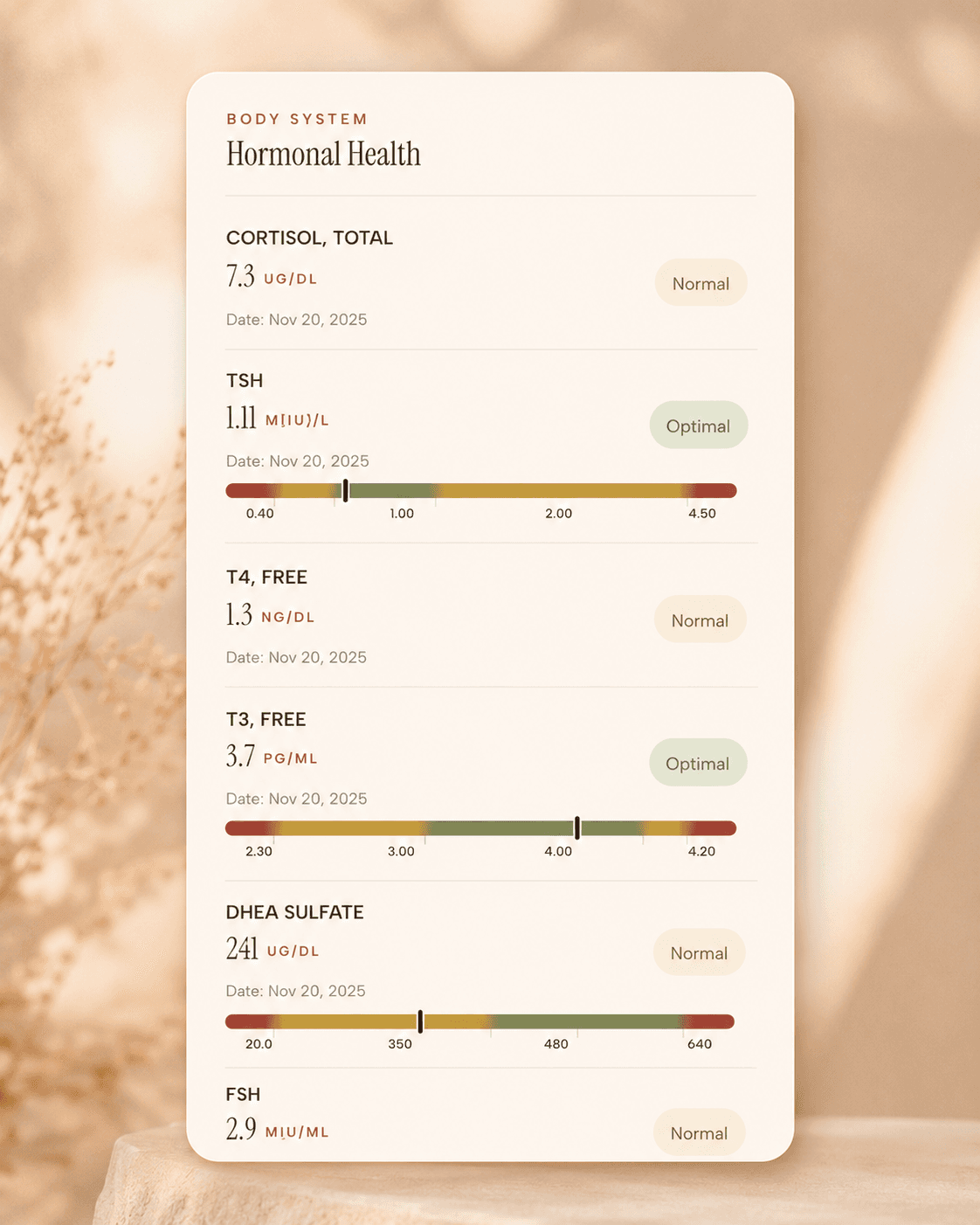
TSH is the master regulator of thyroid function, controlling the production of thyroid hormones T4 and T3. In functional medicine, we use narrower TSH ranges than conventional medicine to identify subclinical thyroid dysfunction early. Even mildly elevated TSH can indicate thyroid insufficiency, leading to fatigue, weight gain, depression, and metabolic dysfunction. TSH levels are influenced by stress, nutrient deficiencies, autoimmune conditions, and environmental toxins. Optimal TSH supports energy, metabolism…
Learn moreHomocysteine
Homocysteine is an amino acid metabolite that serves as an independent risk factor for cardiovascular disease, stroke, and cognitive decline. In functional medicine, elevated homocysteine indicates methylation dysfunction and B-vitamin deficiencies. High homocysteine promotes endothelial dysfunction, oxidative stress, and thrombosis. It's particularly important because it's easily modifiable through B-vitamin supplementation (B6, B12, folate). Homocysteine levels are also associated with Alzheimer's disease risk…
Learn moreLab testing
Check B12, thyroid (TSH), and inflammation (hs-CRP) at Quest
starting from $99 panel with 100+ tests, one visit
No referral needed
About 1 week
Schedule online — results typically within a week
Clear next steps
Guidance included, with follow-up care available
HSA / FSA
Eligible for pre-tax health spending accounts
Pro Tips
Run a two-week “memory pattern” log where you write down the time of day the slip happened, what you were doing, and how you slept the night before. If the worst moments cluster after poor sleep or late alcohol, you just found a high-impact lever.
If names are the problem, switch from trying harder to using a retrieval cue: picture the person in a different setting, say their name out loud once, and link it to one distinctive detail. That small “hook” improves recall more than silently struggling.
Do one safety check at home: set up a weekly pill organizer and a single medication list on the fridge. If you cannot reliably keep meds straight, that is a strong reason to get a cognitive baseline sooner rather than later.
If you suspect sleep apnea, record 30 seconds of your breathing during sleep (with a partner’s help) or use a snore app for a few nights. Bringing that evidence to your clinician often speeds up getting a sleep study.
When you get labs, ask for the actual numbers and keep them in one note on your phone. Trends over time are often more useful than a one-time “normal” stamp, especially for TSH and B12.
Frequently Asked Questions
Is memory loss in your 60s normal aging or a sign of dementia?
Normal aging usually means you are slower to recall a name or word, but you can get it with a hint and you can still manage daily life. Dementia is more about losing function, such as getting lost in familiar places, repeating the same questions, or struggling with finances or medications. If the changes are noticeable to others or are affecting safety or independence, schedule a memory-focused visit and bring examples from the last 3–6 months.
What are the red flags for memory loss that need urgent evaluation?
Sudden confusion over hours to days, new trouble speaking, one-sided weakness, severe headache, or a big personality change can signal a stroke, infection, or another emergency. Rapid decline after starting a new medication, especially a sedative, also deserves prompt attention. If any of these are happening, seek urgent care or emergency evaluation rather than waiting for a routine appointment.
Can low vitamin B12 really cause memory problems?
Yes, low B12 can affect nerve function and mental processing, which can show up as forgetfulness, brain fog, and slower thinking. For brain and nerve symptoms, many clinicians prefer B12 levels around 400–600 pg/mL rather than hovering near the cutoff, and they may use methylmalonic acid or homocysteine to confirm a functional deficiency. If you take metformin, acid blockers, or eat little animal protein, ask to check B12 and make a replacement plan.
Which medications commonly worsen memory in older adults?
Medications that sedate you or block acetylcholine are frequent culprits, including some sleep aids, anti-anxiety drugs, strong antihistamines, and certain bladder medications. The effect can be subtle, like feeling less sharp, or obvious, like forgetting conversations. Do not stop meds abruptly, but ask for a “memory audit” and safer substitutions, then track changes for two weeks.
What blood tests should I ask for with memory loss in my 60s?
A practical starting trio is vitamin B12, TSH (thyroid), and hs-CRP (inflammation), because each can point to a treatable contributor to brain fog and forgetfulness. Abnormal results do not automatically explain everything, but they help you decide what to fix first and what to investigate next. If your symptoms are progressing, pair labs with a cognitive screening and a sleep apnea check so you are not guessing.