Low Libido With Depression: What It Means and What To Do Next
Low libido with depression often comes from stress hormones, antidepressant side effects, or low testosterone/thyroid shifts. Targeted labs at Quest—no referral needed.






Low libido with depression usually comes from a mix of brain chemistry changes that blunt pleasure, stress hormones that keep your body in “survival mode,” and medication side effects that can dampen desire or make orgasm harder. Sometimes there is also a body-level contributor such as low testosterone or a thyroid shift, which can make the “I just don’t want to” feeling more intense and more persistent. A few targeted labs can help sort out which pieces are most likely in your case. This symptom can feel personal and confusing because it sits right at the intersection of mood, hormones, sleep, relationship dynamics, and self-image. You might still love your partner and still feel emotionally connected, but your body does not “rev up,” and that gap can create shame on both sides. The goal here is not to pressure you into sex. It is to help you understand why desire changes during depression, what tends to help in real life, and how tools like PocketMD and targeted blood tests through Vitals Vault can support a clearer plan.
Why depression can lower your libido
Depression blunts reward and desire
Depression can turn down your brain’s “reward” system, which is why things that used to feel exciting can feel flat. Sex drive is partly anticipation and curiosity, and when those circuits are quiet, desire often disappears even if your relationship is solid. A useful clue is whether you have low interest in most pleasurable activities, not just sex, because that points to depression itself being the main driver.
Antidepressants can affect arousal
Some antidepressants, especially SSRIs and SNRIs, can reduce libido, delay orgasm, or make genital sensation feel muted. That can create a frustrating loop where you start avoiding sex because it feels like effort with little payoff, which then lowers desire even more. If this started after a dose change or a new medication, bring it up directly, because options include dose adjustments, switching to a different medication, or adding a targeted strategy rather than just “waiting it out.”
Stress hormones keep you on guard
When you are depressed, your body often runs higher on stress signaling, including cortisol, which pushes you toward safety and away from intimacy. In your body, this can feel like you cannot relax, you are easily irritated, and touch feels “too much” instead of comforting. If your libido is lowest on days when sleep is short or your anxiety is high, treating the stress-and-sleep piece can be as important as treating mood.
Low testosterone reduces sexual interest
Testosterone supports sexual thoughts and responsiveness in all sexes, although the “right” level depends on your age, sex, and whether you use hormones. When levels are low, you may notice fewer spontaneous sexual thoughts, less morning arousal, and a general sense that your body is not interested even when your mind wants closeness. Measuring a morning total testosterone can help clarify whether this is a contributor, especially if low libido comes with low energy or reduced muscle strength.
Thyroid shifts slow everything down
An underactive thyroid can make you feel slowed down, foggy, and less emotionally reactive, which often includes less sexual desire. It can also worsen constipation, dry skin, and fatigue, which makes sex feel like another task instead of something restorative. If your low libido is paired with new cold intolerance or unexplained weight gain, checking thyroid-stimulating hormone can be a high-yield next step.
What actually helps (without forcing it)
Treat depression with a libido plan
If depression is the main driver, improving mood often improves libido, but it helps to name sexual side effects as a treatment goal from day one. Tell your clinician, “I want to feel better and keep my sexual function,” because that changes medication choices and follow-up. If therapy is part of your plan, consider approaches that target avoidance and pleasure-building, because libido often returns when your life has more “want” in it again.
Review meds that affect sex
Do a quick audit of anything that changed in the last three months, including antidepressants, hormonal birth control, and some blood pressure meds. The point is not to stop anything suddenly, but to identify a likely culprit so you can discuss safer alternatives. If orgasm is the main issue rather than desire, that pattern especially points toward medication effect, which is often fixable.
Rebuild desire through low-pressure intimacy
When libido is low, “trying to have sex” can feel like a performance test, which makes your body shut down faster. Instead, create a two-week experiment where the goal is closeness without an endpoint, such as cuddling, massage, or kissing with a clear agreement that you can stop anytime. Many couples find that desire shows up after safety and warmth return, not before.
Prioritize sleep as a hormone lever
Sleep is one of the fastest ways to shift libido because it affects stress hormones, testosterone signaling, and emotional bandwidth. If you are getting under seven hours most nights, start with one concrete change you can actually keep, such as a fixed wake time and a 30–60 minute wind-down without scrolling. If you snore loudly or wake up choking, ask about sleep apnea, because treating it can improve mood and sex drive more than people expect.
Address pain, dryness, or ED directly
Sometimes libido drops because your body has learned that sex equals discomfort or failure, even if you do not consciously think that way. Vaginal dryness, pelvic pain, and erectile dysfunction are common and treatable, and treating them often brings desire back because sex stops feeling risky. If you notice pain, burning, or persistent erection problems, it is worth a focused visit, because “pushing through” usually makes avoidance stronger.
Useful biomarkers to discuss with your clinician
Testosterone, Total, Ms
Total testosterone is the primary male sex hormone responsible for muscle mass, bone density, libido, energy levels, and cognitive function. In functional medicine, we recognize testosterone as a key marker of vitality and aging. Low testosterone (hypogonadism) affects up to 40% of men over 45 and is linked to metabolic syndrome, cardiovascular disease, depression, and reduced quality of life. Optimal testosterone levels support healthy body composition, sexual function, motivation, and overall masculine vitalit…
Learn moreCortisol, Total
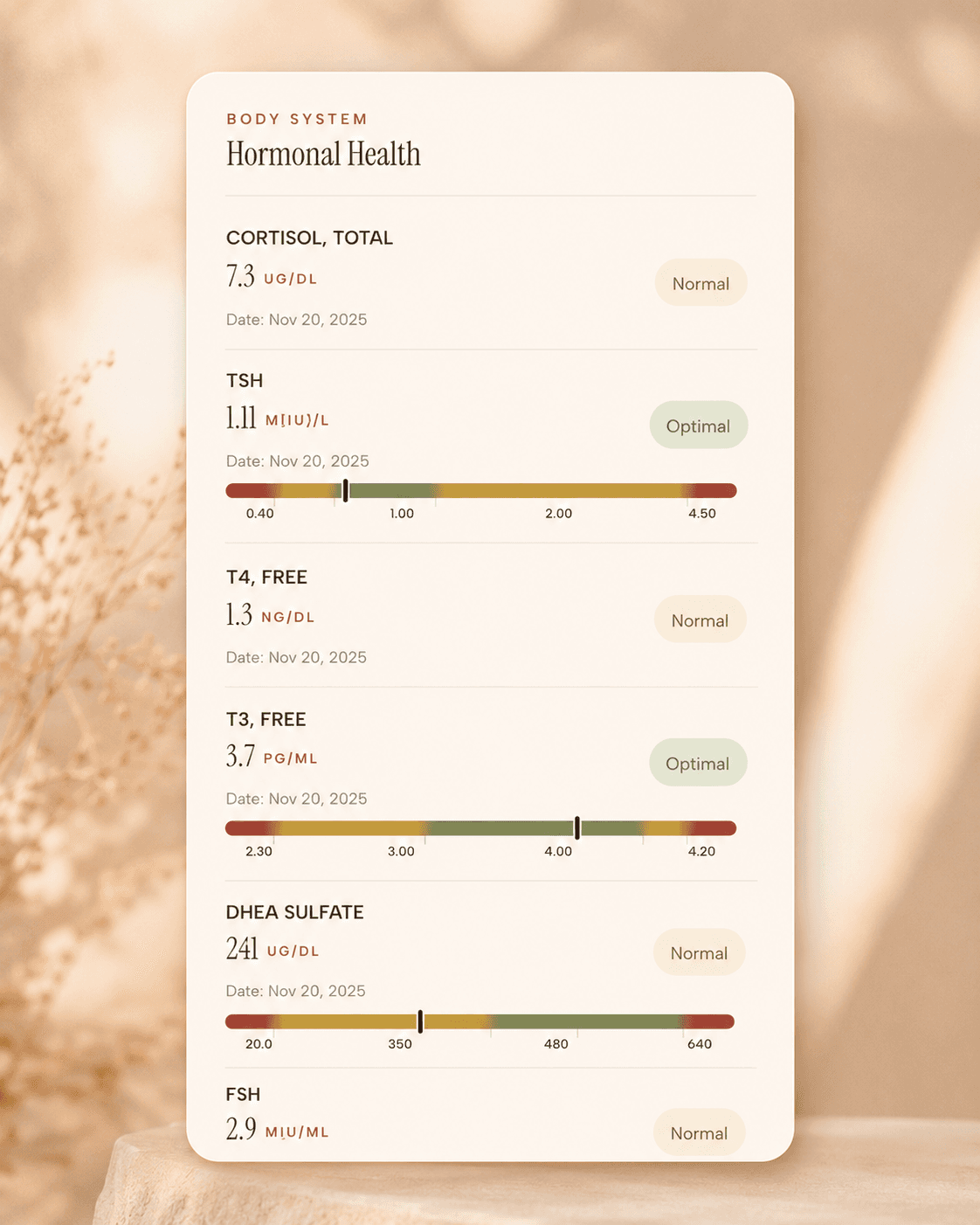
Cortisol is the primary stress hormone that regulates metabolism, immune function, and blood pressure. In functional medicine, cortisol assessment is crucial for understanding stress response and its impact on overall health. Chronic elevation suppresses testosterone production and immune function, while low cortisol indicates adrenal insufficiency. Optimal cortisol rhythm supports energy, mood stability, and hormone balance. Cortisol orchestrates the body's stress response and daily energy rhythms. Balanced cor…
Learn moreTSH
TSH is the master regulator of thyroid function, controlling the production of thyroid hormones T4 and T3. In functional medicine, we use narrower TSH ranges than conventional medicine to identify subclinical thyroid dysfunction early. Even mildly elevated TSH can indicate thyroid insufficiency, leading to fatigue, weight gain, depression, and metabolic dysfunction. TSH levels are influenced by stress, nutrient deficiencies, autoimmune conditions, and environmental toxins. Optimal TSH supports energy, metabolism…
Learn moreLab testing
Get TSH, total testosterone, and prolactin checked at Quest
starting from $99 panel with 100+ tests, one visit
No referral needed
About 1 week
Schedule online — results typically within a week
Clear next steps
Guidance included, with follow-up care available
HSA / FSA
Eligible for pre-tax health spending accounts
Pro Tips
Try a “desire log” for 14 days where you rate desire from 0–10 once a day and write one sentence about sleep, stress, and connection that day; patterns show up faster than you think.
If you suspect medication effects, write down the exact start date and dose changes, plus what changed first (desire, arousal, orgasm, or sensation), because that detail helps your clinician pick the best alternative.
Use a two-step intimacy plan: first schedule 20 minutes of non-sex touch twice a week, and only after that feels easy decide whether you want to add sexual touch; your nervous system often needs the ramp.
If you are avoiding sex because you fear disappointing your partner, say that out loud in a calm moment; naming the fear usually lowers pressure immediately and makes experimentation possible again.
When you get testosterone or prolactin tested, aim for a morning draw after a decent night of sleep and avoid intense exercise the evening before, because both can skew results and create false alarms.
Frequently Asked Questions
Can depression really cause low libido even if I love my partner?
Yes. Depression can blunt the brain’s reward response, so desire and anticipation drop even when affection and commitment are still there. You might notice you also have less interest in other enjoyable things, which is a clue it is depression-driven rather than relationship-driven. A practical next step is to track whether libido improves on your better-mood days and share that pattern with your clinician.
Which antidepressants cause the most sexual side effects?
SSRIs and SNRIs are well known for lowering libido and delaying orgasm for some people, although the effect varies a lot by individual and dose. If sexual function changed after starting or increasing a medication, that timing matters more than any list you read online. Bring it up directly and ask about options such as switching medications or adjusting the plan rather than stopping abruptly.
Should I get my hormones checked for low libido and depression?
It can be worth it when low libido feels persistent and “body-level,” or when you also have fatigue, weight changes, or reduced morning arousal. A focused starting set is TSH, morning total testosterone, and prolactin, because abnormal results can point to treatable contributors. If anything is off, ask for interpretation in the context of your age, sex, and medications.
What testosterone level is considered low?
There is no single perfect number because “low” depends on sex, age, symptoms, and the lab method, and borderline results often need a repeat morning test. In many adult men, clinicians get concerned when total testosterone is consistently below about 300 ng/dL, especially with symptoms, while in women the interpretation is different and usually relies more on symptoms and context than a single cutoff. If your result is borderline, ask whether it should be repeated and whether other tests are needed before any treatment.
How do I talk to my partner about low libido without making it worse?
Lead with reassurance and specificity: tell them you still want closeness, but your body is not responding the way it used to, and you are working on it. Suggest a short, time-limited experiment like two weeks of non-pressure intimacy where the goal is connection, not intercourse, so both of you can relax. If conversations keep turning into conflict, consider a couples therapist who is comfortable with sexual health.