Low Libido in Working Women: What It Usually Means
Low libido in working women often comes from stress overload, sleep debt, or hormone shifts like low thyroid or testosterone. Targeted labs—no referral needed.






Low libido in working women is usually your body prioritizing survival over desire, which can happen with chronic stress, not enough sleep, and hormone shifts such as thyroid slowdown or lower testosterone. Medications, especially antidepressants and some birth control methods, can also blunt desire even when your relationship is solid. The fastest way to stop guessing is to pair your story with a few targeted labs so you can see which driver fits you. If you’re juggling deadlines, caregiving, and a brain that never powers down, it makes sense that sex can slide from “fun” to “one more task.” Low desire is rarely about willpower. It is more often about your nervous system being stuck in high alert, your energy budget being drained, or your hormones being nudged off their usual rhythm. This guide walks you through the most common causes, what tends to help in real life, and which blood tests can add clarity. If you want help connecting the dots for your specific situation, PocketMD can talk it through with you, and Vitals Vault labs can help you confirm what your body is doing.
Why your sex drive drops when you’re working nonstop
Stress turns off “wanting” mode
When your brain is scanning for threats all day, your body leans on stress hormones and shifts blood flow and attention away from pleasure. That can show up as “I love my partner, but I just don’t feel it,” or as irritation when sex comes up because it feels like another demand. A useful clue is that desire often returns on vacation or after a real break, which tells you the system is capable — it’s just overloaded.
Sleep debt blunts arousal signals
Sleep is when your brain resets dopamine, your body makes hormones, and your nervous system downshifts into a calmer state that supports arousal. If you are getting short or fragmented sleep, you may notice less spontaneous desire and more difficulty getting turned on even when you try. If you wake unrefreshed, snore, or feel sleepy while driving, it is worth taking sleep seriously because treating it can improve libido faster than most supplements.
Thyroid slowdown (hypothyroidism)
Your thyroid hormone is like your body’s metabolic “volume knob,” and when it is low, everything can feel muted — including libido. You might also notice fatigue, constipation, dry skin, or feeling cold when others are fine. The takeaway is simple: if low desire is paired with low energy or weight changes, checking TSH and free T4 is a high-yield step because thyroid treatment can meaningfully improve sexual interest.
Medication side effects you didn’t expect
Some common meds can dampen desire by changing brain chemistry, reducing genital sensation, or making orgasm harder to reach. SSRIs and SNRIs are frequent culprits, but blood pressure meds and some hormonal contraceptives can also play a role. If your libido changed within weeks to a few months of starting or increasing a medication, bring that timeline to your prescriber because dose changes, switching agents, or add-on options can help without sacrificing your mental health.
Hormone shifts: perimenopause or low androgens
In your late 30s to 50s, hormone patterns can become less predictable, and that can affect desire through sleep disruption, mood changes, and vaginal dryness that makes sex less appealing. Testosterone also matters for many women, but it is tricky because “normal” depends on age and on how much is bound up by SHBG. If you notice new dryness, pain with sex, or a sudden drop in sexual thoughts, it is reasonable to consider both perimenopause and androgen levels rather than assuming it is “just stress.”
What actually helps you want sex again
Lower the load before you “fix” sex
If your day ends with you depleted, scheduling sex can feel like scheduling another meeting. Try a two-week experiment where you protect one or two evenings with a hard stop on work and chores, and you use that time for connection without the goal of intercourse. Desire often follows safety and spaciousness, so reducing the pressure is not avoidance — it is strategy.
Make sleep a libido intervention
Aim for a consistent wake time and a wind-down routine that starts 60 minutes before bed, because your nervous system needs a runway to shift gears. If you wake at 3 a.m. thinking about work, keep a notepad by the bed and “park” the thoughts so your brain stops rehearsing them. When sleep improves, many women notice more sexual thoughts and a shorter “warm-up” time during intimacy.
Address dryness or pain directly
If sex has started to sting, your brain learns to avoid it, and that avoidance can look like low libido even when the real issue is discomfort. Start with a generous, silicone-based lubricant and longer foreplay, and consider a vaginal moisturizer a few times per week if you feel dry day-to-day. If pain persists or you have bleeding, get checked because treating the tissue problem can bring desire back by making sex feel good again.
Review meds with a plan, not guilt
If an antidepressant is helping you function, stopping it abruptly can backfire and worsen libido through relapse. Instead, ask specifically about sexual side effects and options such as dose adjustment, switching within the class, or adding a medication that counteracts sexual dysfunction. Bringing a simple timeline — when the med started, when libido changed, and what else was happening — makes the conversation faster and more productive.
Use targeted treatment when labs point there
If your thyroid is underactive, treating it can improve energy and interest in sex because your whole system runs better. If prolactin is high, addressing the cause can restore libido and sometimes fertility as well. If testosterone is low for your age and symptoms fit, a clinician can discuss whether carefully monitored therapy is appropriate, because in women the goal is symptom relief with safe dosing, not bodybuilding levels.
Useful biomarkers to discuss with your clinician
Testosterone, Total, Ms
Total testosterone is the primary male sex hormone responsible for muscle mass, bone density, libido, energy levels, and cognitive function. In functional medicine, we recognize testosterone as a key marker of vitality and aging. Low testosterone (hypogonadism) affects up to 40% of men over 45 and is linked to metabolic syndrome, cardiovascular disease, depression, and reduced quality of life. Optimal testosterone levels support healthy body composition, sexual function, motivation, and overall masculine vitalit…
Learn moreTSH
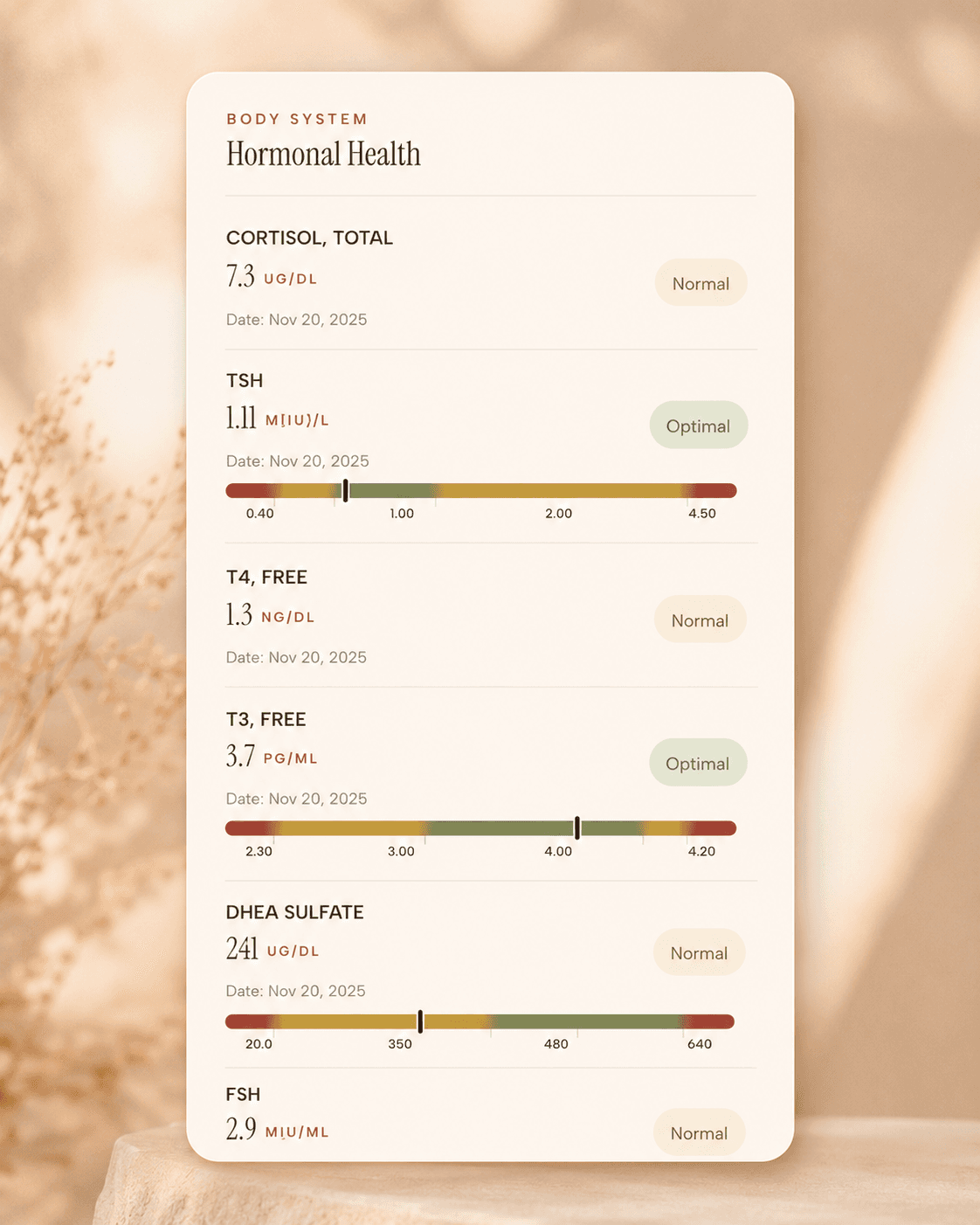
TSH is the master regulator of thyroid function, controlling the production of thyroid hormones T4 and T3. In functional medicine, we use narrower TSH ranges than conventional medicine to identify subclinical thyroid dysfunction early. Even mildly elevated TSH can indicate thyroid insufficiency, leading to fatigue, weight gain, depression, and metabolic dysfunction. TSH levels are influenced by stress, nutrient deficiencies, autoimmune conditions, and environmental toxins. Optimal TSH supports energy, metabolism…
Learn moreEstradiol
Estradiol in men is produced from testosterone via aromatase enzyme. In functional medicine, we recognize that men need optimal estradiol levels for bone health, cognitive function, and cardiovascular protection. However, excessive estradiol can suppress testosterone production and cause feminizing effects. The testosterone-to-estradiol ratio is crucial for male health, with optimal balance supporting vitality while preventing estrogen dominance. Balanced estradiol levels in men support bone health and cognitive…
Learn moreLab testing
Get TSH, free T4, total testosterone, SHBG, and prolactin checked at Quest
starting from $99 panel with 100+ tests, one visit
No referral needed
About 1 week
Schedule online — results typically within a week
Clear next steps
Guidance included, with follow-up care available
HSA / FSA
Eligible for pre-tax health spending accounts
Pro Tips
Try a “desire audit” for 10 days: each night, rate your stress (1–10), sleep quality (1–10), and desire (1–10), and write one sentence about what drained you most. Patterns show up fast, and they tell you what to fix first.
If you never feel spontaneous desire, switch the goal to responsive desire: plan a 20-minute “warm-up” where kissing and touch are allowed, but intercourse is optional. Many women only feel desire after arousal starts, especially during high-stress seasons.
If you suspect a medication effect, write down the exact start date and dose changes, plus when libido shifted. That timeline is often the difference between a vague conversation and a concrete plan with your prescriber.
If you are in perimenopause, treat the friction early: use lubricant every time, even if you think you “shouldn’t need it,” and consider a vaginal moisturizer on a schedule. When sex stops hurting, your brain stops bracing for it.
Pick one boundary that protects your nervous system before intimacy, such as “no work email after 8 p.m.” or “phone stays out of the bedroom.” Libido is much more likely when your brain believes the day is actually over.
Frequently Asked Questions
Is low libido normal when you’re stressed at work?
Yes. Chronic stress keeps your body in a high-alert state, which makes pleasure and sexual curiosity harder to access even if you love your partner. If your desire reliably returns on weekends, vacations, or after a calm stretch, that pattern strongly suggests stress physiology is a major driver. Try a two-week experiment with protected downtime and see if desire rebounds.
Can antidepressants cause low sex drive in women?
They can, especially SSRIs and SNRIs, because they change serotonin signaling in ways that can reduce desire and make orgasm harder. The timing matters: if libido dropped after starting or increasing a dose, it is worth discussing options like switching medications or adjusting the dose. Do not stop suddenly; bring the timeline to your prescriber and ask directly about sexual side effects.
What hormone tests should I get for low libido?
A practical starting set is TSH with free T4 for thyroid function, total testosterone with SHBG to estimate usable testosterone, and prolactin to rule out a common hormone blocker. These tests do not “diagnose” your relationship or stress level, but they can uncover treatable biological contributors. If results are abnormal, the next step is a clinician-guided plan rather than self-dosing hormones.
Can low thyroid cause low libido even if my TSH is “normal”?
Sometimes. Some people feel symptomatic with a TSH in the upper part of the lab range, especially if free T4 is low-normal and you also have fatigue, constipation, or feeling cold. Many clinicians consider a TSH around 0.5–2.5 mIU/L a common “feel-good” zone, but your history and antibodies can change the interpretation. If you have symptoms, ask for both TSH and free T4, not TSH alone.
When should I worry that low libido is a medical problem?
It is worth a medical check if the change is sudden, distressing, or paired with red flags like new severe depression, pain with sex, irregular periods, nipple discharge, or headaches with vision changes. Those clues can point to treatable issues such as thyroid disease, high prolactin, or vaginal tissue changes. A good next step is to write down your timeline and symptoms, then bring it to a clinician or talk it through with PocketMD.