Low Libido in Your 60s: What It Means and What Helps
Low libido in your 60s often comes from hormone shifts, medication side effects, or stress and sleep problems. Targeted labs available—no referral needed.






Low libido in your 60s is usually a mix of body changes and life changes, not a personal failure. Hormone shifts (like lower testosterone or lower estrogen), medication side effects, and sleep or mood problems are some of the most common drivers. A few targeted blood tests can help you figure out which of those is most likely in your case. Desire is not just “in your head,” but it is also not just hormones. In your 60s, your blood flow, nerves, stress load, relationship dynamics, and the medications you take can all change the way your body responds to touch and the way your brain anticipates pleasure. That is why you can still love your partner and still feel like your sex drive has gone missing. This guide walks you through the most common causes, what tends to help in real life, and which labs can make the next step clearer. If you want help sorting your specific pattern, PocketMD can help you think through the possibilities, and VitalsVault labs can help you check the most relevant markers without turning this into a months-long project.
Why your sex drive can drop in your 60s
Hormone shifts change desire signals
As you age, your baseline sex hormones often drift downward, and that can blunt the “spark” your brain expects from sexual cues. In men, lower testosterone can show up as fewer spontaneous sexual thoughts and less morning erection quality, while in women, lower estrogen after menopause can make arousal harder to build and easier to lose. The takeaway is that libido changes can be biological even when your relationship is solid, so it is worth checking hormones if the change feels new or persistent.
Vaginal dryness or pain shuts it down
If sex starts to sting or burn, your brain learns to avoid it, even if you want closeness. After menopause, thinner and drier vaginal tissue (genitourinary syndrome of menopause) can make friction feel like sandpaper, and that can turn desire into dread. A practical next step is to treat the discomfort first, because libido often improves when your body stops bracing for pain.
Erection or blood flow problems
Desire and performance feed each other, so when erections are unreliable, it is common to stop initiating because you do not want to feel embarrassed or disappointed. In your 60s, blood vessel changes from high blood pressure, diabetes, or smoking history can reduce genital blood flow, which makes arousal feel muted and harder to sustain. If this is you, think of it as a circulation issue with a sexual symptom, and bring it up directly because effective treatments exist.
Medications that dampen arousal
Some common meds can flatten libido by changing brain chemistry, blocking nerve signals, or reducing blood flow. Antidepressants like SSRIs, some blood pressure drugs, and medications for prostate symptoms are frequent culprits, and the timing often matches when the prescription started or the dose changed. Do not stop anything abruptly, but do ask about alternatives, dose adjustments, or add-on strategies that protect sexual function.
Stress, sleep, and mood overload
Your brain treats sex as optional when it is busy surviving, so chronic stress, poor sleep, and depression can lower desire even when hormones look “fine.” In your 60s, caregiving, retirement transitions, pain, and sleep apnea can quietly drain your energy and make touch feel like one more demand. If you notice irritability, low motivation, or snoring with daytime sleepiness, addressing those can be the most direct libido treatment you try.
What actually helps you want sex again
Treat pain and dryness first
If penetration hurts, start with comfort because desire rarely returns while your body expects pain. Regular vaginal moisturizers and a generous lubricant during sex can help quickly, and many people do best with local vaginal estrogen or DHEA when dryness is persistent. A good rule is that if you are avoiding sex because of burning, you deserve treatment for the tissue, not a pep talk.
Review libido-killing medications
Bring a list of your meds and supplements and ask, “Which of these can affect sexual desire or arousal, and what are my options?” Sometimes a small change, like switching an antidepressant, adjusting timing, or choosing a different blood pressure medication, makes a noticeable difference within weeks. If you are on an SSRI and orgasm is difficult or desire is flat, that pattern is common and there are evidence-based workarounds to discuss.
Address erections directly (if relevant)
If erections are the bottleneck, treating them can also bring desire back because sex stops feeling like a test you might fail. PDE5 medications are one option, but so are improving cardiovascular fitness, tightening diabetes control, and checking for low testosterone when symptoms fit. If you have chest pain with exertion or you use nitrates, you need clinician guidance before trying erection meds, so make that part of the plan.
Rebuild “responsive desire” on purpose
In your 60s, desire is often responsive, which means it shows up after you start, not before. Scheduling low-pressure intimacy, using longer warm-up, and agreeing that the goal is pleasure rather than intercourse can retrain your brain to expect a good outcome. This is especially powerful for couples, because it reduces performance pressure and makes it easier to try again.
Target sleep and mood like treatment
If you are sleeping badly or feeling persistently down, libido is usually collateral damage. Screening for sleep apnea, treating chronic pain, and getting depression or anxiety properly managed can improve sexual interest more than any supplement. A concrete step is to track sleep for two weeks and bring it to your clinician, because patterns like waking unrefreshed or morning headaches point to fixable causes.
Useful biomarkers to discuss with your clinician
Testosterone, Total, Ms
Total testosterone is the primary male sex hormone responsible for muscle mass, bone density, libido, energy levels, and cognitive function. In functional medicine, we recognize testosterone as a key marker of vitality and aging. Low testosterone (hypogonadism) affects up to 40% of men over 45 and is linked to metabolic syndrome, cardiovascular disease, depression, and reduced quality of life. Optimal testosterone levels support healthy body composition, sexual function, motivation, and overall masculine vitalit…
Learn moreEstradiol
Estradiol in men is produced from testosterone via aromatase enzyme. In functional medicine, we recognize that men need optimal estradiol levels for bone health, cognitive function, and cardiovascular protection. However, excessive estradiol can suppress testosterone production and cause feminizing effects. The testosterone-to-estradiol ratio is crucial for male health, with optimal balance supporting vitality while preventing estrogen dominance. Balanced estradiol levels in men support bone health and cognitive…
Learn moreDhea Sulfate
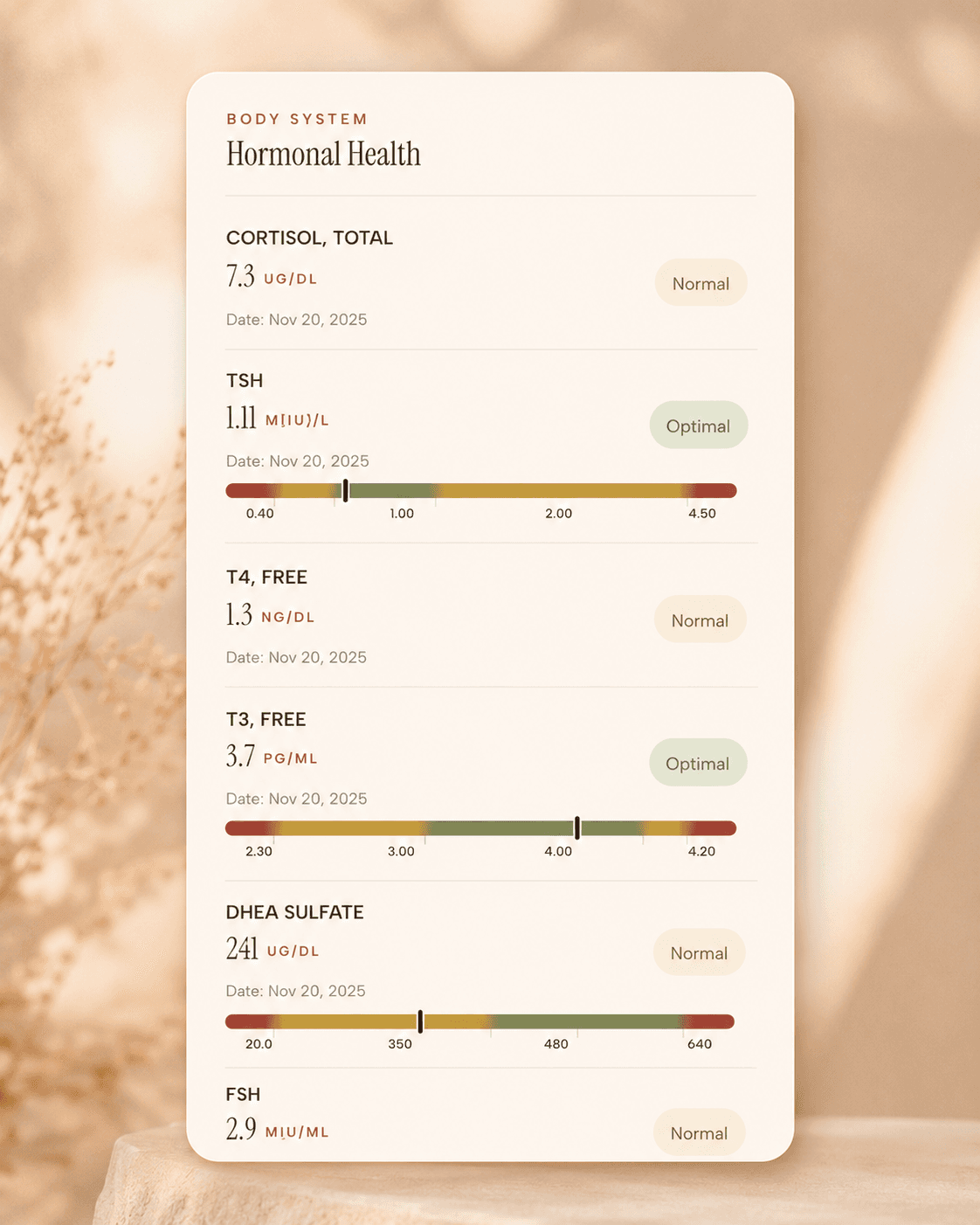
DHEA-S levels reflect adrenal function and decline naturally with age. It's used to evaluate adrenal tumors, congenital adrenal hyperplasia, and androgen excess conditions like PCOS. Some consider it a marker of biological aging and stress resilience. DHEA-Sulfate (DHEA-S) is a hormone produced by the adrenal glands that serves as a precursor to sex hormones (testosterone and estrogen). It's the most abundant steroid hormone in the body.
Learn moreLab testing
Get testosterone, thyroid (TSH), and prolactin checked at Quest
starting from $99 panel with 100+ tests, one visit
No referral needed
About 1 week
Schedule online — results typically within a week
Clear next steps
Guidance included, with follow-up care available
HSA / FSA
Eligible for pre-tax health spending accounts
Pro Tips
If you are trying to figure out whether this is “desire” or “arousal,” ask yourself one question for a week: do you ever enjoy it once you start? If the answer is yes, responsive desire is likely, and longer warm-up plus less pressure can be more effective than chasing a magic supplement.
Do a two-week timeline: write down when libido changed and what else changed around the same time, such as a new antidepressant, a blood pressure medication, a prostate drug, or a stressful life event. That simple timeline often points to the most fixable cause.
If penetration is uncomfortable, try a four-week “comfort reset” where you use a vaginal moisturizer on a schedule and lubricant every time, and you avoid pushing through pain. Your nervous system learns quickly, and removing pain signals can bring desire back faster than you expect.
If erections are inconsistent, take the pressure off by planning intimacy that does not depend on penetration for success. When your body stops associating sex with a pass-fail moment, desire often returns because anticipation becomes safer.
If you suspect sleep apnea, record a short audio clip of your snoring or ask your partner what they notice, and bring that to your clinician. Treating apnea can improve energy, mood, and morning sexual function within weeks, which can change your libido indirectly but dramatically.
Frequently Asked Questions
Is low libido normal in your 60s?
It is common, but “common” does not mean you have to accept it if it bothers you. In your 60s, desire often changes because of hormone shifts, medications, sleep problems, pain, or relationship stress, and many of those are treatable. If the change is new, persistent for more than a couple of months, or affecting your relationship, it is worth a focused check-in and possibly labs like testosterone, TSH, and prolactin.
What hormone causes low libido at 60?
Testosterone is the hormone most directly tied to sexual desire in both men and women, although estrogen also matters for comfort and arousal in women after menopause. Thyroid imbalance can also lower libido indirectly by changing energy, mood, and sleep, which is why TSH is often part of the workup. The most useful step is matching symptoms to labs rather than guessing based on age alone.
Can antidepressants cause low libido in older adults?
Yes, especially SSRIs and SNRIs, and the effect can show up as lower desire, difficulty with arousal, or delayed orgasm. The pattern often tracks with starting the medication or increasing the dose, even if your mood improves. Do not stop suddenly, but ask about options such as dose adjustments, switching agents, or add-on strategies that protect sexual function.
Does menopause cause low libido even years later?
It can, because lower estrogen can lead to dryness and pain, and pain is a powerful libido killer even when you still feel emotionally connected. Menopause can also change sleep and mood, which affects desire through your brain, not just your genitals. If sex feels uncomfortable, treating vaginal tissue changes with moisturizers, lubricant, or local estrogen is often the most direct way to improve libido.
When should I worry about low libido in my 60s?
You should take it seriously if it is a sudden change, if it comes with new headaches or vision changes, or if you also have major fatigue, depression, or erectile problems that are worsening. Those patterns can point to thyroid issues, high prolactin, medication effects, or cardiovascular problems that deserve attention beyond the bedroom. A practical next step is to book a visit and bring a short symptom timeline plus any relevant labs, so you can get to a clear plan faster.