01
Biological age
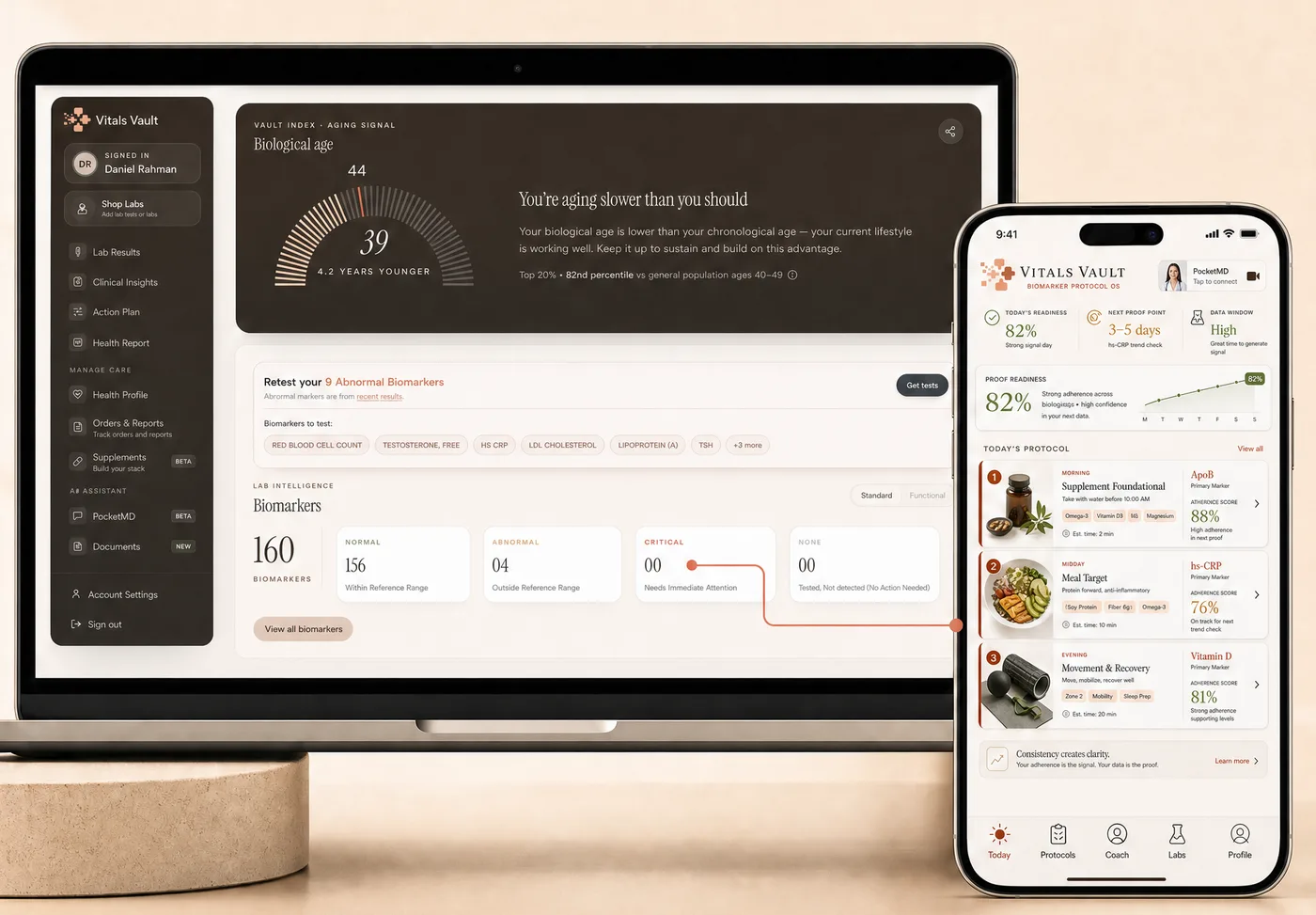
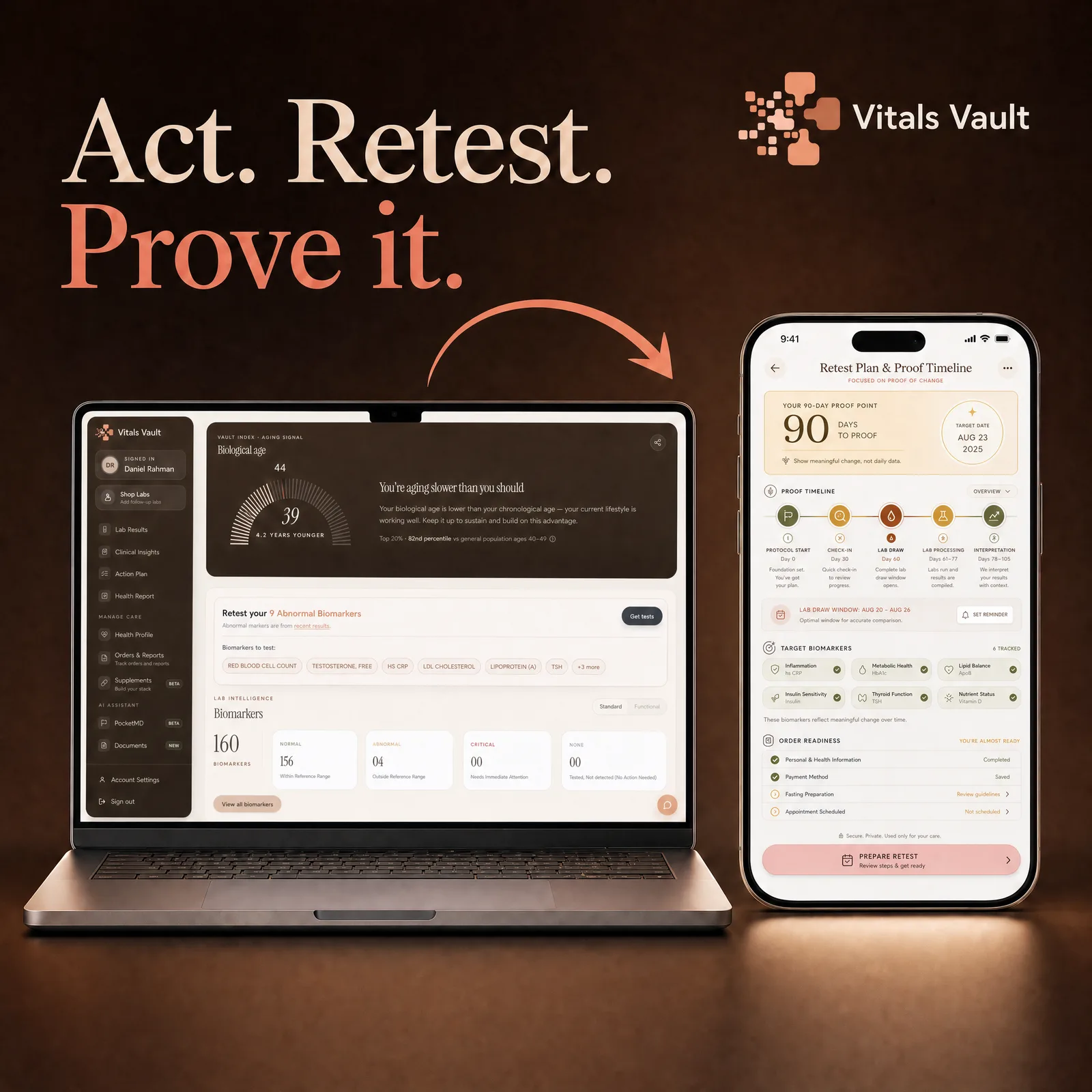
Find out if your body is aging faster or slower than your actual age — and see how you rank against the general population.
39
Biological age
44
Actual age
4.2
Years younger
Thyroid Panel (TSH + T3 + T4)
Results in about 4 days
Thyroid Panel With TSH. It checks TSH and thyroid hormones to assess thyroid function and guide next steps, with easy ordering and Quest lab access through Vitals Vault.
A Thyroid Panel With TSH is a group of blood tests that looks at how your thyroid is being signaled and how much thyroid hormone is available to your tissues. It is one of the most common ways to check whether thyroid function could be contributing to symptoms or changing health markers. This panel is especially useful because TSH (thyroid-stimulating hormone) can move in the opposite direction of thyroid hormones. Looking at TSH together with thyroid hormones helps you and your clinician interpret patterns instead of guessing from a single number. Your results are most meaningful when you compare them to your symptoms, your medications, and prior labs. This test can support clinician-directed care, but it cannot diagnose a condition by itself.
What to expect before and at your draw.
Sample Type
Blood
Collection Method
In person at a Quest Diagnostics location
Age
18+
This order includes the lab markers used for Thyroid Panel (TSH + T3 + T4).
Free T4 Index (T7)
Included in this Quest Diagnostics order and reported in your Vitals Vault account.
T3 Uptake
Included in this Quest Diagnostics order and reported in your Vitals Vault account.
T4 (Thyroxine), Total
Included in this Quest Diagnostics order and reported in your Vitals Vault account.
Tsh
Included in this Quest Diagnostics order and reported in your Vitals Vault account.
Order Thyroid Panel (TSH + T3 + T4) online.
Visit a Quest Diagnostics location near you for your blood draw. Appointments can be scheduled after checkout.
View easy-to-read results in your Vitals Vault account, with trends and a personalized action plan.
Included with every package
Function Health shows you numbers. Vitals Vault connects them — ratios, patterns, and a personalized action plan grounded in functional medicine.
Find out if your body is aging faster or slower than your actual age — and see how you rank against the general population.
39
Biological age
44
Actual age
4.2
Years younger
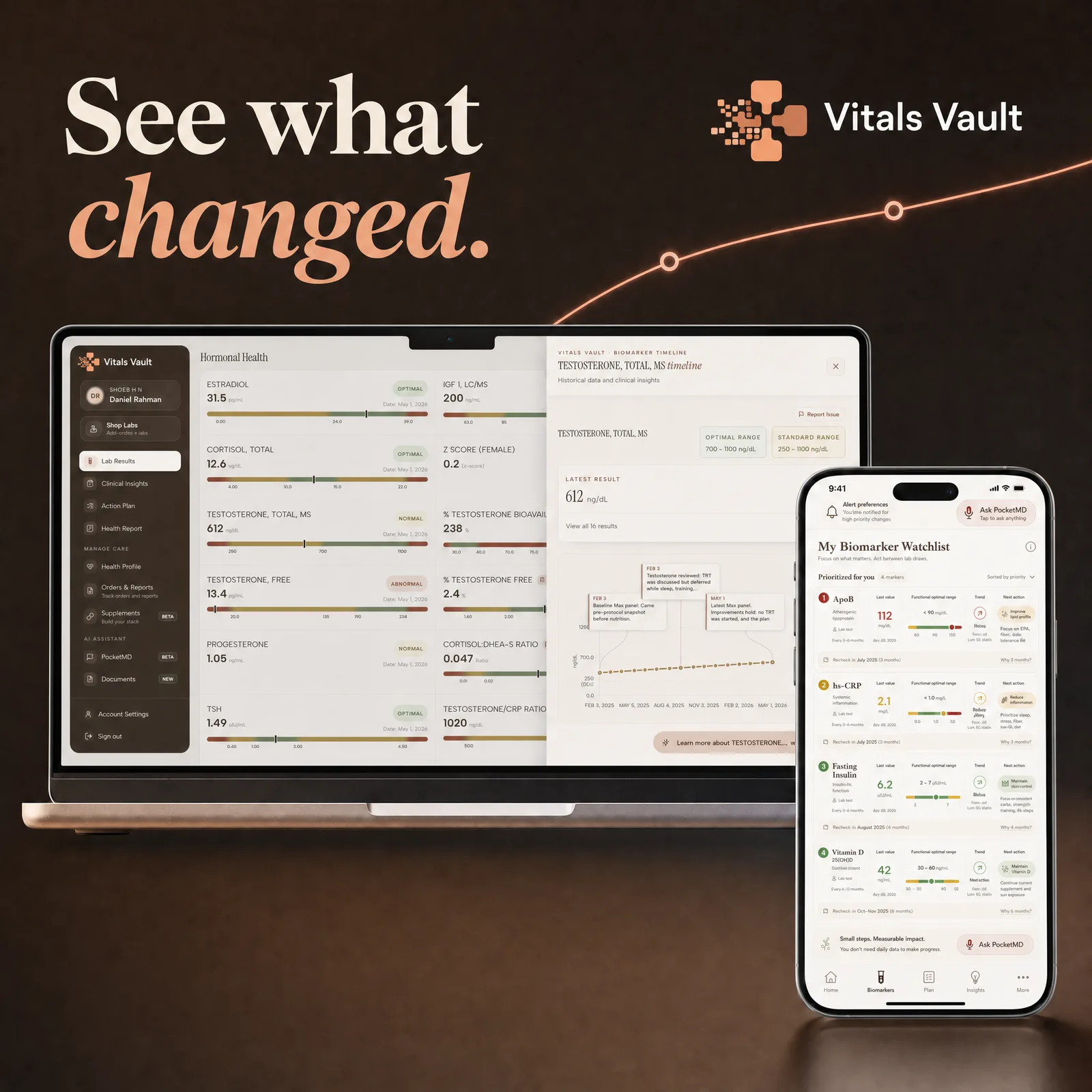
Turn lab data into what to do next—clear guidance on follow-ups, lifestyle context, and add-on testing when you need to go deeper. Make the healthy choice the obvious one.
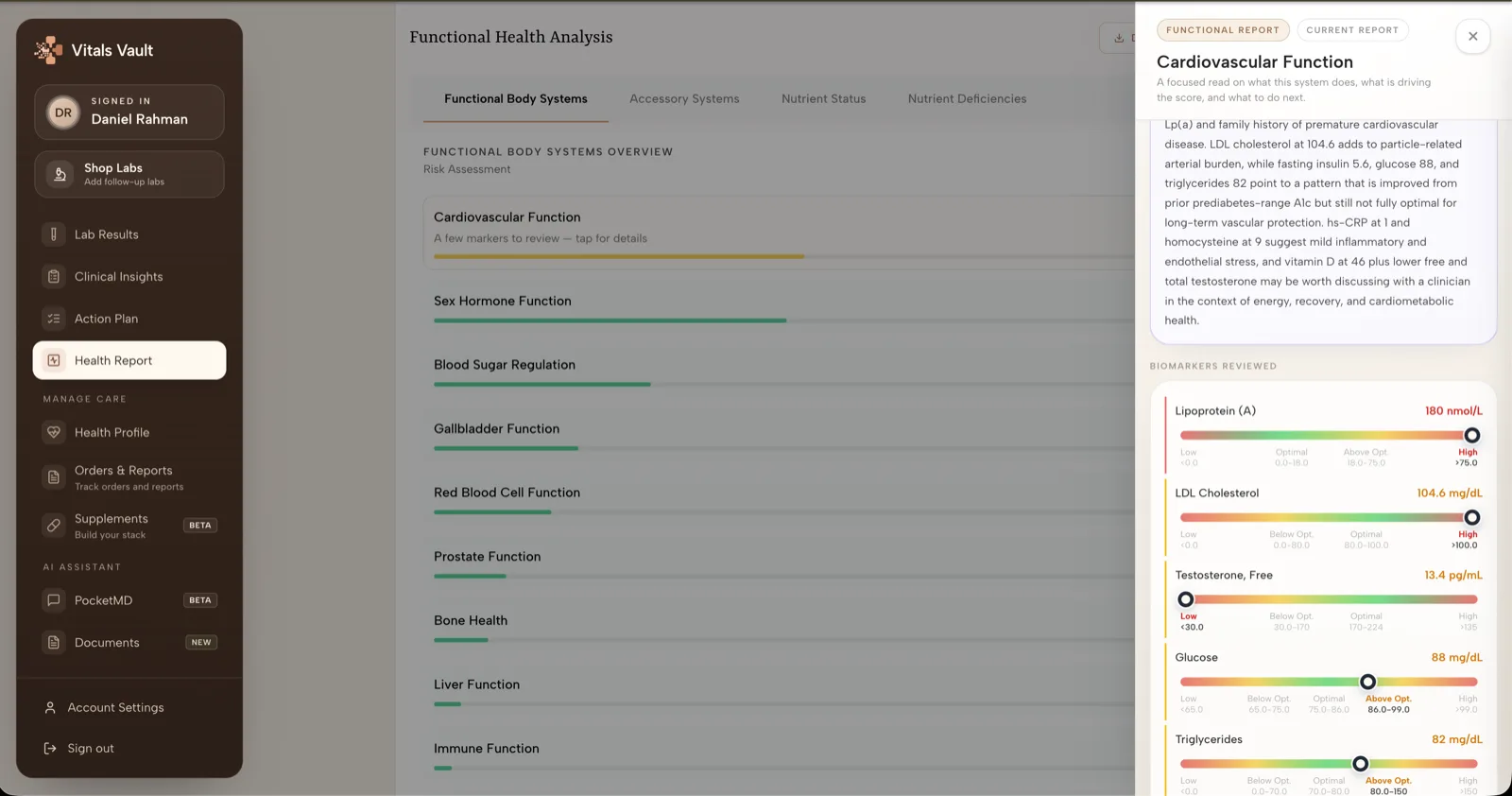
A personalized, plain-language walkthrough of your abnormal markers—reference ranges, pattern context, and what to watch next, grounded in your actual labs.
Personalized Insights
Clear Explanations
Actionable guidance
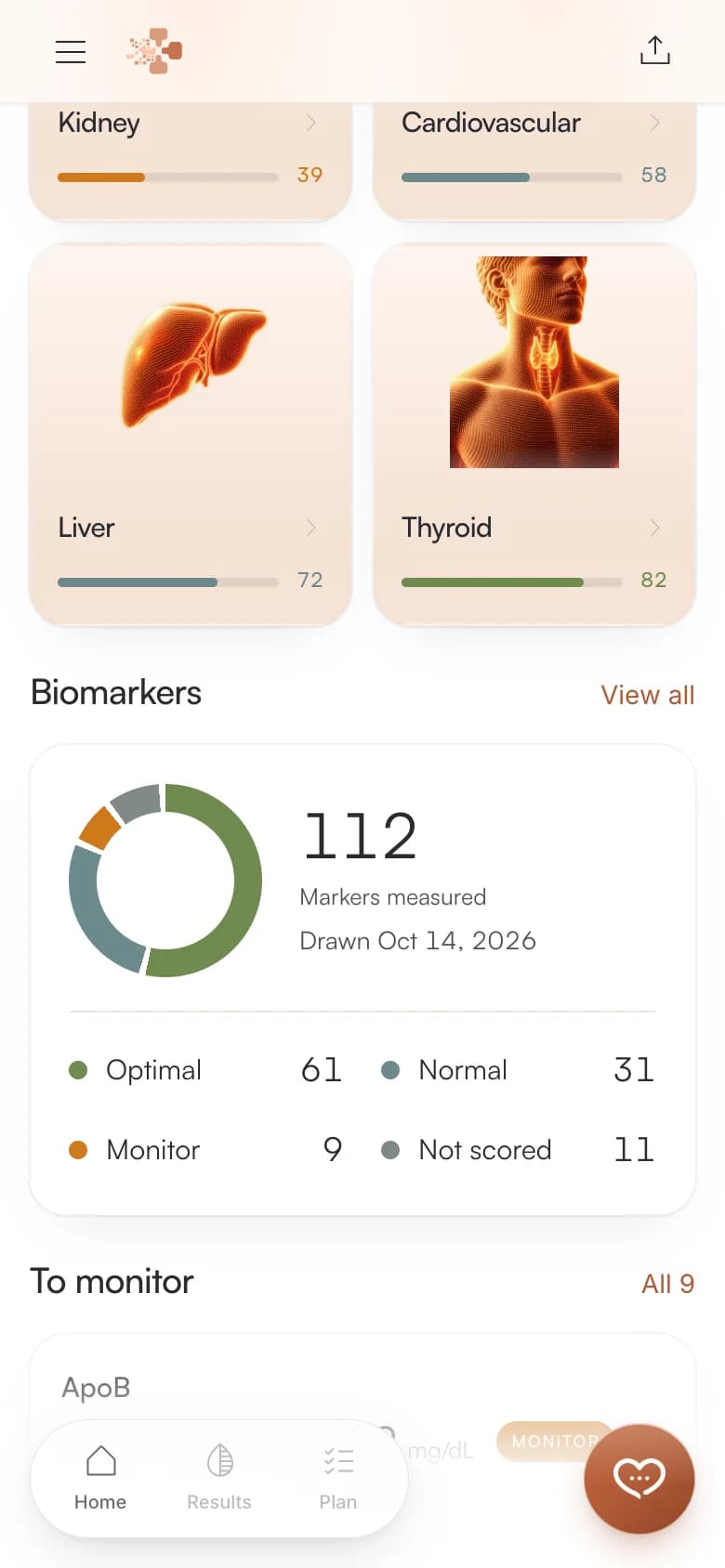
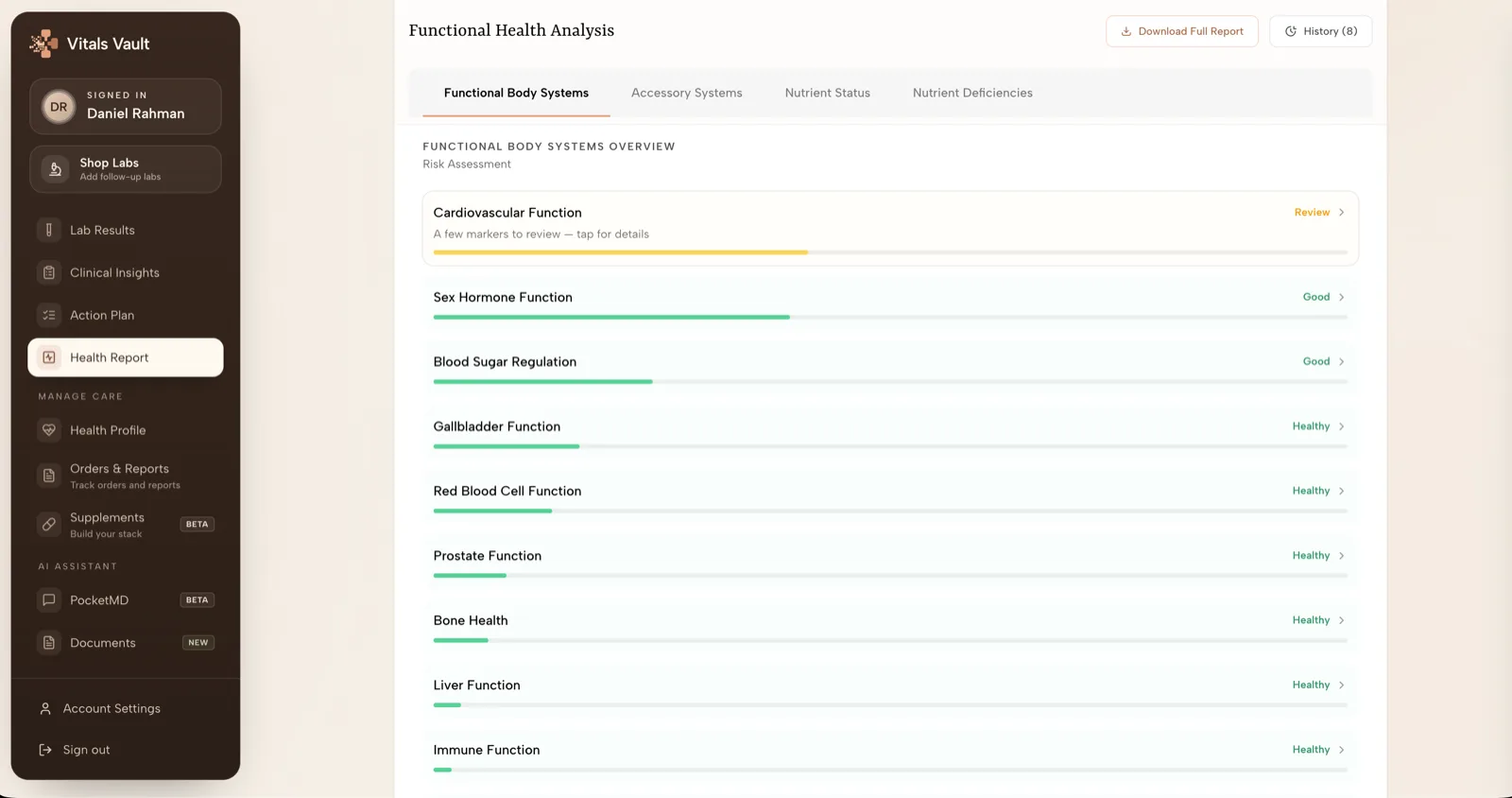
Explore your body systems with clear risk context — refresh your report, download the full PDF, and monitor hormones, heart, bone, and more in one place.
Explore hundreds of tests and panels, filter by concern, and manage your cart—member-exclusive pricing with quick checks and full-body options in one flow.
Wide test selection
300+ tests & panels available
Smart filtering
Find tests by symptoms or goals
Seamless ordering
Add to cart and manage easily
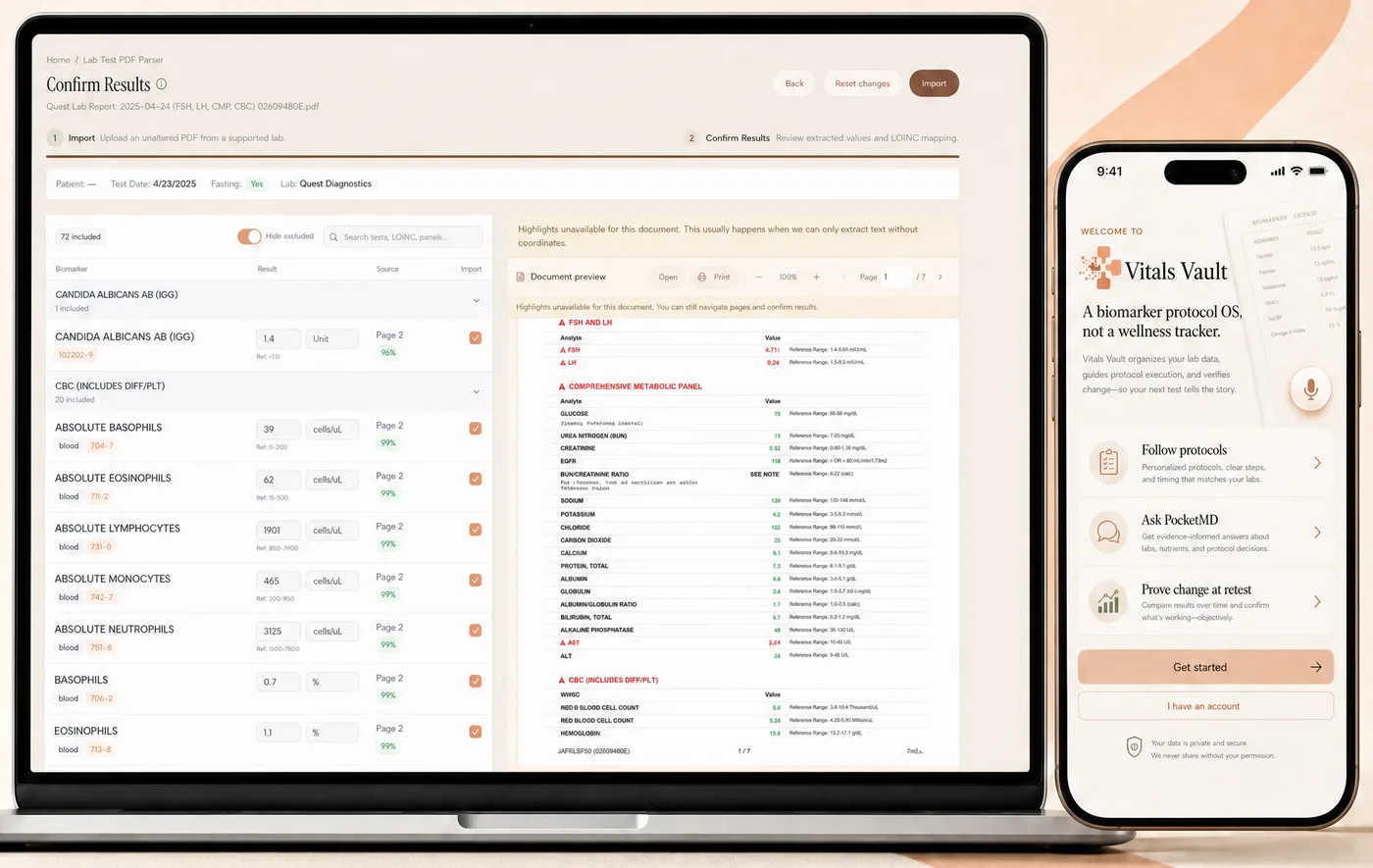
Upload past lab reports, search your documents, and keep appointments and results organized—our AI can extract biomarkers from PDFs so everything lives in one dashboard.
Browse longevity, nutrition, supplement, and movement protocols—structured plans you can follow with clear habits, labs, and targets tied to your profile.
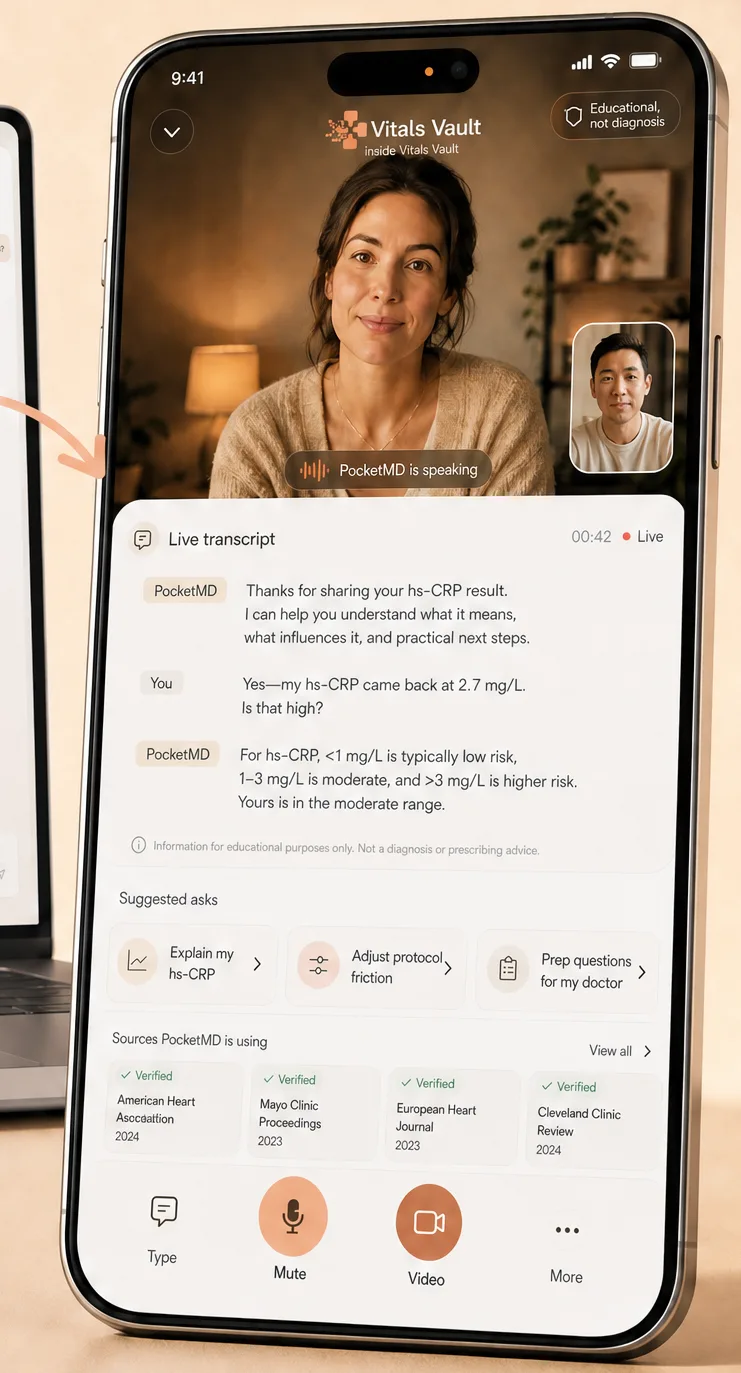
Ask for protocols, nutrition plans, supplement stacks, and education—context-aware suggestions powered by your labs and goals (beta experience).
Order online
Add Thyroid Panel (TSH + T3 + T4) to your cart and check out. No doctor referral is required.
Visit a Quest lab
Provide your blood sample at a Quest Diagnostics location. Appointments can be scheduled after checkout.
Review in Vitals Vault
Results in about 4 days. They stay in your Vitals Vault account for trends and follow-up.
No special preparation is usually needed unless noted at checkout.
This order includes the lab markers used for Thyroid Panel (TSH + T3 + T4) and reported in your Vitals Vault account.
Results
Results in about 4 days
HSA/FSA
Accepted
Who takes it
Must be taken by the purchaser
Preparation
No special preparation needed unless noted at checkout.
It checks TSH and thyroid hormones to assess thyroid function and guide next steps, with easy ordering and Quest lab access through Vitals Vault.





A Thyroid Panel With TSH is a group of blood tests that looks at how your thyroid is being signaled and how much thyroid hormone is available to your tissues. It is one of the most common ways to check whether thyroid function could be contributing to symptoms or changing health markers.
This panel is especially useful because TSH (thyroid-stimulating hormone) can move in the opposite direction of thyroid hormones. Looking at TSH together with thyroid hormones helps you and your clinician interpret patterns instead of guessing from a single number.
Your results are most meaningful when you compare them to your symptoms, your medications, and prior labs. This test can support clinician-directed care, but it cannot diagnose a condition by itself.
You may want a Thyroid Panel With TSH if you have symptoms that can overlap with thyroid imbalance, such as fatigue that does not match your sleep, unexplained weight change, feeling unusually cold or hot, constipation or frequent stools, hair thinning, dry skin, palpitations, anxiety, low mood, or changes in menstrual cycles.
It is also reasonable to test if you are starting, stopping, or adjusting thyroid medication, or if you have a history of thyroid disease, thyroid surgery, or neck radiation. If you are pregnant, postpartum, or planning pregnancy, thyroid testing is often part of proactive care because thyroid hormone needs can change quickly.
You may also consider this panel if a prior TSH was abnormal, borderline, or inconsistent with how you feel. Adding thyroid hormones (like free T4 and sometimes free T3) can clarify whether the signal (TSH) and the hormone output are aligned.
If you have severe symptoms such as chest pain, fainting, severe shortness of breath, confusion, or a very fast heart rate at rest, do not wait on routine lab testing—seek urgent medical care.
These blood tests are run in CLIA-certified laboratories; results should be interpreted with your clinician and are not a standalone diagnosis.
from $43.99 at Quest Diagnostics
Results in days
Clear next steps
HSA / FSA
Vitals Vault lets you order a Thyroid Panel With TSH for convenient lab testing when you want clearer answers about thyroid function or you need to recheck levels after a change in health or medication.
After your blood draw, you can review results in one place and use PocketMD to ask focused questions like what pattern your numbers suggest, what follow-up tests are commonly paired with thyroid labs, and when retesting makes sense for your situation.
If you are tracking a trend, consistent timing and conditions matter. Vitals Vault makes it easy to reorder the same panel so you can compare results over time and bring a clean timeline to your clinician.
A Thyroid Panel With TSH is a set of lab measurements that evaluates thyroid regulation and thyroid hormone availability in your bloodstream. Your thyroid makes hormones—primarily thyroxine (T4) and a smaller amount of triiodothyronine (T3)—that influence energy use, temperature regulation, heart rate, digestion, and many other systems.
TSH is made by your pituitary gland and acts like a thermostat signal. When your body senses not enough thyroid hormone effect, TSH typically rises to push the thyroid to produce more. When thyroid hormone effect is high, TSH typically falls. Because of this feedback loop, a “normal” or “abnormal” result is best interpreted as a pattern across the panel rather than one number.
Many versions of a thyroid panel include free T4 (the unbound, active fraction) and may include total T4, total T3, free T3, and/or thyroid antibodies depending on what your clinician is evaluating. Your lab’s reference ranges and your personal context (pregnancy, age, medications, and timing) matter when deciding what is truly optimal for you.
TSH reflects the pituitary’s signal to your thyroid. A higher TSH often suggests your body is asking for more thyroid hormone effect, while a lower TSH often suggests the opposite. However, pituitary conditions, severe illness, and certain medications can disrupt this relationship, which is why pairing TSH with thyroid hormones is helpful.
Free T4 is the main circulating hormone available to tissues and is commonly used with TSH to assess thyroid status. Free T3 can add context when symptoms and TSH/free T4 do not match, or when hyperthyroidism is suspected, because T3 is the more active hormone at the cellular level.
Total hormone tests include both bound and unbound hormone. They can shift when binding proteins change, such as during pregnancy or with estrogen therapy, which can make total values look high even when free hormone is normal. If your panel includes totals, your clinician may compare them with free levels for a clearer picture.
A “low” pattern often means low free T4 (and sometimes low free T3), usually with a higher-than-expected TSH. This can fit primary hypothyroidism, where the thyroid is not producing enough hormone, but it can also reflect recovery from illness, medication effects, or lab timing differences. If TSH is not elevated despite low free T4, your clinician may consider central (pituitary-related) causes or non-thyroid illness patterns. Your symptoms, heart rate, temperature sensitivity, bowel changes, and medication history help determine whether this is clinically significant.
An “optimal” pattern generally means TSH and free T4 are within the lab’s reference range and make sense together, with free T3 also in range if measured. This usually suggests your thyroid regulation is stable at the time of testing. If you still feel unwell, it does not mean your symptoms are “not real”—it means thyroid imbalance is less likely to be the primary driver, and it may be worth looking at sleep, iron status, inflammation, mood, nutrition, or other hormones with your clinician. Trending results over time can be useful if you are early in a change (postpartum, medication adjustments, or major weight change).
A “high” pattern often means low TSH with higher free T4 and/or free T3, which can fit hyperthyroidism or excessive thyroid hormone replacement. Some people show a low TSH with normal free hormones (sometimes called subclinical hyperthyroidism), which may still matter if you have palpitations, anxiety, tremor, bone loss risk, or atrial fibrillation risk. If free T3 is disproportionately high, your clinician may evaluate causes that raise T3 more than T4. Because thyroid hormone affects the heart, new or severe palpitations should be addressed promptly.
Thyroid results can shift with pregnancy, postpartum changes, acute illness, and significant calorie restriction. Medications and supplements also matter: biotin can interfere with some immunoassays, and thyroid medications (levothyroxine, liothyronine) can change levels depending on when you took your dose relative to the blood draw. Estrogen therapy and pregnancy can raise binding proteins and affect total T4/T3 more than free levels. Iodine exposure (including contrast dye) and autoimmune thyroid disease can also change results over weeks to months, which is why retesting timing should be individualized.
Fasting is not usually required for TSH, free T4, or free T3. The more important consistency factors are time of day and medication timing, especially if you take thyroid hormone. If you are pairing thyroid labs with other tests that require fasting (like lipids or glucose), follow the fasting instructions for the combined order.
TSH can vary across the day and is often highest overnight and lower later in the day. For trend tracking, try to test at a similar time each time you draw labs. If you are monitoring treatment, many clinicians prefer morning testing for consistency, but your personal schedule and medication timing should guide the plan you can repeat.
If you take levothyroxine (T4), taking it right before the draw can slightly affect measured levels, and the effect can be larger with liothyronine (T3). Many clinicians recommend drawing blood before your morning dose to reduce short-term peaks and make results easier to compare over time. Do not change your medication routine without confirming the plan with your prescribing clinician.
A TSH-only test measures the pituitary signal but does not directly show how much thyroid hormone is available. A thyroid panel adds thyroid hormone measurements (commonly free T4 and sometimes free T3 and totals), which can clarify whether an abnormal TSH reflects true hormone imbalance, medication effects, or a pattern that needs follow-up.
Common companions include thyroid peroxidase antibodies (TPOAb) and thyroglobulin antibodies (TgAb) for autoimmune thyroid disease, and sometimes TSH receptor antibodies (TRAb) when Graves’ disease is suspected. Depending on your symptoms, your clinician may also consider ferritin/iron studies, vitamin D, B12, a complete blood count, or metabolic markers that can mimic thyroid symptoms.
If you are changing thyroid medication, retesting is often done after enough time for levels to stabilize, commonly around 6–8 weeks, although this can vary by medication type and clinical situation. If you are stable and asymptomatic, your clinician may monitor less frequently. If you are pregnant, postpartum, or having significant symptom changes, retesting may be sooner and more frequent.
Yes. Acute illness, major stress, and calorie restriction can temporarily shift thyroid hormones and TSH, sometimes producing patterns that do not reflect long-term thyroid function. If your results were drawn during or soon after an illness, your clinician may recommend repeating the panel when you are back to baseline.
Purchase online through Vitals Vault. A licensed clinician reviews and approves your order, then you receive a digital requisition for a Quest Diagnostics blood draw.
Samples are collected in person at Quest Diagnostics locations nationwide. After checkout you can schedule your visit at a convenient site.
Most results in 3–5 business days. You can view them securely in your Vitals Vault account.
No separate referral appointment is required. Clinician review is included in the online order flow.
Yes. Eligible HSA/FSA cards can be used at checkout for qualifying lab orders.
Results are available in your secure Vitals Vault account. You control who you share them with, subject to applicable law.
Blood glucose shows the amount of sugar in your blood at a single moment. A1c (hemoglobin A1c) estimates your average blood sugar over roughly the past 8–12 weeks. Comparing them helps explain whether your long-term average lines up with your fasting glucose on draw day.
It helps you understand how this marker fits into your broader metabolic picture, with results tracked in your Vitals Vault account.
Elevated values can signal higher metabolic risk. Many people start with nutrition, activity, sleep, and weight management, then retest and review results with a clinician. This test is educational and does not replace medical advice or diagnosis.
Your sample is processed at CLIA-certified Quest Diagnostics laboratories. Results should still be interpreted with a qualified clinician alongside your history, symptoms, and other labs.
Consumer-initiated testing through Vitals Vault is limited to adults 18+ so ordering and interpretation stay aligned with clinical best practices for this channel.