Wellness Overtesting: When Health Tracking Backfires
Not every test makes you healthier, and not every number you track is worth knowing.


Not every test makes you healthier, and not every number you track is worth knowing. The wellness-industrial complex — the sprawling ecosystem of apps, wearables, direct-to-consumer labs, and optimization influencers — has quietly shifted the default assumption from 'you are probably fine' to 'you are sick until proven otherwise.' That shift has real consequences for your mental health, your wallet, and sometimes your physical health too. This week, a rare convergence of critical voices — including journalist Deborah Cohen on Eric Topol's podcast, Dr. Layne Norton on continuous glucose monitors, and Dr. Mary Claire Haver on how wellness culture harms women specifically — has pushed this conversation into the mainstream. If you have ever felt more anxious after a health app notification than before it, this piece is for you. And if you do want to run labs that are actually grounded in clinical evidence, Vitals Vault's starting-from-$99 panel and PocketMD telehealth line exist precisely to help you sort signal from noise.
Why this is trending
The criticism of wellness culture is not new, but it has rarely come from this many credible directions at once. Deborah Cohen, an investigative health journalist, laid out a detailed case this week for how the wellness industry profits from manufacturing health anxiety in otherwise healthy people — selling monitoring, supplements, and interventions that have little or no evidence base. At the same time, Dr. Layne Norton published a pointed takedown of continuous glucose monitors for people without diabetes or prediabetes, arguing that the glucose 'spikes' these devices flag in healthy individuals are physiologically normal and that reacting to them can actually create disordered eating patterns. What makes this moment different is that the critique is no longer coming only from skeptics on the fringe. Mainstream clinicians and science communicators are now openly naming the mechanism: when you medicalize normal variation, you create patients out of healthy people. That is worth paying attention to.
What the wellness-industrial complex actually is
A system that profits from your health anxiety
The wellness-industrial complex is the network of companies, influencers, and platforms that sell health products and services by convincing you that your body is always one test away from a hidden crisis. It is not a conspiracy — it is a business model, and it works because health anxiety is genuinely uncomfortable and spending money on it feels productive.
The 'sick until proven healthy' mindset it creates
Traditional medicine starts from the assumption that a person without symptoms is probably well, and tests are ordered when something specific is suspected. Wellness culture inverts this: it positions constant monitoring and optimization as the only responsible approach, which means there is always another number to chase and always a reason to be worried.
Direct-to-consumer testing as the delivery mechanism
Continuous glucose monitors, at-home hormone panels, microbiome kits, and full-body MRI scans are increasingly marketed directly to healthy people without a clinical indication. Some of these tools have genuine value in the right context, but when they are sold as universal optimization tools, they generate a flood of data that most people — and many clinicians — are not equipped to interpret accurately.
Lab testing
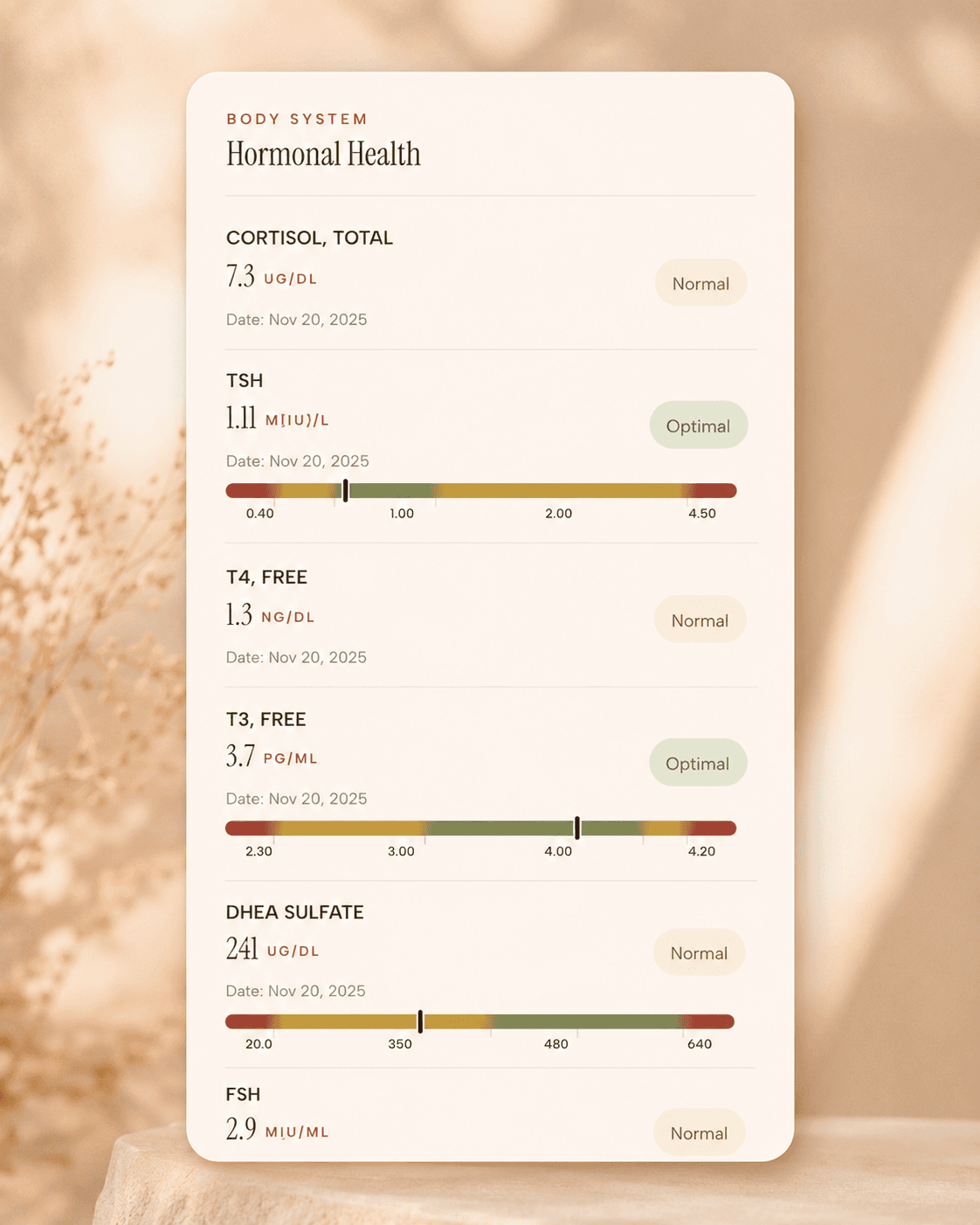
If you do want real data, Vitals Vault's starting from $99 panel covers 100+ clinically validated markers
including metabolic, thyroid, and inflammatory tests
in one visit, with no upsell pressure
About 1 week
Schedule online — results typically within a week
Clear next steps
Guidance included, with follow-up care available
HSA / FSA
Eligible for pre-tax health spending accounts
Why this conversation is happening right now
Deborah Cohen named the mechanism publicly
Cohen's interview with cardiologist Eric Topol this week gave the critique a specific, investigative frame: the wellness industry is not just overhyped, it is structured to keep you in a state of managed uncertainty so you keep buying. That framing resonated widely because it explains something many people have felt but struggled to articulate.
The CGM debate brought it into everyday health decisions
Dr. Layne Norton's critique of continuous glucose monitors for non-diabetic users landed at exactly the right moment, because CGMs have become one of the most visible wellness status symbols of the last two years. His core point — that a healthy pancreas is supposed to produce the glucose response these devices flag as alarming — gave people a concrete example of how normal physiology gets pathologized.
Women are disproportionately targeted, and clinicians are saying so
Dr. Mary Claire Haver, an OB-GYN known for her work on menopause, has been publicly critical of how wellness culture exploits women's legitimate frustrations with being dismissed by conventional medicine — and then sells them expensive, unproven alternatives. The result is that women who deserve better care often end up with more anxiety and less clarity than when they started.
What the research actually shows
CGMs in healthy people flag normal physiology
Studies in non-diabetic individuals consistently show that postmeal glucose rises that look dramatic on a CGM readout are within the range a healthy body handles without any intervention. The clinical thresholds for prediabetes and diabetes were established using fasting blood draws and oral glucose tolerance tests — not continuous sensor data — so comparing CGM readings to those thresholds is not straightforward.
More testing does not reliably produce better outcomes
A substantial body of research on population-level screening shows that expanding testing to lower-risk groups tends to increase the rate of incidental findings, follow-up procedures, and patient anxiety without a proportional reduction in serious disease outcomes. This is the core argument behind evidence-based screening guidelines, which are often more conservative than wellness culture suggests.
Health anxiety itself has measurable physical effects
Chronic health anxiety — which researchers call illness anxiety disorder [IAD] when it becomes severe — is associated with elevated cortisol, disrupted sleep, and increased healthcare utilization without improved health. The irony is that the monitoring meant to protect your health can, in some people, activate the same stress pathways it claims to prevent.
Some direct-to-consumer tests have genuine clinical value
This is not an argument that all self-directed testing is bad. Lipid panels, thyroid function, HbA1c, vitamin D, and inflammatory markers like high-sensitivity CRP have strong evidence bases and are genuinely useful for people who have risk factors or symptoms. The problem is not testing — it is testing without a clinical framework for interpreting and acting on the results.
What wellness culture gets wrong — and right
Myth: more data always means better decisions
More data means better decisions only when you have a valid way to interpret it and a clear action tied to each result. Without that framework, more data often means more noise, more false positives, and more decisions made from anxiety rather than evidence — which is exactly how unnecessary interventions get started.
Myth: if your doctor didn't order it, it isn't worth knowing
Conventional medicine does undertest in some areas, particularly for conditions that disproportionately affect women, people of color, and anyone whose symptoms don't fit a classic presentation. The answer to that real gap is not to buy every available test, but to find a clinician who will take your concerns seriously and order tests that are actually indicated.
Fact: your personal triggers and patterns do matter
Tracking sleep, energy, mood, and how you feel after eating is genuinely useful — not because every fluctuation signals disease, but because patterns over time can reveal things worth discussing with a clinician. The difference between helpful self-monitoring and harmful over-monitoring is whether the data informs a conversation or replaces one.
The real risks of over-optimization
Incidental findings can cascade into serious harm
When you test broadly without a clinical reason, you will occasionally find something that looks abnormal but is not — and the follow-up tests, biopsies, or procedures that result carry their own risks. This is called the cascade effect, and it is one of the main reasons evidence-based guidelines don't recommend full-body scans or broad hormone panels for asymptomatic healthy adults.
Wellness interventions are not always harmless
Supplements, restrictive protocols, and unregulated IV infusions marketed as optimization tools have caused serious harm in documented cases — including the kind of outcome Dr. Layne Norton covered in his reporting on a Miami holistic treatment death. 'Natural' and 'wellness-focused' are not synonyms for safe, and the absence of a prescription does not mean the absence of risk.
The financial cost is real and rarely discussed
A CGM subscription, a microbiome kit, a full-body MRI, and a functional medicine panel can easily run into thousands of dollars per year — money that, for most people, would produce more health benefit if spent on sleep, food quality, or reducing financial stress itself. Cost is a legitimate part of any health decision, and wellness culture rarely acknowledges it.
Frequently Asked Questions
Is wearing a CGM bad for you if you don't have diabetes?
Wearing a CGM is not physically dangerous for most people, but it can be psychologically counterproductive. The glucose responses it flags in healthy individuals are often normal physiological events, and reacting to them with dietary restriction or anxiety can create more problems than it solves. If you're curious about your metabolic health, a fasting glucose and HbA1c test gives you clinically validated data at a fraction of the cost.
How do I know which health tests are actually worth getting?
The most useful tests are the ones tied to your specific age, sex, family history, and symptoms — not the ones a wellness influencer recommends universally. A good starting point is a comprehensive metabolic panel that includes lipids, thyroid, blood sugar, and inflammatory markers, interpreted by a clinician who knows your history. Vitals Vault's panel covers those bases, and a PocketMD clinician can help you decide what's actually indicated for you.
Why does wellness culture seem to target women more than men?
Women have historically been dismissed or undertreated by conventional medicine, which creates a real and legitimate frustration that wellness culture is very good at exploiting. By positioning itself as the alternative that 'actually listens,' the wellness industry captures people who have been genuinely failed — and then sells them expensive, often unproven solutions. The answer is better conventional care, not more wellness products.
Can health anxiety from over-monitoring actually make you physically sick?
Yes, and this is well-documented. Chronic activation of the stress response — which health anxiety reliably triggers — raises cortisol, disrupts sleep, and can worsen the very symptoms you're trying to monitor. If you find that checking your health data makes you feel worse rather than more in control, that's a meaningful signal worth discussing with a clinician.
Is there a version of health optimization that is actually evidence-based?
Absolutely. Regular age-appropriate screening, managing known risk factors like blood pressure and cholesterol, prioritizing sleep and physical activity, and having a clinician you trust to interpret your results — these are the interventions with the strongest evidence base. The goal is not to avoid all self-knowledge but to make sure the data you collect is actionable and interpreted in context.