Vaginal Estrogen: UTI Prevention, Sex Health & Longevity
Vaginal estrogen is a low-dose, locally applied hormone therapy that restores tissue health in the vagina and urinary tract — and the evidence behind it is far stronger than most women (or their doctors) realize.


Vaginal estrogen is a low-dose, locally applied hormone therapy that restores tissue health in the vagina and urinary tract — and the evidence behind it is far stronger than most women (or their doctors) realize. It reliably reduces recurrent urinary tract infections, reverses the dryness and pain that make sex miserable after menopause, and carries a safety profile that makes the widespread reluctance to prescribe it genuinely hard to justify. This topic has moved into the mainstream health conversation largely because physicians like Peter Attia have started calling it one of the most underutilized therapies in women's medicine. If you have been quietly suffering through painful sex, frequent UTIs, or the general indignity of a body that feels like it belongs to someone else, this is worth understanding. Vitals Vault's hormone panels and PocketMD telehealth line can help you figure out where your own levels stand and what questions to bring to your doctor.
Why this is trending
Peter Attia published a detailed breakdown of vaginal estrogen this week, arguing that physician reluctance to prescribe it is not supported by the data and that the therapy's benefits — particularly for recurrent UTIs — are being systematically undertreated. His piece lands in the middle of a broader moment: menopause hormone therapy has been dominating health media for the past two years as researchers and clinicians push back against the overcorrection that followed the Women's Health Initiative study in 2002, which caused a generation of doctors to become broadly cautious about all forms of estrogen. What makes vaginal estrogen a distinct conversation is that it is not systemic hormone therapy. The dose stays local, blood levels barely move, and the mechanism is specific and well understood. That distinction matters enormously for safety — and it is the reason the reluctance is so hard to defend on clinical grounds.
What vaginal estrogen actually is
A local therapy, not a systemic one
Vaginal estrogen is applied directly to the vaginal tissue as a cream, ring, or small tablet, and it works almost entirely at the site of application. Because the dose is tiny and absorption into the bloodstream is minimal, it does not carry the same considerations as oral or patch-based hormone therapy — which is exactly why its safety profile is so different.
It targets a specific, named condition
The cluster of symptoms it treats has a clinical name — genitourinary syndrome of menopause [GSM] — which covers vaginal dryness, thinning of the vaginal walls, painful intercourse, urinary urgency, and increased susceptibility to UTIs. These symptoms happen because estrogen is what keeps the tissue of the vagina and lower urinary tract thick, elastic, and well-populated with protective bacteria.
It works by restoring the tissue environment
When estrogen drops after menopause, the vaginal lining thins, the natural acidity that keeps harmful bacteria in check fades, and the urinary tract loses some of its structural resilience. Vaginal estrogen reverses most of that — rebuilding the tissue, restoring the acidic environment, and re-establishing the bacterial balance that makes UTIs far less likely.
Lab testing
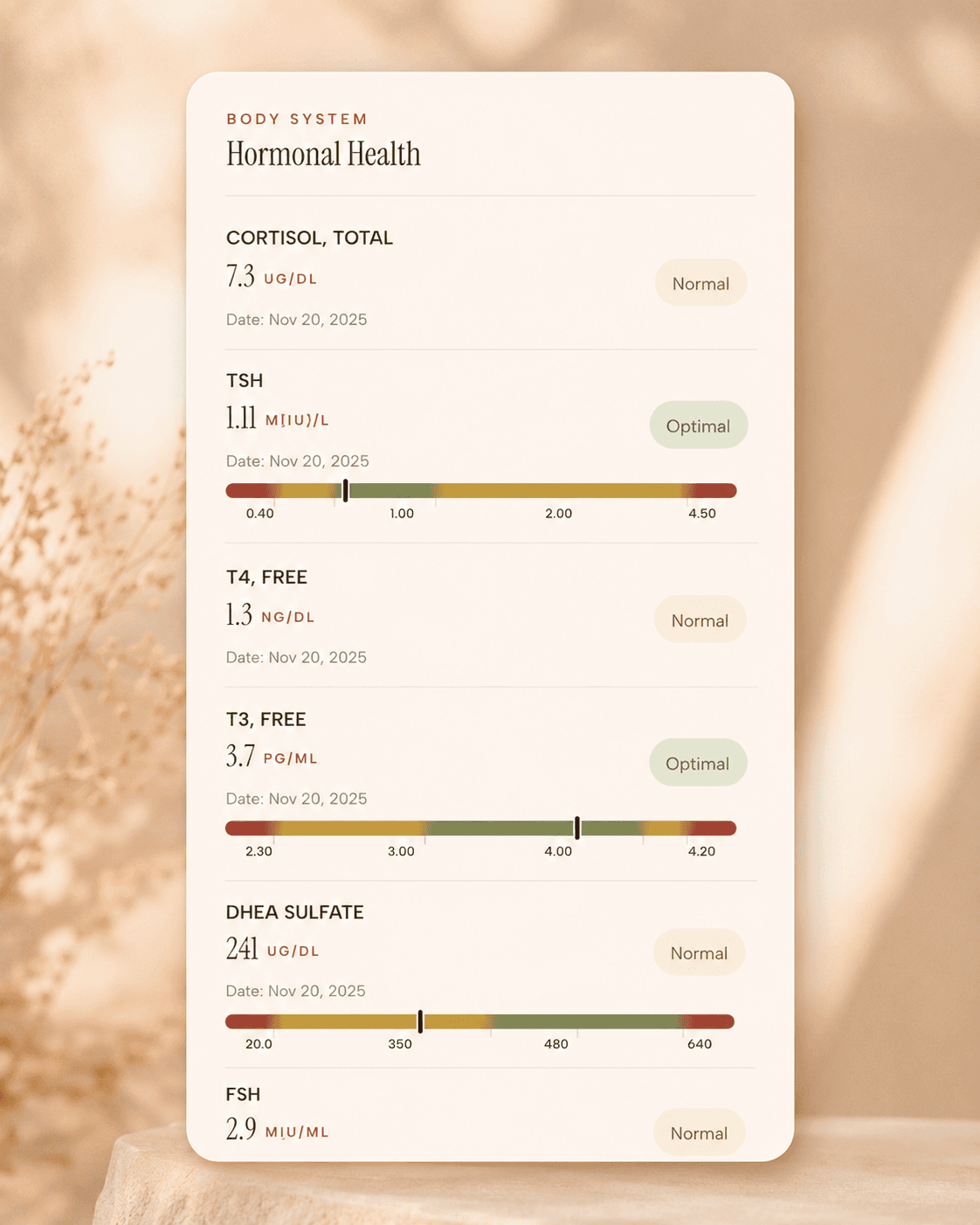
Check your estrogen, FSH, and full hormone picture with our starting-from-$99 panel covering 100+ tests in one visit
no referral required
About 1 week
Schedule online — results typically within a week
Clear next steps
Guidance included, with follow-up care available
HSA / FSA
Eligible for pre-tax health spending accounts
Why this is getting serious attention right now
A credible voice called out the prescribing gap
Peter Attia's detailed article on vaginal estrogen made the case plainly: this is one of the most evidence-backed therapies in women's medicine, and it is being systematically underprescribed. When a physician known for rigorous evidence standards says that reluctance is hard to justify clinically, it moves the conversation.
The 2002 hormone scare cast a very long shadow
The Women's Health Initiative study caused a dramatic drop in all hormone prescribing — including local vaginal estrogen, which was never the focus of that research. Two decades later, many doctors and patients are still operating under assumptions that the data simply do not support for this specific therapy.
Emerging data hints at longevity benefits
Beyond comfort and UTI prevention, some observational research suggests that women who use vaginal estrogen have lower rates of certain serious outcomes, including cardiovascular events and overall mortality. This data is preliminary and not yet at the level where anyone should treat it as settled — but it is generating real scientific interest and is part of why researchers are pushing for more study.
What the research actually shows
Recurrent UTI prevention is the strongest signal
Multiple randomized controlled trials have shown that vaginal estrogen significantly reduces the frequency of recurrent urinary tract infections in postmenopausal women — in some studies cutting the rate by more than half. This is not a small or uncertain effect; it is one of the more robust findings in menopause medicine, and it matters because recurrent UTIs are not just uncomfortable but can lead to kidney infections and antibiotic resistance over time.
Painful sex relief is consistent and well-documented
The evidence for vaginal estrogen improving painful intercourse [dyspareunia] and vaginal dryness is strong enough that major medical organizations including the Menopause Society list it as a first-line treatment. Women typically notice meaningful improvement within a few weeks, with full benefit building over two to three months as the tissue gradually rebuilds.
Blood estrogen levels stay essentially unchanged
Studies measuring serum estrogen in women using low-dose vaginal preparations consistently show that blood levels remain within the normal postmenopausal range. This is the key pharmacological fact that separates vaginal estrogen from systemic therapy and is the basis for its favorable safety assessment — the hormone is doing its work locally, not circulating through the body at meaningful concentrations.
Mortality data is intriguing but still early
A large observational study found associations between vaginal estrogen use and reduced all-cause mortality, but observational data cannot prove causation — healthier women may be more likely to seek and continue treatment, which could explain part of the signal. The finding is worth watching as researchers design better studies, but it should not be the primary reason someone starts therapy.
Who this matters most for
Women with recurrent UTIs after menopause
If you have had two or more UTIs in a year since going through menopause, the tissue changes from estrogen loss are almost certainly contributing — and vaginal estrogen addresses the root cause rather than just treating each infection with antibiotics. This is the population where the evidence is clearest and the benefit-to-risk ratio is most compelling.
Anyone experiencing painful or uncomfortable sex
Painful sex after menopause is extremely common and extremely underreported, because many women assume it is just something they have to accept. It is not — vaginal estrogen is specifically designed for this, it works, and there is no good medical reason to endure it when an effective treatment exists.
Women who were told estrogen was off-limits for them
Some women with a history of hormone-sensitive breast cancer have been told to avoid all estrogen, and that guidance deserves a direct conversation with an oncologist — not a blanket assumption. Several major cancer organizations have begun acknowledging that local vaginal estrogen, because of its minimal systemic absorption, may be appropriate even in some breast cancer survivors, though this is an individualized decision that requires specialist input.
What to know before you start
It still requires a prescription and a real conversation
Vaginal estrogen is not over the counter, and getting it right — the right formulation, the right dose, the right follow-up — matters. If your doctor dismisses your symptoms without engaging with the evidence, that is worth pushing back on or seeking a second opinion, ideally from a clinician who specializes in menopause medicine.
Breast cancer history needs specialist guidance
For women with a personal history of hormone-receptor-positive breast cancer, the decision about vaginal estrogen is genuinely more complex and should involve your oncologist. The systemic absorption is low, but it is not zero, and the right answer depends on your specific cancer history, current treatment, and risk profile — not a general rule.
Symptoms can return if you stop
Vaginal estrogen is typically a long-term therapy because the underlying cause — lower estrogen after menopause — does not go away. Most women need to continue using it to maintain the benefits, which is worth knowing upfront so you can have a realistic conversation with your doctor about ongoing use rather than treating it as a short-term fix.
Frequently Asked Questions
Is vaginal estrogen the same as hormone replacement therapy?
No — and that distinction is clinically important. Vaginal estrogen is applied locally in very small doses, and blood levels stay within the normal postmenopausal range, which is very different from systemic hormone therapy delivered through pills or patches. The safety profile and the considerations involved are meaningfully different, which is why many women who are not candidates for systemic HRT can still use vaginal estrogen.
How long does it take for vaginal estrogen to work?
Most women notice some improvement in dryness and discomfort within two to four weeks, but the full benefit — including meaningful UTI prevention and tissue rebuilding — typically takes two to three months of consistent use. It works gradually because the tissue is physically regenerating, not just being temporarily soothed.
Can I use vaginal estrogen if I have had breast cancer?
This is one of the most important questions to bring to your oncologist rather than answer with a general rule. For some breast cancer survivors, particularly those not on aromatase inhibitors, local vaginal estrogen may be considered appropriate given its minimal systemic absorption — but that decision depends heavily on your specific cancer type, stage, and current treatment. Do not assume the answer is automatically no, but do not assume it is automatically yes either.
What forms does vaginal estrogen come in?
It comes in several forms: a cream applied with an applicator, a small dissolvable tablet or suppository inserted into the vagina, and a flexible ring that sits in place and releases a slow, steady dose over about three months. The right choice depends on your preference and your doctor's recommendation — they all work through the same mechanism, but some women find one form much easier to use consistently than others.
Will vaginal estrogen show up on a hormone blood test?
Studies consistently show that low-dose vaginal estrogen does not meaningfully raise estrogen levels in the bloodstream — blood tests in women using it typically look the same as in women not using any estrogen. If you are tracking your hormone levels through Vitals Vault or another panel, vaginal estrogen use is unlikely to change what you see, though it is always worth telling your provider what you are using so they can interpret results in full context.