Testosterone in Women: Menopause, Libido & What's Real
Yes, women make testosterone — and yes, it matters.


Yes, women make testosterone — and yes, it matters. Low testosterone in women is real, measurable, and linked to symptoms that go well beyond low libido, including fatigue that sleep doesn't fix, brain fog, loss of muscle, and a flattened sense of motivation. The problem is that most women are never tested for it, and when they do mention these symptoms, they're far more likely to leave with an antidepressant than a hormone panel. This guide breaks down what testosterone actually does in your body, what low levels feel like, how testing works, and what treatment looks like when it's appropriate. If you want to talk through your symptoms before ordering labs, Vitals Vault's PocketMD line connects you with a clinician who can help you figure out where to start.
Why this is trending
Several prominent women's health clinicians — including Dr. Mary Claire Haver, Dr. Gabrielle Lyon, and Dr. Susan Hardwick-Smith — published overlapping content this week making the same core argument: testosterone deficiency in women is dramatically underdiagnosed, and the symptoms are routinely mistaken for depression, burnout, or just aging. That kind of multi-source expert convergence doesn't happen by accident. It reflects a real shift in how clinicians are talking about female hormones, and a growing frustration that testosterone has been treated as an exclusively male concern for decades. What's actually new isn't the biology — women have always produced testosterone. What's new is the clinical conversation catching up to what many women have been reporting for years. Research on testosterone therapy for women is still catching up to the estrogen literature, but the evidence base is growing, and more practitioners are now willing to test and treat rather than dismiss.
What Testosterone Actually Does in Women
Your body makes it — just in smaller amounts
Women produce testosterone in the ovaries and adrenal glands, and while levels are much lower than in men, the hormone plays an active role in your physiology from puberty onward. It works alongside estrogen and progesterone rather than independently, which is part of why its decline during perimenopause and menopause can feel like so many things going wrong at once.
It shapes energy, muscle, and mental sharpness
Testosterone supports the growth and maintenance of lean muscle tissue, helps regulate how your body uses fat, and appears to influence the brain circuits involved in motivation and focus. When levels drop, many women describe a specific kind of fatigue — not sleepiness, but a loss of drive — along with difficulty building or keeping muscle even when their diet and exercise haven't changed.
Libido is real, but it's only part of the picture
Low sexual desire is the symptom most commonly associated with low testosterone in women, and the connection is real — but it's also the one most likely to get dismissed or attributed to relationship stress or mood. What often goes unrecognized is that the same hormonal shift can also blunt your overall sense of vitality, reduce bone density over time, and affect how well you recover from physical exertion.
Lab testing
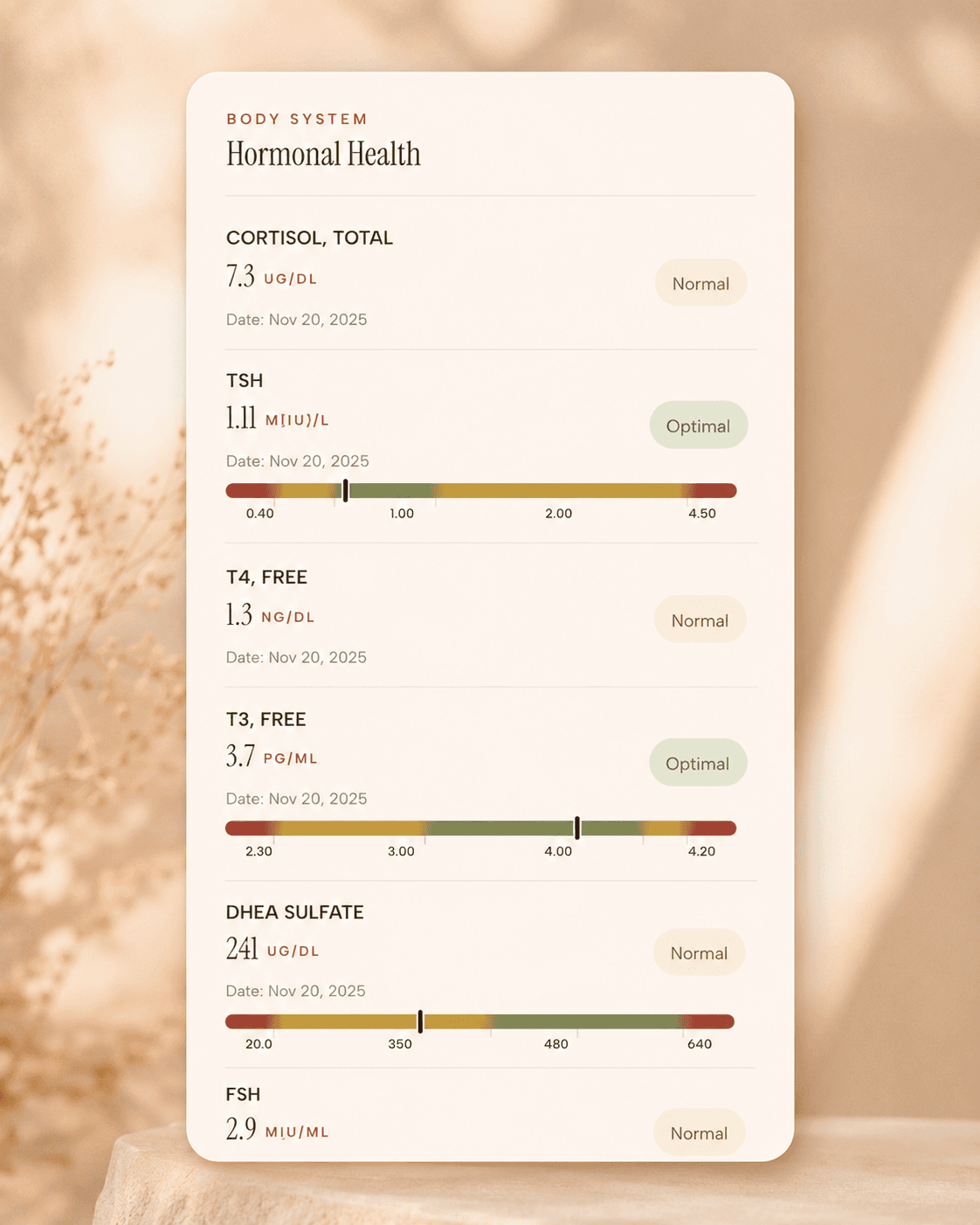
A Vitals Vault starting-from-$99 panel with 100+ tests, one visit includes total and free testosterone, SHBG, DHEA-S, and other hormone markers named in this article
so you walk in knowing what to ask for
About 1 week
Schedule online — results typically within a week
Clear next steps
Guidance included, with follow-up care available
HSA / FSA
Eligible for pre-tax health spending accounts
Why This Conversation Is Happening Now
Women are pushing back on being dismissed
A growing number of women in perimenopause and menopause are arriving at clinical appointments armed with research, and they're asking specifically about testosterone — not just estrogen. That shift in patient advocacy is forcing a broader clinical conversation about whether the standard hormone workup for women has been incomplete all along.
The misdiagnosis pattern is getting documented
Clinicians like Dr. Haver have been vocal about a pattern they see repeatedly: a woman in her 40s or 50s reports low energy, flat mood, and no interest in sex, and gets diagnosed with depression rather than having her hormones checked. The antidepressant doesn't help much, and years pass before anyone measures her testosterone. That pattern is now being named publicly, which is why it's resonating so widely.
Research is slowly catching up
Testosterone therapy for women has been used off-label for decades, but the formal research base has lagged behind the clinical practice. Several recent reviews and position statements from endocrinology and menopause societies have begun to formalize guidance on when and how to test and treat — giving clinicians more confidence to have the conversation and giving patients more language to ask for it.
The Evidence: What Research Actually Shows
Sexual function: the strongest and most consistent finding
The most robust evidence for testosterone therapy in women is in the area of sexual dysfunction — specifically low desire that causes personal distress, a condition called hypoactive sexual desire disorder. Multiple randomized controlled trials and a 2019 international consensus statement concluded that testosterone therapy at physiological doses improves sexual desire, arousal, and satisfaction in postmenopausal women. This is the one area where the evidence is solid enough that most menopause specialists consider it established.
Mood and cognition: promising but still preliminary
Several smaller studies suggest that testosterone may play a role in mood regulation and cognitive function in women, particularly the kind of mental sharpness and word-retrieval that many women notice declining in perimenopause. The findings are interesting, but the research is not yet at the level where clinicians can say definitively that testosterone therapy improves cognition — it's an active area of investigation, not a settled conclusion.
Muscle and body composition: real effects, real nuance
Testosterone does support muscle protein synthesis, and studies in postmenopausal women show that therapy can help preserve or modestly increase lean mass, particularly when combined with resistance training. What the evidence does not support is the idea that testosterone alone produces dramatic body recomposition — the effect is real but modest, and it works best as part of a broader approach that includes exercise and adequate protein intake.
Long-term safety: still being studied
The long-term safety data for testosterone therapy in women is less complete than for estrogen therapy, largely because the research has been conducted over shorter timeframes. Current evidence does not show increased cardiovascular or breast cancer risk at physiological doses, but experts are careful to note that the studies haven't been large enough or long enough to be fully conclusive. This is a real gap in the literature, not a reason to panic — but it is a reason to have an ongoing conversation with a clinician rather than self-treating.
Who Should Actually Pay Attention to This
Women in perimenopause with unexplained symptom clusters
If you're in your 40s and experiencing low energy, reduced motivation, difficulty building muscle, and a drop in sexual desire — and your thyroid and iron have already been checked — testosterone is worth adding to the conversation with your doctor. These symptoms overlap with many conditions, so testing rather than assuming is the right move.
Postmenopausal women whose HRT isn't fully working
Some women on estrogen and progesterone therapy still report persistent low libido or fatigue, and for a subset of them, the missing piece is testosterone. If your hormone replacement therapy has helped with hot flashes and sleep but hasn't restored your sense of vitality or sexual interest, it's worth asking whether your testosterone was ever measured.
Women who've had their ovaries removed
Surgical menopause — when both ovaries are removed — causes an abrupt drop in testosterone as well as estrogen, and the testosterone decline is often steeper and faster than what happens in natural menopause. Women in this situation are at particularly high risk of low testosterone symptoms and are often the clearest candidates for evaluation and treatment.
What to Know Before You Pursue This
Testing is trickier than it sounds
Standard testosterone tests measure total testosterone, but what matters more is free testosterone — the portion your body can actually use — along with a protein called sex hormone-binding globulin (SHBG) that affects how much testosterone is available to your tissues. Many labs also have reference ranges built from male data, which makes interpreting female results genuinely difficult without a clinician who understands the difference.
Too much testosterone causes real problems
Supraphysiological doses — meaning levels above what your body would naturally produce — can cause acne, unwanted hair growth, voice changes, and clitoral enlargement, some of which may not fully reverse when treatment stops. This is why dosing matters enormously, and why testosterone therapy in women should aim to restore levels to the normal female range rather than push them higher. Be cautious of any protocol that doesn't involve regular monitoring.
Not every symptom is a hormone problem
Low energy, flat mood, and low libido have many causes — thyroid dysfunction, iron deficiency, sleep disorders, depression, and relationship factors among them. Testosterone is one piece of a larger picture, and treating it without ruling out other causes first can mean missing something important. A thorough workup is more useful than jumping straight to hormone therapy.
Frequently Asked Questions
What are the signs of low testosterone in women?
The most commonly reported symptoms are low sexual desire, persistent fatigue that doesn't improve with rest, difficulty building or maintaining muscle, and a general loss of motivation or mental sharpness. These symptoms overlap with many other conditions — including thyroid problems, iron deficiency, and depression — so testing is important before assuming testosterone is the cause.
What testosterone level is considered low for a woman?
This is genuinely complicated because most lab reference ranges were built using male data, and there's no universally agreed-upon threshold for what counts as low in women. Most menopause specialists look at free testosterone and SHBG alongside total testosterone, and they interpret results in the context of your symptoms rather than a single cutoff number. A clinician familiar with female hormone panels is essential for making sense of your results.
Can testosterone therapy help with menopause symptoms beyond low libido?
The strongest evidence is specifically for low sexual desire, where multiple clinical trials show meaningful improvement. There is emerging but less definitive evidence that testosterone may also help with energy, mood, and muscle maintenance in menopause. It is not currently considered a first-line treatment for hot flashes or sleep disruption — estrogen remains the better-studied option for those symptoms.
Is testosterone therapy safe for women?
At doses that restore testosterone to the normal female physiological range, current evidence does not show increased risk of cardiovascular disease or breast cancer, but the long-term safety data is less complete than for estrogen therapy. The main risks at appropriate doses are related to over-treatment — acne, hair growth, and voice changes — which is why regular monitoring of levels is important. This is a conversation to have with a knowledgeable clinician, not a decision to make based on a wellness protocol alone.
How do I get my testosterone tested as a woman?
You can ask your primary care doctor or gynecologist to order a hormone panel that includes total testosterone, free testosterone, and SHBG — though not all providers are familiar with interpreting these results in women. Vitals Vault's starting-from-$99 panel with 100+ tests, one visit includes these markers, and PocketMD clinicians can help you understand what your results mean and whether follow-up is warranted.