Muscle First: Why Strength Training Is the Key to Longevity
Muscle is not just about looking strong — it is one of the most powerful predictors of how long you live and how well you live while you get there.


Muscle is not just about looking strong — it is one of the most powerful predictors of how long you live and how well you live while you get there. The research is increasingly clear that building and preserving muscle mass does more for your long-term health than almost any other single habit, including the steady-state cardio that has dominated longevity conversations for decades. This shift in thinking has been building in the scientific literature for years, but it is finally reaching mainstream awareness — and for good reason. If you want to understand what the evidence actually says, what you can do about it starting this week, and where the hype ends and the real biology begins, you are in the right place. Vitals Vault's lab panels can help you track the metabolic markers that change as you build strength, and PocketMD is available if you want to talk through a plan with a clinician.
Why this is trending
Two influential voices — physician and researcher Dr. Gabrielle Lyon and the coaching team at Renaissance Periodization — published content this week making the same core argument from different angles: strength is not something you add to a longevity plan after you have handled the basics. It is the foundation the rest of the plan sits on. Lyon frames muscle as a metabolically active organ that governs insulin sensitivity, inflammation, and resilience against disease. Renaissance Periodization focuses on the training side, emphasizing that progressive overload — gradually increasing the demand you place on your muscles over time — is the mechanism that actually produces adaptation. What makes this moment different from previous fitness trends is that the underlying science is genuinely solid. Grip strength, muscle mass, and lean body composition have all shown up as independent predictors of all-cause mortality in large epidemiological studies. This is not influencer overreach. The debate is less about whether muscle matters and more about how to build it efficiently and safely across different life stages.
What the strength-first approach actually means
Muscle as your body's metabolic engine
Skeletal muscle is the largest insulin-sensitive tissue in your body, which means it is the primary place where glucose gets cleared from your bloodstream after a meal. When you have more muscle, your body handles blood sugar more efficiently — and that single fact has downstream effects on your risk of type 2 diabetes, cardiovascular disease, and even some cancers.
Progressive overload: the mechanism behind the adaptation
Progressive overload simply means giving your muscles slightly more challenge over time — more weight, more reps, or less rest — so they have a reason to grow stronger. Without that gradual increase in demand, your body has no signal to adapt, which is why doing the same workout for years produces diminishing returns.
Healthspan, not just lifespan
Longevity researchers increasingly distinguish between how long you live and how many of those years you spend physically capable and free from chronic disease. Muscle mass is central to both: it protects your joints, keeps you upright and mobile, and buffers your body against the metabolic damage that accumulates with age.
Lab testing
Track the markers that actually change with strength training
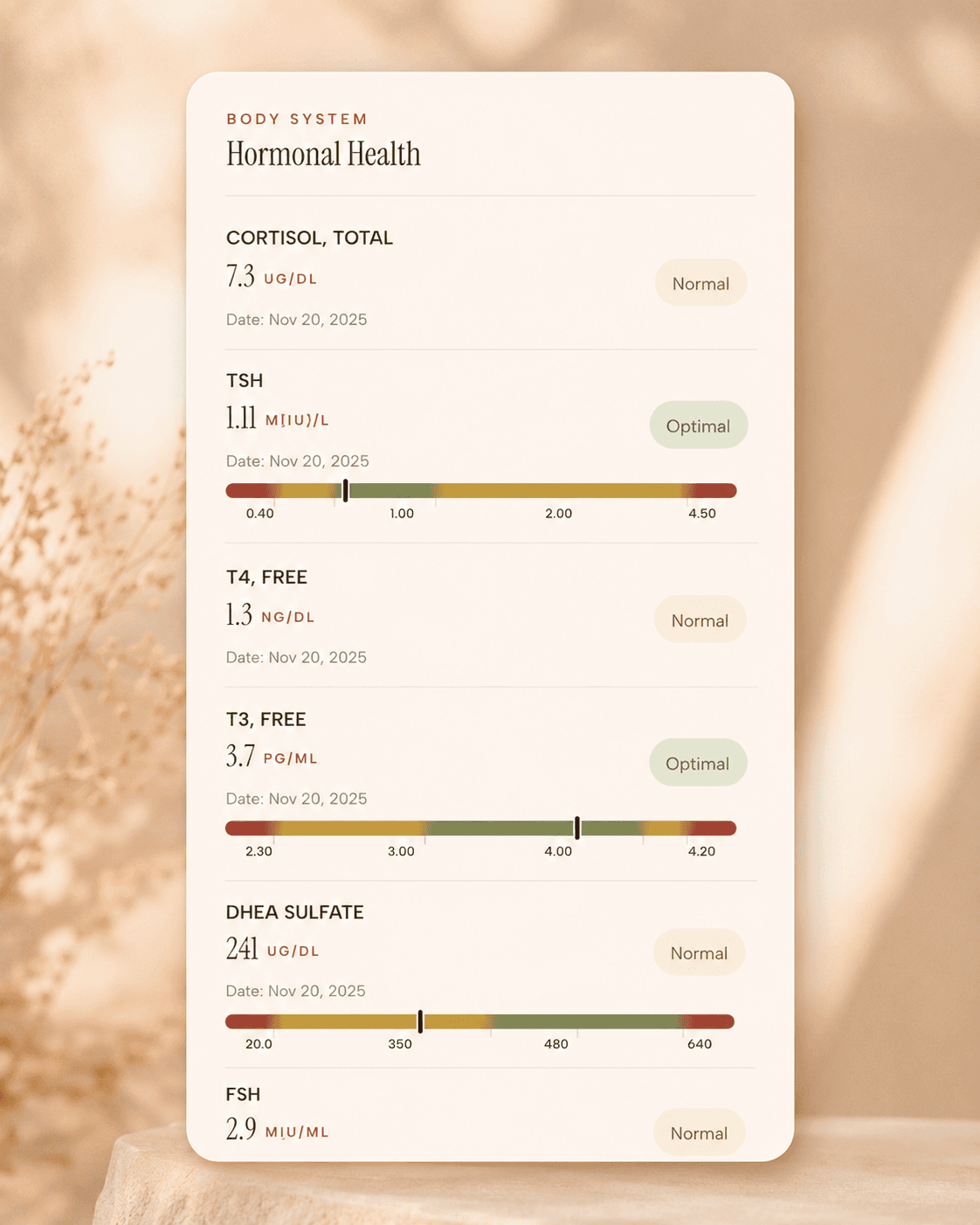
fasting insulin, HbA1c, testosterone, and inflammatory markers like CRP
with Vitals Vault's starting from $99 panel with 100+ tests, one visit
About 1 week
Schedule online — results typically within a week
Clear next steps
Guidance included, with follow-up care available
HSA / FSA
Eligible for pre-tax health spending accounts
Why this conversation is happening right now
A direct challenge to the cardio-first default
For decades, public health messaging has centered on aerobic exercise — walking, running, cycling — as the primary tool for a long, healthy life. The strength-first argument does not dismiss cardio, but it repositions resistance training as the non-negotiable foundation, with cardio as a valuable complement rather than the main event.
Muscle loss with age is faster than most people realize
After your mid-thirties, you can lose three to five percent of your muscle mass per decade without deliberate resistance training — a process called age-related muscle loss (sarcopenia). That loss accelerates after sixty, and by the time most people notice it, they have already lost meaningful strength, balance, and metabolic capacity.
Lab data is making the invisible visible
More people are now tracking markers like fasting insulin, HbA1c, and inflammatory proteins, and they are watching those numbers improve in response to strength training in ways that feel concrete and motivating. That feedback loop — train, test, see results — is helping shift the culture away from scale weight and toward functional metabolic health.
The biology connecting muscle to a longer life
Muscle signals the rest of your body through myokines
When you contract your muscles during exercise, they release signaling proteins called myokines into your bloodstream. These proteins travel to your brain, liver, fat tissue, and immune system, where they reduce inflammation, improve insulin sensitivity, and even support the growth of new brain cells — which is why regular strength training is associated with lower rates of cognitive decline.
More muscle means a higher metabolic floor
Muscle tissue burns more calories at rest than fat tissue does, so building muscle gradually raises your resting metabolic rate — the number of calories your body uses just to keep you alive and functioning. This makes it easier to maintain a healthy body composition over years and decades without extreme dietary restriction.
Strength protects you from the injuries that end independence
Falls are the leading cause of injury-related death in adults over sixty-five, and the single best predictor of fall risk is lower-body strength and balance. Building strong legs, hips, and core muscles is not just about athletic performance — it is about whether you can catch yourself when you stumble at seventy-five.
A practical framework for building strength at any age
Start with compound movements that train multiple joints
Squats, deadlifts, rows, and presses recruit large amounts of muscle at once, which means you get more metabolic and structural benefit per minute of training than you would from isolated exercises. If you are new to these movements, starting with bodyweight or light resistance and focusing on form is more important than the weight on the bar.
Apply progressive overload consistently, not aggressively
The goal is to make your workouts slightly harder over weeks and months — not to crush yourself every session. Adding five pounds to a lift every few weeks, or doing one more rep with the same weight, is enough of a signal to drive meaningful adaptation over time while keeping injury risk low.
Protein timing and quantity matter more than most people think
Your muscles need adequate protein to rebuild after training, and most adults over forty are eating less than the amount that supports muscle protein synthesis — roughly 0.7 to 1 gram per pound of body weight per day is the range most researchers currently support. Spreading that protein across three or four meals rather than loading it all at dinner appears to improve how well your body actually uses it.
What to watch out for and where the evidence has limits
Starting too hard too fast is the most common mistake
Enthusiasm is great, but jumping into heavy compound lifts without building a foundation of movement quality first is a reliable path to injury — particularly for your lower back, shoulders, and knees. Working with a qualified coach for even a few sessions to learn the basic patterns is an investment that pays off for years.
Strength training alone is not a complete longevity strategy
The evidence for muscle and longevity is strong, but it does not mean cardio is irrelevant — cardiovascular fitness (VO2 max) is also a powerful predictor of long-term health, and the two types of training work better together than either does alone. The strength-first framing is about priority and sequencing, not about replacing one with the other.
Some conditions require medical clearance before starting
If you have uncontrolled high blood pressure, a recent cardiac event, osteoporosis, or a history of joint replacement, the right program for you looks different from a standard beginner template — and you should talk with a clinician before significantly increasing training intensity. That conversation is worth having before you need it, not after something goes wrong.
Frequently Asked Questions
Is strength training actually better for longevity than cardio?
The honest answer is that both matter, and the research does not support dropping one for the other. What the evidence does show is that muscle mass and strength are independent predictors of longevity — meaning they predict how long you live even after you account for cardiovascular fitness. The practical takeaway is to prioritize resistance training if you currently do none, while keeping some aerobic activity in your routine.
How much strength training do I need each week to see longevity benefits?
Most of the research showing mortality benefits is associated with two to three sessions of resistance training per week, each lasting thirty to sixty minutes. More than that can produce additional fitness gains, but the biggest jump in benefit comes from going from zero to something — even one well-structured session per week is meaningfully better than none.
Can I build muscle after 60 or 70?
Yes, and this is one of the most important and underappreciated findings in exercise science. Adults in their sixties, seventies, and even eighties can build meaningful muscle mass and strength with consistent resistance training, though the process is slower and requires more attention to protein intake and recovery than it does in younger adults. Starting later is not ideal, but it is far better than not starting at all.
What lab tests should I track if I am starting a strength training program?
Fasting insulin and HbA1c give you a picture of how your body is handling blood sugar, which often improves significantly with consistent strength training. Inflammatory markers like high-sensitivity CRP, along with testosterone and DHEA-S, can also shift in meaningful ways. Vitals Vault's panel covers all of these in a single visit, so you have a baseline to compare against as you build your program.
How does muscle loss with age actually happen, and can I stop it?
Age-related muscle loss (sarcopenia) happens because the signals your body uses to build and maintain muscle — including anabolic hormones like testosterone and growth hormone, as well as the mechanical stimulus of resistance training — all decline with age. You cannot fully stop the process, but you can dramatically slow it by training consistently, eating enough protein, and keeping your hormones in a healthy range. People who strength train throughout their lives retain far more muscle and function into old age than those who do not.