How Sleep Changes With Age: A Stage-by-Stage Guide
Your sleep does not stay the same across your life — it changes more dramatically than almost any other biological function, and those changes are not random.



Your sleep does not stay the same across your life — it changes more dramatically than almost any other biological function, and those changes are not random. The amount of deep sleep you get, when your body clock tells you to feel tired, and how much time you spend dreaming all shift in predictable, science-backed ways from the moment you are born to the time you reach your eighties. Understanding those shifts matters because the strategies that protect sleep at 25 are not the same ones that work at 55 or 75. If you have noticed your sleep feeling lighter, earlier, or more fragmented as the years pass, there is a real biological explanation — and real things you can do about it. If you want to dig into your own numbers first, Vitals Vault's lab panels can flag hormonal and metabolic markers that quietly undermine sleep quality at any age.
Why this is trending
Sleep researcher Matt Walker released a dedicated episode this week mapping how sleep architecture evolves across the entire human lifespan, and it has pulled a much wider audience into a conversation that used to stay inside academic circles. Most sleep content online focuses on sleep hygiene basics — screens before bed, caffeine cutoffs — without ever explaining why a 70-year-old structurally cannot sleep the same way a 25-year-old does. What is genuinely new here is not the underlying science, which has been building for decades, but the public framing: people are starting to understand that age-related sleep changes are not failures or disorders. They are normal biology. That shift in framing changes what you should actually do about them, and that is where the real practical value lives.
What Sleep Architecture Actually Is
Sleep is a cycle, not a flat state
Every night your brain moves through repeating cycles of light sleep, deep sleep (called slow-wave sleep), and dream sleep (called REM, or rapid eye movement sleep). Each full cycle takes roughly 90 minutes, and the mix of stages inside each cycle shifts as the night progresses — you get more deep sleep in the first half of the night and more REM sleep in the second half.
Deep sleep is your body's repair window
During slow-wave sleep, your brain flushes out metabolic waste through a drainage system called the glymphatic system, your pituitary gland releases growth hormone, and your immune system consolidates its defenses. This is the stage that declines most sharply with age, which is why the consequences of aging sleep go well beyond just feeling tired.
Your internal clock is a separate system from sleep pressure
Your circadian rhythm (the internal 24-hour clock driven largely by a brain region called the suprachiasmatic nucleus) tells your body when to feel sleepy and when to feel alert. Sleep pressure, on the other hand, is the chemical buildup of adenosine that accumulates the longer you stay awake. Both systems change with age — and they change in different ways, which is why the timing and quality of sleep both shift.
Lab testing
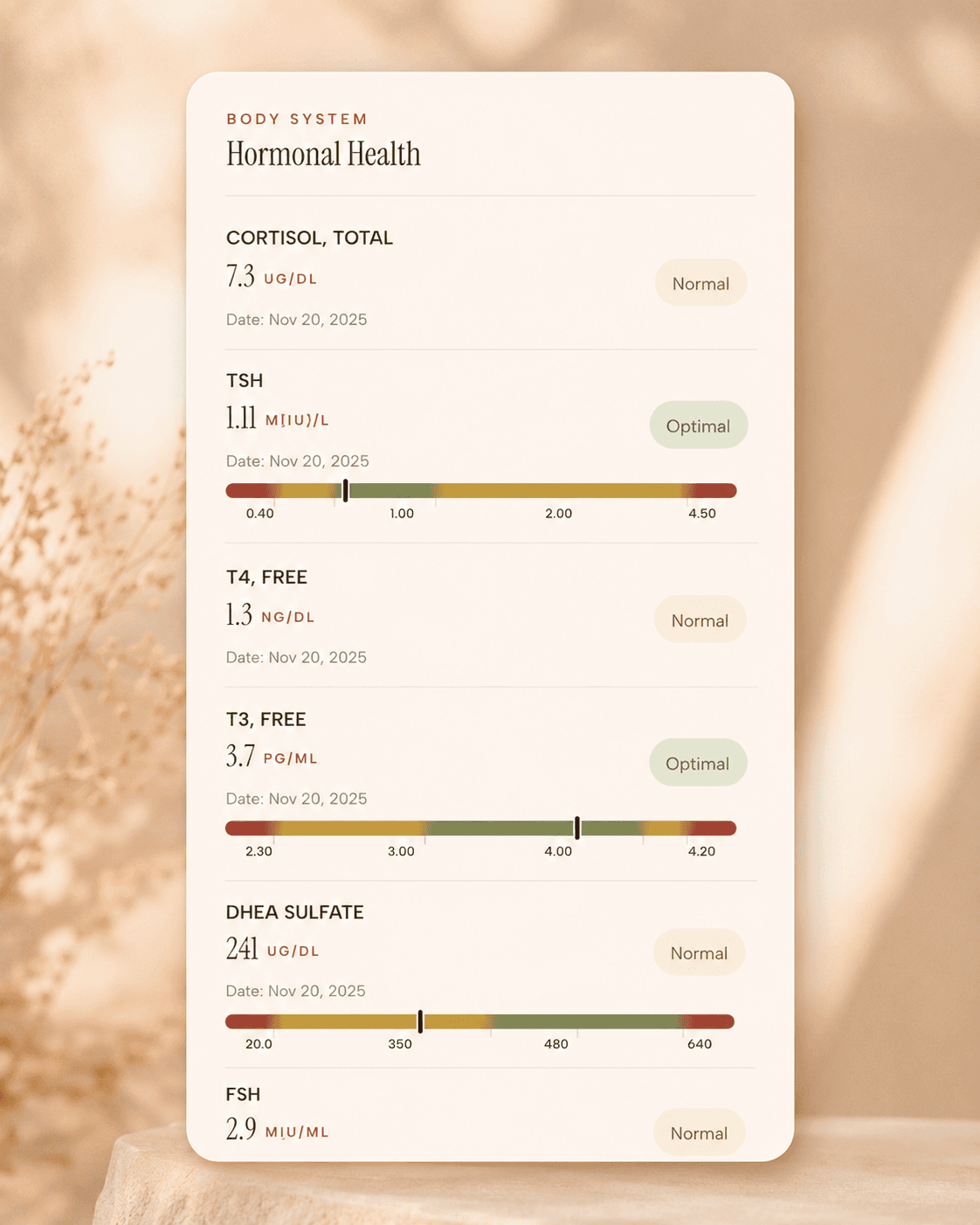
Hormones like cortisol, thyroid markers, and melatonin precursors all influence how well you sleep
and all show up in Vitals Vault's starting-from-$99 panel with 100+ tests, one visit
About 1 week
Schedule online — results typically within a week
Clear next steps
Guidance included, with follow-up care available
HSA / FSA
Eligible for pre-tax health spending accounts
Why Everyone Is Talking About This Now
Matt Walker's lifespan episode reframed the conversation
Walker's new episode walked through the full arc of sleep from infancy to old age in a way that made the science accessible without dumbing it down. The key reframe that resonated widely was this: waking earlier and sleeping lighter in your sixties and seventies is not insomnia — it is biology — and treating it like a disorder can lead to unnecessary medication.
Wearables are making people confront their sleep data
Millions of people now see nightly readouts of their deep sleep and REM percentages, and many are alarmed by what they see as they age. That data anxiety is driving real questions about what is normal versus what signals a problem, and the internet has not done a great job answering that clearly until recently.
Longevity culture has elevated sleep as a core biomarker
As the longevity conversation has moved mainstream, sleep has moved with it — from a lifestyle tip to a genuine health metric. Researchers and clinicians now talk about sleep architecture the way they talk about blood pressure: something worth tracking, understanding, and actively protecting across decades, not just when something goes wrong.
How Sleep Shifts at Every Life Stage
Infants and toddlers: REM dominates, cycles are short
Newborns spend roughly 50 percent of their sleep in REM, compared to about 20 percent in adults, because that dream state is doing heavy lifting for brain development — building neural connections at a rate that will never happen again. Their sleep cycles are also much shorter, around 50 minutes, which is why they wake so frequently and why forcing adult sleep schedules onto infants is biologically counterproductive.
Adolescence: the clock shifts later, not laziness
During puberty, the circadian clock shifts forward by one to three hours, meaning teenagers genuinely do not feel sleepy until later at night and cannot easily wake early without a real biological cost. School start times that conflict with this shift create a form of chronic sleep deprivation that affects mood, learning, and metabolic health — and the research on this is now strong enough that many school districts have changed their schedules.
Midlife: deep sleep starts its long decline
From your late twenties onward, the amount of slow-wave deep sleep you get each night begins to fall — slowly at first, then more noticeably in your forties and fifties. By midlife, many people also notice that alcohol, late meals, and stress fragment sleep in ways they did not in their twenties, because the brain's ability to maintain deep sleep becomes less robust and more sensitive to disruption.
Older adulthood: earlier timing, lighter sleep, more fragmentation
After about age 65, the circadian clock shifts earlier — the opposite of adolescence — so you feel sleepy earlier in the evening and wake earlier in the morning. Deep sleep may be reduced by 50 to 80 percent compared to young adulthood, and the brain becomes less efficient at staying in any single sleep stage, leading to more frequent brief awakenings. These changes are normal, but they do interact with medications, chronic pain, and conditions like sleep apnea in ways that can make things significantly worse.
Age-Specific Strategies That Actually Help
For teens: protect the second half of the night
Because adolescents are biologically wired to fall asleep later, the most damaging thing is cutting sleep short in the morning rather than staying up late. If you have a teenager, advocating for later school start times matters more than enforcing an early bedtime, and on weekends, allowing them to sleep until their body wakes naturally — rather than forcing alignment with adult schedules — reduces the accumulated sleep debt that affects their mental health during the week.
For adults in their thirties and forties: guard deep sleep aggressively
This is the decade when lifestyle choices start to visibly erode sleep architecture, so the highest-leverage moves are reducing alcohol (even one drink suppresses deep sleep measurably), keeping your sleep and wake times consistent seven days a week, and treating stress as a sleep problem — because elevated cortisol at night directly competes with the hormonal conditions needed for slow-wave sleep.
For adults over sixty: work with the shifted clock, not against it
Trying to stay up late to match a younger schedule typically just means you lose sleep from the front of the night without gaining it at the back, because the circadian drive to wake early does not budge. Instead, shifting your entire sleep window earlier — going to bed when you actually feel sleepy rather than when you think you should — and getting bright light exposure first thing in the morning helps anchor the clock and improve sleep quality within the window you have.
Risks and Caveats Worth Knowing
Normal aging sleep changes can mask real disorders
Sleep apnea, restless leg syndrome, and circadian rhythm disorders all become more common with age and can look like ordinary aging sleep changes from the outside. If you are waking unrefreshed despite adequate time in bed, snoring loudly, or experiencing uncomfortable sensations in your legs at night, those are worth discussing with a physician rather than attributing to aging — because they are treatable and leaving them unaddressed accelerates cognitive and cardiovascular decline.
Sleep medications carry real risks in older adults
Sedative sleep aids — including some that are available over the counter — are associated with fall risk, next-day cognitive impairment, and in some cases long-term memory concerns in older adults. The fact that sleep becomes lighter with age does not automatically mean medication is the answer, and the American Geriatrics Society specifically flags several common sleep drugs as inappropriate for routine use in people over 65.
Wearable sleep data is useful but not diagnostic
Consumer devices are reasonably good at estimating total sleep time and broad sleep stages, but they are not accurate enough to diagnose a sleep disorder or to make medication decisions. If your wearable is consistently showing very low deep sleep or REM, that is a useful signal to bring to a clinician — not a diagnosis in itself, and not a reason to start supplementing or self-treating without understanding what is actually driving the pattern.
Frequently Asked Questions
How much deep sleep should I be getting at my age?
Young adults typically spend 15 to 20 percent of their total sleep time in deep slow-wave sleep, but that figure drops to roughly 5 to 10 percent by the time people reach their sixties and seventies. Rather than chasing a specific number, the more useful question is whether you feel restored in the morning — because sleep quality and architecture vary considerably between individuals at every age.
Is it normal to wake up earlier as you get older?
Yes, this is one of the most consistent and well-documented changes in sleep across the lifespan. The circadian clock shifts earlier with age, meaning your body genuinely starts producing sleep-promoting signals earlier in the evening and stops suppressing wakefulness earlier in the morning. Fighting this shift by staying up late usually just shortens your total sleep time rather than resetting the clock.
Why do teenagers seem impossible to wake up in the morning?
During puberty, the circadian clock shifts forward by one to three hours — a biological change driven by hormonal shifts, not attitude or laziness. This means a teenager's body is genuinely not ready to fall asleep at 10 p.m. or wake at 6 a.m. without a real physiological cost, and chronic early wake times during adolescence accumulate into a sleep debt that affects mood, learning, and metabolic health.
Can you recover lost deep sleep as you age, or is the decline permanent?
Some of the decline in deep sleep with age is structural and not fully reversible, but lifestyle factors have a meaningful influence on how much deep sleep you preserve. Regular aerobic exercise, consistent sleep timing, limiting alcohol, and managing chronic stress all support slow-wave sleep at any age — and addressing underlying conditions like sleep apnea or thyroid dysfunction can recover significant sleep quality that was being lost to a treatable cause.
Should I take melatonin to fix age-related sleep changes?
Melatonin is not a sleep drug — it is a timing signal, and it works best for shifting the clock rather than deepening sleep or extending total sleep time. In older adults, low-dose melatonin taken about an hour before the desired bedtime may help with sleep onset, but the evidence for improving sleep architecture is weak. It is worth talking to a physician before starting any supplement routine, particularly if you are taking other medications, because melatonin does interact with blood thinners and some blood pressure medications.