Protein Myths Debunked: Kidneys, Muscle & Daily Needs
No, eating more protein will not destroy your kidneys if they are healthy — and no, the 0.8 grams per kilogram of body weight you were probably told is almost certainly not enough if you want to hold onto muscle as you age.


No, eating more protein will not destroy your kidneys if they are healthy — and no, the 0.8 grams per kilogram of body weight you were probably told is almost certainly not enough if you want to hold onto muscle as you age. These two ideas have been repeated so often, by so many well-meaning doctors and dietitians, that they feel like settled science. They are not. Protein is having a cultural moment — it is showing up in lattes, cookies, and every other grocery aisle — but the underlying science is more nuanced than either the hype or the fear suggests. This article walks through the five most persistent protein myths, what the research actually says about each one, and how to build a practical intake framework that works for your body. If you want to dig deeper into your own numbers, Vitals Vault's lab panels can show you markers tied to muscle health and kidney function, and PocketMD can help you interpret what they mean.
Why this is trending
Two of the most-followed voices in functional and muscle-centric medicine — Dr. Mark Hyman and Dr. Gabrielle Lyon — both published protein myth content this week, and the overlap is not a coincidence. It reflects a sustained moment where food industry marketing has saturated the conversation to the point that genuine confusion is at a peak. Protein bars claim to build muscle with 10 grams per serving; protein coffees promise body recomposition; and meanwhile, some physicians are still telling patients with normal kidney function to cut back on meat to protect their kidneys. The frustrating part is that the fear-based advice and the marketing hype are both pulling people away from the same thing: a clear, evidence-grounded understanding of what protein actually does in your body and how much of it you need at different life stages. The science has moved considerably in the last decade, and it is worth catching up.
What the Myths Actually Are
The kidney damage myth that won't die
The idea that high protein intake damages healthy kidneys comes from research done in people who already had chronic kidney disease, where the kidneys genuinely do struggle to filter the byproducts of protein metabolism. Applying that finding to people with normal kidney function is like warning someone with healthy lungs not to breathe deeply because people with emphysema have trouble doing it.
The 0.8 grams per kilogram myth
The official recommended dietary allowance for protein — 0.8 grams per kilogram of body weight per day — was designed to prevent deficiency in sedentary adults, not to optimize muscle maintenance, immune function, or metabolic health. For a 150-pound person, that works out to about 55 grams a day, which most researchers studying muscle aging now consider far too low for anyone over 40.
The 'your body can only absorb 30 grams at once' myth
This one spread widely through gym culture and still shows up on supplement packaging, but it is not how digestion works. Your body does not cap absorption at 30 grams and then discard the rest — it simply processes a larger meal more slowly, using the amino acids over a longer window. The 30-gram idea was a misreading of studies on muscle protein synthesis rates, not total protein utilization.
Lab testing
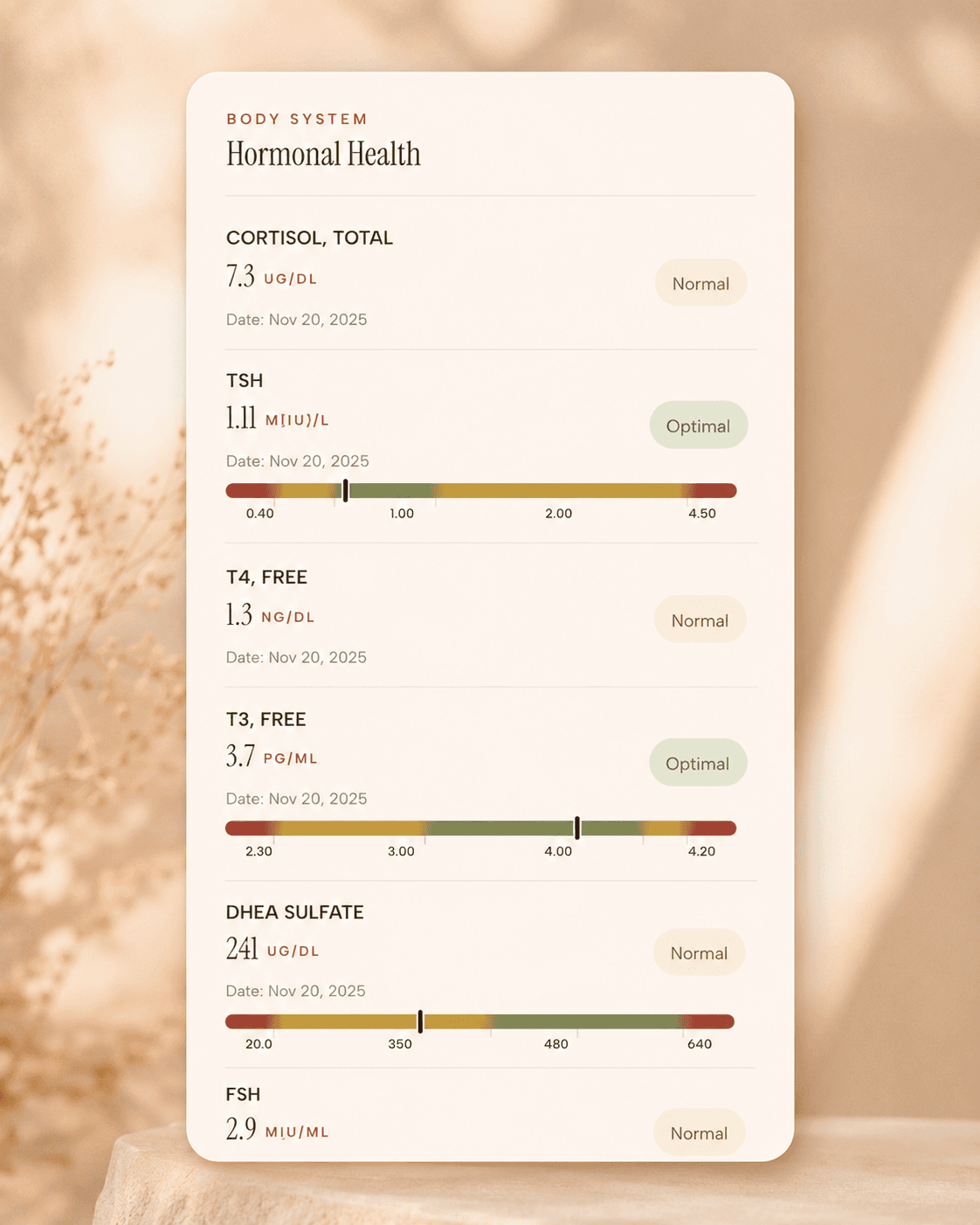
Your creatinine, BUN, eGFR, and albumin levels tell a real story about how your kidneys and muscles are doing. The Vitals Vault starting-from-$99 panel covers 100+ tests in one visit
no referral needed
About 1 week
Schedule online — results typically within a week
Clear next steps
Guidance included, with follow-up care available
HSA / FSA
Eligible for pre-tax health spending accounts
Why Protein Confusion Is Peaking Right Now
Food marketing turned protein into a buzzword
When protein appears on the label of a cookie or a flavored water, it stops meaning anything specific — and that ambiguity makes it easy for fear-based messaging to fill the gap. People are simultaneously being told protein is a superfood and that too much of it will send them into kidney failure, and both messages are being amplified by social media without much context.
Muscle loss is finally being taken seriously
Dr. Gabrielle Lyon's framing — that the real epidemic is not excess fat but insufficient muscle — has resonated because it matches what a growing body of research on longevity and metabolic health actually shows. Muscle tissue is not just for lifting things; it acts as a metabolic buffer, a glucose sink, and even an endocrine organ that signals other tissues. That reframe has pushed protein back into the conversation in a serious way.
GLP-1 medications are raising the stakes
The widespread use of GLP-1 receptor agonists for weight loss has added urgency to the protein question because these medications suppress appetite so effectively that many people are not eating enough protein to protect their muscle mass while losing weight. Clinicians and researchers are paying more attention to protein adequacy now precisely because the consequences of getting it wrong are more visible.
What the Evidence Actually Shows
Healthy kidneys handle high protein just fine
Multiple systematic reviews and meta-analyses in people with normal kidney function have found no evidence that protein intakes well above the RDA cause any measurable decline in kidney function over time. The kidneys do increase their filtration rate slightly when protein intake goes up — a process called hyperfiltration — but in healthy tissue this is a normal adaptive response, not a sign of damage.
Older adults need significantly more, not less
Research consistently shows that older adults experience something called anabolic resistance, which means their muscles respond less efficiently to the signal that protein sends to trigger repair and growth. To get the same muscle-building stimulus that a younger person gets from 20 grams of protein, an older adult may need 35 to 40 grams in a single sitting — which is one reason why spreading protein across meals matters more as you age.
The current evidence points to 1.6 grams per kilogram as a reasonable target for active adults
A 2017 meta-analysis published in the British Journal of Sports Medicine, covering 49 studies and nearly 1,900 participants, found that protein intakes above 1.62 grams per kilogram of body weight per day produced no additional gains in muscle mass in people doing resistance training. That is roughly double the official RDA, and it is the figure most sports nutrition researchers now use as a practical upper threshold for muscle-building purposes.
Protein quality and distribution matter as much as total amount
Not all protein sources trigger muscle protein synthesis equally — animal proteins and certain plant proteins like soy tend to have higher levels of leucine, which is the amino acid that most directly activates the muscle-building pathway known as mTOR. Spreading your intake across three or four meals rather than concentrating it in one sitting also appears to produce better muscle outcomes, particularly in older adults.
How to Apply This to Your Own Plate
Start with your body weight, not a generic number
A practical starting point for most healthy adults who are moderately active is somewhere between 1.2 and 1.6 grams of protein per kilogram of body weight per day — so for a 150-pound person, that is roughly 82 to 109 grams. If you are over 60, actively trying to build muscle, or recovering from illness or surgery, erring toward the higher end of that range is well-supported by the evidence.
Build each meal around a protein anchor
Rather than tracking grams obsessively, a simpler approach is to make sure each of your main meals contains a meaningful protein source — roughly the size of your palm for animal proteins, or a generous cup of legumes or tofu for plant-based options. This naturally distributes your intake across the day and takes advantage of the leucine-triggered muscle repair window that opens after each meal.
Know the difference between protein sources that count and ones that don't
A protein cookie with 8 grams per serving is not the same as 8 grams from eggs, Greek yogurt, or chicken — not because the grams are different, but because the amino acid profile and digestibility often are. Whole food protein sources tend to come with leucine, other essential amino acids, and co-nutrients that processed protein-fortified foods frequently lack, so they do more work per gram when it comes to muscle signaling.
Risks, Caveats, and Who Should Be Careful
If you already have kidney disease, the rules change
Everything said above about protein safety applies to people with healthy, normally functioning kidneys. If you have been diagnosed with chronic kidney disease — even in an early stage — your nephrologist's guidance on protein restriction takes priority, because your kidneys genuinely do have a reduced capacity to handle the filtration load that higher protein intake creates. This is not a myth; it is a real and important distinction.
Very high intakes without resistance training don't build muscle
Eating 200 grams of protein a day while sitting at a desk will not turn into muscle — protein is the building material, but resistance exercise is the signal that tells your body to use it for construction rather than just burning it for energy. If you significantly increase your protein intake, pairing it with some form of strength training is what makes the difference between an expensive habit and an effective one.
Protein shakes and supplements are tools, not replacements
Protein supplements are convenient and can genuinely help people hit their targets, but they are not regulated the same way food is, and some products have tested positive for heavy metals or undisclosed ingredients in independent analyses. If you rely on supplements, choosing brands that publish third-party testing results is a reasonable precaution — and getting most of your protein from whole foods remains the better default.
Frequently Asked Questions
Can eating too much protein really damage your kidneys?
In people with healthy kidneys, the current evidence does not support this fear — multiple large reviews have found no link between higher protein intakes and kidney function decline in people without pre-existing kidney disease. The concern originated from research in people who already had chronic kidney disease, where the kidneys genuinely struggle with the filtration demands of a high-protein diet. If you are unsure about your kidney health, a basic panel measuring creatinine and eGFR can give you a clear baseline.
How much protein do I actually need per day?
The official recommendation of 0.8 grams per kilogram of body weight was set to prevent deficiency, not to support muscle health or active aging. Most researchers studying muscle and longevity now suggest 1.2 to 1.6 grams per kilogram as a more appropriate target for healthy, moderately active adults — and older adults or those doing regular strength training may benefit from the higher end of that range. A clinician can help you personalize this based on your weight, activity level, and health history.
Is it true your body can only absorb 30 grams of protein at a time?
No — this is a persistent gym myth that misreads the science. Your body does not discard protein above 30 grams; it simply digests a larger protein load more slowly, spreading the amino acid absorption over a longer period. What the research does suggest is that spreading protein across multiple meals produces better muscle-building results than eating the same total amount in one sitting, particularly for older adults.
Does plant protein work as well as animal protein for building muscle?
Plant proteins can absolutely support muscle health, but most have a lower leucine content and lower digestibility than animal proteins, which means you may need to eat somewhat more of them to get the same muscle-building signal. Combining different plant sources — like rice and pea protein, or beans and whole grains — helps fill in the amino acid gaps, and soy protein in particular has a profile that compares favorably to many animal sources.
What lab tests can tell me about my protein status and muscle health?
Serum albumin gives a rough picture of overall protein adequacy, while creatinine and eGFR reflect how well your kidneys are handling your current intake. Blood urea nitrogen (BUN) rises when protein intake is high or kidney clearance is reduced, so it adds useful context. Vitals Vault's starting-from-$99 panel covers all of these markers and more than 100 others in a single visit, so you get a real picture rather than guessing.