Your Brain on Music: Sleep, Mood & Cognition
Yes, music really does change your brain — and not just in the feel-good, metaphorical sense.



Yes, music really does change your brain — and not just in the feel-good, metaphorical sense. Decades of neuroscience research show that listening to music activates more regions of your brain simultaneously than almost any other activity, influencing everything from how deeply you sleep to how well your memory holds up as you age. The effect is real, measurable, and surprisingly accessible. What makes this moment interesting is that sleep scientists and cognitive researchers are now connecting dots that used to sit in separate silos. If you have ever wondered whether your bedtime playlist is actually helping you or whether music could do something meaningful for your focus and long-term brain health, the answer is more nuanced — and more hopeful — than most headlines let on. If you want to dig into your own biology alongside this, Vitals Vault's lab panels and PocketMD advisors can help you see what is happening under the hood.
Why this is trending
Sleep researcher Matt Walker recently dedicated a full podcast episode to what he calls 'the brain on music,' bringing rigorous sleep-science framing to a topic that had mostly lived in wellness influencer territory. Around the same time, cognitive health voices like Max Lugavere have been pointing to musical engagement as one of the underrated levers for a sharper brain — not as a cure, but as a genuine lifestyle input worth taking seriously. What is actually new is not the idea that music feels good. It is the growing body of imaging and longitudinal studies showing that music engages the brain's reward, memory, and motor systems in ways that may have lasting structural effects. Researchers are now asking whether intentional listening — and especially active musical engagement — could be a meaningful tool for slowing cognitive aging. That is a different and more interesting question than 'does music make you happy?'
What 'your brain on music' actually means
Music lights up your whole brain at once
When you listen to music you love, your brain's auditory cortex, memory centers, emotional processing areas, and motor regions all activate together — which is unusual, because most activities only engage one or two of these at a time. This whole-brain engagement is part of why music feels so powerful and why researchers think it may have outsized effects on brain health compared to more passive forms of rest.
Your brain releases real chemicals when you listen
Music triggers the release of dopamine — the same reward chemical involved in motivation and pleasure — particularly at moments of musical anticipation or resolution, like a chorus dropping or a chord resolving. This is not a metaphor; brain imaging studies have captured dopamine release in the brain's reward pathway (nucleus accumbens) during peak emotional responses to music, which researchers call 'chills' or 'frisson.'
Rhythm and tempo directly influence your nervous system
Your body physically synchronizes to musical rhythm in a process called entrainment, where your heart rate, breathing, and even brainwave patterns begin to mirror the tempo of what you are hearing. Slow, steady music around 60 beats per minute tends to shift your nervous system toward a calmer, more parasympathetic state — which is exactly the direction you want to move before sleep or during stress recovery.
Lab testing
Cognitive health has biological underpinnings
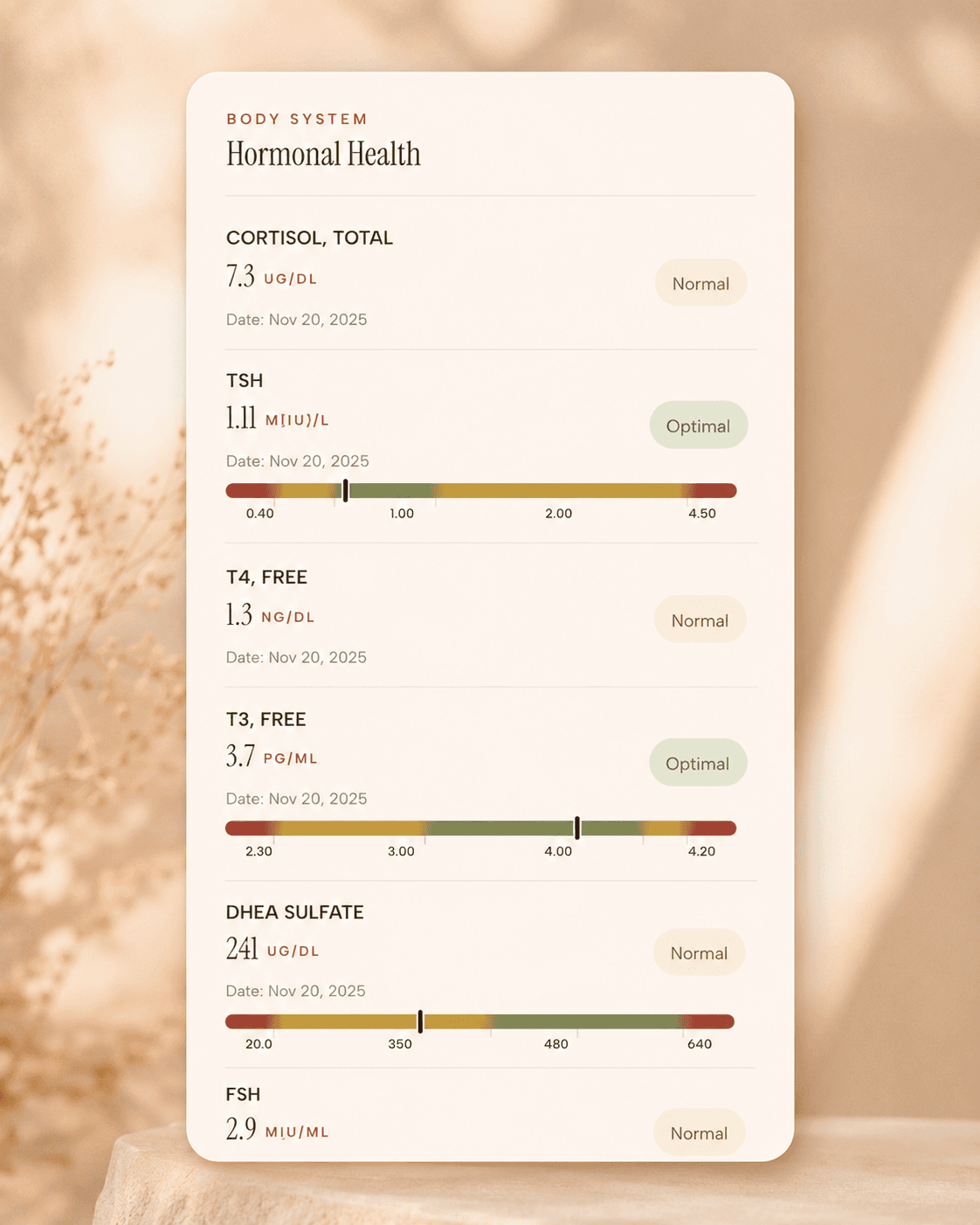
thyroid function, inflammation, and cortisol all affect how your brain performs
The Vitals Vault starting-from-$99 panel covers 100+ tests in one visit, so you can see your baseline before assuming lifestyle changes alone are enough
About 1 week
Schedule online — results typically within a week
Clear next steps
Guidance included, with follow-up care available
HSA / FSA
Eligible for pre-tax health spending accounts
Why this is getting serious attention right now
Sleep scientists are now studying music directly
Matt Walker's recent deep dive into music and sleep brought credibility that wellness influencers alone could not provide, because he framed the question around sleep architecture — the actual stages of deep and REM sleep — rather than just relaxation. His point is that if music can reliably help people fall asleep faster and spend more time in restorative sleep stages, that is a clinically meaningful outcome, not just a nice bedtime ritual.
Cognitive aging research is expanding fast
Longitudinal studies are now following people over decades to see whether musical engagement — listening, playing, or even just paying close attention to music — correlates with slower cognitive decline. Early results are promising enough that researchers are designing intervention trials, which is a meaningful step beyond observational data. The question has shifted from 'is music good for the brain?' to 'how much, what kind, and for whom?'
People are looking for low-cost brain health tools
After years of expensive supplement stacks and complicated biohacking protocols, there is genuine appetite for interventions that are free, enjoyable, and backed by actual science. Music fits that description better than almost anything else, which is why it keeps surfacing across communities ranging from neuroscience podcasts to dementia-prevention forums.
What the research actually shows
Music before bed measurably improves sleep quality
Multiple randomized controlled trials — the gold standard of evidence — have found that listening to slow, calming music for 30 to 45 minutes before sleep reduces the time it takes to fall asleep and increases self-reported sleep quality, particularly in adults over 60. The effect size is modest but consistent, and it works through the nervous system calming mechanism described above rather than through any sedative effect.
Music activates memory in ways that may protect against decline
One of the most striking findings in music neuroscience is that musical memories are stored differently from other memories — they appear to be encoded across multiple brain regions simultaneously, which makes them more resilient to the kind of damage seen in early Alzheimer's disease. This is why people with significant memory loss can often still recognize and respond emotionally to songs from their past, and it is the basis for music therapy programs in dementia care.
Active listening strengthens the brain's auditory processing network
Research on trained musicians shows structural differences in the brain's auditory cortex and corpus callosum (the bridge connecting the two brain hemispheres) compared to non-musicians — but even non-musicians who engage attentively with music show some of these benefits over time. The key word is 'attentively': background music while multitasking does not appear to produce the same neurological engagement as focused listening.
Mood regulation through music is real but context-dependent
Studies consistently show that people use music intentionally to regulate their emotional states — to energize, calm, process grief, or boost motivation — and that this works at a neurochemical level. However, research also shows that using sad music to ruminate rather than to process emotions can backfire, deepening low mood rather than relieving it. The intention behind how you use music matters as much as the music itself.
How to use music intentionally for your brain
Build a wind-down playlist with tempo in mind
Start your pre-sleep playlist at whatever tempo feels natural and gradually move toward songs around 60 beats per minute — roughly the pace of a resting heartbeat — over 20 to 30 minutes. This gradual deceleration mirrors what your nervous system is trying to do naturally as you approach sleep, and it works better than jumping straight to the slowest music because the transition feels less jarring.
Try focused listening as a daily cognitive practice
Once a day, put on a piece of music you find genuinely interesting — something with enough complexity to hold your attention — and listen without doing anything else for 10 to 15 minutes. This is different from background music; you are actively tracking the melody, noticing the instruments, anticipating what comes next. That kind of engaged listening is what appears to produce the stronger neurological benefits in the research.
Match music to your goal, not just your mood
If you want to boost focus, instrumental music without lyrics tends to work better because your brain's language centers do not compete with the words you are trying to read or write. If you want to process a difficult emotion, music that matches how you feel first — rather than music that contradicts it — tends to be more effective at moving you through the feeling rather than suppressing it.
What to watch out for
Volume is a real and underappreciated risk
Listening through earbuds at high volume — above about 85 decibels, which is roughly the level of a busy restaurant — for extended periods causes cumulative hearing damage that is permanent. This matters for brain health directly, because hearing loss in midlife is one of the strongest modifiable risk factors for cognitive decline identified in recent dementia research. Keep your volume at 60 percent of maximum or lower, and take listening breaks.
Music is not a substitute for treating sleep disorders
If you have symptoms of sleep apnea — waking unrefreshed, loud snoring, gasping at night, or excessive daytime sleepiness — a calming playlist will not fix the underlying problem, and delaying evaluation could have serious cardiovascular and cognitive consequences. Music can complement good sleep hygiene, but it cannot compensate for a structural breathing problem that needs medical attention.
Emotional amplification cuts both ways
Because music is genuinely powerful at shifting your emotional state, it can deepen negative moods just as effectively as it can lift them — particularly if you are already in a low or anxious state and you reach for music that reinforces those feelings rather than helps you process them. If you notice that your listening habits tend to leave you feeling worse rather than better, that is worth paying attention to and potentially worth discussing with a mental health professional.
Frequently Asked Questions
Does listening to music while sleeping actually help or hurt sleep quality?
It depends on how you do it. Listening to slow, calming music before sleep — and then letting it stop before or shortly after you fall asleep — is associated with better sleep quality in research. Leaving music playing all night, especially with variable volume or tempo, can fragment your sleep by keeping your brain's auditory system partially active, which is the opposite of what you want.
Is classical music actually better for your brain, or is that a myth?
The 'Mozart effect' — the idea that listening to classical music makes you smarter — is largely a myth that grew out of a single, narrow study from the 1990s that was widely overstated. What the research actually supports is that music you find engaging and emotionally meaningful produces the strongest brain responses, regardless of genre. Your personal connection to the music matters more than the genre itself.
Can music really help prevent dementia or cognitive decline?
The honest answer is that the evidence is promising but not yet definitive. Observational studies suggest that people who engage regularly with music — especially those who play an instrument — show slower cognitive decline on average, but we cannot yet say with certainty that music caused the difference. What is clear is that musical engagement exercises multiple brain systems simultaneously, and keeping those systems active is generally associated with better cognitive aging.
Why does music give me chills or make me cry even when I'm not sad?
Those chills — sometimes called frisson — are a genuine neurological event involving dopamine release in your brain's reward system, triggered by moments of musical surprise, resolution, or emotional intensity. The fact that music can produce this response even when the emotion does not match your current mood is part of what makes it such a powerful tool for emotional regulation. Not everyone experiences frisson; research suggests it may be more common in people who score high on openness to experience.
What kind of music is best for focus and concentration?
For most people, instrumental music without lyrics works best for tasks that require reading, writing, or detailed thinking, because your brain's language processing areas are not competing with the words in the song. The tempo and complexity matter too — music that is too simple becomes boring and loses its focus-sustaining effect, while music that is too complex or emotionally charged pulls your attention toward the music itself. Many people find that familiar music at a moderate tempo hits the sweet spot.