Meal Habits That Cut Blood Sugar Spikes & Inflammation
What you eat matters — but how, when, and in what mental state you eat it can shift your blood sugar response and inflammation markers just as dramatically, even when the food on your plate is identical.


What you eat matters — but how, when, and in what mental state you eat it can shift your blood sugar response and inflammation markers just as dramatically, even when the food on your plate is identical. Taking a few slow breaths before a meal, eating vegetables before starches, or walking for ten minutes afterward are not wellness rituals. They are behaviors with measurable effects on your glucose curve and, over time, on the chronic low-grade inflammation that drives so many modern diseases. This idea has been gaining serious traction in nutrition research, and it recently got a detailed treatment from functional medicine physician Mark Hyman, who laid out a before-during-after framework for eating that goes well beyond food composition. If you want to understand what the evidence actually supports — and what is still preliminary — you are in the right place. Vitals Vault labs can also help you track the markers that tell you whether these habits are working in your body specifically.
Why this is trending
The conversation around food has spent decades focused almost entirely on macros, calories, and ingredient quality. What is newer — and what is now showing up in continuous glucose monitor data, clinical trials, and mainstream functional medicine — is the idea that the context surrounding a meal shapes your metabolic response as much as the meal itself. Mark Hyman published a detailed breakdown this week on the before-during-after eating framework for lowering inflammation, and his short-form content connecting eating habits to five distinct inflammatory disease pathways has amplified the conversation further. This is not a fringe idea anymore. Researchers studying postprandial (after-meal) glucose spikes have found that behaviors like eating order and post-meal movement produce effects comparable to some dietary swaps. That does not mean food quality is irrelevant — it means there is a layer of leverage most people are not using yet.
What the before-during-after framework actually means
It is about food context, not just food content
The framework recognizes that your nervous system state, eating pace, and movement after a meal all influence how your body processes the exact same food. Two people eating identical plates can produce meaningfully different blood sugar curves based entirely on what they did before and after sitting down.
Blood sugar spikes are the central mechanism
When glucose rises sharply after a meal — a postprandial spike — your body releases a surge of insulin to bring it back down, and that process generates oxidative stress and inflammatory signaling. Repeated spikes over years are linked to insulin resistance, weight gain, and chronic inflammation that quietly damages blood vessels, joints, and brain tissue.
The behaviors involved are surprisingly simple
We are talking about things like taking a few slow breaths before eating, starting your meal with fiber or protein before hitting the starchy or sugary parts, chewing thoroughly, and moving your body gently for ten to fifteen minutes after you finish. None of these require special equipment or a perfect diet — which is exactly why researchers find them so interesting.
Lab testing
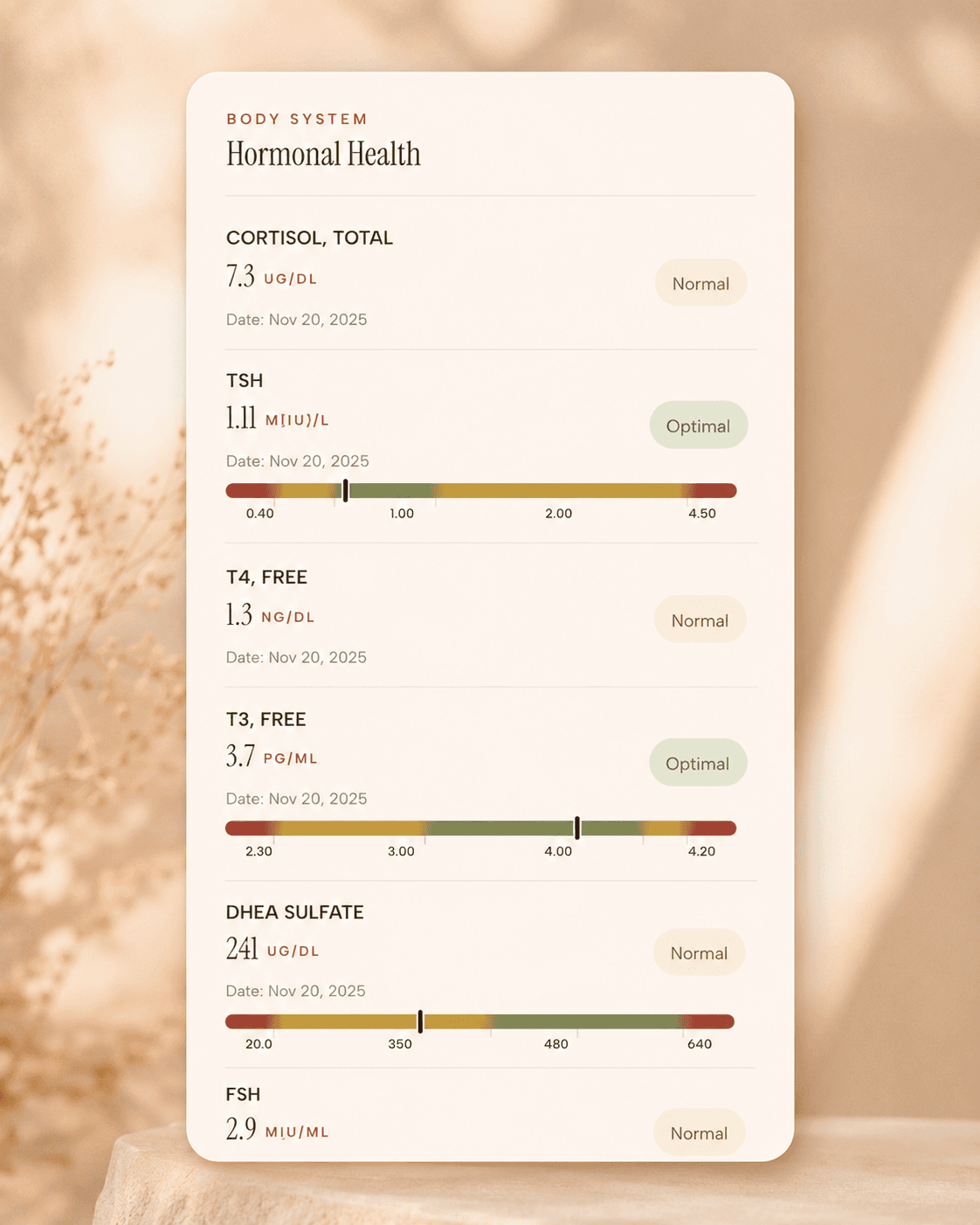
See what your habits are doing to your body. A Vitals Vault starting-from-$99 panel with 100+ tests covers fasting glucose, insulin, HbA1c, hsCRP, and other inflammation markers
one visit, no referral needed
About 1 week
Schedule online — results typically within a week
Clear next steps
Guidance included, with follow-up care available
HSA / FSA
Eligible for pre-tax health spending accounts
Why this idea is getting so much attention right now
Continuous glucose monitors made the spikes visible
When wearable glucose monitors became available to people without diabetes, millions of people saw for the first time how dramatically a walk after dinner flattened their blood sugar curve compared to sitting on the couch. That real-time feedback loop turned abstract nutrition advice into something you could watch happen in your own body.
Functional medicine is connecting spikes to inflammation
Physicians like Mark Hyman have been vocal about the chain from repeated glucose spikes to chronic low-grade inflammation to conditions like heart disease, cognitive decline, and autoimmune flares. That framing — that inflammation is not one disease but a shared root of many — has resonated with people who feel unwell but have been told their standard labs look fine.
Research on eating order and meal pacing has matured
Studies from groups in Japan, the US, and Europe have now replicated the finding that eating vegetables and protein before carbohydrates reduces the post-meal glucose peak by a meaningful amount — sometimes 30 to 40 percent compared to eating carbohydrates first. That is no longer a single small study; it is a consistent pattern across different populations and meal types.
The biology behind each phase of the meal
Before you eat: your nervous system sets the stage
When you sit down stressed, rushed, or distracted, your body is in a sympathetic state — the same fight-or-flight mode that evolved for emergencies. Digestion is not a priority in that state, which means your gut moves food through less efficiently and your insulin response can be blunted or dysregulated. Even two or three slow, deliberate breaths before your first bite activates the parasympathetic system (the part of your nervous system that governs rest and digestion), which primes your stomach acid, digestive enzymes, and insulin release to work in the coordinated way they are supposed to.
During the meal: order and pace change the glucose curve
Fiber from vegetables forms a kind of physical barrier in your gut that slows how quickly carbohydrates are absorbed into your bloodstream, which smooths the glucose rise rather than spiking it. Eating slowly and chewing thoroughly extends the time your gut has to signal fullness to your brain, which means you are less likely to overshoot your actual caloric need — and the slower absorption itself reduces the insulin demand your pancreas has to meet.
After the meal: muscle contraction clears glucose directly
When your muscles contract during a walk, they pull glucose out of your bloodstream through a pathway that does not require insulin — essentially bypassing the spike-and-crash cycle entirely. A ten-to-fifteen-minute walk within about thirty minutes of finishing a meal has been shown in multiple trials to reduce the postprandial glucose peak by a clinically meaningful amount, and over time that adds up to less cumulative inflammatory signaling.
What you can actually start doing at your next meal
Build a two-minute pre-meal pause into your routine
Before you pick up your fork, put your phone down and take three to five slow breaths — inhale for four counts, exhale for six. This is not meditation theater; it is a physiological shift that takes your nervous system out of stress mode and into digestion mode, and it costs you almost nothing.
Eat your vegetables and protein before your starches
You do not have to change what you eat — just the order in which you eat it. Start with the salad, the broccoli, or the chicken before you reach for the rice, bread, or pasta. The fiber and protein you eat first slow the absorption of the carbohydrates that follow, and the research on this is consistent enough that it is worth making a habit even if you are not tracking your glucose.
Take a short walk after dinner instead of sitting down immediately
You do not need to go to the gym — a ten-minute walk around the block is enough to engage the muscle-glucose uptake pathway that flattens your post-meal spike. Keeping a simple log of how you feel an hour after meals on days you walk versus days you do not can make the benefit feel concrete and personal rather than abstract.
What to keep in mind before you overhaul your routine
These habits support metabolic health — they do not replace medical treatment
If you have type 2 diabetes, prediabetes, or are on medications that affect blood sugar, changes to your eating behavior can affect how your medications work, and you should talk with your doctor before making significant shifts. These strategies are powerful additions to a treatment plan, not substitutes for one.
The evidence is stronger for some behaviors than others
Eating order and post-meal walking have solid, replicated trial data behind them. Pre-meal breathing and mindful eating have promising but smaller bodies of research — the effects are real but the optimal dose is less clear. Be skeptical of anyone who presents the entire framework as equally proven, because it is not.
Individual responses vary more than averages suggest
Continuous glucose monitor studies have shown that two people eating the same meal can have dramatically different glucose responses based on their gut microbiome, sleep the night before, stress levels, and baseline metabolic health. Tracking your own markers — fasting glucose, insulin, and an inflammation marker like high-sensitivity C-reactive protein — gives you far more useful information than any population average.
Frequently Asked Questions
Does eating order really make a difference if I eat the same foods?
Yes, and the effect is larger than most people expect. Studies have consistently found that eating vegetables and protein before carbohydrates reduces the post-meal glucose peak by roughly 30 to 40 percent compared to eating carbohydrates first, even when the total meal is identical. The fiber you eat early physically slows carbohydrate absorption in your gut, smoothing the glucose curve rather than spiking it.
How long do I need to walk after a meal to see a benefit?
Ten to fifteen minutes appears to be enough to meaningfully blunt the post-meal glucose rise, based on the available trial data. The key is timing — walking within about 30 minutes of finishing your meal catches the window when glucose is still rising, so your muscles can pull it out of your bloodstream before the peak gets too high.
What lab tests show whether my eating habits are affecting inflammation?
The most useful starting markers are fasting glucose, fasting insulin, HbA1c (which reflects your average blood sugar over the past three months), and high-sensitivity C-reactive protein, which is a direct measure of systemic inflammation. Tracking these over time — rather than looking at a single snapshot — is the best way to see whether behavioral changes are actually moving the needle in your body.
Can stress really change how my body handles a meal?
It can, and the mechanism is well understood. When you are in a stressed or rushed state, your sympathetic nervous system suppresses digestive function and can dysregulate the insulin response that normally manages your post-meal glucose. Taking a few slow breaths before eating shifts your body toward the parasympathetic state where digestion and metabolic regulation work as intended.
Is this approach safe for people with diabetes or prediabetes?
The individual behaviors — eating order, post-meal walking, slower eating — are generally safe and often recommended as part of diabetes management. However, if you are on insulin or medications that lower blood sugar, changes in your post-meal glucose patterns can affect how those medications behave, so it is important to work with your doctor rather than adjusting on your own.