Why Aging Research Is Chronically Underfunded
Aging is the single largest driver of death and disability on Earth, responsible for roughly 100,000 deaths every day — and yet the research budget dedicated to understanding and slowing it is a rounding error compared to what wealthy governments spend on threats that kill far fewer people.


Aging is the single largest driver of death and disability on Earth, responsible for roughly 100,000 deaths every day — and yet the research budget dedicated to understanding and slowing it is a rounding error compared to what wealthy governments spend on threats that kill far fewer people. That mismatch is not a conspiracy; it is a policy blind spot with measurable consequences for your health and your healthspan. The conversation is finally getting louder. Longevity researchers, physicians like Peter Attia, and engaged online communities are pushing the question into mainstream view: what if we funded aging biology the way we fund cancer or defense? If you want to track the biological markers that aging research says matter most, Vitals Vault's lab panels and PocketMD advisors can help you act on the science that already exists — but understanding why more science is not being funded is worth your time too.
Why this is trending
Two threads on the longevity subreddit lit up in the same week this September. One, posted by /u/kpfleger, laid out a striking comparison: the United States has spent roughly $8 trillion on post-9/11 military operations over 25 years, while total global investment in aging biology research sits somewhere around $5 to $6 billion annually — a ratio that is hard to look at without feeling something. The second thread, from /u/towngrizzlytown, proposed an 'Aging Essential 8' framework modeled on the American Heart Association's cardiovascular checklist, arguing that geroscience needs a simple public-facing scorecard to close the gap between what researchers know and what ordinary people actually do. Neither thread is making things up. The National Institute on Aging budget for fiscal year 2025 was approximately $4.4 billion, which sounds large until you realize the NIH spends more than twice that on cancer alone — a disease that aging itself is the primary risk factor for. Peter Attia has made a similar argument in his work on healthspan: treating the diseases of aging one at a time is like mopping the floor while the tap is still running.
What the Funding Gap Actually Is
Aging research gets a fraction of what it deserves
The National Institute on Aging receives roughly $4.4 billion per year, which sounds significant until you compare it to the $47 billion the NIH spends annually across all institutes — or the $8 trillion the U.S. alone has directed toward post-9/11 military operations over 25 years. Aging biology, which underlies heart disease, cancer, dementia, and diabetes simultaneously, is funded as though it were a niche specialty rather than the root cause of most human suffering.
Geroscience targets the process, not the symptoms
Geroscience is the field that studies aging itself as a biological process — things like cellular senescence, where old damaged cells refuse to die and instead inflame surrounding tissue, or the shortening of telomeres, the protective caps on your DNA. The bet geroscientists are making is that slowing or partially reversing these upstream processes would reduce your risk of every major age-related disease at once, rather than fighting each one separately after it appears.
The 'Aging Essential 8' idea tries to bridge the gap
Modeled on the American Heart Association's cardiovascular health checklist, the proposed Aging Essential 8 framework would give the public a concrete set of behaviors and biomarkers — things like sleep quality, muscle mass, blood glucose stability, and inflammatory load — that geroscience has identified as the levers most worth pulling. The goal is not to replace research funding but to make the science that already exists actionable for people who are not reading journals.
Lab testing
The biomarkers aging researchers study most
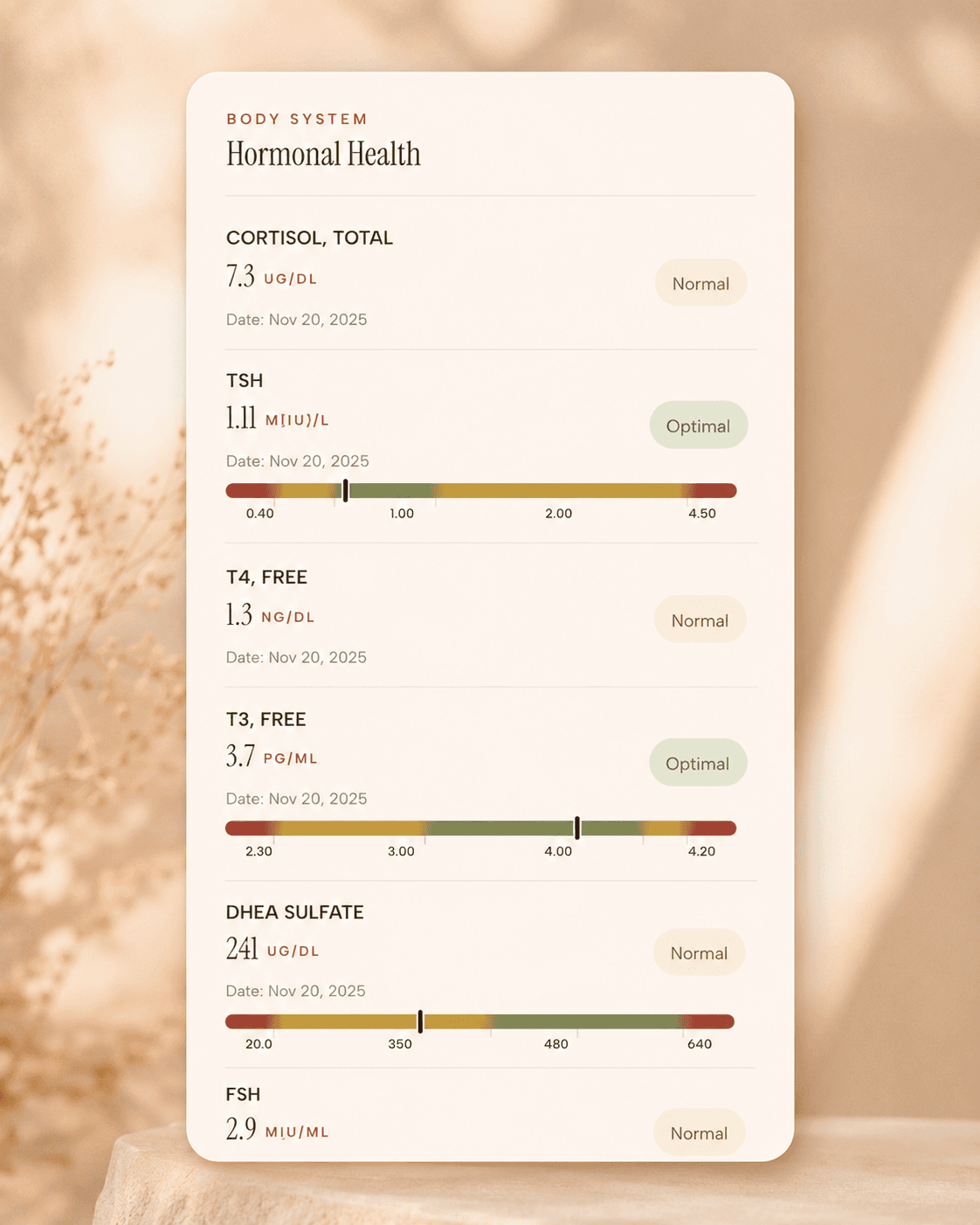
insulin sensitivity, inflammatory markers, lipid particle size, and more
are all included in Vitals Vault's starting-from-$99 panel with 100+ tests, one visit
About 1 week
Schedule online — results typically within a week
Clear next steps
Guidance included, with follow-up care available
HSA / FSA
Eligible for pre-tax health spending accounts
Why This Is Trending Now
A striking spending comparison went viral in longevity circles
The Reddit post comparing $8 trillion in war spending to roughly $5 to $6 billion in annual aging research investment resonated because the numbers are real and the contrast is visceral. Terrorism, which receives enormous public and political attention, kills far fewer people per year than aging-related disease kills in a single afternoon — and that asymmetry is increasingly hard to ignore as the longevity community grows.
Mainstream physicians are amplifying the argument
Peter Attia's work on healthspan — the years of life you spend healthy and functional, not just alive — has brought the funding-gap argument to a much wider audience than academic papers ever could. His framing, that medicine is playing defense against diseases that aging itself is causing, gives people a way to understand why the current research allocation feels backwards.
The political moment may be unusually open
With the DOGE-era conversation about government spending priorities still active in 2026, advocates for longevity research are making the case that redirecting even a small fraction of defense or disease-specific budgets toward geroscience would be among the highest-return investments a government could make. Whether that argument gains legislative traction is genuinely uncertain, but the window for making it publicly feels wider than it has in years.
What the Evidence Says
Aging biology research has already produced real results
Rapamycin, a drug originally developed to prevent organ rejection, extends lifespan in mice by 10 to 25 percent even when started late in life — a finding that has held up across multiple independent labs. Senolytics, drugs that selectively clear out those old non-dying cells mentioned earlier, have shown promising results in early human trials for conditions like pulmonary fibrosis and osteoarthritis, though large-scale human longevity data does not yet exist.
The ROI case for geroscience is mathematically compelling
A 2021 analysis published in Nature Aging estimated that compressing the period of age-related disease by just two years — not extending total lifespan, just shrinking the sick years at the end — would be worth approximately $83 trillion to the global economy over 50 years. That figure dwarfs the entire current annual research investment many times over, which is why economists who study this call it one of the most underfunded opportunities in public health.
Epigenetic clocks are giving researchers a way to measure progress
Biological age tests based on DNA methylation patterns, often called epigenetic clocks, now allow researchers to measure how fast someone's cells are aging relative to their chronological age — and to test whether interventions actually move that number. This is a genuine methodological breakthrough because it means aging research no longer has to wait decades to see if a drug works; it can look for changes in biological age markers within months.
Private funding is stepping in, but it cannot replace public investment
Companies like Altos Labs, Calico, and a growing number of biotech startups have attracted billions in private capital for longevity research, which is genuinely exciting. But private investment chases commercial returns, which means it tends to focus on interventions that can be patented and sold rather than on the basic biology questions that would benefit everyone — and that gap in basic science funding is exactly where public money matters most.
Who Should Care About This
Anyone currently in their 30s, 40s, or 50s
If you are between 30 and 55 right now, the interventions that geroscience is developing — senolytics, mTOR pathway modulators, metabolic optimization protocols — could plausibly be available and validated within your lifetime, but only if the research gets funded at a meaningful scale. The decisions being made about research budgets in the next five to ten years will directly shape what medicine can offer you in your 70s and 80s.
People with strong family histories of age-related disease
If your parents or grandparents experienced early dementia, cardiovascular disease, or cancer, you have a personal stake in whether geroscience finds upstream interventions before those diseases find you. The current model — waiting for symptoms and then treating each disease separately — is exactly what the funding-gap argument says is the wrong approach, and your family history makes that argument feel less abstract.
Citizens who vote on health and science policy
Research funding is ultimately a political decision, which means it responds to public pressure in ways that most health decisions do not. Understanding the scale of the mismatch between aging's burden and aging's research budget is the first step toward being the kind of informed voter or advocate who can push that needle — even if your influence is just one conversation at a time.
Risks and Caveats
The funding gap argument can slide into hype
The case for investing more in aging research is genuinely strong, but some voices in the longevity space use it to oversell specific interventions — supplements, peptides, or off-label drugs — as though the research is more settled than it is. More funding is needed precisely because we do not yet have proven human longevity therapies; conflating the promise of the field with the readiness of specific products is a mistake worth watching for.
Redirecting health budgets involves real trade-offs
Arguing that aging research deserves more funding is not the same as arguing that infectious disease, pediatric health, or mental health research deserves less — and the longevity community sometimes glosses over that tension. The strongest version of the argument is that aging research is so underfunded relative to its potential impact that it deserves new money, not reallocated money from other worthy priorities.
Individual action matters now, even before the science matures
Waiting for geroscience to deliver a pill is not a strategy, because the lifestyle factors that aging research consistently identifies as protective — sleep, resistance exercise, blood glucose control, and managing chronic inflammation — are available to you right now. The funding gap is a policy problem worth caring about, but it should not become a reason to defer the health decisions you can already make.
Frequently Asked Questions
How much does the US actually spend on aging research each year?
The National Institute on Aging budget for fiscal year 2025 was approximately $4.4 billion, which is the largest single public funder of aging research in the world. For context, the NIH spends roughly $7 billion annually on cancer research alone, and the U.S. Department of Defense budget exceeds $800 billion — so aging research, despite addressing the root cause of most chronic disease, receives a relatively small share of public health investment.
What is geroscience and why do researchers think it matters so much?
Geroscience is the study of aging as a biological process — specifically the cellular and molecular changes that make your body more vulnerable to disease over time, things like cellular senescence, mitochondrial decline, and chronic low-grade inflammation. The core idea is that if you can slow or partially reverse these upstream processes, you reduce risk across all the major age-related diseases simultaneously rather than fighting each one after it appears. That potential for broad impact is why many researchers consider it the highest-leverage area in all of medicine.
What is the Aging Essential 8 and is it official?
The Aging Essential 8 is a proposed public health framework, not an official guideline from any medical organization as of 2026. It was put forward by longevity advocates modeled on the American Heart Association's cardiovascular health checklist, with the goal of giving people a concrete set of behaviors and biomarkers — like sleep quality, muscle mass, and blood glucose stability — that aging research identifies as most important. Think of it as an advocacy concept that may eventually influence clinical guidelines, not a validated clinical tool yet.
Can I do anything now while waiting for geroscience to mature?
Yes, and the research is fairly consistent about what works: resistance training to preserve muscle mass, prioritizing sleep quality, keeping blood glucose stable through diet and activity, and managing chronic inflammation through lifestyle rather than medication where possible. These are not placeholders — they are the same levers that aging researchers are studying in clinical trials, and the evidence for their impact on biological aging is stronger than for most supplements or off-label drugs currently being marketed.
Are private longevity companies like Altos Labs filling the funding gap?
Private investment in longevity research has grown dramatically, with companies like Altos Labs raising billions to study cellular reprogramming and related approaches. But private capital tends to focus on interventions that can be commercialized, which means basic science questions — the kind that build the foundation everyone else's research depends on — tend to get underfunded unless public money fills that role. Private and public investment are complementary rather than interchangeable.