Inflammaging: How Chronic Inflammation Cuts Healthspan
Inflammaging is real, it is measurable, and it is quietly shortening the number of healthy years you live — not just your total lifespan.


Inflammaging is real, it is measurable, and it is quietly shortening the number of healthy years you live — not just your total lifespan. The short version: as you get older, your immune system gets stuck in a low-level alarm state, and that constant background fire slowly damages your heart, brain, joints, and metabolic health long before you feel obviously sick. This idea has been building in research circles for years, but it broke into mainstream longevity conversation this week after immunologist Miriam Merad's talk at the Aging Research and Drug Discovery (ARDD) 2025 conference went viral in the longevity community. Her work makes the cellular mechanics unusually clear — and the good news is that several of the most effective countermeasures are things you can start without a prescription. If you want to know where your own inflammatory markers stand, Vitals Vault's lab panels and PocketMD advisors can help you get a baseline and make sense of the numbers.
Why this is trending
Longevity researchers have used the word "inflammaging" since immunologist Claudio Franceschi coined it around 2000, but it stayed mostly inside academic circles until recently. What changed is that high-profile scientists like Miriam Merad are now presenting at conferences specifically designed to bridge research and public understanding, and clips from those talks are spreading fast on Reddit's longevity community and YouTube channels like FoundMyFitness. The framing has also sharpened: instead of talking about inflammation as something that causes disease, researchers are now talking about it as the central mechanism that compresses your healthspan — the years you live free of serious chronic illness — even when your lifespan looks fine on paper. That distinction matters because it changes what you are trying to prevent. You are not just trying to avoid dying early; you are trying to avoid a decade or more of managed decline. That reframe is landing with a wide audience, and it is driving real interest in both the science and the practical tools.
What Is Inflammaging?
A slow burn your body cannot turn off
Inflammaging is the gradual shift of your immune system into a permanently elevated, low-level alert state as you age — not the sharp, purposeful inflammation that heals a cut, but a smoldering background signal that never fully resolves. Think of it as your immune system leaving the stove on at a low setting for years, slowly scorching everything around it.
Senescent cells are a major fuel source
One of the biggest drivers is the accumulation of what researchers call zombie cells — old, damaged cells that stop dividing but refuse to die, and instead leak a cocktail of inflammatory signals called the senescence-associated secretory phenotype (SASP) into surrounding tissue. Every year you live, you accumulate more of these cells, and their chemical exhaust keeps the inflammatory fire stoked.
It is distinct from the inflammation you already know
Acute inflammation — the redness and swelling around a sprained ankle — is your immune system doing exactly what it should, and it resolves in days. Inflammaging operates at levels too low to cause obvious symptoms, which is why standard blood work often looks "normal" even when the process is well underway. The damage accumulates silently over years, which is what makes it so dangerous.
Lab testing
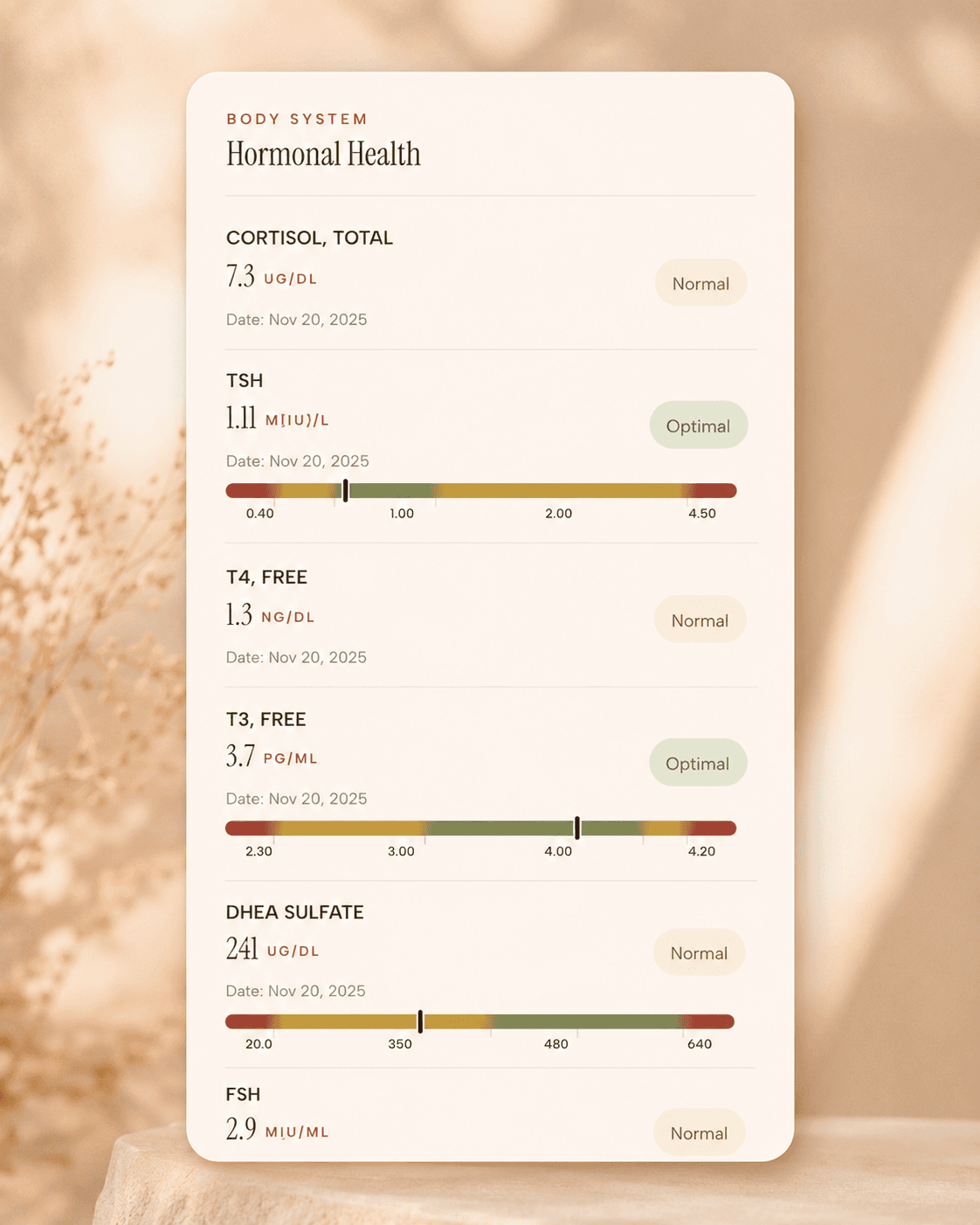
Check your CRP, IL-6, and metabolic markers with Vitals Vault's starting-from-$99 panel covering 100+ tests in one visit
no referral needed
About 1 week
Schedule online — results typically within a week
Clear next steps
Guidance included, with follow-up care available
HSA / FSA
Eligible for pre-tax health spending accounts
Why Everyone Is Talking About It Now
Miriam Merad's ARDD2025 talk crystallized the stakes
Immunologist Miriam Merad presented research at the 2025 Aging Research and Drug Discovery conference showing that targeting inflammaging is one of the most promising levers for extending healthspan — not just lifespan. Her work on how the immune system ages and how that aging drives systemic decline gave the longevity community a clear, mechanistic story to share, and it spread quickly.
The "sickspan" framing is hitting a nerve
Longevity communicators like Matt Kaeberlein have been pushing a related concept: the idea that most people spend the last decade or more of their lives managing chronic disease rather than living well. When you understand that inflammaging is a primary engine of that sickspan, the motivation to act shifts from abstract fear of death to a much more immediate concern about quality of life.
Measurable biomarkers make it feel actionable
Unlike some longevity concepts that remain theoretical, inflammaging has concrete blood markers — high-sensitivity C-reactive protein (hsCRP) and interleukin-6 (IL-6) are the most established — that you can actually test and track. That measurability turns it from a research abstraction into something you can monitor and respond to, which is why interest in inflammatory panels has grown alongside the public conversation.
How It Works Inside Your Body
Your immune cells lose their precision with age
Young immune cells respond to a threat, neutralize it, and stand down. As you age, certain immune cells — particularly a type called macrophages — become chronically activated and start firing inflammatory signals even when there is no real threat to fight. This is partly because they accumulate molecular damage over time and partly because the environment they live in, saturated with SASP signals from senescent cells, keeps them on edge.
Gut barrier breakdown adds more fuel
Your gut lining is supposed to be a tight barrier that keeps bacteria and their byproducts inside the digestive tract. When that barrier becomes leaky — something that happens more readily as you age, especially with a poor diet — bacterial fragments called lipopolysaccharides (LPS) slip into your bloodstream and trigger a low-grade immune response that never fully stops. This gut-to-systemic inflammation connection is one reason diet has such an outsized effect on inflammaging.
The damage compounds across every major organ system
Because the inflammatory signals circulate in your blood, no organ is insulated from the effects. In your arteries, chronic inflammation accelerates plaque buildup. In your brain, it contributes to the neuroinflammation associated with cognitive decline. In your muscles and joints, it drives the breakdown that makes physical function harder. The reason inflammaging is so central to healthspan is that it is not attacking one system — it is quietly degrading all of them at once.
Lifestyle Levers You Can Pull Today
Prioritize sleep quality above almost everything else
During deep sleep, your brain runs a waste-clearance system called the glymphatic system that flushes out inflammatory debris, and your body suppresses many of the inflammatory cytokines that accumulate during waking hours. Even one week of consistently poor sleep measurably raises hsCRP levels, so if you are looking for the single highest-leverage daily habit, protecting seven to nine hours of quality sleep is it.
Shift your diet toward foods that lower the inflammatory load
The Mediterranean-style eating pattern has the strongest evidence for reducing inflammatory markers — it emphasizes fatty fish, olive oil, vegetables, legumes, and whole grains while limiting ultra-processed foods and refined sugars that drive LPS-mediated gut inflammation. You do not need to overhaul everything at once; replacing one ultra-processed food per day with a whole-food alternative is a real and measurable start.
Resistance training is one of the most potent anti-inflammatory tools available
Muscle tissue is metabolically active in ways that directly counter inflammaging — it releases anti-inflammatory molecules called myokines during contraction, and maintaining muscle mass reduces the visceral fat that is itself a major source of inflammatory cytokines. Two to three sessions of resistance training per week, even at moderate intensity, has been shown to lower IL-6 and CRP over time in multiple studies.
Risks and Caveats Worth Knowing
Suppressing inflammation too aggressively is its own problem
Your immune system needs some inflammatory capacity to fight infections, heal injuries, and surveil for cancer cells. Taking high-dose anti-inflammatory supplements or medications without medical guidance can blunt those protective responses, which is why the goal is calibration — reducing chronic background inflammation — rather than suppression. If you are considering anything beyond lifestyle changes, talk to a clinician first.
Elevated CRP can have causes that need direct treatment
If your hsCRP comes back high, inflammaging is one explanation — but active infection, autoimmune conditions, and cardiovascular disease are others that require their own workup. A single elevated marker is a prompt to investigate further, not a self-diagnosis of accelerated aging, and it is worth having a clinician help you interpret the full picture rather than jumping to longevity supplements.
Most targeted anti-inflammaging drugs are still experimental
Compounds like rapamycin and senolytics (drugs designed to clear senescent cells) are generating real excitement in research, and some longevity-focused physicians are beginning to use them off-label. But the long-term safety data in healthy humans is still limited, and the optimal dosing is genuinely unknown. The lifestyle interventions described in this article have far more evidence behind them and carry essentially no downside risk — start there.
Frequently Asked Questions
What is inflammaging in simple terms?
Inflammaging is the gradual shift of your immune system into a low-level, chronic alert state as you get older — a slow background fire rather than the sharp, purposeful inflammation that heals an injury. Over years and decades, that persistent signal damages your heart, brain, joints, and metabolism, compressing the number of healthy years you live. It is distinct from any specific disease; it is more like the underlying condition that makes many diseases more likely.
What blood tests show inflammaging?
High-sensitivity C-reactive protein (hsCRP) and interleukin-6 (IL-6) are the most clinically established markers for chronic low-grade inflammation. Some longevity-focused panels also look at fibrinogen, ferritin, and tumor necrosis factor-alpha (TNF-α). Vitals Vault's starting-from-$99 panel includes hsCRP alongside more than 100 other markers, so you can get a broad baseline picture in a single visit.
Can you reverse inflammaging with diet and exercise?
The evidence strongly supports that lifestyle changes can meaningfully lower inflammatory markers and slow the process — multiple studies show that Mediterranean-style eating, regular resistance training, and consistent quality sleep reduce hsCRP and IL-6 within weeks to months. Whether that translates to fully reversing the underlying cellular changes is still an open research question, but the direction of the effect is clear and the interventions carry no meaningful downside.
Is inflammaging the same as having an autoimmune disease?
No — they are related but distinct. Autoimmune diseases involve your immune system actively attacking specific tissues in a way that causes diagnosable symptoms and measurable damage to particular organs. Inflammaging is a more diffuse, lower-level process that does not target a specific tissue and often produces no obvious symptoms for years. That said, chronic inflammaging can lower the threshold at which autoimmune conditions flare, so the two can interact.
Are anti-inflammaging supplements worth taking?
Some supplements have preliminary evidence — omega-3 fatty acids, curcumin, and quercetin have all shown modest effects on inflammatory markers in clinical studies, though the effect sizes are generally smaller than what you get from consistent sleep, diet, and exercise. The supplement market is also full of products that make inflammaging claims with essentially no human trial data behind them, so skepticism is warranted. If you are considering supplements, it is worth discussing them with a clinician who can weigh them against your actual lab results.