ED as a Heart Warning Sign: Tests Every Man Needs
If you or someone you care about has experienced erectile dysfunction, the conversation usually stops at embarrassment or a prescription.


If you or someone you care about has experienced erectile dysfunction, the conversation usually stops at embarrassment or a prescription. But here is what most doctors do not say loudly enough: ED is frequently one of the earliest signs that your arteries are losing their ability to open and close properly — and that process, left unchecked, is the same one that causes heart attacks and strokes. The good news is that two specific tests can tell you how serious the vascular problem actually is, and several of the same lifestyle changes that protect your heart also restore sexual function. If you want to dig into your own numbers before your next appointment, Vitals Vault's starting-from-$99 panel covers more than 100 markers, and PocketMD can walk you through what they mean.
Why this is trending
This topic is getting unusual cross-community attention right now. Physicians focused on muscle and metabolic health have been explaining the vascular mechanics of ED to audiences who would never search for cardiology content, while mental health creators are covering the psychological side — stress, anxiety, and the shame spiral that keeps men from getting checked. That combination is rare, and it is pulling a topic that men typically avoid into mainstream health conversations. What is actually new is not the science — the link between ED and cardiovascular disease has been in the medical literature for over two decades — but the framing. Calling ED a diagnostic signal rather than a personal failure changes what men do next. Instead of quietly filling a prescription, more men are asking their doctors for the right cardiovascular workup, which is exactly the right response.
ED as a vascular signal, not just a bedroom problem
The arteries involved are unusually small
The blood vessels that supply an erection are among the smallest in your body — roughly 1 to 2 millimeters in diameter — which means they show damage from poor circulation years before the larger coronary arteries that feed your heart do. Think of them as the canary in the coal mine: if something is going wrong in your vascular system, these vessels will show it first.
The root cause is often the same as heart disease
Both ED and coronary artery disease begin with a breakdown in the inner lining of blood vessels, called the endothelium [endothelial dysfunction]. When that lining stops producing enough of a signaling molecule called nitric oxide, vessels cannot dilate properly — and that affects both erections and blood flow to the heart. This is not a coincidence; it is the same disease process expressing itself in two different places.
The timing gap is a gift, if you use it
Research consistently shows that ED tends to appear roughly three to five years before a first cardiac event in men who have underlying vascular disease. That window is not a curse — it is an opportunity to intervene with testing, lifestyle changes, and medication before the heart is seriously damaged.
Lab testing
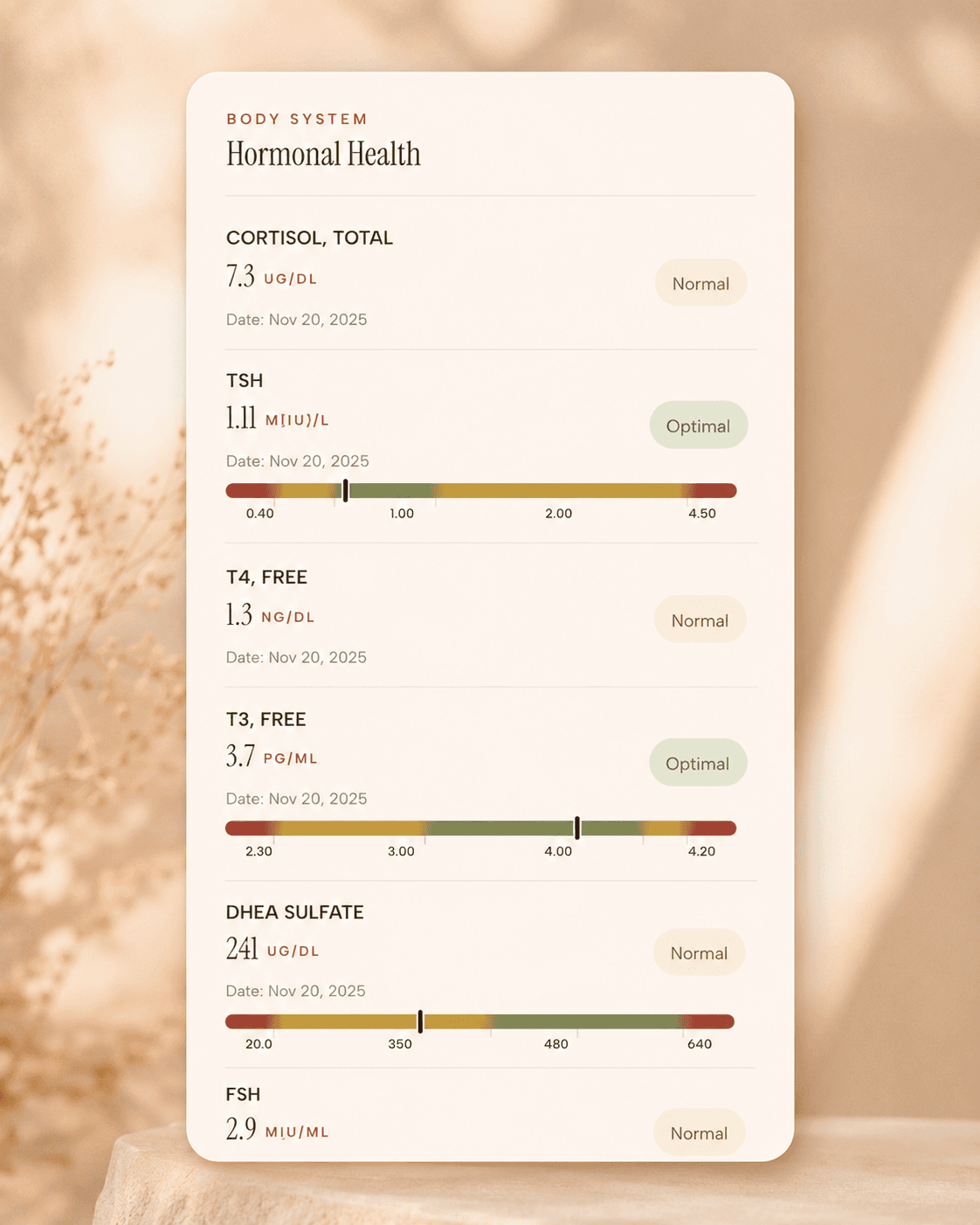
Your arteries leave clues in your bloodwork long before symptoms appear. The Vitals Vault starting-from-$99 panel includes 100+ tests
lipid particle size, blood sugar, inflammation markers, and more
in a single visit, so you can see your vascular risk in full
About 1 week
Schedule online — results typically within a week
Clear next steps
Guidance included, with follow-up care available
HSA / FSA
Eligible for pre-tax health spending accounts
Why men are finally talking about this
Physicians are reframing ED as a diagnostic tool
Urologists and cardiologists have started presenting ED not as a condition to be quietly treated but as a symptom that should trigger a cardiovascular workup. When a respected physician says on camera that ED predicts heart attacks better than some chest pain presentations, men pay attention in a way they do not when reading a pamphlet in a waiting room.
Mental health creators are removing the shame barrier
Separate from the cardiology conversation, creators focused on men's mental health have been addressing the anxiety and identity shame that surrounds ED — which matters because psychological stress itself raises cortisol, suppresses testosterone, and worsens vascular function. Removing the stigma is not just kind; it is clinically relevant.
Men under 40 are realizing this applies to them too
The old assumption was that ED was a problem for men over 60. But rates in men in their 30s have been climbing alongside rising rates of obesity, sleep apnea, and metabolic dysfunction. Younger men seeing this content are recognizing that their symptoms are not just stress — and that getting checked now matters.
What is actually happening in your body
Nitric oxide is the key molecule
When you are sexually aroused, your nervous system signals the endothelium to release nitric oxide, which relaxes the smooth muscle in penile arteries and allows blood to rush in. If your endothelium is damaged — by high blood sugar, oxidized LDL cholesterol, chronic inflammation, or smoking — it cannot produce enough nitric oxide, and the mechanical process of an erection simply cannot complete.
Plaque narrows the pipeline
Over time, the same inflammatory process that damages the endothelium allows fatty deposits [atherosclerotic plaque] to build up inside artery walls, narrowing the channel through which blood flows. In the small penile arteries this shows up as ED; in the coronary arteries it shows up as angina or a heart attack. The two are not separate problems — they are the same pipeline getting clogged in different locations.
Testosterone and metabolic health are part of the picture
Low testosterone does not cause the vascular damage directly, but it does reduce libido and can worsen insulin resistance, which accelerates endothelial dysfunction. High insulin levels, excess visceral fat, and poor sleep all feed into the same cycle — which is why addressing metabolic health often improves both cardiovascular risk and sexual function at the same time.
What the research actually shows
ED doubles the risk of a cardiac event
A large meta-analysis published in the European Heart Journal found that men with ED had approximately double the risk of a heart attack, stroke, or cardiovascular death compared to men without ED, even after controlling for traditional risk factors like blood pressure and cholesterol. The association held across age groups, which is why younger men with ED should not assume they are too young to worry.
The penile-brachial index reveals arterial health
One of the two key diagnostic tests is the penile-brachial index, which compares blood pressure in the penile arteries to blood pressure in the arm. A significant difference between the two suggests arterial narrowing in the pelvis and lower body — and correlates strongly with coronary artery disease. It is non-invasive, inexpensive, and rarely ordered unless a physician is specifically thinking about vascular ED.
Advanced lipid testing catches what standard panels miss
The second key test is an advanced lipid panel that measures lipoprotein particle size and number rather than just total LDL cholesterol. Small, dense LDL particles are far more likely to penetrate and damage the endothelium than large, fluffy ones — but a standard cholesterol test cannot tell them apart. Men with ED and a seemingly normal LDL often have a dangerous particle profile that only shows up on NMR or advanced lipid testing.
Lifestyle changes improve both outcomes simultaneously
Multiple randomized trials have shown that aerobic exercise, a Mediterranean-style diet, and weight loss improve endothelial function measurably within weeks — and that these improvements show up in both cardiovascular markers and erectile function scores. This is not a coincidence; it is the same underlying mechanism responding to the same interventions.
What to keep in mind before you act on this
Not all ED is vascular — and that matters for treatment
Psychological causes — anxiety, depression, relationship stress, and performance pressure — account for a significant portion of ED cases, especially in younger men. Treating a psychological cause with cardiovascular screening alone will not help, and treating a vascular cause with therapy alone will not help either. A good evaluation considers both, which is why talking to a physician rather than self-diagnosing is genuinely important here.
PDE5 inhibitors treat the symptom, not the disease
Medications like sildenafil work by amplifying the nitric oxide signal that is already present, which is why they are less effective when endothelial damage is severe. They are a legitimate and useful treatment, but taking one without investigating the underlying vascular cause is like putting a better faucet on a pipe that is slowly corroding — the symptom improves while the real problem continues.
Cardiovascular screening has its own nuances
A normal advanced lipid panel or penile-brachial index does not completely rule out cardiovascular risk, and an abnormal result does not mean a heart attack is imminent. These tests add information to a full clinical picture that includes blood pressure, blood sugar, family history, and lifestyle factors. Use them to start a conversation with your doctor, not to reach a verdict on your own.
Frequently Asked Questions
At what age should men start worrying about ED as a heart warning sign?
There is no safe age to ignore it. While vascular ED becomes more common after 40, men in their 30s with ED and any metabolic risk factors — excess weight, high blood pressure, prediabetes, or a family history of early heart disease — should bring it up with their doctor. The earlier the vascular problem is caught, the more reversible it tends to be.
What two tests should I specifically ask my doctor for?
Ask for a penile-brachial index, which compares blood pressure in the penile arteries to the arm and reveals pelvic arterial narrowing, and an advanced lipid panel that measures LDL particle size and number rather than just total cholesterol. Both are underused in routine care but provide far more vascular information than a standard checkup. Your doctor may also order a fasting glucose and HbA1c to check for insulin resistance, which feeds the same process.
Can fixing my diet and exercise actually reverse ED?
For vascular ED, yes — meaningfully so. Studies show that men who lose significant weight, exercise aerobically for 30 to 40 minutes most days, and shift toward a Mediterranean-style diet see measurable improvements in erectile function scores within 8 to 12 weeks. The mechanism is real: better metabolic health restores endothelial function and nitric oxide production. It is not a guarantee, but it is one of the most evidence-backed interventions available.
Does low testosterone cause ED, and should I get my levels checked?
Low testosterone can reduce libido and contribute to ED, but it is rarely the sole cause of the vascular component. It is worth checking — a simple blood test measures total and free testosterone — because low levels are treatable and also signal broader metabolic problems. However, restoring testosterone to normal range will not fix endothelial damage on its own, so it should be one part of a fuller evaluation.
Is it safe to take ED medication if I have heart disease?
For most men with stable heart disease, PDE5 inhibitors like sildenafil are considered safe, but there is one critical exception: they cannot be combined with nitrate medications like nitroglycerin because the combination can cause a dangerous drop in blood pressure. If you take any nitrate drug for chest pain or heart failure, you must tell your prescribing physician before starting any ED medication. This is a conversation to have explicitly, not to assume is covered.