Deep Sleep Loss and Alzheimer's Protein Buildup Explained
Yes, losing deep sleep really does appear to accelerate the accumulation of the proteins linked to Alzheimer's disease — and a new study published in Nature Neuroscience is the clearest evidence yet of exactly how that happens inside your brain.



Yes, losing deep sleep really does appear to accelerate the accumulation of the proteins linked to Alzheimer's disease — and a new study published in Nature Neuroscience is the clearest evidence yet of exactly how that happens inside your brain. This is not a vague correlation between poor sleep and bad health outcomes. Researchers identified a specific biological mechanism: when you miss the deepest stage of sleep, your brain loses its best window to flush out toxic waste, and those proteins pile up faster. This finding matters whether you are 35 and pulling late nights or 60 and noticing your sleep has gotten lighter over the years. The good news is that deep sleep is modifiable — meaning the choices you make tonight have a measurable effect on your brain's overnight cleaning cycle. If you want to dig into your own health picture, Vitals Vault labs and PocketMD are here to help you connect the dots between your sleep, your biomarkers, and your long-term brain health.
Why this is trending
The Nature Neuroscience paper landed this week and immediately sparked serious discussion in the Reddit longevity community, where researchers and health-focused readers dissected what the findings actually mean versus what headlines were claiming. Sleep researcher Matt Walker, whose work on sleep and brain health has reached millions, has been covering this territory for years — but this study adds a level of mechanistic detail that moves the conversation from "sleep is important" to "here is the specific biological chain of events." What is genuinely new here is not the idea that sleep and Alzheimer's are connected — that link has been building for a decade. What is new is the precision: researchers could show which stage of sleep matters most, what happens to protein clearance when that stage is disrupted, and how quickly the effect appears. That specificity is what separates this from older, more general sleep-health research, and it is why clinicians and longevity researchers are paying close attention.
What This Connection Actually Is
Your brain has its own overnight cleaning crew
During deep sleep — the stage scientists call slow-wave sleep — your brain's fluid-drainage system (the glymphatic system) becomes dramatically more active, flushing out metabolic waste that builds up during the day. Two of the proteins it clears are amyloid-beta and tau, which are the same proteins that accumulate in the brains of people with Alzheimer's disease. When deep sleep is cut short or fragmented, that cleaning cycle runs incompletely, and the proteins are left behind.
Not all sleep stages carry the same protective weight
Your sleep cycles through lighter stages, deep slow-wave sleep, and REM sleep several times a night, but the glymphatic system does most of its heavy lifting during slow-wave sleep specifically. This is why six hours of fragmented sleep is not equivalent to six hours of solid sleep — the architecture matters as much as the total time, because fragmentation tends to rob you of the deepest, most restorative stage.
Protein buildup is a decades-long process
Amyloid plaques and tau tangles do not appear overnight; they accumulate silently over 15 to 20 years before any memory symptoms show up. That long runway is actually hopeful, because it means the sleep habits you build in your 40s and 50s are genuinely relevant to whether those proteins reach a dangerous threshold by your 70s. The new research suggests that consistent deep-sleep loss accelerates that accumulation meaningfully.
Lab testing
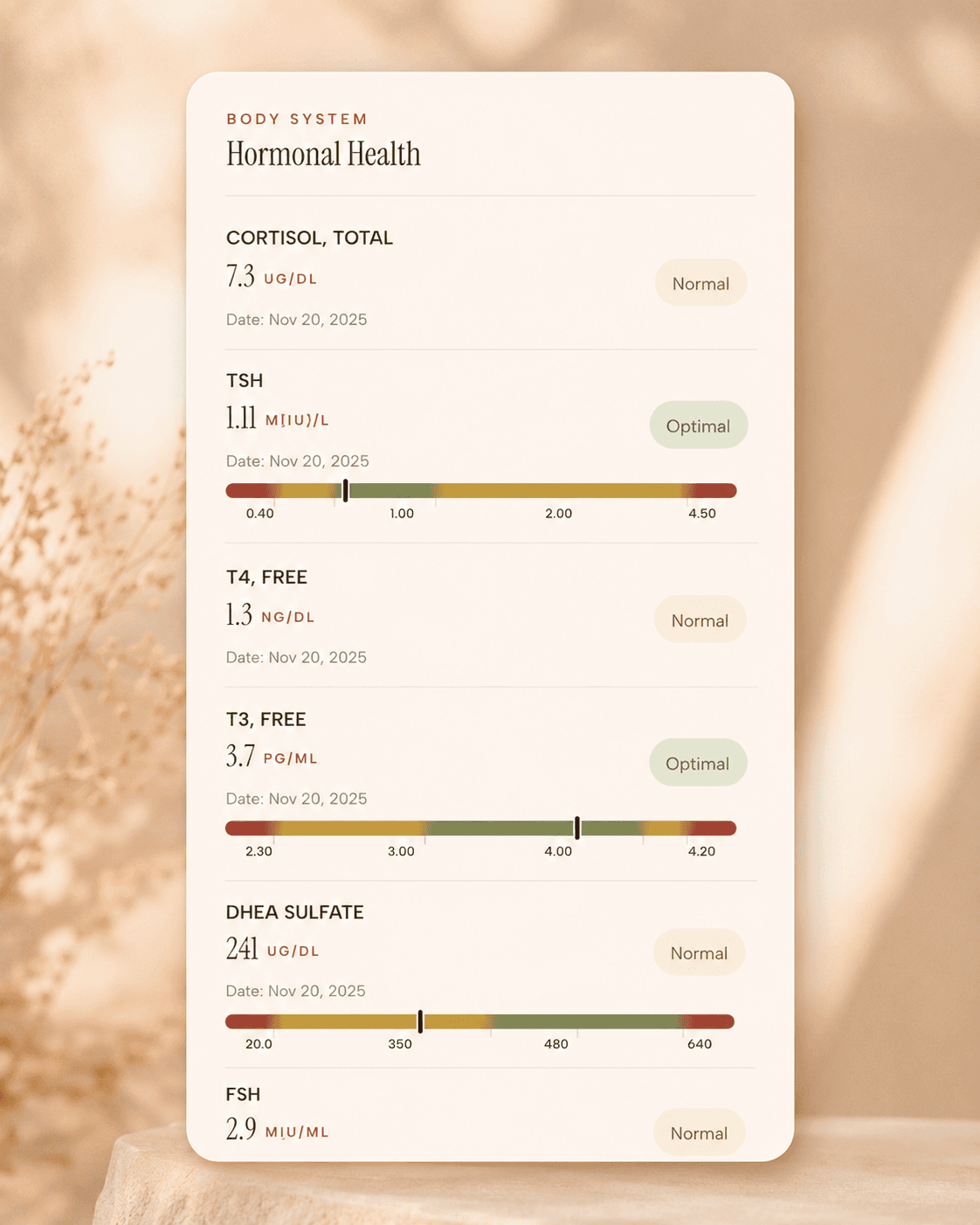
Inflammation markers, thyroid function, and metabolic health all affect sleep quality and brain health. The Vitals Vault starting-from-$99 panel covers 100+ tests in one visit
no referral needed
About 1 week
Schedule online — results typically within a week
Clear next steps
Guidance included, with follow-up care available
HSA / FSA
Eligible for pre-tax health spending accounts
Why Everyone Is Talking About It Now
A landmark study gave the mechanism a name
Previous research showed correlations between poor sleep and higher amyloid levels, but the Nature Neuroscience study went further by mapping the specific pathway — showing how disrupted slow-wave sleep reduces the pressure-driven flow of cerebrospinal fluid that powers glymphatic clearance. That level of mechanistic detail is what turns a correlation into a plausible causal story, and it is what made this paper travel so far beyond academic journals.
The longevity community recognized the practical stakes
Reddit's longevity forums lit up because this research reframes deep sleep not as a lifestyle luxury but as a biological necessity for brain maintenance — something with the same long-term weight as diet or exercise. For a community already tracking biomarkers and optimizing health span, a modifiable risk factor for Alzheimer's is exactly the kind of finding that demands attention.
It challenges the "I'll sleep when I'm dead" culture
Figures like Ben Greenfield have argued that sleep needs vary widely and that some people genuinely thrive on less. That debate is real and worth having. But this research specifically targets deep sleep quality, not just total hours — which means even people who feel fine on six hours may be shortchanging the stage that matters most for protein clearance, regardless of how rested they feel.
How the Science Works
Slow-wave sleep triggers a fluid pressure shift
During slow-wave sleep, the electrical activity in your brain shifts into large, synchronized waves, and the space between brain cells actually expands slightly. This expansion allows cerebrospinal fluid to flow more forcefully through the glymphatic channels, carrying amyloid-beta and tau proteins out toward the lymphatic system for disposal. Disrupt those slow waves — through alcohol, stress, sleep apnea, or simply not sleeping long enough — and the fluid flow weakens.
Amyloid-beta is the protein that accumulates fastest overnight
Studies using PET imaging have shown that even a single night of sleep deprivation causes a measurable increase in amyloid-beta in the brain, particularly in regions like the hippocampus that are critical for memory. The new research builds on this by showing that it is specifically the loss of slow-wave activity — not just total sleep time — that predicts how much protein accumulates. Your brain is producing amyloid-beta constantly as a byproduct of normal neural activity; deep sleep is when it gets cleared.
Tau follows a slower but equally important pattern
Tau protein, which forms the tangles that damage neurons from the inside, also shows elevated levels after sleep disruption, though its accumulation is somewhat slower than amyloid-beta. What makes tau particularly concerning is that once tau pathology spreads through the brain, it correlates strongly with actual cognitive decline — more so than amyloid plaques alone. Protecting deep sleep appears to slow both processes, which is why researchers see it as one of the most accessible levers for Alzheimer's prevention.
What You Can Actually Do About It
Protect the conditions that produce slow-wave sleep
Deep sleep is most abundant in the first half of the night, which means going to bed earlier — not just sleeping longer — gives your brain more slow-wave time. Keeping your bedroom cool (around 65–68°F) significantly increases slow-wave activity because your core body temperature needs to drop to enter and sustain deep sleep. These are not complicated interventions; they are environmental conditions your biology already responds to.
Alcohol is the most underestimated deep-sleep disruptor
Even one or two drinks in the evening suppress slow-wave sleep measurably, even if you fall asleep faster and feel like you slept fine. The sedation alcohol produces is not the same as natural sleep architecture — it actually fragments the deeper stages and reduces the slow-wave activity that drives glymphatic clearance. If protecting your brain is the goal, cutting alcohol within three hours of bedtime is one of the highest-leverage changes you can make.
Screen for sleep apnea if you snore or wake unrefreshed
Sleep apnea repeatedly pulls you out of deep sleep throughout the night, often without you knowing it, and it is one of the most common reasons people lose slow-wave sleep even when they spend eight hours in bed. Untreated sleep apnea is independently associated with higher amyloid burden and faster cognitive decline. If your partner reports snoring or you wake up exhausted, this is worth investigating — a sleep study is far less invasive than it used to be.
Risks and Caveats Worth Knowing
This research does not mean poor sleep causes Alzheimer's with certainty
The mechanistic evidence is compelling, but Alzheimer's is a complex disease with genetic, metabolic, and lifestyle contributors that interact over decades. Sleep disruption is one significant modifiable factor among several — not a single cause. Improving your deep sleep is genuinely worth doing, but it should be part of a broader picture that includes cardiovascular health, metabolic health, and social engagement, not a standalone cure.
Sleep-tracking devices measure deep sleep imperfectly
Consumer wearables estimate sleep stages using movement and heart rate, which gives you a useful trend over time but is not the same as the brain-wave measurement (polysomnography) used in clinical research. If your tracker says your deep sleep is low, that is worth paying attention to — but do not make major medical decisions based on wearable data alone without talking to a clinician who can interpret it in context.
Some sleep supplements marketed for deep sleep have thin evidence
Magnesium glycinate and low-dose melatonin have reasonable evidence for supporting sleep onset and quality in people who are deficient or jet-lagged, but many products marketed specifically to "boost deep sleep" or "enhance glymphatic clearance" are well ahead of the science. Be skeptical of any supplement claiming to directly increase slow-wave activity — the honest answer is that the most effective interventions are behavioral, not bottled.
Frequently Asked Questions
How much deep sleep do you actually need each night?
Most adults get roughly 1 to 2 hours of slow-wave sleep per night, which represents about 15 to 20 percent of total sleep time. The amount naturally decreases with age, which is one reason Alzheimer's risk rises as we get older. Rather than chasing a specific number, focus on the conditions that support deep sleep — consistent bedtimes, a cool room, and limiting alcohol — and your body will generally produce as much slow-wave sleep as it can.
Can you recover lost deep sleep by sleeping in on weekends?
Partially, but not fully. Your brain does prioritize slow-wave sleep when it is sleep-deprived, so a recovery night will contain more deep sleep than usual — but research suggests that chronic sleep restriction creates a cumulative deficit that weekend catch-up does not completely erase. For brain health purposes, consistency across the week matters more than occasional long nights.
Does everyone who sleeps poorly get Alzheimer's?
No — sleep disruption is one risk factor among many, and Alzheimer's involves a complex interplay of genetics, age, cardiovascular health, and lifestyle. Many people with poor sleep never develop dementia, and some people with excellent sleep do. The research suggests that improving deep sleep reduces risk meaningfully, not that it guarantees protection or that poor sleep guarantees disease.
Are there any blood tests that can show Alzheimer's risk related to sleep?
Emerging blood tests for amyloid-beta and phosphorylated tau (p-tau 217) are showing real promise as early Alzheimer's biomarkers and are becoming more available through specialty labs. These are not yet standard screening tools, and interpreting them requires clinical context. Metabolic and inflammatory markers — which are available through panels like those at Vitals Vault — can also reveal conditions like insulin resistance and chronic inflammation that independently raise Alzheimer's risk and worsen sleep quality.
Does melatonin improve deep sleep specifically?
Melatonin primarily helps with sleep timing — it signals to your brain that it is time to sleep — rather than directly increasing the amount of slow-wave sleep you get. It is most useful for jet lag, shift work, or people whose natural melatonin production is low. If your goal is specifically more deep sleep, the behavioral changes around temperature, alcohol, and consistent sleep timing have stronger evidence than melatonin supplementation.