Blood Pressure: Measure It Right, Read It Right
Blood pressure is one of the most measured numbers in medicine — and one of the most frequently measured wrong.


Blood pressure is one of the most measured numbers in medicine — and one of the most frequently measured wrong. The short answer is this: a reading taken correctly, in the right conditions, with a validated cuff, tells you something genuinely important about your cardiovascular risk. A reading taken carelessly tells you almost nothing useful, and acting on it could lead you in the wrong direction entirely. The good news is that fixing your technique takes about five minutes to learn, and understanding what your numbers actually mean takes only a little more than that. If you want to go deeper — or if your readings are consistently high and you are not sure what to do next — Vitals Vault's PocketMD line connects you with a clinician who can walk through your specific situation, and our lab panels can flag the metabolic factors that often drive blood pressure up in the first place.
Why this is trending
This week, physician and longevity researcher Peter Attia rebroadcast one of his most-requested episodes — a deep dive on blood pressure measurement and management — which sent a wave of people back to their home cuffs with new questions. At almost the same moment, cardiologist and science writer Eric Topol published a sharp critique of recent cardiovascular trials, arguing that too many interventions are judged on surrogate markers rather than outcomes that actually matter to patients. Together, these two voices landed on the same uncomfortable truth: cardiovascular measurement is only useful when it is done rigorously and interpreted honestly. What makes this moment different from the usual blood pressure awareness cycle is the specificity of the conversation. It is not just 'check your blood pressure.' It is 'here is exactly how most people get it wrong, here is what the number actually predicts, and here is the evidence behind the treatments your doctor might offer.' That is a more useful conversation, and it is the one this guide is built around.
What Blood Pressure Actually Is
Two numbers that tell a two-part story
Every blood pressure reading gives you two numbers: the pressure your arteries feel when your heart squeezes (systolic, the top number) and the pressure when your heart rests between beats (diastolic, the bottom number). Both matter, but for most adults over 50 the systolic number is the stronger predictor of heart attack and stroke risk.
What the threshold numbers actually mean
A reading below 120 over 80 is considered normal, while anything at or above 130 over 80 meets the current American College of Cardiology definition of high blood pressure (hypertension). That threshold was lowered in 2017, which is why many people who were told they were fine a decade ago are now told they have stage 1 hypertension — the science on risk at that range genuinely shifted, not just the label.
Why a single reading is almost never enough
Your blood pressure is not a fixed number — it shifts constantly based on stress, posture, caffeine, a full bladder, and even the act of talking. A single clinic reading can be 10 to 20 points higher than your true resting average, a well-documented phenomenon called white-coat hypertension. This is exactly why repeated home measurements, taken correctly, give a far more accurate picture than a single office visit.
Lab testing
High blood pressure rarely travels alone
insulin resistance, kidney stress, and lipid imbalances often drive it
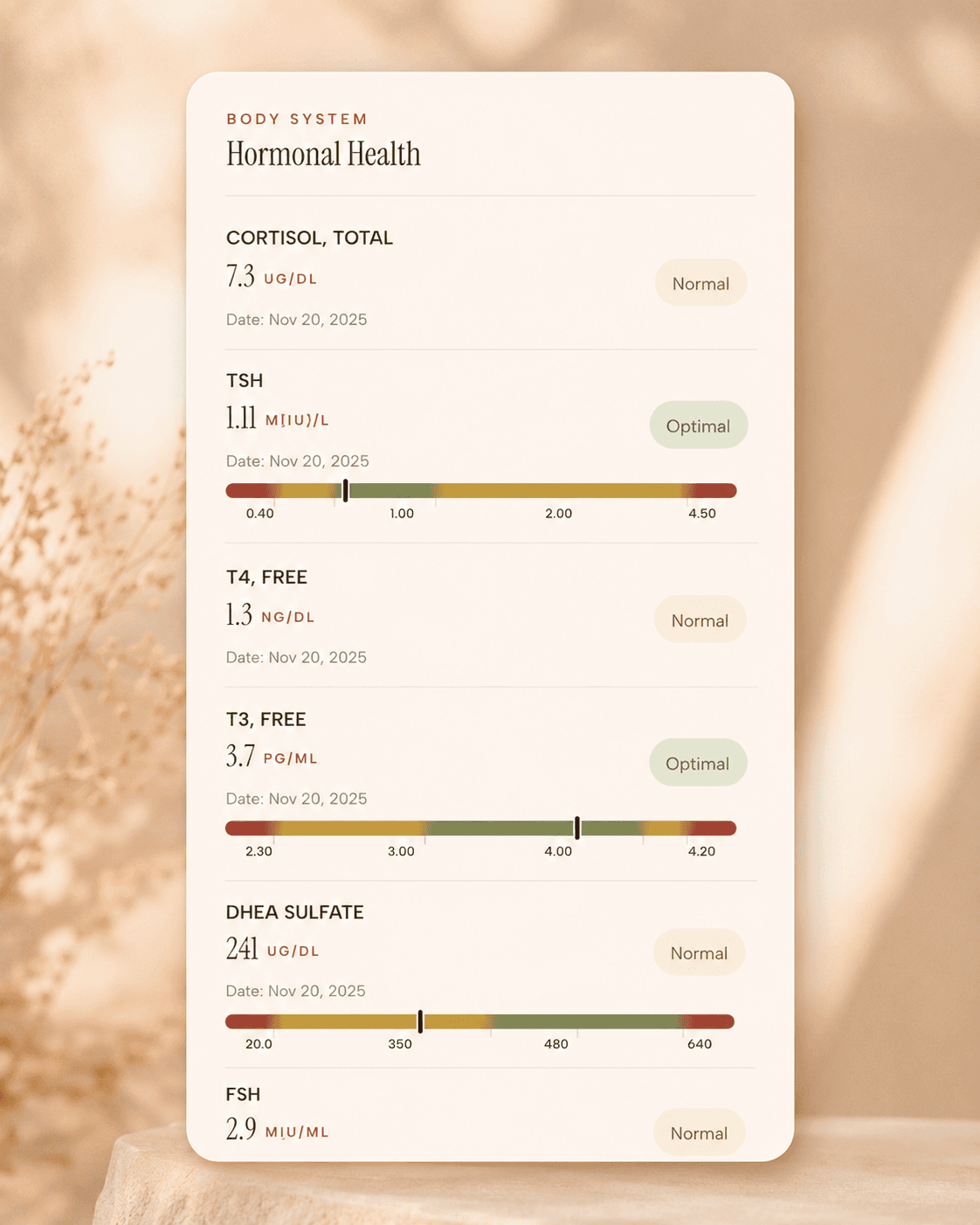
Our starting-from-$99 panel with 100+ tests, one visit checks the metabolic markers that matter most alongside your cardiovascular risk picture
About 1 week
Schedule online — results typically within a week
Clear next steps
Guidance included, with follow-up care available
HSA / FSA
Eligible for pre-tax health spending accounts
Why This Is Trending Right Now
Peter Attia's rebroadcast reignited the measurement debate
Attia's blood pressure AMA is one of his most-shared episodes because it goes further than most clinical advice — he argues that most people, including many physicians, are not measuring blood pressure in a way that produces reliable data. His emphasis on protocol over technology resonated with listeners who own home cuffs but have never been taught how to use them properly.
Eric Topol raised the stakes on what we measure and why
Topol's critique of surrogate-metric-based cardiovascular trials is a reminder that a number on a screen is only valuable if it predicts something real. His argument pushes back against the assumption that lowering a biomarker automatically means reducing harm — a nuance that applies directly to blood pressure treatment decisions, especially at borderline levels.
Home monitoring devices are everywhere, but guidance is not
Wrist cuffs, smart watches, and upper-arm monitors are now in millions of households, yet most people using them have never been shown the validated technique for getting an accurate reading. The gap between device ownership and measurement literacy is wide, and that gap is what this current wave of expert commentary is trying to close.
The Evidence on Treatment
Lifestyle changes have the strongest foundation
Reducing sodium intake, increasing aerobic exercise, limiting alcohol, and losing excess weight each have solid randomized trial evidence behind them — and their effects stack. Aerobic exercise alone can lower systolic pressure by roughly 5 to 8 points on average, which is comparable to starting a low-dose medication.
Medications work, but the threshold for starting them is genuinely debated
For people with readings consistently above 140 over 90, the evidence for medication is clear and the benefit is large. For the 130-to-139 range, the picture is more complicated — the SPRINT trial suggested benefit from aggressive treatment, but that trial used an automated unattended measurement protocol that produces lower readings than standard clinic measurements, which makes direct comparison tricky.
The DASH diet has more evidence than most supplements
The Dietary Approaches to Stop Hypertension (DASH) diet — which emphasizes vegetables, fruit, whole grains, and low-fat dairy while cutting saturated fat and sodium — has been shown in multiple trials to lower blood pressure meaningfully, often within two weeks. Many supplements marketed for blood pressure support have far weaker or more preliminary evidence behind them.
Treating the underlying driver matters more than the number alone
High blood pressure is frequently a downstream effect of insulin resistance, sleep apnea, kidney dysfunction, or chronic stress — and treating only the pressure without addressing the cause is like turning off a smoke alarm without looking for the fire. This is where a metabolic lab panel becomes genuinely useful, because it can reveal which driver is most likely at work in your specific case.
How to Measure It Correctly
The five-minute prep that changes everything
Sit quietly for five minutes before measuring — not scrolling your phone, not mid-conversation, not right after walking in from outside. Your feet should be flat on the floor, your back supported, and your arm resting at heart level on a table. Skipping this step is the single most common reason home readings are unreliable.
Cuff position and size matter more than brand
The cuff should sit on bare skin, not over a sleeve, with the bottom edge about an inch above the crease of your elbow, and it needs to be the right size for your arm — a cuff that is too small will read artificially high. Most validated upper-arm monitors are more accurate than wrist devices, which are highly sensitive to wrist position and angle.
Take three readings and use the average
Take your first reading, wait one minute, take a second, wait another minute, then take a third — and average the last two. The first reading is almost always the highest because your body is still reacting to the cuff. Doing this morning and evening for a week gives you a far more honest picture of your true blood pressure than any single clinic visit.
Risks and Caveats Worth Knowing
Overtreating borderline readings carries real risk
Driving blood pressure too low — especially in older adults — can cause dizziness, falls, and fainting, which carry their own serious consequences. If you are on medication and regularly seeing readings below 110 over 70, that is worth a conversation with your clinician about whether your dose still fits your current health picture.
Some conditions mimic high blood pressure and need different treatment
An overactive thyroid, anxiety disorder, or certain medications — including some decongestants and NSAIDs — can push your readings up in ways that look like primary hypertension but are not. Treating the number without identifying the cause means you might be managing a symptom while the actual problem continues unchecked.
Home monitors need validation and occasional calibration
Not all blood pressure monitors sold online are clinically validated — look for devices listed on the validated device list maintained by the American Medical Association or the British and Irish Hypertension Society. It is also worth bringing your home cuff to a clinic visit once a year to compare it against a calibrated device, since readings can drift over time.
Frequently Asked Questions
What is a normal blood pressure reading for my age?
For most adults, a reading below 120 over 80 is considered normal regardless of age, though blood pressure does tend to rise gradually as arteries stiffen with age. What matters more than a single age-based target is your trend over time and your overall cardiovascular risk picture — a 65-year-old with no other risk factors is in a different situation than a 65-year-old with diabetes and high cholesterol.
Is a wrist blood pressure monitor as accurate as an upper-arm cuff?
Wrist monitors can be accurate, but they are much more sensitive to positioning — your wrist needs to be held exactly at heart level during the reading, which most people do not do consistently. Upper-arm monitors with a properly sized cuff are generally more reliable for home monitoring, and they are the type used in most clinical validation studies.
Can stress alone cause high blood pressure?
Acute stress absolutely raises blood pressure in the moment, but the relationship between chronic stress and sustained high blood pressure is more complicated. Chronic stress can contribute through poor sleep, elevated cortisol, and behaviors like overeating or drinking more alcohol — but it rarely acts as the sole cause of persistent hypertension without other contributing factors.
How long should I try lifestyle changes before starting medication?
For readings in the 130-to-139 range with no other major risk factors, most guidelines suggest a genuine three-to-six month trial of lifestyle changes first — meaning consistent changes, not occasional ones. If your readings are above 140 over 90, or if you already have heart disease, kidney disease, or diabetes, the evidence supports starting medication sooner rather than waiting. This is a decision worth making with a clinician who knows your full history.
Does Vitals Vault offer any tests relevant to blood pressure management?
Yes — our comprehensive panel includes markers for kidney function, fasting glucose and insulin, thyroid hormones, and a full lipid profile, all of which can reveal underlying drivers of high blood pressure that a cuff reading alone cannot identify. Starting from $99 with 100+ tests in a single visit, it is a practical way to understand what is actually pushing your numbers up.