Biomarkers of Aging Conference 2026: What to Watch
Harvard Medical School's Biomarkers of Aging Conference lands October 5–6, 2026, and the agenda is a direct window into the questions the field has not yet settled — which biological clocks actually predict how long you will stay healthy, whether a single aging-rate number is even meaningful, and how far personal testing has come.


Harvard Medical School's Biomarkers of Aging Conference lands October 5–6, 2026, and the agenda is a direct window into the questions the field has not yet settled — which biological clocks actually predict how long you will stay healthy, whether a single aging-rate number is even meaningful, and how far personal testing has come. If you have ever wondered whether your lab results can tell you something your chronological age cannot, this is the moment to pay attention. The conference details dropped on r/longevity the same week a community member published a meticulous 50-test personal aging-rate analysis spanning years of self-tracking — and the combination sparked exactly the kind of debate that makes this field worth following. If you want to run your own baseline before the science moves again, Vitals Vault's lab panels and PocketMD clinicians can help you get oriented.
Why this is trending
Aging biomarker research has been building toward a credibility inflection point for several years, but 2026 feels different because the institutional and grassroots conversations are finally happening at the same time. Harvard putting a two-day conference on the calendar signals that the field is mature enough to argue publicly about methodology — which clocks to trust, which tissues they actually reflect, and whether composite scores obscure more than they reveal. On the community side, a detailed Reddit post tracking 50 different aging-rate tests since 2018 showed something researchers rarely admit in papers: different clocks give meaningfully different answers for the same person, and those answers shift over time in ways that are not always easy to explain. That kind of honest, longitudinal self-data is pushing institutional researchers to be clearer about what their tools can and cannot promise.
What the Biomarkers of Aging Conference Actually Is
A scientific summit, not a wellness expo
Harvard Medical School's Biomarkers of Aging Conference is a research-focused event where scientists present and debate the tools used to measure how fast a body is aging at the biological level. The goal is not to sell you a protocol — it is to stress-test the methods before they reach clinical practice.
Biological age versus chronological age
Your chronological age is simply how many years you have been alive, but your biological age is an estimate of how worn or resilient your cells and tissues actually are. The gap between those two numbers is what aging biomarkers are designed to measure, and closing that gap — or at least understanding it — is the central ambition of the field.
Multiple clocks, not one answer
There is no single agreed-upon test for biological age. Researchers use epigenetic clocks that read chemical tags on your DNA, proteomic clocks that measure hundreds of proteins in your blood, and composite scores built from routine lab markers. Each captures a slightly different slice of how your body is aging, which is precisely why the conference exists.
Lab testing
The markers being debated at Harvard
including inflammatory proteins, metabolic panels, and lipid fractions
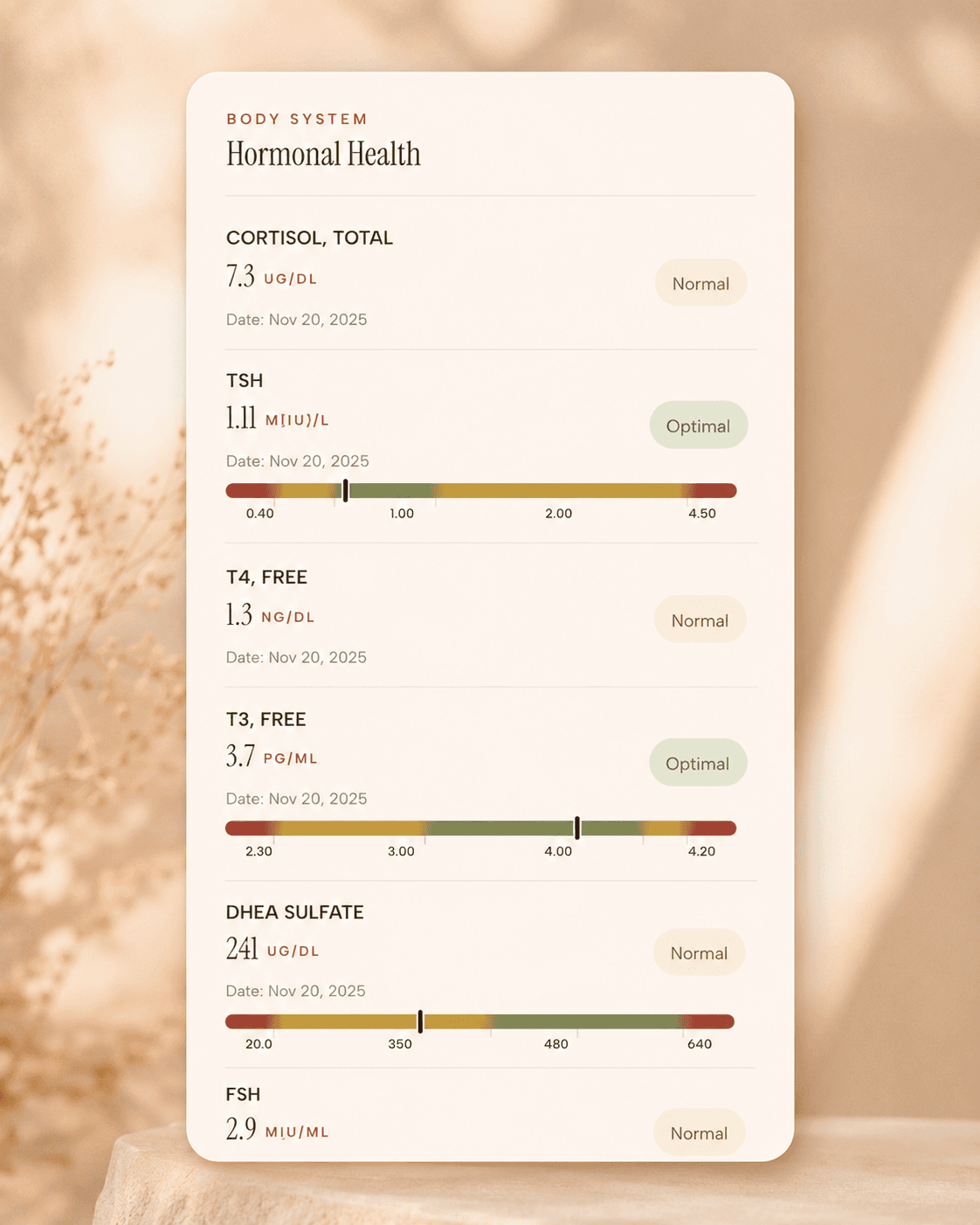
are all available through Vitals Vault's starting-from-$99 panel with 100+ tests, one visit
About 1 week
Schedule online — results typically within a week
Clear next steps
Guidance included, with follow-up care available
HSA / FSA
Eligible for pre-tax health spending accounts
Why This Conference Is Getting Attention Right Now
The agenda went public and the community noticed
When the speaker roster and session topics appeared on r/longevity, it triggered a wave of discussion about which questions the field is still genuinely unsettled on. Seeing Harvard researchers scheduled to debate clock validity alongside community members sharing their own multi-year test data created an unusual moment of parallel conversation.
A 50-test personal analysis raised hard questions
One community member's detailed breakdown of 50 aging-rate tests taken since 2018 showed that different clocks routinely disagreed about their biological age — sometimes by a decade. That kind of real-world discordance is exactly what the conference is designed to address, and it made the academic debate feel personally relevant to thousands of readers.
Cognitive longevity is now on the main stage
Georgetown University's Carlo Tornatore presented work on brainspan — the idea that cognitive aging deserves its own dedicated biomarker framework, separate from general biological age. The inclusion of brain-specific aging metrics signals that the field is moving beyond a single number toward organ-level precision.
What the Science Actually Shows So Far
Epigenetic clocks predict mortality better than chronological age
Several large studies have shown that epigenetic clocks — which measure chemical modifications called methylation marks on your DNA — outperform your birth year at predicting who will develop age-related disease or die earlier. That is a meaningful result, but it does not mean these clocks are ready to guide individual treatment decisions.
Proteomic clocks add a different layer of information
Protein-based aging scores, built from panels of hundreds of blood proteins, have shown strong associations with physical function and disease risk in studies like the UK Biobank. Because proteins reflect what your cells are actively doing right now, they may be more responsive to lifestyle changes than DNA-based clocks — though the research on that responsiveness is still early.
Composite scores from routine labs are accessible but noisier
Tools that estimate biological age from standard blood markers like glucose, albumin, and white cell count are widely available and inexpensive, which is why they are popular in self-tracking communities. They correlate with health outcomes at the population level, but they pick up a lot of short-term variation — a bad week of sleep or a recent infection can shift your score in ways that do not reflect true aging.
Different clocks often disagree for the same person
This is the finding that the 50-test community analysis illustrated so clearly: your epigenetic age, your proteomic age, and your phenotypic age from routine labs can point in different directions at the same time. Researchers believe this is partly because different clocks measure aging in different tissues, and your organs do not all age at the same rate.
Who Actually Benefits From Tracking These Markers
People with a strong family history of early disease
If cardiovascular disease, dementia, or metabolic conditions run in your family, biological age markers can give you an earlier signal that something is shifting — before symptoms appear. That early signal is most useful when you have a clinician who knows how to act on it, rather than just a number on a report.
Anyone making significant lifestyle changes
If you have recently overhauled your diet, started a serious exercise program, or changed your sleep habits, biological age markers are one way to check whether those changes are registering at the cellular level. The honest caveat is that most clocks need months to show meaningful movement, so weekly testing is not informative.
Curious self-trackers who want context, not just data
The longevity community has no shortage of people running their own experiments, and that is genuinely valuable — the 50-test Reddit analysis is a good example of what careful self-tracking can reveal. The key is pairing that data with enough scientific literacy to know when a result is signal and when it is noise.
What to Be Careful About Before You Test
A biological age score is not a diagnosis
No aging clock currently approved or validated for clinical use can tell you that you have a specific disease or that you will develop one. These tools are risk-stratification aids at best, and treating a single score as a verdict about your health is a misuse of what the technology can actually do.
Short-term factors can make your score look worse than it is
Illness, poor sleep, intense exercise, alcohol, and even the timing of your last meal can shift some biological age scores by several years in either direction. If you test during a stressful week and get an alarming number, the right response is to retest under more typical conditions — not to panic or immediately change your entire routine.
The field is still actively debating which clocks to trust
The fact that Harvard is holding a conference specifically to debate biomarker validity in October 2026 is itself a signal that no consensus exists yet. Spending significant money on a testing protocol built around a single clock — especially one marketed primarily through influencer channels rather than peer-reviewed research — carries real financial and psychological risk.
Frequently Asked Questions
What is the Harvard Biomarkers of Aging Conference in 2026?
It is a two-day scientific conference at Harvard Medical School on October 5–6, 2026, focused on evaluating and debating the tools researchers use to measure biological aging. The agenda covers epigenetic clocks, protein-based aging scores, cognitive aging metrics, and the broader question of whether a single aging-rate number is scientifically meaningful.
Which biological age clock is the most accurate?
There is no single winner — different clocks measure different biological processes, and they often disagree for the same person. Epigenetic clocks have the strongest mortality-prediction data in large studies, but proteomic clocks may be more sensitive to recent lifestyle changes. The honest answer is that the field has not yet reached consensus, which is part of why the 2026 conference exists.
Can I track my own aging rate with blood tests?
Yes, and many people in the longevity community do exactly that using routine lab panels that feed into composite biological age calculators. The important thing to understand is that these scores fluctuate with short-term factors like sleep and illness, so a single result is less informative than a trend tracked over many months. Vitals Vault's panels can give you a solid baseline to start from.
What does brainspan mean and why does it matter?
Brainspan is the idea that your brain ages on its own trajectory, which may not match how the rest of your body is aging — and that cognitive longevity deserves its own dedicated biomarker framework. Georgetown's Carlo Tornatore presented on this at the 2026 conference, arguing that waiting for cognitive symptoms to appear is too late and that earlier biological signals need to be identified and acted on.
Should I change my health routine based on a biological age test result?
Not based on a single result, and not without talking to a clinician who understands what these scores can and cannot tell you. A biological age number is a starting point for a conversation, not a prescription — and the interventions most consistently supported by research are the unsexy ones: sleep, exercise, diet quality, and stress management. A PocketMD clinician can help you interpret your results in the context of your full health picture.