Why Anxiety Kills Motivation and How to Fix It
Chronic anxiety does not just make you feel bad — it actively shuts down the part of your brain responsible for wanting things, starting things, and finishing things.



Chronic anxiety does not just make you feel bad — it actively shuts down the part of your brain responsible for wanting things, starting things, and finishing things. That is not a character flaw or a lack of willpower. It is a predictable neurological consequence of a stress system that has been running too hot for too long. This has become one of the most searched mental health questions of the year, and for good reason: more people are recognizing that their procrastination, flatness, and inability to get going are not laziness but a nervous system stuck in survival mode. If you want to dig into your own biology — cortisol, thyroid, inflammation markers — Vitals Vault's lab panels and PocketMD clinicians can help you build a clearer picture. But first, let's talk about what is actually happening inside your body.
Why this is trending
Several prominent voices in mental health and medicine converged on this topic at the same time. HealthyGamerGG released back-to-back short videos on why anxiety is rising and how it directly undermines motivation, framing it through a clinical psychology lens that resonated widely with younger audiences who recognize the pattern in their own lives. Around the same time, Dr. Mark Hyman was discussing why so many people are locked in a chronic fight-or-flight state, and neuroscientist Dr. Masud Husain appeared on Andrew Huberman's platform to break down the brain circuits behind motivation and procrastination in precise detail. What makes this moment different from the usual wellness noise is that the clinical framing and the lived-experience framing are finally saying the same thing. The research on how threat-detection circuits suppress reward-seeking circuits has existed for years — but it is only now reaching people in language they can actually use.
What Is the Anxiety-Motivation Trap?
Two systems that cannot run at the same time
Your brain has a threat-detection system centered on a small almond-shaped structure called the amygdala, and a separate reward-and-drive system that runs on dopamine. When the amygdala is firing — because you feel danger, pressure, or chronic stress — it actively suppresses the dopamine circuits, which means your brain is literally less capable of generating the feeling of wanting to do something. It is not that you have both anxiety and low motivation as two separate problems; the anxiety is causing the motivational flatness.
Why your body treats a deadline like a predator
The stress response your nervous system uses for a looming work deadline is the same one it evolved to use when running from a physical threat. In that original context, stopping to pursue a long-term goal would be fatal, so the brain deprioritizes future-oriented thinking and narrows focus to immediate survival. The problem is that modern anxiety rarely resolves the way a physical threat does, so the system stays activated and your motivational circuits stay suppressed — sometimes for months or years.
The freeze response nobody talks about
Most people know about fight-or-flight, but there is a third stress response called freeze — a kind of shutdown that happens when the nervous system decides neither fighting nor fleeing is possible. Freeze looks almost identical to laziness or depression from the outside: you cannot start tasks, you scroll instead of acting, and nothing feels worth doing. Recognizing this as a physiological state rather than a personality trait is the first step toward actually changing it.
Lab testing
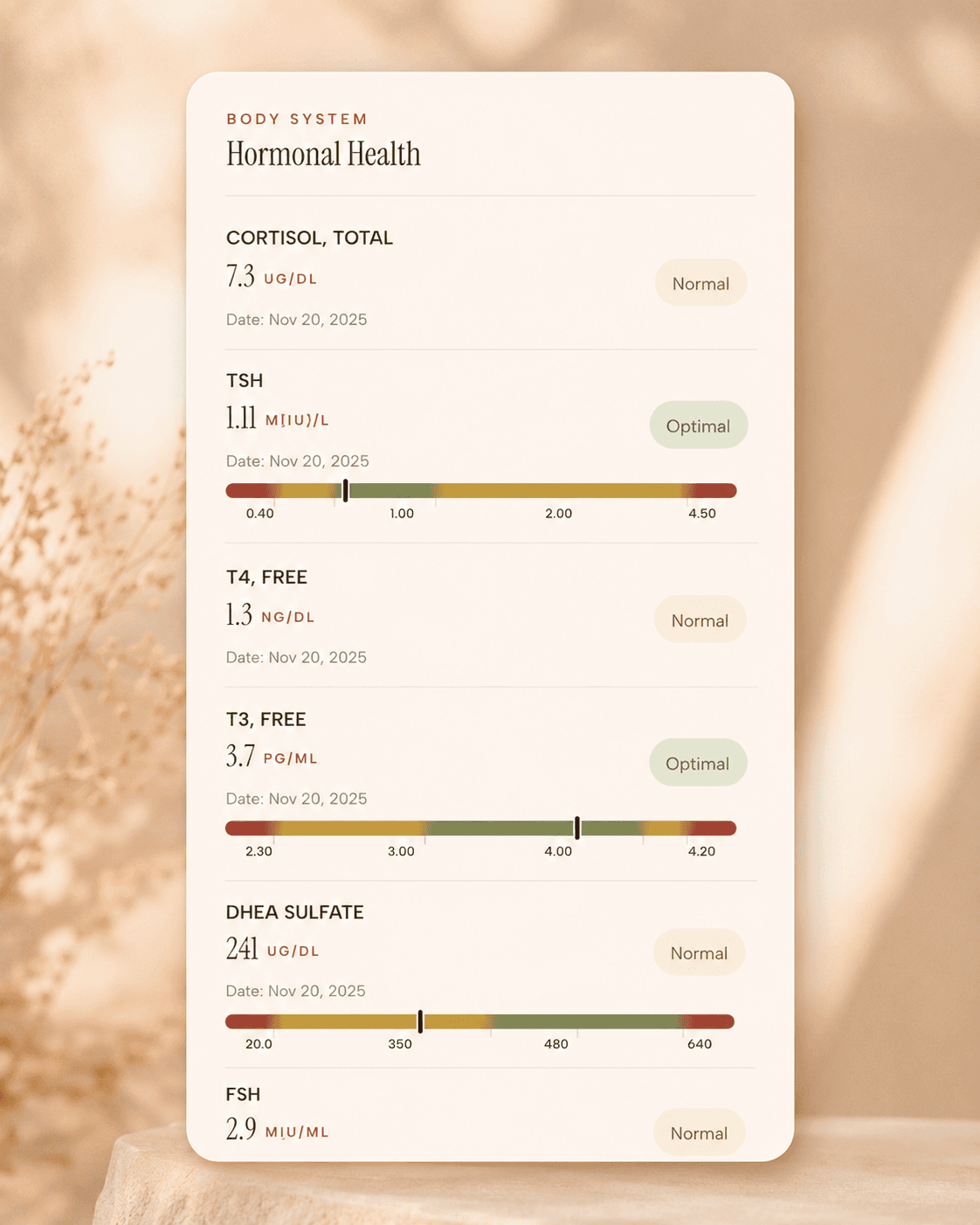
Cortisol patterns, thyroid function, and inflammation markers can all amplify anxiety and flatten motivation. The Vitals Vault starting-from-$99 panel covers 100+ tests in one visit
no referral needed
About 1 week
Schedule online — results typically within a week
Clear next steps
Guidance included, with follow-up care available
HSA / FSA
Eligible for pre-tax health spending accounts
Why Everyone Is Talking About This Now
A generation that grew up anxious is now burning out
Anxiety rates among people in their 20s and 30s have been climbing for over a decade, and many of those people are now hitting a wall where the chronic stress they normalized in adolescence is visibly costing them their drive and productivity. The conversation is shifting from 'how do I manage my anxiety' to 'why can't I do anything even when I'm not panicking' — and that second question is finally getting clinical answers.
Creators are translating neuroscience into plain language
Channels like HealthyGamerGG — run by a Harvard-trained psychiatrist — have built large audiences by explaining brain mechanisms in terms that feel personally relevant rather than academic. When that kind of content lands alongside research-focused conversations about dopamine and procrastination, it creates a moment where a lot of people simultaneously realize their experience has a biological explanation. That recognition is both validating and, importantly, actionable.
The post-pandemic nervous system is still dysregulated
Years of uncertainty, social isolation, and disrupted routines left many people's stress systems in a chronically elevated state, and the cultural expectation that things would simply 'go back to normal' did not account for how long nervous system recalibration actually takes. Many people are now experiencing the delayed consequences — persistent low motivation, difficulty starting tasks, and a vague sense of dread that has no obvious source — and are looking for explanations that go beyond 'just try harder.'
How It Works in Your Brain
Cortisol suppresses your dopamine reward signal
When you are chronically stressed, your adrenal glands release cortisol in patterns that interfere with dopamine signaling in the brain's reward pathway (the mesolimbic system). Dopamine is not just the 'pleasure chemical' — it is the signal your brain uses to say 'that thing is worth pursuing.' When cortisol blunts that signal, goals that used to feel compelling start to feel pointless, and the effort required to start anything feels disproportionately large.
Your prefrontal cortex goes offline under threat
The part of your brain responsible for planning, prioritizing, and starting tasks — the prefrontal cortex — is metabolically expensive and gets deprioritized when the amygdala signals danger. This is why anxiety does not just make you feel bad; it literally reduces your capacity for executive function. You may notice this as an inability to organize your thoughts, a tendency to avoid decisions, or a strange mental blankness when you sit down to work.
Avoidance feeds the cycle and makes it worse
When motivation drops and tasks feel overwhelming, the natural response is to avoid them — but avoidance keeps the amygdala activated because the unfinished task remains a perceived threat. Each avoided task adds to a background load of low-level dread, which keeps cortisol elevated, which keeps dopamine suppressed, which makes the next task feel even harder. This is the trap: the anxiety-driven avoidance is the very thing that perpetuates the anxiety.
Practical Tools to Break the Cycle
Use your body to signal safety to your brain
Your nervous system takes cues from your body about whether the environment is safe, and you can deliberately send those cues. Slow, extended exhales — breathing in for four counts and out for six or eight — activate the parasympathetic branch of your nervous system (the 'rest and digest' state) and lower amygdala activity within minutes. This is not a relaxation trick; it is a direct physiological input that shifts your brain out of threat mode and makes the prefrontal cortex more accessible.
Start absurdly small to bypass the threat response
When a task feels impossible to start, your brain is treating it as a threat — and the amygdala responds to size and ambiguity. Shrinking the task to something genuinely tiny (opening the document, writing one sentence, sending one email) reduces the perceived threat enough that the prefrontal cortex can re-engage. The goal is not to trick yourself into productivity; it is to give your nervous system a manageable entry point that does not trigger the freeze response.
Track your triggers to find your personal pattern
Keeping a simple log of when your motivation crashes — and what you ate, drank, slept, or felt in the hours before — often reveals patterns within a week or two that are specific to you. Some people find their motivational flatness is worst after poor sleep or high-caffeine days; others find it tracks with social stress or skipped meals. Knowing your pattern gives you something concrete to address rather than fighting a vague, formless problem.
Risks and Caveats Worth Knowing
This pattern can look like depression — and sometimes is
Motivational flatness driven by chronic anxiety and motivational flatness driven by clinical depression overlap significantly in how they feel, but they have different underlying mechanisms and respond to different treatments. If the tools above are not moving the needle after a few consistent weeks, or if you are also experiencing persistent low mood, changes in sleep and appetite, or thoughts of hopelessness, it is worth talking to a clinician rather than continuing to self-manage.
Physical causes can amplify or mimic anxiety-driven low drive
Thyroid dysfunction, chronically elevated cortisol, low iron, and blood sugar instability can all produce symptoms that look and feel like anxiety-driven motivational problems — including fatigue, difficulty concentrating, and emotional flatness. If you have been managing what you assume is purely psychological anxiety for a long time without improvement, it is worth ruling out a biological contributor with a basic lab panel before assuming the solution is purely behavioral.
Nervous system tools are real but not instant fixes
Breathwork, cold exposure, and vagal nerve exercises have genuine evidence behind them for shifting nervous system state, but they work on a timescale of weeks to months of consistent practice — not minutes of occasional use. Social media content sometimes implies these tools produce dramatic immediate results, and while you may notice a real short-term shift in how you feel, the lasting change in your baseline anxiety level requires repetition and time.
Frequently Asked Questions
Can anxiety actually cause a lack of motivation, or are they separate problems?
They are deeply connected at the brain level, not just emotionally linked. Chronic anxiety keeps your threat-detection system activated, which suppresses the dopamine circuits responsible for drive and goal-pursuit — so the motivational flatness is a direct neurological consequence of the anxiety, not a separate issue running alongside it. Treating them as one problem rather than two tends to produce better results.
Why do I feel motivated sometimes but completely stuck other times?
Your nervous system state fluctuates based on sleep quality, blood sugar, social stress, caffeine, and dozens of other inputs, which means your amygdala activity and dopamine availability fluctuate too. On days when your stress load is lower and your body feels safer, motivation comes more easily — not because your character changed, but because your brain chemistry did. Tracking what is different on your good days is one of the most useful things you can do.
Is the freeze response the same as depression?
They overlap in how they look — both involve low energy, difficulty starting tasks, and emotional flatness — but they are not the same thing. Freeze is a nervous system state driven by perceived threat and tends to lift when the nervous system feels safer, while depression involves changes in brain chemistry that are more persistent and require different interventions. If you are unsure which you are dealing with, a clinician can help you distinguish them.
Do breathing exercises actually work for anxiety and motivation, or is that overhyped?
The evidence for slow, extended-exhale breathing as a tool for shifting nervous system state is genuinely solid — it activates the vagus nerve and increases parasympathetic tone in a measurable way. What is sometimes overhyped is the idea that a few minutes of breathwork will resolve chronic anxiety or restore motivation long-term; it is a real tool, but it works best as a consistent daily practice rather than an occasional intervention.
Could a lab test show why my anxiety and motivation are so low?
Yes, in some cases. Thyroid hormones, cortisol patterns, ferritin (iron stores), vitamin D, and blood sugar markers can all contribute to anxiety-like symptoms and motivational flatness when they are out of range. A comprehensive panel will not diagnose anxiety, but it can rule out or identify physical contributors that make psychological symptoms harder to manage — and that information is genuinely useful for anyone who has been struggling without clear improvement.