30-Year Alzheimer's Prevention Plan: Start Now
Yes, you can meaningfully reduce your risk of Alzheimer's disease — and the window to act is much earlier than most people think.



Yes, you can meaningfully reduce your risk of Alzheimer's disease — and the window to act is much earlier than most people think. Roughly 40 percent of dementia cases are linked to modifiable lifestyle factors, which means the choices you make in your 30s, 40s, and 50s are quietly shaping the brain you will live in at 80. The conversation around Alzheimer's prevention has shifted dramatically in the last few years, moving from vague advice about crossword puzzles to a specific, evidence-informed framework built around metabolic health, sleep quality, gut function, and targeted biomarkers. Neurologists like Dr. David Perlmutter and functional medicine physicians like Dr. Mark Hyman have been translating that research for general audiences, and the interest is enormous. If you want to understand what the science actually supports — and what you can start doing this week — Vitals Vault's lab panels can help you see where your numbers stand right now, and a PocketMD clinician can help you interpret what they mean for your personal risk.
Why this is trending
A wave of high-profile content dropped in the same week: Dr. Mark Hyman released a podcast episode and YouTube video featuring neurologist Dr. David Perlmutter specifically on Alzheimer's prevention, and The Dr. Gundry Podcast published its own dementia episode at nearly the same time. These are not fringe voices — Perlmutter is a board-certified neurologist and the author of Grain Brain, and Hyman leads the Cleveland Clinic Center for Functional Medicine. When clinicians with those credentials align on a prevention-first message across multiple platforms simultaneously, it creates a real signal worth paying attention to. What is genuinely new here is not any single discovery but rather the convergence of several research threads — insulin resistance in the brain, the gut-brain axis, glymphatic waste clearance during sleep, and ApoE genetics — into a coherent, actionable framework. The science behind each piece has been building for a decade, but the synthesis into a decade-by-decade plan is what is resonating with people right now. Some of the specific claims circulating online go further than the evidence supports, so it is worth being precise about what is proven, what is promising, and what is still speculative.
What the Brain Defenders Plan Actually Is
A prevention framework, not a treatment protocol
The Brain Defenders approach is a collection of lifestyle strategies designed to lower your biological risk of Alzheimer's before any symptoms appear — it is not a cure, and it is not a substitute for medical care if you or someone you love already has a diagnosis. The core idea is that Alzheimer's disease develops over 20 to 30 years before memory loss becomes obvious, which means the most powerful window to intervene is decades earlier than most people act.
Metabolic health is the central pillar
What Hyman and Perlmutter both emphasize is that Alzheimer's is deeply connected to how well your body — and specifically your brain — handles blood sugar and insulin. Some researchers even use the informal term 'Type 3 diabetes' to describe the insulin resistance pattern seen in many Alzheimer's brains, though that label is not an official diagnosis and remains debated in the scientific literature.
Five domains, tracked over time
The framework organizes prevention into five areas: what you eat, how you move, how well you sleep, the health of your gut microbiome, and the biomarkers you monitor before problems surface. Each domain has its own evidence base, and they interact — poor sleep worsens insulin sensitivity, which worsens inflammation, which accelerates the brain changes associated with dementia.
Lab testing
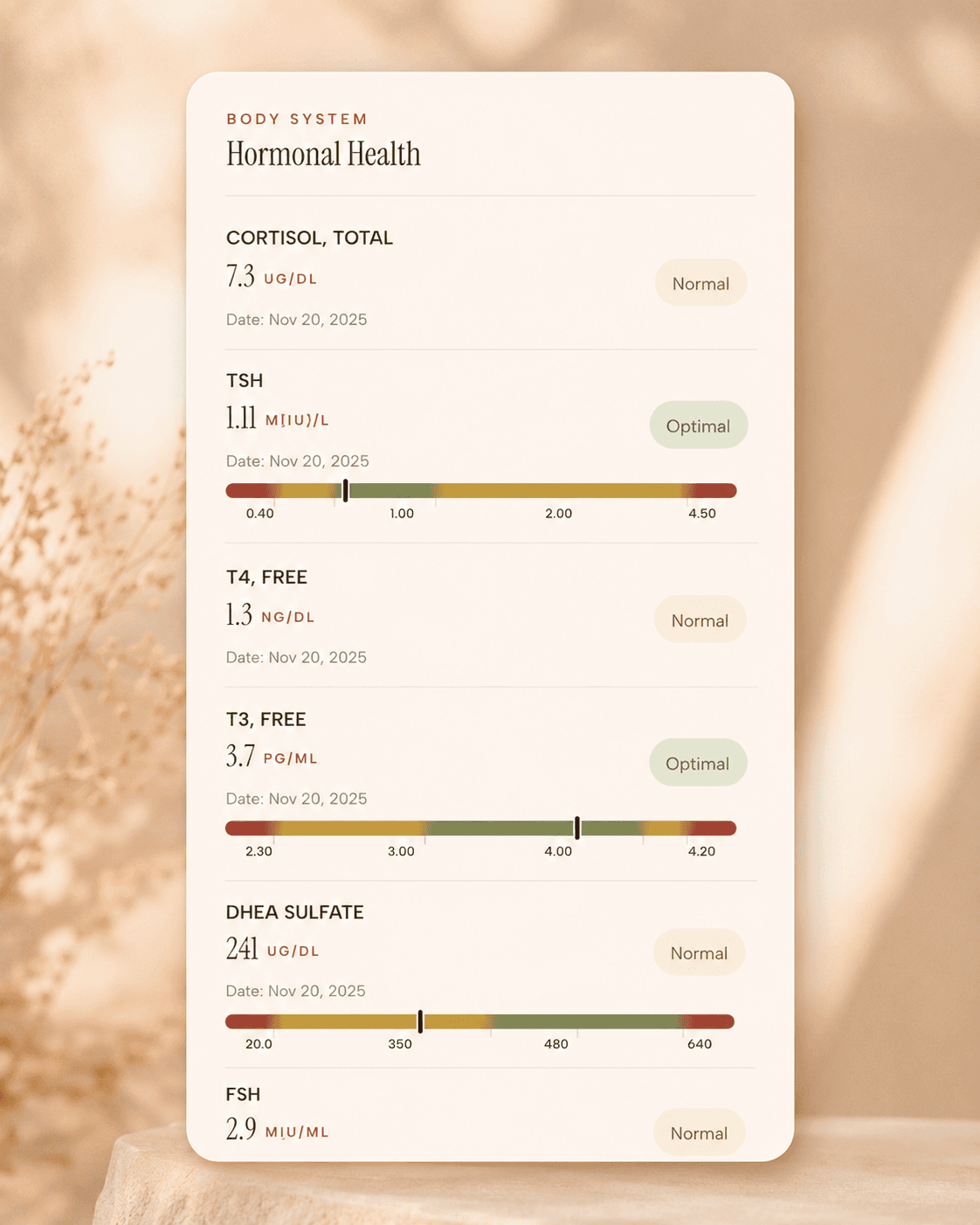
Your brain health starts with numbers you can see. The Vitals Vault starting-from-$99 panel with 100+ tests covers fasting insulin, HbA1c, homocysteine, lipids, thyroid, and inflammation markers
the exact biomarkers experts flag for early dementia risk assessment, all in one visit
About 1 week
Schedule online — results typically within a week
Clear next steps
Guidance included, with follow-up care available
HSA / FSA
Eligible for pre-tax health spending accounts
Why This Is Trending Right Now
Drug trials have repeatedly disappointed
After more than 20,000 patients enrolled in failed pharmaceutical trials over two decades, public trust in a drug-based solution to Alzheimer's has eroded significantly. That frustration has pushed both clinicians and patients toward prevention, and it has made audiences far more receptive to lifestyle-based frameworks than they were ten years ago.
Younger generations are paying attention earlier
People in their 30s and 40s are now actively searching for Alzheimer's prevention information — a shift from the previous pattern where most engagement came from adult children worried about aging parents. Watching a grandparent or parent decline has motivated a generation to ask what they can do now, and the content ecosystem has responded.
Biomarker testing is becoming accessible
Blood-based tests that can detect early Alzheimer's-related changes — including markers like phosphorylated tau and amyloid-beta ratios — are moving from research labs into clinical practice. That accessibility is making the prevention conversation feel more concrete and personal, because people can now get a clearer picture of their biological risk rather than just guessing.
How It Works Inside Your Brain
Your brain has its own waste-clearance system
During deep sleep, your brain activates a drainage network called the glymphatic system, which flushes out metabolic waste — including the amyloid-beta protein that accumulates in Alzheimer's disease. Consistently poor sleep is not just tiring; it literally allows waste to build up in brain tissue over years, which is why sleep quality is treated as a front-line prevention target rather than a lifestyle nicety.
Insulin resistance starves your neurons
When your brain cells become resistant to insulin, they lose their ability to efficiently use glucose for energy — and neurons that are chronically energy-starved are more vulnerable to the inflammation and protein accumulation that drive Alzheimer's pathology. This is why fasting insulin and HbA1c show up on every serious brain health biomarker list, not just on diabetes screening panels.
Your gut talks directly to your brain
The gut and brain are connected through the vagus nerve and through the bloodstream, and the community of bacteria in your gut (your microbiome) produces neurotransmitters and inflammatory signals that reach your brain every day. Research is still establishing exactly how much gut dysbiosis contributes to dementia risk, but the direction of the evidence is consistent enough that improving gut health is considered a reasonable prevention target even before the mechanistic picture is fully clear.
How to Apply It Decade by Decade
In your 30s and 40s: build the metabolic foundation
This is the decade to establish the habits that protect insulin sensitivity — prioritizing whole foods over ultra-processed ones, getting consistent aerobic exercise, and making sleep a genuine priority rather than a variable you sacrifice. It is also the right time to get a baseline metabolic panel so you know your fasting insulin, blood sugar, homocysteine, and inflammation levels before any problems develop, because catching insulin resistance early is far easier to reverse than catching it late.
In your 50s: add targeted monitoring and stress management
Midlife is when vascular risk factors — blood pressure, cholesterol patterns, and blood sugar — begin to have their most significant impact on long-term brain health, so this decade calls for more frequent lab checks and honest conversations with a clinician about your trajectory. Chronic psychological stress elevates cortisol in ways that damage the hippocampus (the part of your brain most critical for memory formation), so stress reduction practices like structured breathing, therapy, or even regular time in nature are not soft add-ons — they are part of the biological strategy.
In your 60s and beyond: protect what you have built
Strength training becomes especially important in this decade because muscle mass is directly linked to insulin sensitivity and to the production of brain-protective molecules called myokines, which are released by working muscle tissue. Social connection and continued cognitive engagement also show up consistently in the longevity research as protective, not because they are magic, but because isolation and mental disengagement accelerate the same inflammatory and metabolic pathways you have been working to keep in check.
Risks, Caveats, and What the Science Can't Promise Yet
Lifestyle changes reduce risk — they do not eliminate it
Even people who do everything right can develop Alzheimer's, particularly those who carry two copies of the ApoE4 gene variant, which significantly raises lifetime risk regardless of lifestyle. The honest framing is that these strategies shift the odds meaningfully in your favor, and for most people that is a genuinely important shift — but no clinician or content creator can promise you a dementia-free future in exchange for a clean diet and good sleep habits.
Some popular claims outrun the evidence
Specific supplement protocols — high-dose resveratrol, lion's mane mushroom, certain nootropic stacks — are frequently presented in wellness content as proven brain protectors, but most of the supporting research is either in animal models or very small human studies. Being curious about these options is fine, but spending significant money on them before addressing the foundational lifestyle factors (sleep, blood sugar, exercise) is getting the order wrong.
Genetic risk is real but not destiny
If you know you carry the ApoE4 variant, that information is worth having — but it should prompt earlier and more aggressive attention to the modifiable factors, not fatalism. Talking with a clinician who understands both the genetics and the lifestyle levers is the most useful next step, because the interpretation of genetic risk in the context of your full health picture is genuinely nuanced and should not be done in isolation.
Frequently Asked Questions
At what age should I start worrying about Alzheimer's prevention?
The biological changes associated with Alzheimer's can begin accumulating in your 30s and 40s, which means the most impactful prevention window is well before any memory symptoms appear. Starting in your 30s with metabolic health habits — stable blood sugar, regular exercise, quality sleep — gives you the longest runway to benefit. That said, meaningful risk reduction is possible at any age, so starting in your 50s or 60s is still worth doing.
What blood tests are most relevant for Alzheimer's risk?
The markers most consistently flagged by brain health researchers include fasting insulin, HbA1c, homocysteine, high-sensitivity CRP (a measure of inflammation), a full lipid panel, and thyroid function. Some clinicians also order ApoE genetic testing for people with a strong family history, though that conversation is best had with a doctor who can put the result in context. A comprehensive baseline panel gives you a starting point to track changes over time, which is more useful than a single snapshot.
Is the 'Alzheimer's as Type 3 diabetes' idea actually proven?
It is a hypothesis with meaningful supporting evidence, not a settled scientific consensus. Research has consistently shown that insulin resistance in the brain is associated with increased Alzheimer's risk and that the brains of many Alzheimer's patients show impaired glucose metabolism. However, the causal chain is still being worked out, and 'Type 3 diabetes' is an informal term used to highlight the metabolic connection — it is not an official medical diagnosis and should not be taken to mean that managing blood sugar alone will prevent or cure Alzheimer's.
Does the ApoE4 gene mean I will definitely get Alzheimer's?
No — carrying one copy of ApoE4 raises your lifetime risk, and carrying two copies raises it further, but neither is a guarantee. Many people with ApoE4 never develop Alzheimer's, and many people without it do. What the gene variant does is make the modifiable lifestyle factors even more important for you, because the evidence suggests that people with ApoE4 may get a larger protective benefit from things like aerobic exercise and metabolic health optimization than those without it.
Can improving gut health actually protect my brain?
The gut-brain connection is real and well-established in terms of the communication pathways involved — the vagus nerve and inflammatory signaling through the bloodstream are both documented routes. What is still being clarified is exactly how much gut microbiome composition contributes to Alzheimer's risk specifically, and whether targeted probiotic or dietary interventions can measurably shift that risk in humans over time. The current evidence is promising enough that improving gut health through a fiber-rich diet and reduced ultra-processed food intake is a reasonable strategy, especially since it benefits your metabolic health simultaneously.