Why You Crash at 3pm: Blood Sugar & Circadian Fix
That foggy, heavy feeling that hits somewhere between 2 and 4pm is not a personal failing or a sign you need another coffee.



That foggy, heavy feeling that hits somewhere between 2 and 4pm is not a personal failing or a sign you need another coffee. It is a predictable collision between your blood sugar rhythm and your body's internal clock — and once you understand both, you can largely stop it from happening. Most advice about the afternoon slump stops at 'drink more water' or 'take a walk,' which is not wrong but barely scratches the surface. This week, physician and functional medicine advocate Mark Hyman published both a podcast and a YouTube video digging into the blood sugar and meal-timing side of the crash, while Dr. Mary Claire Haver reinforced the behavioral angle through her habit-stacking approach. Together they paint a more complete picture — and if you want to check whether something deeper like insulin resistance or thyroid function is quietly making your afternoons worse, Vitals Vault's lab panels and PocketMD telehealth line are worth knowing about.
Why this is trending
The 3pm slump has been a wellness talking point for years, but the conversation this week sharpened around two specific mechanisms that most people have never heard explained clearly. Mark Hyman's new content frames the crash as a blood sugar and meal-composition problem — meaning what you ate at lunch, and how fast it hit your bloodstream, is doing most of the damage. Dr. Mary Claire Haver's habit-stacking shorts add a behavioral layer: small, intentional movement and light-exposure habits built into the early afternoon can blunt the crash before it starts. What makes this moment different from the usual 'eat less sugar' advice is the circadian angle. Researchers have known for over a decade that humans have a natural dip in alertness in the early afternoon that is completely independent of food — it is wired into your biology. The new conversation is about how blood sugar swings and poor habits amplify that dip into something that derails your whole afternoon, and how targeted changes can keep it manageable.
What the Afternoon Slump Actually Is
A real biological dip, not a willpower problem
Your body runs on a roughly 24-hour internal clock called the circadian rhythm [circadian rhythm], and that clock programs a natural drop in alertness and core body temperature in the early afternoon — typically between 1 and 3pm. This dip exists even in people who slept perfectly and ate nothing all day, which means blaming your lunch entirely misses half the story.
Blood sugar swings that turn a dip into a crash
When you eat a lunch heavy in refined carbohydrates or sugars, your blood glucose spikes quickly and then falls just as fast — and that falling phase lands right on top of your natural circadian dip. The result is not just mild tiredness but the full foggy, heavy, can't-focus experience that feels impossible to push through.
A feedback loop your habits can make much worse
Sitting still after lunch, eating at your desk while stressed, skipping breakfast and then overeating at noon — all of these push your blood sugar higher and your energy lower by mid-afternoon. The good news is that the same loop works in reverse: small habit changes at the right times can keep the crash shallow enough that you barely notice it.
Lab testing
Check the markers that actually explain afternoon fatigue
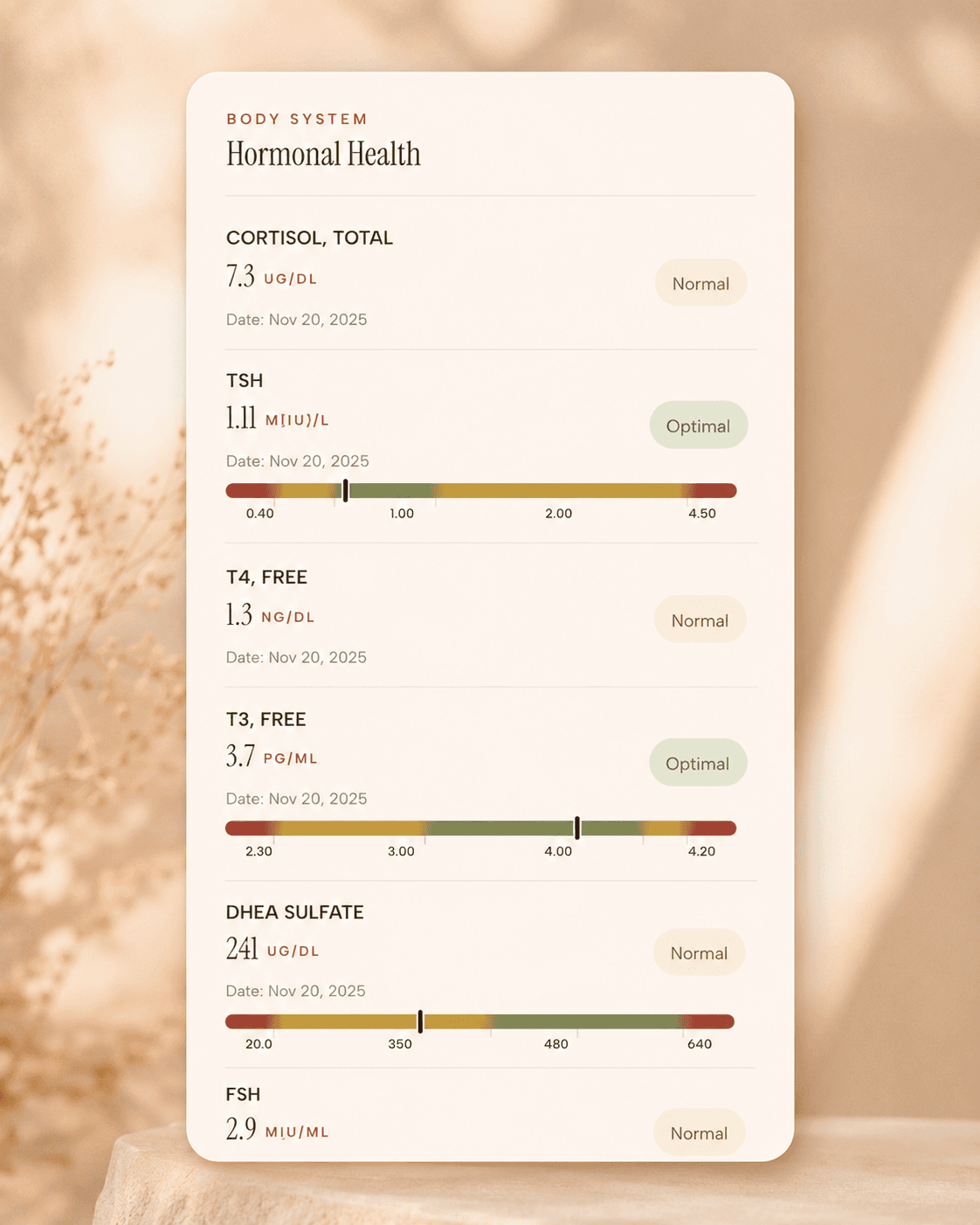
fasting glucose, insulin, HbA1c, thyroid, and cortisol are all included in the starting-from-$99 panel with 100+ tests, one visit, no referral needed
About 1 week
Schedule online — results typically within a week
Clear next steps
Guidance included, with follow-up care available
HSA / FSA
Eligible for pre-tax health spending accounts
Why Everyone Is Talking About It Now
Mark Hyman's meal-timing framework goes mainstream
In his new podcast episode and accompanying YouTube video, Mark Hyman walks through how the composition and timing of your lunch — specifically the ratio of protein and fiber to fast carbohydrates — determines how hard your blood sugar falls two hours later. His framing moves the conversation away from generic 'eat healthy' advice and toward specific, testable meal strategies.
Dr. Haver's habit-stacking angle adds a behavioral layer
Dr. Mary Claire Haver's recent short-form content highlights how stacking a brief walk or light exposure into your early afternoon routine — not as a workout but as a deliberate habit anchor — can blunt the circadian dip before it compounds with any blood sugar drop. Her approach is practical in a way that resonates with people who already know what to do but struggle to actually do it consistently.
Wearable data is making the crash visible and personal
Continuous glucose monitors [continuous glucose monitors] and smartwatch heart-rate-variability data are letting people see their own afternoon dips in real time for the first time, which is turning an abstract concept into a personal data story. When you can watch your glucose fall on a graph at 2:47pm, the advice to change your lunch suddenly feels urgent rather than theoretical.
The Science Behind the Crash
Your brain's temperature controller triggers the dip
The part of your brain that controls body temperature and sleep-wake cycles (hypothalamus) signals a slight drop in core temperature in the early afternoon as part of normal circadian programming. Lower core temperature makes you feel sleepy — it is the same mechanism that helps you fall asleep at night, just a smaller version of it in the afternoon.
Insulin and glucose create the energy rollercoaster
When you eat fast-digesting carbohydrates, your pancreas releases insulin [insulin] to pull glucose out of your blood and into your cells. If that process overshoots — which it often does after a large, carb-heavy meal — your blood glucose drops below your baseline, and your brain, which runs almost entirely on glucose, starts sending distress signals that feel like fatigue, irritability, and difficulty concentrating.
Cortisol's morning peak fades right on schedule
Your stress hormone cortisol [cortisol] naturally peaks in the first hour after you wake up and then gradually declines through the day. By early afternoon it has dropped significantly, which means the alertness boost it was providing in the morning is gone — and if your blood sugar is also falling at the same time, you are losing two sources of energy simultaneously.
How to Actually Fix It
Build your lunch around protein and fiber first
Eating protein and non-starchy vegetables before any carbohydrates at lunch slows how fast glucose enters your bloodstream, which flattens the spike-and-crash curve considerably. You do not have to eliminate carbohydrates — you just eat them last, after the protein and fiber have already slowed digestion down.
Take a ten-minute walk within thirty minutes of eating
Light movement after a meal uses up some of the glucose your muscles would otherwise leave in circulation, which blunts the insulin overshoot that causes the crash. Dr. Haver's habit-stacking approach suggests anchoring this walk to something you already do — standing up when a meeting ends, or walking to refill your water — so it becomes automatic rather than a decision you have to make every day.
Use light and timing as circadian anchors
Getting bright light exposure in the morning sets your circadian clock more precisely, which means the afternoon dip arrives at a predictable, shallower level rather than an unpredictable deep one. Even five minutes of outdoor light before 10am — combined with avoiding the blue-light-blocking sunglasses during that window — can shift how your whole afternoon feels.
Risks and When to Take It Seriously
Severe or daily crashes can signal something testable
If your afternoon fatigue is so heavy that it regularly disrupts your work or you feel shaky, sweaty, or anxious alongside it, that pattern is worth investigating with actual lab work rather than just dietary tweaks. Conditions like insulin resistance, hypothyroidism, and adrenal dysfunction can all produce afternoon energy crashes that feel identical to the ordinary kind but will not respond to habit changes alone.
Continuous glucose monitors are informative but easy to misread
Seeing a glucose dip on a monitor does not automatically mean you have a blood sugar disorder — normal glucose fluctuation looks alarming on a graph if you do not know what the reference ranges mean. If you are using a CGM to investigate your afternoon crash, reviewing the data with a clinician rather than self-diagnosing based on the app's alerts will save you a lot of unnecessary worry.
Skipping meals to 'fix' blood sugar can backfire
Some people respond to the blood sugar crash story by skipping lunch entirely, reasoning that no meal means no spike. But for many people — especially those with any history of disordered eating or who are already under-fueled — skipping lunch worsens the afternoon cortisol drop and leaves the brain without the glucose it needs to function. Meal composition matters far more than meal skipping.
Frequently Asked Questions
Why do I always feel tired at 3pm even when I sleep well?
A well-rested person still experiences an afternoon alertness dip because it is programmed into the circadian rhythm — your body temperature and cortisol both drop in the early afternoon as part of normal biology. If your lunch also caused a blood sugar spike and fall, the two effects stack on top of each other and the tiredness feels much more severe than either cause alone would produce.
What should I eat for lunch to avoid the afternoon crash?
Prioritizing protein and non-starchy vegetables at the start of your meal — before eating any bread, rice, or other carbohydrates — slows glucose absorption and reduces how sharply your blood sugar falls afterward. Keeping the total carbohydrate portion moderate rather than eliminating it entirely tends to work better for sustained energy than very low-carb lunches, which can leave some people feeling flat in a different way.
Is the 3pm slump the same as low blood sugar?
Not exactly. True low blood sugar (hypoglycemia) is a medical condition where glucose falls below a clinical threshold and causes symptoms like shakiness, sweating, and confusion. The afternoon crash most people experience is a relative drop — glucose falling from a high point back toward normal — which feels unpleasant but is not the same as clinical hypoglycemia. If you regularly feel shaky or anxious alongside the fatigue, that is worth checking with a lab test.
Does caffeine actually help with the afternoon slump?
Caffeine blocks the brain receptors that respond to adenosine, the chemical that builds up and makes you feel sleepy, so it does temporarily reduce the feeling of fatigue. The problem is that caffeine consumed after about 1 or 2pm can delay sleep onset by several hours for most people, which makes the next day's afternoon crash worse — creating a cycle where you need more caffeine to compensate for worse sleep.
Can Vitals Vault labs tell me if my afternoon crash has a medical cause?
Yes — markers like fasting glucose, fasting insulin, HbA1c, thyroid-stimulating hormone, and cortisol can reveal whether insulin resistance, thyroid dysfunction, or adrenal patterns are contributing to your fatigue. Vitals Vault's starting-from-$99 panel covers over 100 tests in a single visit, and a PocketMD clinician can help you interpret the results in the context of your specific symptoms.